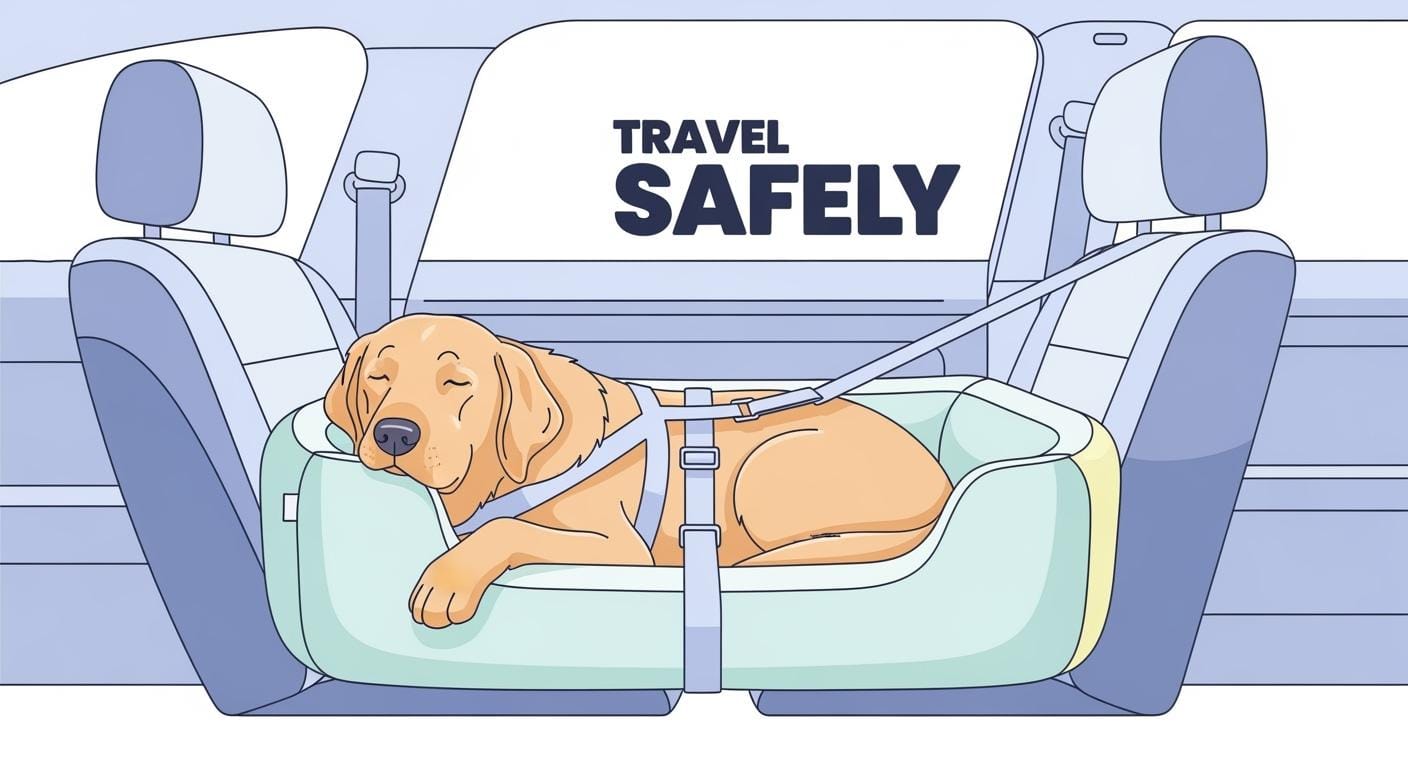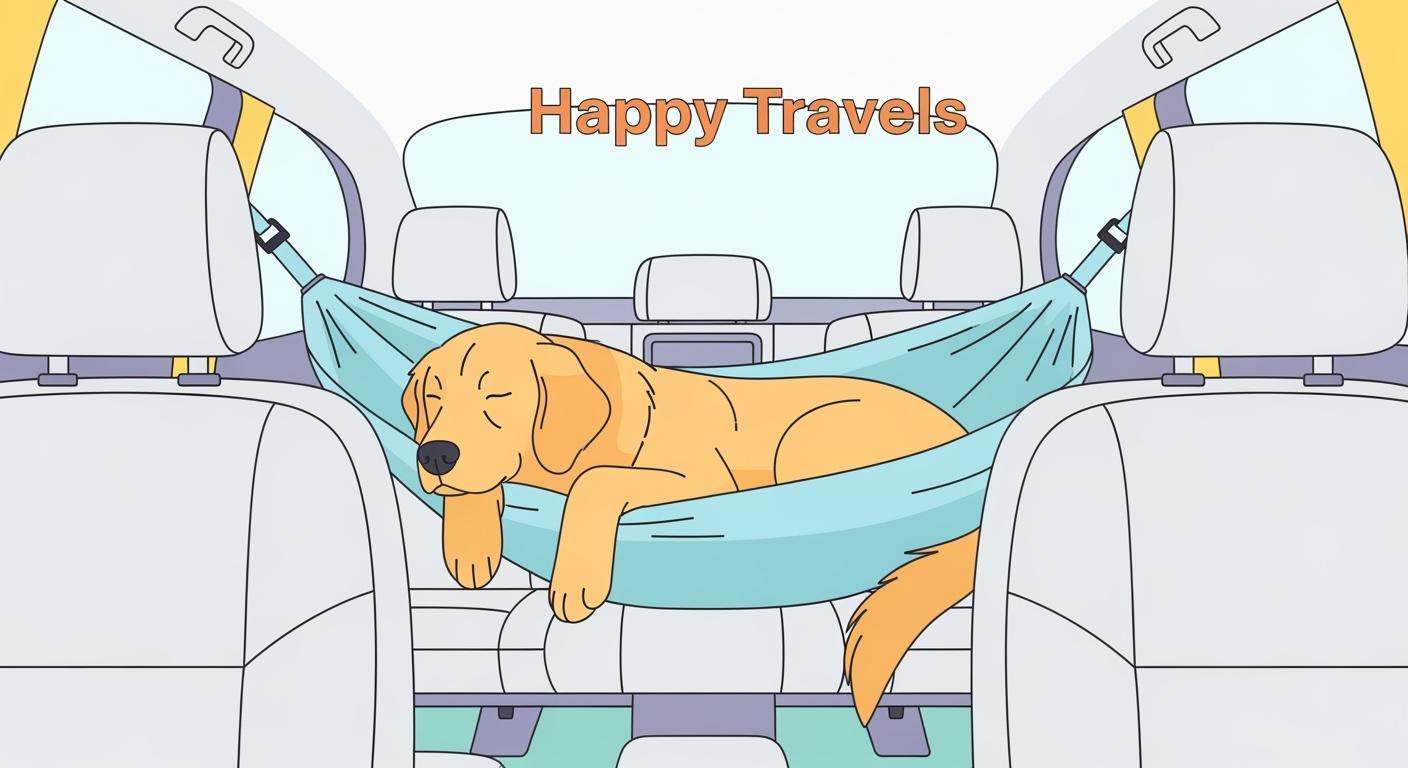
You see muddy paw prints on the front seatbacks after every drive. The rear seat cover is in place. The mess still gets through.
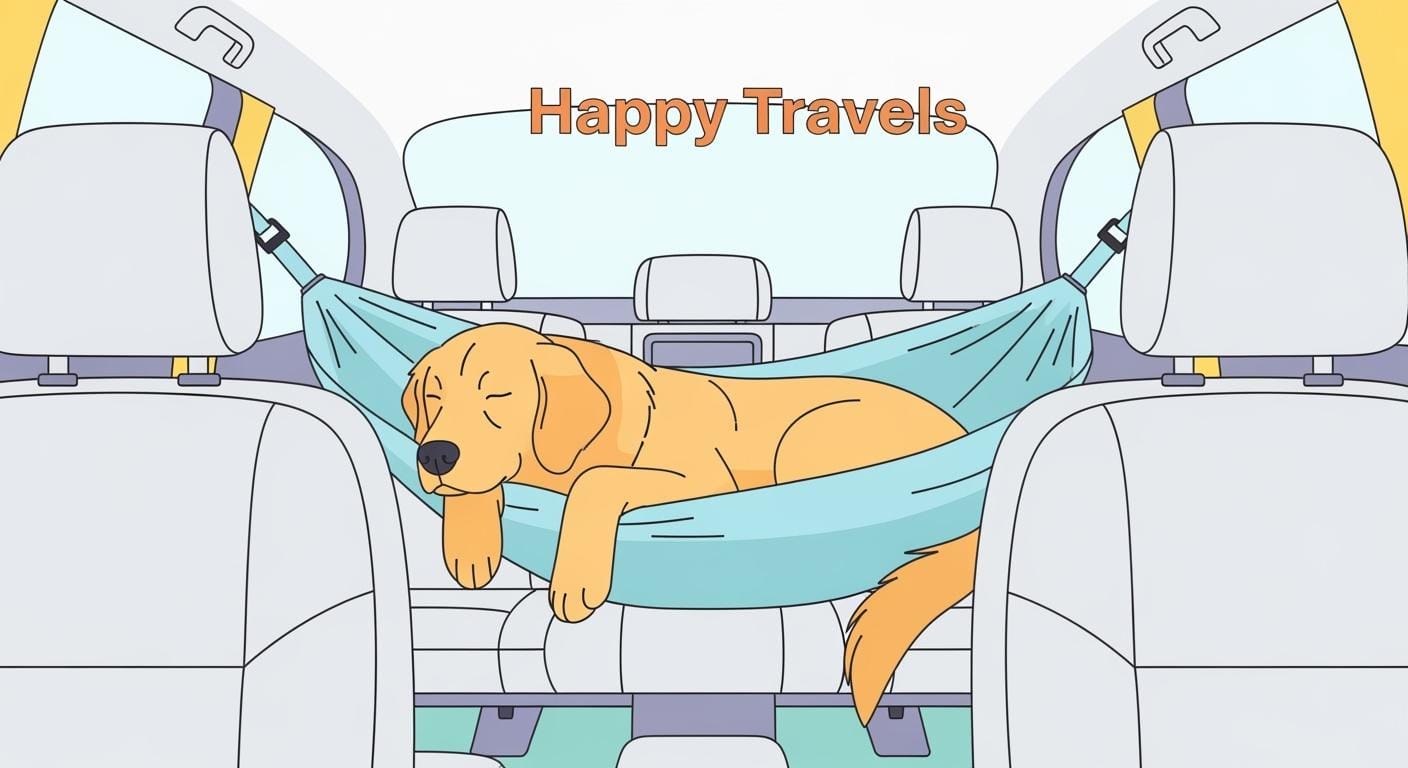
That gap between what a standard bench cover protects and what your dog actually touches during a car ride is where a car hammock for dogs either works or fails. The design detail that decides the outcome is not whether a hammock exists. It is whether the front panel covers the full contact zone at the right height, with a surface that stops moisture from soaking through, and with seams positioned away from where paws land.
A bench cover and a hammock solve different protection problems. The bench cover shields the seat cushion your dog sits on. The hammock adds the vertical barrier most bench designs omit. When you see paw-shaped dirt marks at chest height on the seatback, the bench-only approach is simply not covering the contact zone where your dog braces.
Why Standard Rear Seat Covers Leave Front Seatbacks Exposed
Dogs do not sit still in a moving car. They stand to look out the window. They brace hard when you brake. They turn around — sometimes several times — before settling. Each movement puts paws, often wet or muddy, directly against the back of the front seats.
The physics is straightforward. When a dog stands and braces during braking, forward momentum pushes body weight toward the front of the car. Paws extend forward for stability. If the only thing between those paws and the seatback is empty air, mud transfers on contact. A rear bench cover addresses a different surface — the horizontal seat the dog sits on — and leaves the vertical contact zone above it completely exposed. The design difference between bench and hammock styles comes down to whether the cover bridges the footwell gap and extends upward to create a continuous barrier.
You can verify the pattern yourself. After a drive with your dog, check the seatback face at roughly the height of your dog’s chest when standing. Paw-shaped dirt marks at 12 to 18 inches above the seat cushion mean the cover is not reaching the actual contact zone. No dirt on the seat bottom but mud on the seatback is the signature of a coverage gap.
What Makes a Front Panel Actually Block the Mess
Three design dimensions separate a front panel that works from one that becomes decorative fabric hanging between the seats.
Panel height and width. A short panel that stops halfway up the seatback leaves the upper portion unprotected. Dogs stretch and stand tall during a drive — especially approaching a destination or reacting to movement outside. A panel that extends to the full height of the seatback and wraps around the edges closes the most common escape routes. But height alone is not enough. Narrow panels leave exposed strips at the sides — exactly where a dog turning around places a paw. After a 10-minute drive, run your hand along the outer edges of the seatback. Dirt on your fingers means the panel width is not covering the full lateral contact area. Side flaps and edge-to-edge coverage close these gaps before mud finds them.
Water-resistant surface. Mud carries moisture. A fabric-only front panel absorbs that moisture and eventually transfers it to the seatback underneath. Ripstop polyester with a waterproof PU backing creates a physical barrier — moisture beads on the surface instead of penetrating. You can test this: after a wet-dog drive, lift the panel and press your palm against the seatback fabric behind it. Dampness there means the barrier layer has either failed or was never present.
Seam placement. The causal chain is direct. Mud and moisture collect in seams. Seams stitched across the center of the panel become collection points at the highest-contact area. Over repeated drives, paw pressure and moisture exposure weaken the stitching at those points. Water finds the needle holes. Dirt works into the thread. The seam becomes a leak path. Reinforced seams positioned away from the center contact zone — at strap attachment points and corner edges — avoid this failure mode. The stitching is still present, but it is not bearing repeated direct paw impact. The difference between a hammock that holds up over months of use and one that starts leaking after weeks often traces back to where the factory placed the seam lines.
Material Layers That Determine Whether Moisture Reaches the Seatback
The gap between a dry seatback and a stained one often comes down to what sits between the outer fabric and the upholstery.
A single-layer fabric panel — even a thick one — eventually lets moisture through. Fabric fibers wick moisture laterally through capillary action. Once the outer layer saturates, water pulls through to the other side along the same fiber pathways. A waterproof backing layer — typically TPU or PU bonded to the underside of the face fabric — interrupts this chain. Water stops at the barrier because there is no fiber structure to continue pulling it through. This is why material stack-up matters more than fabric weight alone. A 600D oxford outer with a polyurethane backing stops moisture. A thicker 1200D fabric without a backing layer absorbs more water before it saturates and leaks. The backing layer, not the face fabric weight, is the actual waterproofing mechanism in a car seat cover.
A continuous surface design — where the panel bridges the gap between the rear seat and the front seatbacks without breaks — adds a second line of defense. Dirt and hair that would otherwise tumble into the footwell or wedge between the seats stay on the cover. You can observe this after a muddy trip: check the footwell carpet directly below the front edge of the hammock. Debris accumulation there means the continuous surface has a gap or the panel is not tensioned correctly.
Note: A wipe-clean top layer speeds up daily maintenance but does not replace the waterproof backing underneath. The top layer handles solid debris — mud clumps, hair, dried dirt. The backing handles moisture. Both layers need to function for full protection.
When Full Hammock Coverage Fits (and When a Different Setup Works Better)
A full-panel car hammock excels when a single dog rides in the back seat and the primary concern is keeping front seatbacks clean from mud and hair. This setup works best on short, frequent trips — park runs, trailheads, daily walks — where wet paws are the constant variable and quick post-ride cleanup matters more than maximizing passenger space. The hammock bridges the footwell, contains debris on one removable surface, and blocks the vertical contact zone in a single piece of gear.
The design advantage shrinks in specific conditions. If the hammock surface is slick, a dog that already struggles with car anxiety may brace constantly against it. Constant bracing means more paw contact, more stress on seams, and more chances for dirt to find an uncovered edge. A non-slip top layer helps but does not resolve motion-related anxiety itself.
Multiple dogs in the back seat introduce a different failure mode. Two dogs jostling for position can shift the hammock sideways, pull at strap connections, and open gaps at the corners that a single occupant would not create. The hammock, designed around a single dog’s movement range, may not hold full edge coverage under two moving bodies.
Vehicles with split-folding rear seats or a fixed center console in the back also challenge the standard hammock shape. The front panel may not align cleanly with an offset split, leaving a channel where debris drops through. A booster seat or alternative restraint setup can work better in those configurations.
Disclaimer: These coverage checks assume smooth-coated dogs where paw prints and mud streaks are visually obvious on seatback fabric. Double-coated or long-haired breeds may leave subtler dirt transfer that requires hand-feeling the seatback surface rather than visual inspection alone. If your dog has a barrel chest or a very deep keel that pushes their standing posture farther forward than breed averages, the actual contact zone may extend higher or wider than the seatback height guidelines describe — check at the height where your dog’s paws actually land, not where a size chart estimates they should land.
FAQ
How do you clean a car hammock for dogs?
Shake off loose dirt and hair outside the vehicle. Wipe the surface with a damp cloth for routine cleaning. For embedded mud, use a pet-safe cleaner and let the hammock air dry completely before reinstalling. Avoid machine washing unless the manufacturer explicitly confirms it is safe — aggressive wash cycles can delaminate waterproof backing layers from the face fabric.
Does a car hammock fit all vehicles?
Most hammocks adjust to fit standard sedans, wagons, and mid-size SUVs via headrest straps. The real fit question is less about whether the straps reach and more about whether the panel covers the full width and height of your specific seatback. Measure from the seat cushion to the top edge of the seatback, and across the widest point, before comparing to hammock dimensions. A hammock that attaches but leaves a 3-inch gap at each side is not protecting the full contact zone.
Can you use a car hammock with a dog safety harness?
Yes. Hammocks with reinforced seat belt openings let you pass a crash-tested harness tether through to the buckle. The opening should align with your vehicle’s buckle position and stay aligned when the hammock is tensioned. If the belt opening drifts laterally after installation, it may block buckle access on one side and force the restraint connection to the opposite buckle instead.
How do you stop a car hammock from sliding?
Tighten all headrest straps fully and use seat anchors if the hammock includes them. A non-slip backing on the bench section reduces sliding on leather or smooth fabric seats. Check strap tension before each trip — nylon webbing can loosen slightly after repeated loading and temperature cycles.
Does a car hammock protect against wet dogs?
A hammock with a waterproof backing layer — typically PU or TPU bonded to the underside of the fabric — blocks moisture from wet fur and muddy paws. After a rainy walk or swim, the moisture stays on the cover surface. Wipe the hammock dry after the trip to prevent any pooled water from finding its way to an edge or seam. If the surface stops beading water and instead darkens where wet, the water-repellent coating may need reapplication.