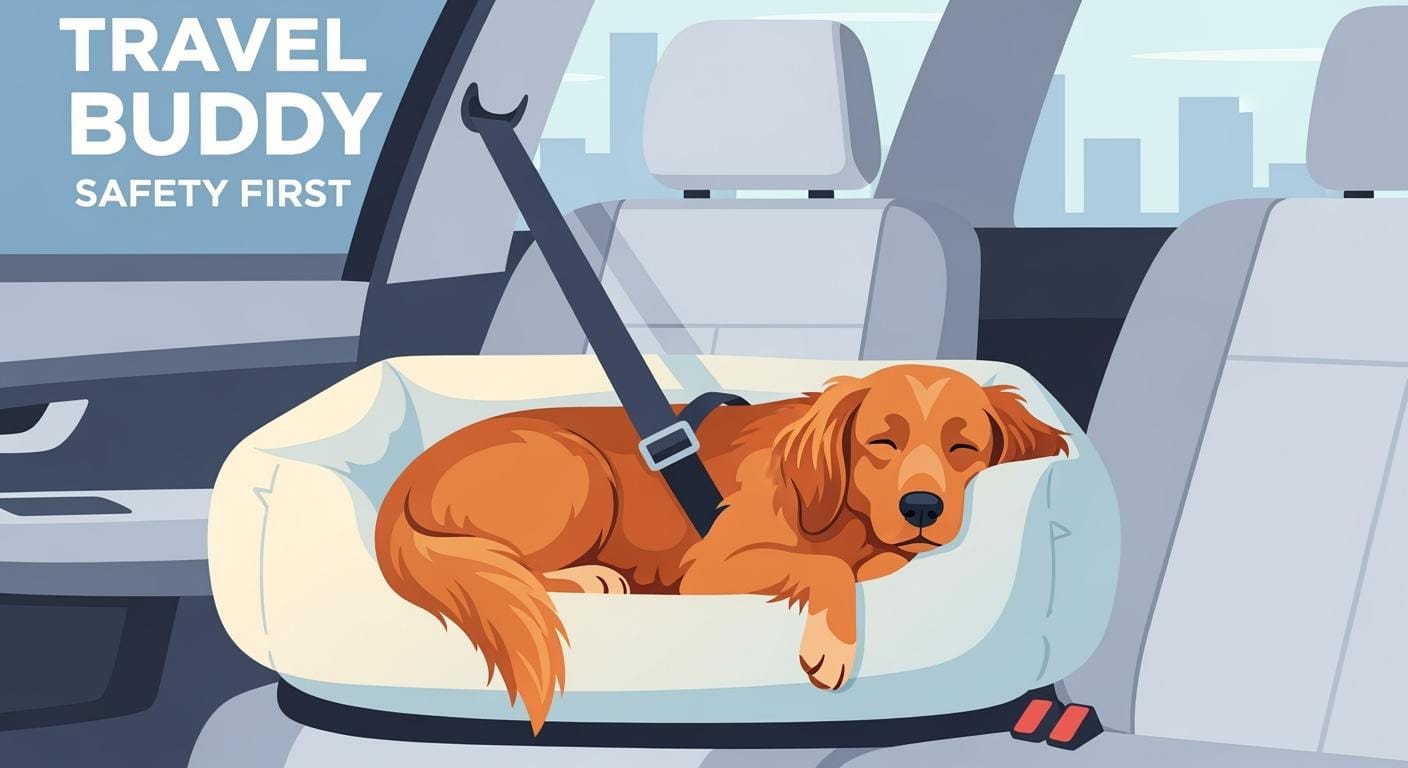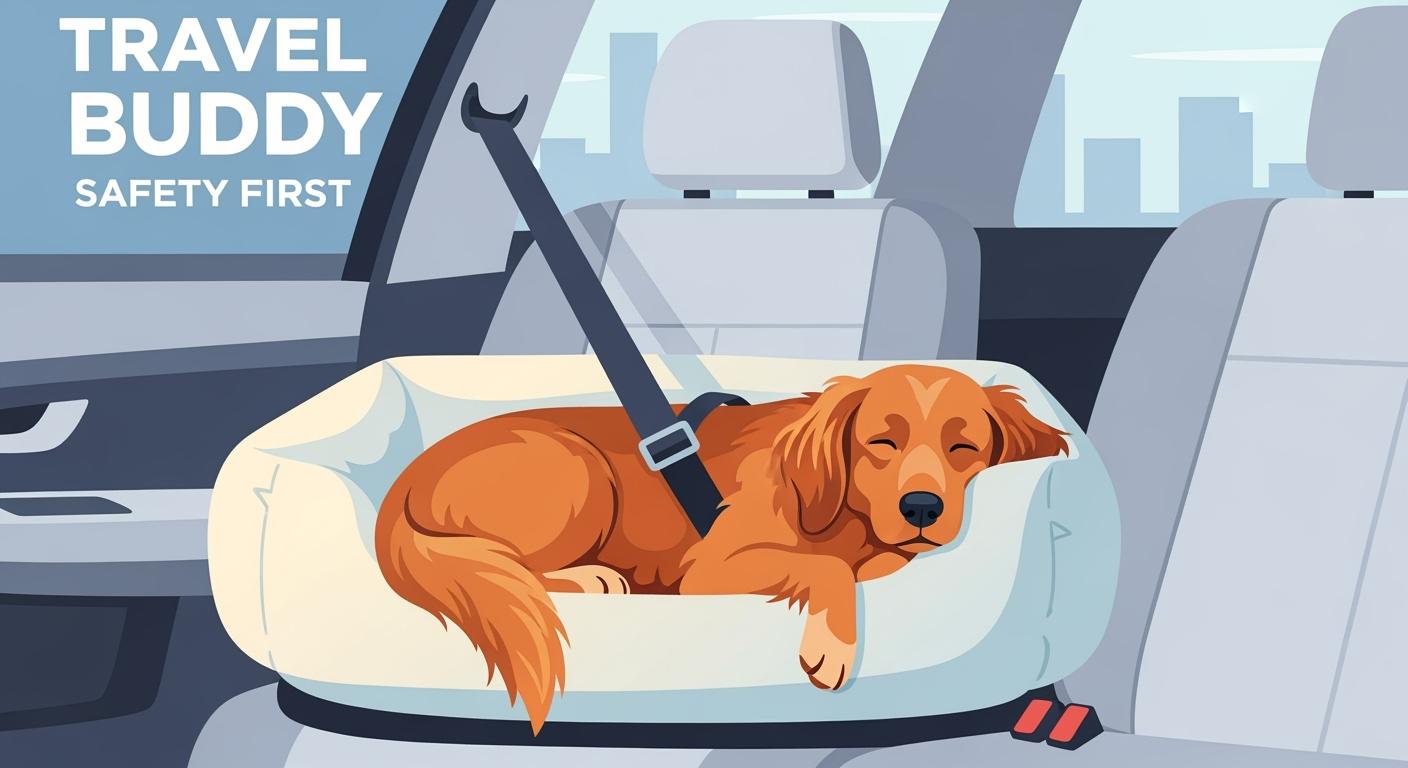
A car bed for dog can look soft, padded, and cozy before the drive even starts. That does not tell you whether it will stay centered on the rear seat when you brake, whether the walls will hold shape through a turn, or whether your dog will relax instead of bracing against movement.
This is the real buying question. A bed can feel comfortable in a parked car and still become annoying or unstable once the ride begins. The better product is not the one with the softest photo. It is the one that lets your dog settle without sliding, rocking, or constantly readjusting body position.
Key Takeaways
- Pick a dog car bed that fits your car seat. A soft bed that hangs over the seat edge or bridges over seat contours can feel unstable even before the first turn.
- Look at attachment quality as a stability check, not automatic proof of crash protection. Installation language matters, but it does not replace verified testing.
- Watch what your dog does on a short real ride. Sliding, bracing, leaning, or repeated repositioning usually tells you more than the product label.
Why Some Dog Car Beds Feel Unsteady on the Road

The Base Must Match the Seat
A car bed works best when the base matches the usable rear-seat area instead of floating over buckle housings, raised seat contours, or narrow edges. Measure the seat, including any curves or seat belt buckles. If the base rocks while the car is parked, it will usually feel worse once normal braking and cornering start.
Bolsters Help, but They Cannot Stop Sliding
Walls and bolsters can help some dogs feel calmer, especially if they like leaning into a boundary. But if those walls collapse easily, reduce usable resting space, or make entry awkward, they can turn a comforting bed into a balancing exercise. A dog that keeps pushing into one side or perching on the edge is often reacting to the shape, not just to travel stress.
Watch for Bracing, Sliding, and Repositioning
A calm short test ride reveals more than a product description. Some dogs lie down and settle. Others stay half-standing, brace through the forelegs, or keep shifting after every change in speed. Those are not small details. They usually mean the bed is moving more than it should or asking the dog to stabilize its own body through the ride.
Tip: If the bed already tips, bunches, or drifts while parked, do not assume the issue will disappear once you start driving.
| Check Item | Pass Signal | Fail Signal | What to Change |
|---|---|---|---|
| Base contact | The bed sits flat and stays centered | One corner lifts, dips, or bridges over the seat | Move to a flatter footprint or a different bed shape |
| Body position | The dog can curl or lie naturally without sliding | The dog braces, leans, or keeps correcting posture | Choose a firmer base and more stable wall structure |
| Wall support | The sides hold shape without crowding the dog | The walls fold, cave in, or reduce resting space too much | Pick a lower or firmer wall design |
| Turn-and-stop stability | The bed stays put through normal neighborhood driving | The bed slides, rocks, or shifts toward the seat gap | Recheck installation method and rear-seat match |
What the Attachment System Really Tells You
ISOFIX, LATCH, and Seat-Belt Routing Do Different Jobs
You may see a car bed described with ISOFIX-style language, seat-belt routing, safety buckles, or rear-seat anchors. Those details matter because they affect how the product installs and how much it moves in normal driving. They do not all mean the same level of restraint, and they do not automatically prove crash performance.
A Stable Install Is Not the Same as Proven Crash Protection
Read the installation method exactly as intended. If the product depends on routing through the vehicle belt path, make sure the path stays flat and usable. If it relies on dedicated anchor points, confirm the setup matches your vehicle instead of assuming every rear seat works the same way. Never build your own workaround with extra straps, loose extensions, or random clip points.
Many dog car beds look soft and nice, but you need to think about more than just how they feel. Attachment language should help you understand installation, not talk you into assuming restraint performance that has not been clearly shown.
| Attachment Detail | What It Can Help With | What It Does Not Automatically Prove |
|---|---|---|
| Seat-belt routing | Can reduce shifting when the belt path fits correctly | That the bed is independently crash-tested as a pet restraint |
| ISOFIX or lower-anchor style attachment | Can improve installation stability when the product and vehicle match | That the whole setup gives proven crash protection for your dog |
| Headrest or rear-seat straps | Can help control ordinary movement and keep the bed from drifting | That the bed can manage higher crash forces on its own |
| Internal tether point | Can help reduce roaming when used correctly with a harness | That long slack or poor routing will stay safe in a crash |
Note: A steadier installation is worth having even for ordinary travel, but steadier is not the same as fully validated crash protection.
Test the Bed on a Short Drive Before You Rely on It
Start with a Short, Ordinary Drive
The most useful test is a short ride with normal low-speed turns, gentle stops, and a dog that has a fair chance to settle. You are not looking for perfection in the first minute. You are looking for whether the bed stays where it should and whether your dog can stop working against it.
Stop Using the Bed If You See These Signs
- The bed shifts enough that your dog has to keep correcting body position.
- Your dog braces through the legs, stays perched instead of lying down, or keeps leaning into one wall.
- The setup uses too much slack, awkward routing, or attachment points that you cannot verify with confidence.
Check Stability First, Then Comfort
Once the base stays put, then it makes sense to judge padding, side height, airflow, and ease of cleaning. If the ride still feels loose, extra softness usually just hides the real issue for a few minutes instead of solving it.
| Symptom on the Ride | Likely Cause | Fast Check | Better Response |
|---|---|---|---|
| The bed drifts during turns | Poor seat match or weak install control | Recreate the movement by pressing and pulling the parked bed | Use a different footprint or a better-defined attachment method |
| The dog keeps leaning or sliding | Base instability or over-large usable space | Watch where the body settles after one stop and one turn | Choose a bed that matches both seat size and resting style |
| The dog stands and will not settle | The ride still feels insecure or too exposed | Check wall support, seat fit, and internal slack | Shorten the test and reassess the whole setup |
| The bed feels calm parked but messy on the road | Real movement exposes weak routing or poor stability | Compare parked fit to actual in-motion behavior | Trust the road test, not the still photo |
When a Dog Car Bed Is Not the Best Option
Some Dogs Need a Different Travel Setup
Sometimes the problem is not the exact bed. It is the format. A dog that cannot stop pacing, a dog that panics with partial restraint, or a dog whose main need is stronger travel restraint may be better served by another setup. A car bed is usually best understood as a comfort-focused rear-seat solution, not a universal answer for every dog and every trip.
Do Not Force the Format If the Ride Still Feels Wrong
If your top priority is proven crash protection, or if your dog keeps slipping, standing, or showing clear stress even after careful setup, move on instead of forcing the same format. Some trips call for a different restraint type entirely.
Alert: Never let your dog ride loose, never rely on plush walls as restraint, and never leave your dog alone in a parked car.
A good car bed for dog should do one thing first: stay put well enough that your dog can stop compensating for the ride. If it cannot stay flat, stay centered, and stay believable through ordinary turns and stops, the softness does not matter as much as it seems.
FAQ
Does ISOFIX or lower-anchor language mean the car bed is crash-tested?
No. It tells you something about how the product may attach in the vehicle, but not automatically that the full pet setup has independent crash-test evidence behind it.
Can raised walls replace a harness-compatible restraint setup?
No. Raised sides can help a dog feel contained and more comfortable, but they do not replace proper restraint planning. Comfort features and restraint performance are different questions.
Should a dog car bed go in the front seat?
The rear seat is the better place for a comfort bed during ordinary travel. Keeping the setup away from the front passenger area reduces interference and avoids airbag-related risk.