Choosing the best dog harness for large dogs is not just about size. For bigger dogs, small fit mistakes become obvious fast. A harness that looks secure on the rack can shift, crowd the shoulders, rub behind the front legs, or feel heavy on a long walk. Before you buy, check chest fit, shoulder clearance, adjustment range, hardware stability, and how the harness behaves once the leash is attached.
This guide focuses on everyday walking fit and control. It does not treat a walking harness as crash protection, medical support, or a cure for pulling. The goal is simpler: help you choose a harness that fits a large dog cleanly, feels stable in motion, and creates fewer return-worthy problems after the first few walks.
Key Takeaways
- Measure your dog’s chest and neck accurately to ensure a proper fit. For large dogs, chest girth matters most, but neck opening and belly-strap position also affect comfort and security.
- Do not choose by breed label or weight alone. Two dogs at the same weight can carry size very differently through the chest, shoulders, and rib cage.
- Look for stable hardware, enough adjustment range, smooth edge finishing, and a layout that does not crowd the front of the shoulders.
- Always do an indoor fit check and a short walk test before daily use. Watch for shifting, rubbing, twisting, or a leash ring that does not stay centered.
Fit Guide for Large Dogs
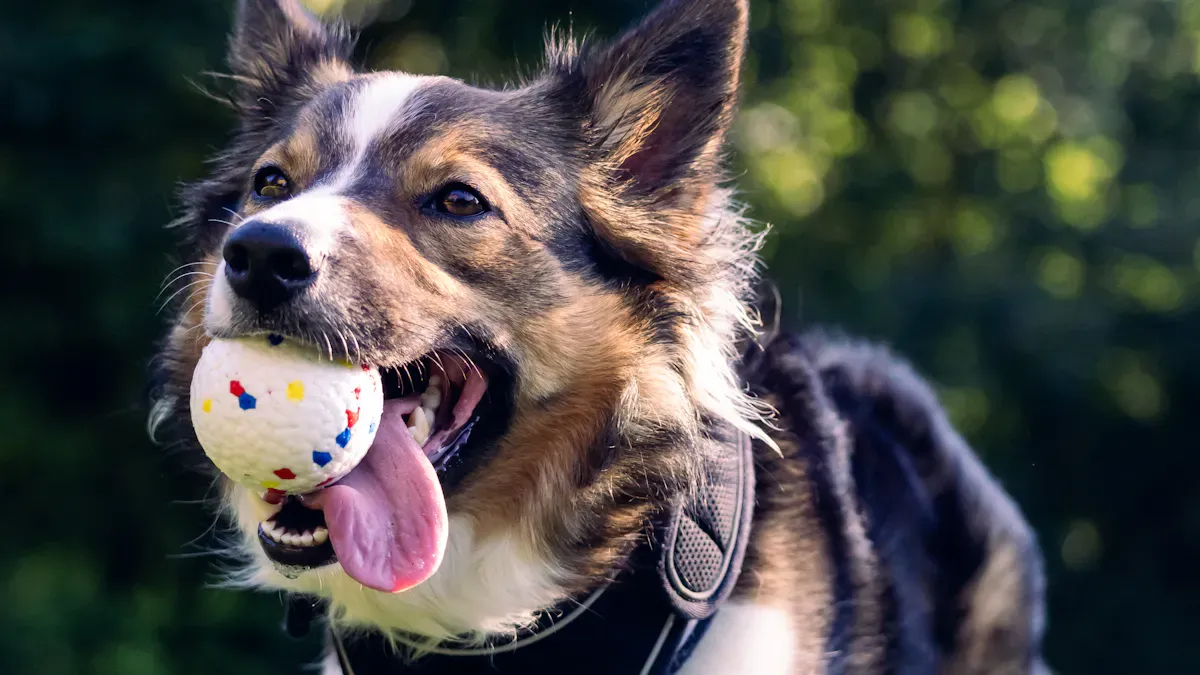
A proper fit keeps a large dog more comfortable and easier to manage. You want a harness that spreads leash pressure across the chest, sits clear of the throat, and stays steady when your dog turns, pauses, or leans into the leash.
- Measure the chest first, at the widest part behind the front legs.
- Check the neck opening at the base of the neck, not high up under the jaw.
- Look at belly-strap position. It should sit behind the front legs without riding too far back.
- Make sure the front layout does not crowd the shoulder area when the dog walks or lowers the head.
- Choose hardware that matches the size and strength of a large dog, especially the leash ring, buckles, and strap junctions.
How to Measure Before You Compare Size Charts
Use a soft tape. Stand your dog naturally on a flat floor. Measure the chest at the deepest part of the rib cage, then measure the neck at the base where the harness opening will sit. If the brand lists only weight, treat that as a rough filter, not the final answer. The better check is whether your dog’s chest and neck numbers both fall inside the stated adjustment range.
When your dog sits between sizes, the safer direction is usually the size that gives you room to adjust without leaving long, loose strap tails. Too much extra bulk can make a large harness feel clumsy even if the numbers look correct on paper.
Pass/Fail Fit Checklist
| Check Point | Pass Signal | Fail Signal |
|---|---|---|
| Chest fit | Feels snug and flat, with about one to two fingers of space | Gaping, twisting, or pressing into the coat and skin |
| Neck opening | Sits low at the base of the neck and stays off the throat | Rides high, crowds the throat, or shifts when the leash tightens |
| Shoulder clearance | Dog can walk, turn, and lower the head without looking crowded | Front strap cuts across movement or the dog shortens stride |
| Belly strap position | Sits clear of the elbow area and stays in place | Rubs behind the front legs or slides backward |
| Leash ring balance | Stays centered instead of rolling to one side | Tilts, drifts, or makes the whole harness rotate |
Features Worth Checking Before You Buy
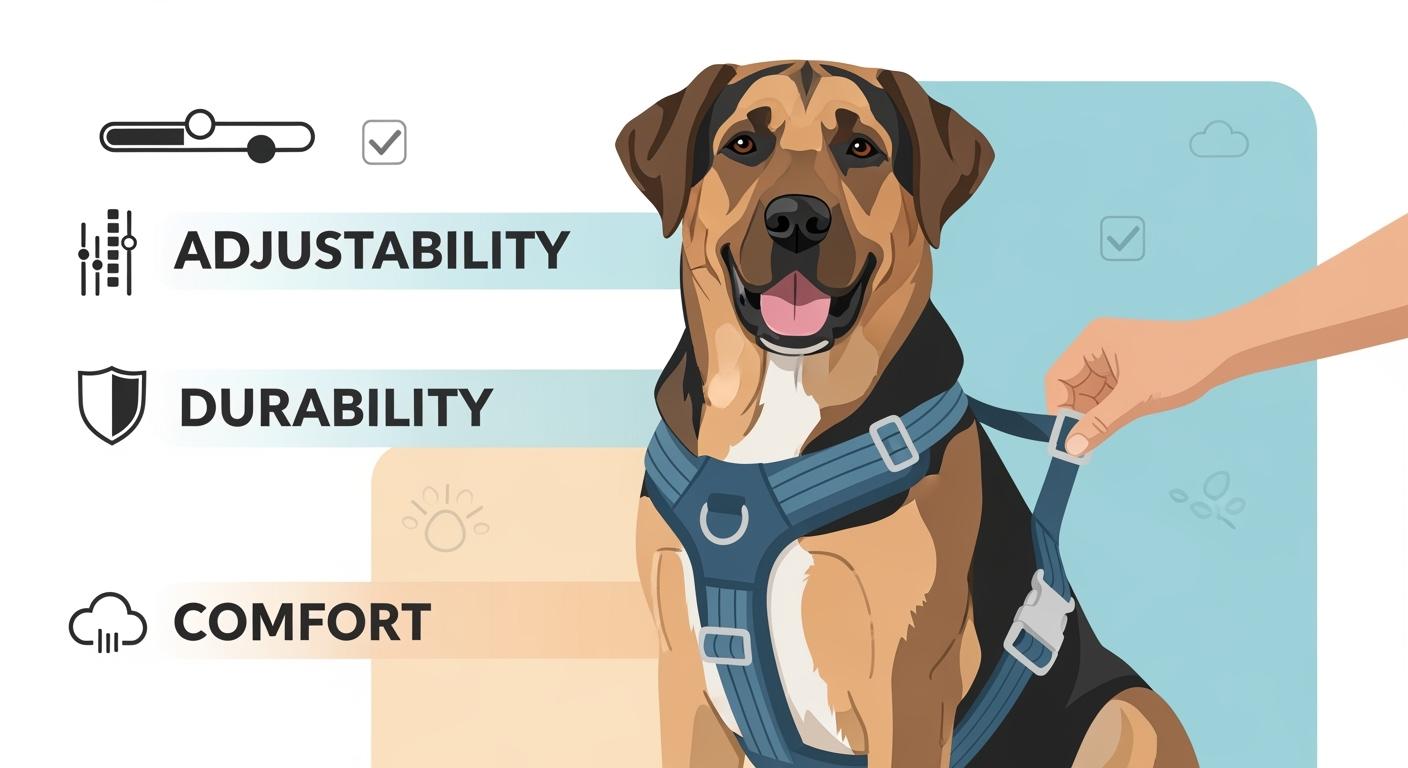
Large dogs do not just need a bigger harness. They need a layout that stays usable under real leash pressure. Before buying, focus on the parts most likely to affect comfort, handling, and product life in daily use.
Adjustment Range and Secure Hardware
- Check how many adjustment points the harness has and whether they actually help you fine-tune chest and belly fit.
- Look at buckle size and closure feel. The buckle should close cleanly and stay locked without wobble.
- Check the leash ring and connection points. Large dogs can expose weak hardware quickly when they lunge, stop suddenly, or pull through turns.
- If you want a front-clip option, make sure the front point does not create a bulky chest area that shifts from side to side.
Padding, Webbing, and Everyday Durability
Soft padding can improve comfort, but more padding is not always better. On a large dog, thick bulk can trap heat, take longer to dry, and feel stiff if the pattern does not follow the body well. Smooth webbing edges, clean stitching, and a shape that lies flat matter more than oversized padding on every panel.
Material choice also matters, but it is better to compare by use case than by fixed lifespan claims. For example, a quick-drying webbing layout may suit wet walks and easy cleanup, while a heavier construction may feel more stable on strong pullers. Whatever the material, check for frayed edge risk, stiff seams, and whether the harness still feels manageable when wet.
Large-Dog Buying Checklist
| What to Check | Why It Matters | Quick Buyer Question |
|---|---|---|
| Chest coverage | Helps spread leash pressure and reduce shifting | Does the chest panel sit flat without crowding the front legs? |
| Adjustment range | Lets you fine-tune fit across a deep chest and wider rib cage | Can you tighten it enough without leaving it awkward or bulky? |
| Hardware size | Large dogs can stress rings, buckles, and strap joints quickly | Do the buckles and ring look matched to a strong dog? |
| Edge finishing | Rough edges can become obvious on longer walks | Are the seams and edge areas smooth enough for daily wear? |
| Easy cleanup | Large dogs bring more dirt, water, and coat friction into daily use | Can you wipe it down or rinse it without hassle? |
Quick Walk Test and Common Buying Mistakes
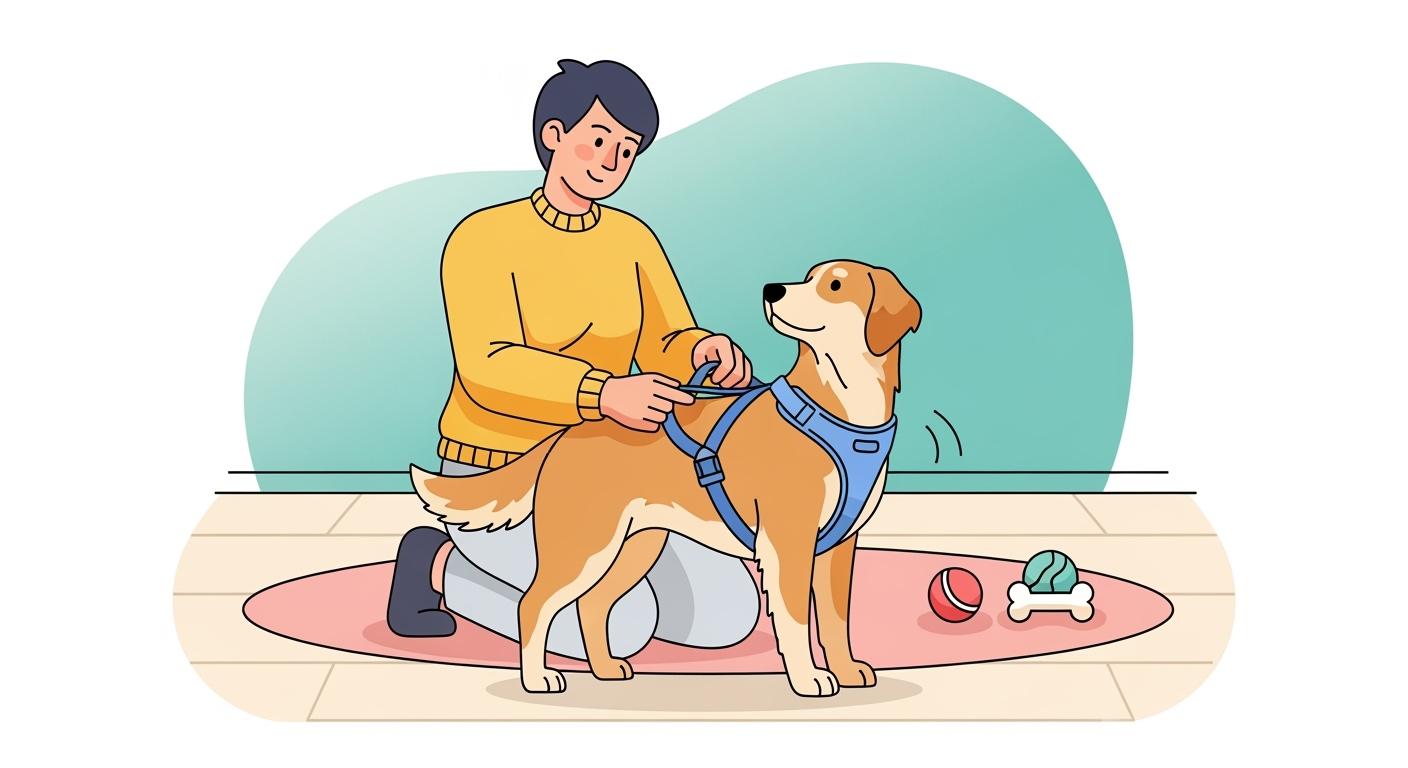
A short real-world test tells you more than a size chart alone. Before the first full walk, put the harness on indoors, clip on the leash, and watch how it behaves through a few common motions.
Three Quick Checks
- Doorway test: Walk through a doorway and make one slow turn. The harness should stay centered instead of dragging to one side.
- Three-minute walk test: Walk at a normal pace on a flat surface. Watch for shoulder crowding, belly-strap rubbing, or repeated shifting after the leash goes tight.
- Post-walk recheck: Run your hand behind the front legs, across the chest, and around the neck opening. Look for hot spots, coat flattening, or any area that feels overly compressed.
Common Buying Mistakes
- Buying by breed or weight only, without measuring the chest and neck first.
- Assuming a tighter fit means better control. Over-tightening often creates rubbing and awkward movement.
- Choosing a very bulky harness when the dog only needs a stable, clean everyday walking fit.
- Expecting a no-pull label to replace fit work and leash practice. Design can help handling, but poor fit still creates problems.
- Skipping the first short test walk and discovering movement or rubbing after the return window feels tighter.
Tip: If the harness looks fine standing still but rotates, creeps, or crowds movement once the leash is attached, treat that as a fit problem, not a minor break-in issue.
FAQ
My dog is between sizes. Should I size up?
Usually choose the size that keeps both chest and neck measurements within range and still lets you fine-tune the straps cleanly. The better choice is the one that gives a flat, stable fit without excess bulk or long loose strap ends.
Does a front-clip harness stop pulling?
A front clip can improve steering and make pulling easier to manage, but it is not a guarantee. The layout still needs enough chest stability and shoulder clearance, especially on a strong large dog.
Why does the harness shift to one side?
Side shift usually points to a fit imbalance, uneven adjustment, or a chest section that does not sit cleanly on your dog’s shape. Recheck both sides, then repeat a short walk test.
When should I replace a harness?
Replace it when you see cracked hardware, loose stitching, stretched strap sections, or a fit that no longer stays stable after adjustment. If your dog shows limping, persistent rubbing, or pain on walks, stop use and speak with your veterinarian.
The best dog harness for large dogs is the one that fits your dog’s body cleanly, stays stable when the leash loads, and feels manageable in everyday use. Start with measurements, confirm shoulder and elbow clearance, and do a short test walk before you commit to regular outings.
This guide covers everyday product fit and use. It is not medical advice. If your dog has pain, skin breakdown, or a change in gait, stop using the harness and contact your veterinarian.