
A collar can look fine when your dog is standing still and still fail once the walk starts. Slipping, coughing, twisting, poor control, and sudden backing out usually come from one of four issues: the collar is too loose, too tight, the leash setup does not match the environment, or the collar is being asked to do a job better handled by a different piece of walking gear. The goal is not to make the collar tighter and tighter. It is to create a setup that stays secure without putting unnecessary pressure on the neck.
This guide stays focused on simple checks you can actually use before a walk: where the collar should sit, how to confirm it is not too loose, how leash length changes control, and which warning signs mean you should stop and refit instead of hoping the problem goes away on its own.
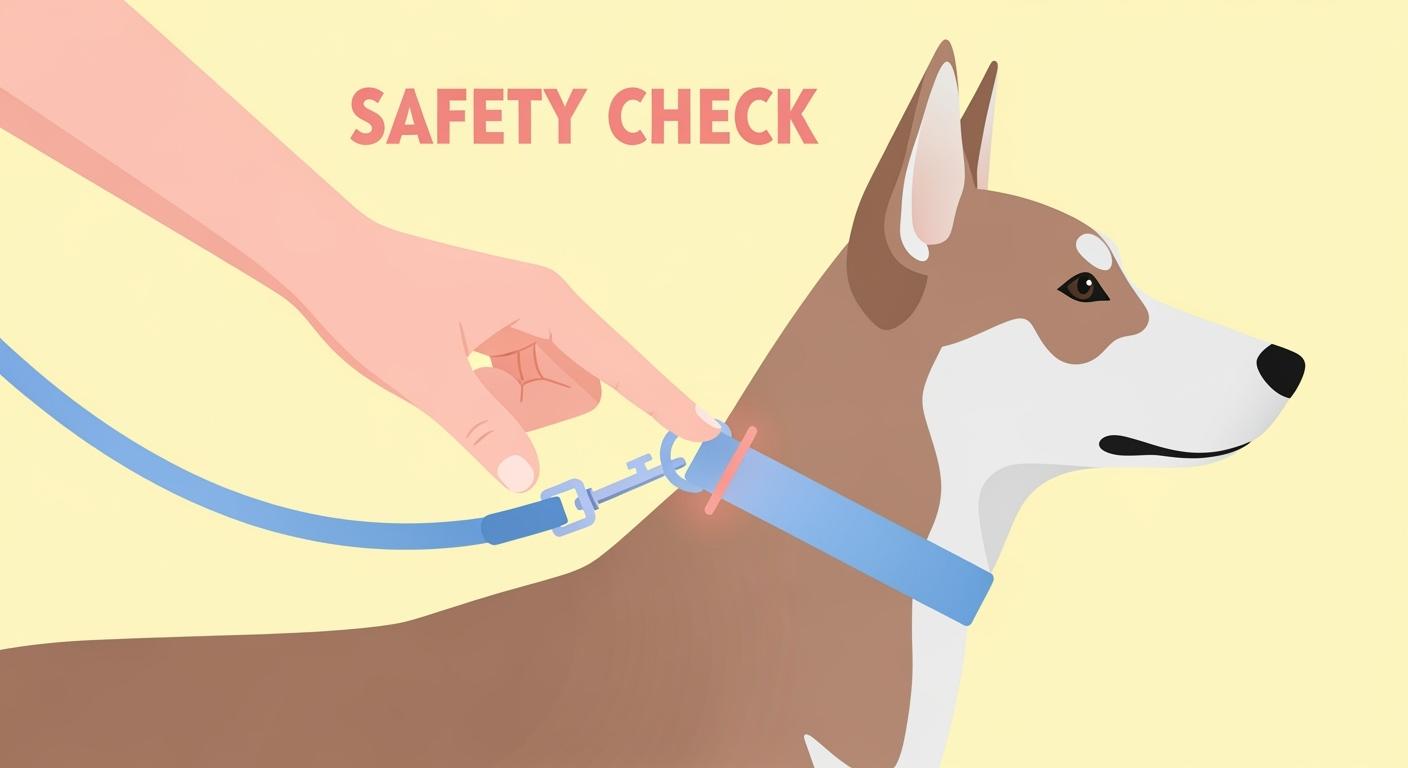
Why collar fit and leash setup have to be checked together
A collar does not work in isolation. The way it fits affects how the leash feels, how much control you have, and how likely your dog is to slip backward or start coughing when pressure hits the neck. A loose collar may seem comfortable until the dog startles and backs out. A tight collar may stop slipping but create rubbing, gagging, or obvious discomfort during normal movement.
What a safer setup should do
- Stay secure without riding up into the throat.
- Let your dog turn, sniff, and walk normally.
- Reduce the chance of slipping backward out of the collar.
- Give you enough control for the route you actually walk.
Why the leash matters too
Even a correctly fitted collar can feel wrong if the leash is too long for the environment or too awkward to handle when your dog speeds up. In crowded sidewalks, crossings, or busy entrances, extra slack often means slower reaction time. In quieter areas, a slightly longer leash may feel more natural. The right balance usually becomes clearer when the walk is part of a steady walking routine instead of a different setup every day.
Quick rule: if the collar feels secure only when it is uncomfortably tight, or if the leash always feels hard to manage in your usual route, the setup needs to change rather than just be pulled harder.
How to fit the collar so it stays secure without rubbing
The best place to measure is where the collar will actually sit, just below the head and above the shoulders. This matters because measuring too low on the neck often gives a size that feels loose once the collar sits higher in real use.
Use these fit checks in order
- Measure the neck where the collar naturally rests.
- Put the collar on and use a two-finger check for a snug but not pinching fit.
- Let your dog walk a short distance, turn, and lower the head.
- Do a gentle slip check by pulling backward over the widest part of the head.
What good fit should look like
| Check | What you want to see | What usually means trouble |
|---|---|---|
| Two-finger check | Two fingers slide in without forcing | No room at all, or so much room that the collar floats |
| Neck position | Collar sits high enough to stay stable | Rides into the throat or drops too low and twists |
| Slip check | Does not slide off with light backward pressure | Comes off easily when the dog backs up |
| Walk test | Dog moves normally with no coughing or pawing | Gagging, scratching, rubbing, or repeated head-shaking |
Common fit mistakes
- Choosing size by breed or body weight instead of neck measurement.
- Tightening too much after one slip without checking where the collar sits.
- Ignoring coat changes after grooming or seasonal shedding.
- Using the same adjustment for every route, dog mood, and weather condition.
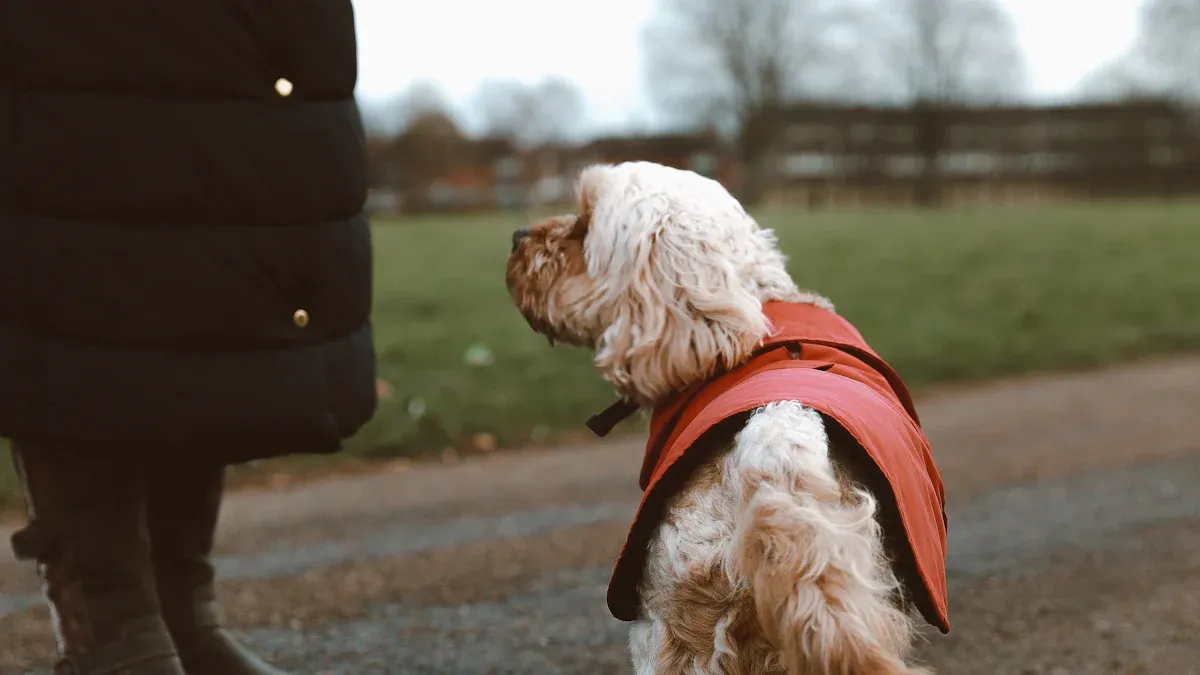
Choose leash length and hardware that match the route
Leash control is not only about material strength. Length, handle comfort, and clip movement all affect how easy it is to keep the walk calm. A leash that is fine in an open park may feel too slow near traffic or tight corners. A leash that is very short may feel secure but can make ordinary movement feel tense if you use it everywhere.
How to think about leash length
- Shorter fixed leash: better for crowded sidewalks, frequent crossings, and dogs that need closer handling.
- Standard daily leash: often the easiest middle ground for neighborhood routes and general walking.
- Longer training or open-space leash: only makes sense where you can safely manage the extra slack.
Hardware details that matter in real use
Look for a clip that feels smooth and secure, a handle you can hold comfortably without gripping too hard, and enough stability that the leash does not twist into a nuisance every few minutes. Strong dogs, sudden turns, and frequent stops expose weak hardware faster than casual use does.
When the collar is not the right answer
If your dog coughs, pulls hard, slips backward, or reacts strongly enough that neck pressure becomes part of the problem, the next step is not usually a tighter collar. It is often better to step back and review harness fit and sizing so the walk setup matches the dog’s actual control needs rather than relying on the neck to do too much.
Red flags, quick pre-walk checks, and when to refit
The easiest way to prevent slipping and discomfort is to use the same short check before every walk. It only takes a minute, and it catches most problems before they turn into a stressful outing.
Use this quick routine
- Check that the collar sits in the right place and is not twisted.
- Confirm the two-finger fit.
- Do a gentle backward slip check.
- Inspect the leash clip, ring, and handle for wear.
- Think about the route and make sure the leash length still fits it.
Red flags that mean you should stop and reassess
- Your dog coughs, gags, or paws at the neck during normal walking.
- The collar slides off with a light backward pull.
- You see rubbing, hair loss, or redness under the strap.
- The leash hardware sticks, twists badly, or shows visible wear.
- Your dog’s behavior has changed enough that the old setup no longer feels controlled.
What to change first
Start with fit and route match before replacing everything. Re-measure the neck, recheck where the collar sits, and see whether the leash length is making control harder than it needs to be. If the same problem keeps returning, that is usually a sign the current collar-and-leash setup is not the right tool for the way this dog actually walks.
FAQ
How tight should a dog collar be for walking?
It should be snug enough that you can slide two fingers under it without forcing them, but not so loose that it rotates excessively or slips over the head during a gentle backward check.
Why does my dog still slip out even when the collar feels snug?
Some dogs have head and neck shapes that make flat collars easier to back out of, especially when startled. The issue may be collar style or position, not just tightness.
What leash length is best for safer daily walks?
For many daily walks, a standard fixed leash works well, while shorter options are often easier in crowded or higher-risk areas. The best length depends on your route and how much close control you need.
When should I stop using the collar for leash pressure?
Stop and reassess if your dog coughs, gags, rubs the neck, slips backward, or pulls so hard that control depends on repeated pressure to the throat area.
How often should I recheck collar fit?
Check it before walks and recheck after grooming, coat changes, weight changes, growth, or any time the collar starts feeling less secure or less comfortable than usual.






