
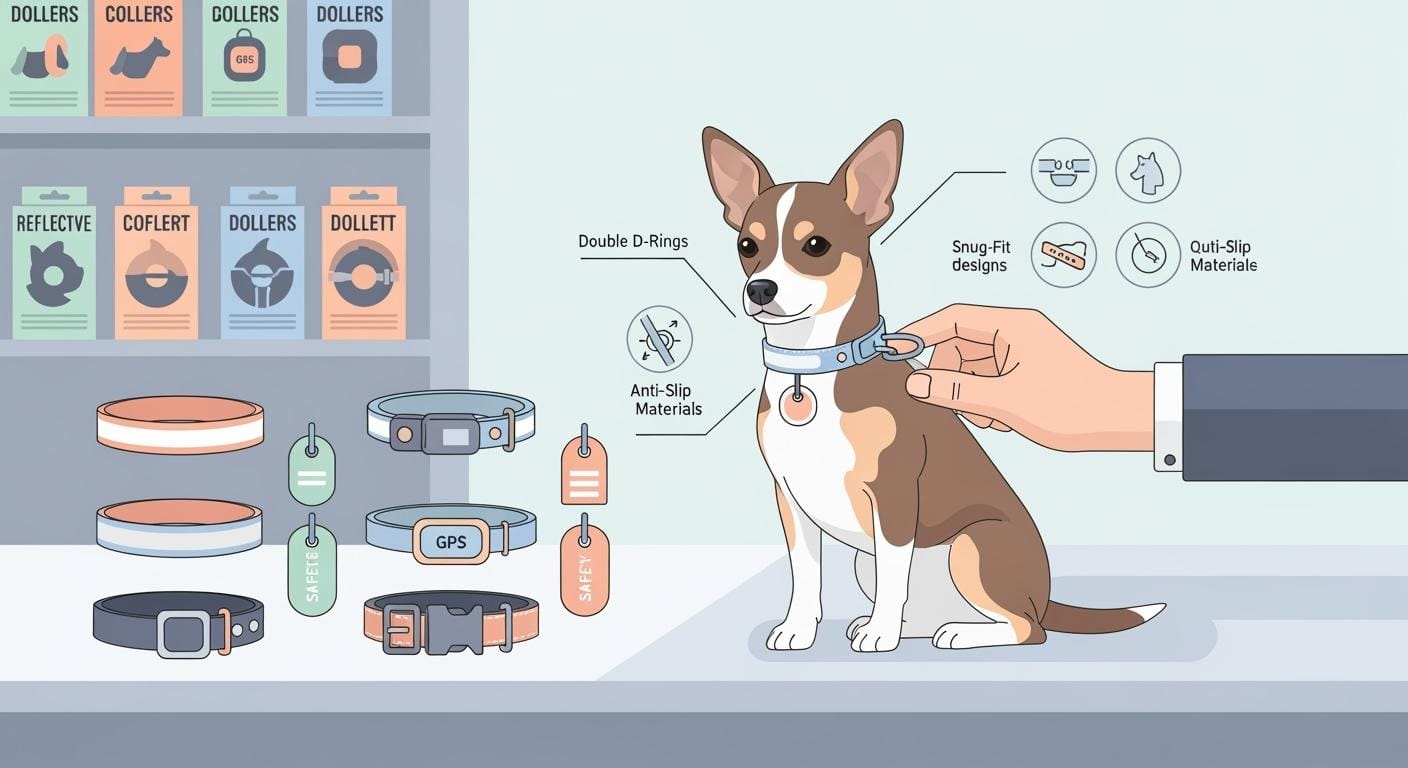
Small and toy breeds have weak necks and soft tracheas. Choosing collars for little dogs can be risky. These risks include tracheal injury, choking, getting caught, and escaping. Veterinary references such as the Merck Veterinary Manual and peer-reviewed articles on tracheal collapse in small dogs describe how chronic pressure on the neck can worsen cough and airway problems. Research on leash tension and collar pressure also shows that some small dogs can pull with forces similar to or greater than their own body weight, which makes collar-related injuries more likely when collars are used for leash control.
Our company provides ERP and retail systems for pet brands and pet retailers, so we regularly review sales, returns, and fitting problems for collars, harnesses, and other small dog gear. For this guide we combined that day-to-day retail view with external expertise: veterinary textbooks and review articles on tracheal collapse, studies of leash tension and collar pressure from universities and journals such as Frontiers in Veterinary Science, and clinical guidance from board-certified specialists in internal medicine and surgery published through organisations like the American College of Veterinary Internal Medicine (ACVIM) and the American College of Veterinary Surgeons (ACVS). Dog-training organisations and behaviour texts that favour harnesses over collars for small breeds also shape the practical tips in this article.
The small sample of studies below does not cover every dog or device, but it shows why harnesses are usually safer for leash control. They measured how hard dogs pull and where pressure is placed on the body, and found that results are mixed but that collars do not give a clear safety advantage over harnesses.
Study | Findings |
|---|---|
Shih et al. | In one trial, dogs tended to pull harder when force was taken from the back of a harness than from a front-attached collar, showing that device type can change how dogs pull. |
Bailey et al. | Measured pulling forces in small dogs and found that some could pull with forces similar to or greater than their own body weight. |
Zilocchi and Parisi | Reported no major difference in basic communication between headcollars and harnesses when used correctly. |
Retailers and developers need to make sure collars fit right. They should use light materials and safe designs to keep small dogs safe.
The studies in this table are examples of peer-reviewed research into collars, harnesses, and pulling forces. They include work on neck pressure on simulated dog necks, leash tension measured with force meters during real walks, and behavioural comparisons between collars and harnesses. This external research does not cover every dog or device, but it gives brands, trainers, and retailers an independent starting point when deciding how to reduce neck pressure for small dogs.
Key Takeaways
Pick collars for small dogs that are light and soft. This helps stop neck injuries.
Use the two-finger rule to check the fit. This keeps dogs from choking or escaping.
Choose harnesses for walks, not collars. Harnesses protect small dogs’ necks and tracheas.
Check the collar fit often, especially for puppies. This makes sure they are safe and comfortable.
Teach customers why collar safety features matter. Features like breakaway clasps and adjustable sizing help keep dogs safe.
Why Collars for Little Dogs Need Special Standards
Anatomy Risks for Small Breeds
Small dogs have bodies that are different from big dogs. Their necks are thin and easy to hurt. The trachea is held up by soft rings. Even a little pressure can hurt them. It can cause pain or even make the trachea collapse. Some breeds, like Yorkshire terriers, Pomeranians, Poodles, and Chihuahuas, have weaker tracheas than others.
Small and toy breeds can get trachea injuries from collars.
These injuries can be mild or very serious.
The trachea in small dogs is weak and can get hurt easily.
Common Injury and Escape Scenarios
Collars can cause many kinds of injuries in little dogs. You should know about the most common ones:
Injury Scenario | Description |
|---|---|
Tracheal Collapse | Collars can press on the neck and cause this. |
Thyroid Gland Pressure | Collars can push on the thyroid and cause problems. |
Nerve Damage | Pulling on collars can hurt neck nerves. |
Eye Issues | Pressure from collars can make eye problems worse. |
Vagus Nerve Injuries | Damage here can hurt organs inside the body. |
Paw Licking and Foreleg Lameness | Collars can sometimes cause these problems, not just allergies. |
Collars that do not fit well can slip off. This lets small dogs escape or get lost.
Veterinary case reports and trainer notes often describe similar real-world problems: small dogs that develop cough or tracheal collapse signs after months of pulling on tight collars, or dogs that slip out of loose collars when they panic at traffic or other animals. Retailers we work with also report returns and complaints when collars rub the neck or when dogs escape during walks. Using these patterns as warnings helps you design and choose products that avoid the same mistakes.
Collars vs Harnesses for Little Dogs
Vets now say harnesses are better for walking and playing. Harnesses do not put pressure on the neck or throat. This helps stop injuries. Collars should be used for ID tags and to help people see the dog. For flat-faced breeds, collars can make it hard to breathe and can hurt the trachea.
Tip: Use harnesses for walks and keep collars for ID tags. This keeps small dogs safer from harm.
Stores and makers should use light, safe materials and make sure collars fit right. This helps stop injuries and keeps small dogs from escaping.
Proper Fit and Sizing for Collars for Little Dogs
Measuring for a Safe Dog Gear Fit
Getting the proper fit for collars for little dogs is the most important step in preventing injuries and escapes. You need to measure your dog’s neck carefully before choosing a collar. Use a soft measuring tape and wrap it around the spot where the collar will sit. Think of your dog’s neck as a cone. Start at the base, which is the widest part, and move upwards, recording the measurement as you go.
Follow these steps for a safe collar fit:
Place the measuring tape around your dog’s neck where the collar will rest.
Record the measurement, making sure the tape is snug but not tight.
Apply the two-finger rule. Slide two fingers between the collar and your dog’s neck. For very small dogs, you may only need a gap of one finger. The collar should not be so tight that it restricts movement or breathing, and not so loose that it slips off.
Tip: Always check the fit after you put the collar on. If you can easily slide one or two fingers between the collar and the neck, you have achieved a proper fit.
Sizing, Width, and Adjustment Range
Choosing the right size and width helps you maintain a proper fit and keeps your dog safe. Collars that are too wide or too narrow can cause discomfort or increase the risk of escape. For small breeds, thinner collars are best. Lightweight materials like genuine leather or soft nylon work well.
Dog Size Category | Neck Size (inches) | Recommended Collar Widths (inches) |
|---|---|---|
Micro & Small Framed Dogs | 9″ – 12″ | 1/2″, 5/8″, 3/4″ |
Small Breeds | 8″ – 14″ | Thinner collars recommended |
For dogs weighing 20 pounds or less, choose collars that are 1/2″, 5/8″, or 3/4″ wide.
Very small dogs like Chihuahuas and Dachshunds do best with 1/2″ collars.
Tougher small breeds can use collars up to 3/4″ wide.
Always select collars with an adjustable range that matches your dog’s neck size. This helps you keep a proper fit as your dog grows or changes weight.
Note: An oversized collar presents a significant escape risk. A loose collar increases the chance of slipping out, especially during play or sleep.
Growth Checks and Routine Safety
Regular fit checks are essential for maintaining a proper fit, especially for puppies and dogs with weight changes. Puppies grow quickly, so you need to check their collar fit every week. Look for signs of chafing, redness, or fur loss. If the collar becomes tight or hard to adjust, move up to a larger size.
Dog Type | Frequency of Collar Check |
|---|---|
Puppies | Every 2-4 weeks until 6 months old, then monthly until fully grown. |
Adult Dogs | Every 3-6 months is usually sufficient. |
For puppies, check the collar fit weekly because they grow fast.
For adult dogs, a monthly check is usually enough.
Senior dogs or those with weight changes should be checked every few weeks.
Reminder: Never rely on a single measurement. Dogs change over time. Regular checks help you keep a proper fit and prevent escape or injury.
A collar that is too loose increases the chance of your dog slipping out and running away during walks. Always make sure the collar is snug enough that you can fit your thumb or one to two fingers between the collar and the neck, but not so tight that it causes discomfort.
Collars for little dogs require careful attention to sizing, width, and adjustment. You protect your dog from injury and escape by following these steps and checking the fit often.
Safe Dog Gear Materials and Construction
Lightweight and Durable Materials
When picking safe dog gear for small dogs, focus on light and strong materials. Small dogs have soft necks. Heavy collars can hurt them or make them feel bad. Light collars help stop pain and are better for everyday use. Look for collars made from soft cloth, vegan leather, or ones with padding. These collars feel nice on the neck and help stop rubbing.
Here is a chart that compares common collar materials for little dogs:
Material | Characteristics | Safety Ratings |
|---|---|---|
Nylon | Cheap, tough, easy to wash, but can get wet and dirty. | Good nylon meets strength rules. |
Biothane | Waterproof, safe for allergies, bends easily, simple to clean. | Great for active dogs and those who swim. |
Leather | Strong, lets air in, shapes to neck, safe for allergies. | Needs care each month; gets weak when wet. |
Hemp | Good for the earth, soft on skin, lets air in. | Gentle, best for dogs with sensitive skin. |
Neoprene | Safe for allergies, soft, light, lets air in. | Stops rubbing, good for sensitive skin. |
Silicone | Feels good, strong, does not hold water or smell. | Best for dogs who like water or have sensitive skin. |
Pick safe dog gear that lets air in and is easy to wash. Collars with padding or rolled edges help stop skin problems, especially for puppies or dogs with soft skin.
Escape-Proof Dog Collar Hardware
Hardware is important for safe dog gear. You need strong buckles, D-rings, and sliders that do not break. Light hardware is best for small dogs. It does not make the collar heavy. Stainless steel and good plastic are used a lot. These do not rust and last a long time.
Tip: Always check that the hardware on your safe dog gear is smooth and has no sharp parts. This helps stop cuts and getting stuck.
Pick hardware that does not break when chewed or pulled. This keeps collars for little dogs safe and helps stop escapes.
Stitching and Build Quality
Stitching and how the collar is made are important for safe dog gear. Double stitching makes collars stronger and helps them last longer. Check the seams for loose threads or weak spots. Good collars use strong thread and neat stitches. This stops the collar from breaking when dogs play or move fast.
A well-made collar keeps its shape and stays safe, even after many uses. You keep small dogs safe by picking dog gear that is made well and has good details.
Escape-Proof Dog Collar Safety Mechanisms
To keep small dogs safe, you need to know about escape-proof collars. Small dogs can get hurt if their collar gets stuck or if they slip out. These problems happen more at parks, on walks, or when dogs play together. You can help stop these risks by picking the right collar and using it the right way. This part will talk about breakaway collars, martingale collars, and how to use collars and harnesses together for safety.
Breakaway Collars for Strangulation Risks
Breakaway collars help stop strangling accidents in small dogs. They have a special buckle that opens if the collar gets pulled too hard or caught. This is important because small dogs have weak necks and can get hurt easily. Use breakaway collars at home, in the yard, or at the park. These places have things like fences or furniture that collars can get stuck on.
Feature | Benefit |
|---|---|
Safety buckle | Opens if pulled hard to stop choking. |
Designed for small dogs | Safer than regular collars for little dogs. |
Breaks away if entangled | Lets the collar come off if stuck, keeping dogs safe. |
Breakaway collars open if they get caught, so dogs do not choke. They are good for small dogs who can get hurt by normal collars. If your dog gets stuck while playing, the collar will open and let them get free. This helps stop choking and bad injuries.
Note: Do not use breakaway collars for leash walks. Only use them for ID tags and being seen. Always use a harness for walks or training.
Martingale and No-Slip Designs
Martingale collars are another way to stop escapes. These collars get tighter if your dog tries to back out, but they do not choke. They are good for dogs with narrow heads or dogs who slip out of collars. You can use martingale collars for leash training or when you need more control.
Feature | Description |
|---|---|
Escape-Proof Design | Stops dogs from slipping out, good for narrow heads. |
Training Tool | Helps with leash training and guiding small dogs. |
Martingale collars work well for puppies and small breeds. They have loops that are the right size for little dogs. You get more control but do not hurt your dog’s neck. Many trainers say martingale collars are good for small dogs who need escape-proof collars for walks or busy places.
Tip: Make sure the martingale collar fits snug but does not choke. You should be able to fit two fingers between the collar and your dog’s neck.
Combining Collars and Harnesses Safely
You can keep your dog safer by using both a collar and a harness. This gives extra safety and helps stop escapes. Use the collar for ID tags and to help people see your dog. Use the harness for leash control, especially on walks or when training. This helps stop neck injuries and keeps your dog from getting loose.
Here are some tips for using collars and harnesses together:
Make sure both the collar and harness fit well, not too tight.
Use a leash that clips to both for more control in busy places.
Use the collar inside or for ID, and the harness for walks or training.
For more safety at the park or on hikes, use both a harness and collar.
Check that you can fit two fingers under the harness.
Do not use two leashes at once; pick one spot to clip the leash.
Use a front-clip harness for dogs that pull to help stop jumping.
Check the collar often to make sure it is comfy and fits right.
Some new escape-proof systems, like GPS collars, can help at the park. These collars warn your dog if they get close to the edge and use gentle signals to bring them back. Most dogs learn fast, so they stay safe and do not run away.
Reminder: Always teach your team and customers about the risks of collars for small dogs. Show them how to use escape-proof collars and harnesses the right way. This helps stop injuries and escapes at the park and other places.
Stores and makers should train their teams on safe ways to use collars. Give clear instructions and show customers how to use escape-proof collars and harnesses. This helps everyone keep small dogs safe at the park.
Avoiding Common Mistakes and Risks
Sizing and Fit Errors
Getting the wrong size collar is a big problem for little dogs. Many people do not take enough time to measure their dog’s neck. Some measure over the fur, which gives the wrong size. Others guess or use old numbers instead of checking again.
Small dog owners often make mistakes like measuring too fast, measuring over fur, guessing the size, or picking collars that are too tight or too small.
Always use a measuring tape to get the right size. Guessing or using old sizes can hurt your dog or let them escape. Check the collar fit often with the two-finger rule. This means you should fit two fingers between the collar and your dog’s neck. This helps you keep the collar from being too tight or too loose. A collar that fits right keeps your dog safe and healthy.
Material and Durability Issues
The material and strength of a collar are very important for safety. Collars that are weak or old can break or hurt your dog. Look for signs like fraying, stiff spots, or thin areas. Check for broken or rusty parts and make sure the collar fits well. The table below lists some common problems:
Issue Type | Description |
|---|---|
Visible Wear and Tear | Fraying, stiffness, and thinning material mean the collar is weak and needs to be replaced. |
Broken Hardware | Rusty or broken parts can snap and are not safe for your dog. |
Poor Fit | A collar that does not fit right can hurt your dog or let them escape, so replace it if needed. |
Pick collars made from light and strong materials. Check collars often and replace any that look damaged. This keeps your dog safe and stops escapes.
Unsafe Use Scenarios
Some ways of using collars are not safe for small dogs. Here are some common mistakes:
Tight collars can make it hard for your dog to breathe and can rub the skin.
Wearing a tight collar for a long time can cause coughing or trouble swallowing.
Loose collars can slip off, and your dog might run away or get into danger.
If a collar is too loose, your dog could get its jaw or paw stuck while playing.
Never leave a collar on your dog when they are in a crate. The collar could get caught and hurt your dog. Do not use collars that have not been tested or ones that punish, like choke, prong, or shock collars. Vets and safety groups say not to use these for training, especially with small dogs. Instead, make sure collars fit well, check them often, and use them for ID tags and being seen. Harnesses are safer for walks.
Prevention tips: Always measure your dog’s neck, adjust collars as your dog grows, and use the two-finger rule to check the fit. These steps help you avoid mistakes and keep your dog safe.
Best Practices Checklist for Safe Dog Gear
Product Development Guidelines
You help keep dogs safe by following important rules when making products. Always pick lightweight and breathable materials to protect small dogs’ necks. In most markets, collars for little dogs are treated as general consumer products, not medical devices, so you need to consider broad product-safety and chemical rules rather than pet-specific laws. The table below lists examples of regulations and frameworks that brands selling into the United States often discuss with their compliance teams and test labs. Not every rule applies to every product, and this list does not replace legal advice.
| Compliance Requirement | Description |
|---|---|
| CPSIA and ASTM standards | In the U.S., the Consumer Product Safety Improvement Act (CPSIA) sets rules for children’s products, such as limits for lead and some phthalates. Pet products are not classed as children’s products, but many brands choose to design collars for little dogs to meet similar chemical limits or to use ASTM test methods recommended by their labs, especially when products are likely to be handled by children. |
| California Proposition 65 | Requires businesses selling into California to provide warnings if products expose people to listed chemicals above certain levels. Labs or legal counsel can help you decide whether Prop 65 testing or warnings are needed for your collar materials, dyes, or metal hardware. |
| Flammable Fabrics Act | Governs flammability for certain clothing and textile products. Some soft pet products are tested using the same textile flammability methods as human clothing. Ask your test lab whether any flammability rules apply to the fabrics used in your collars. |
| Lacey Act | Restricts trade in illegally sourced wildlife, timber, and plant materials. Brands that use leather or plant-based fibres should work with suppliers to document legal and responsible sourcing. |
| Third-party testing | Independent labs can run tests for things like tensile strength, buckle durability, colourfastness, and chemical content. Use reports from accredited labs as evidence that your collars meet the performance and safety levels you claim. |
| Proper labelling | General labelling rules (such as fibre content or country of origin) may apply, and extra warnings (for example “not for tie-out use” or “for ID tags only”) help customers use collars correctly and understand limits. |
| Third-party certifications | Optional quality marks, such as eco or textile-safety labels, are not required by law but can show that your brand invests in safer materials and manufacturing. |
Always test your products to make sure they last and do not cause skin problems. Use clear labels so customers know your products are safe. Third-party certifications show you care about safety management and where your materials come from.
Retail Selection and Customer Education
When picking dog safety products for your store, focus on safety features and good quality. Choose collars made from soft, breathable fabrics like nylon or leather. Look for adjustable buckles so the collar fits well. Pick collars with reflective stitching and breakaway clasps for extra safety management. Always check the collar fit by measuring the dog’s neck and using the two-finger rule.
Checklist for Retailers and Customers:
Measure the dog’s neck at the widest spot.
Pick collars with adjustable sizing for a good fit.
Choose dog safety products with safety features like reflective stitching and breakaway clasps.
Check product quality by looking at the stitching and hardware.
Teach customers about the risks of wrong sizing and why regular fit checks matter.
Remind customers that harnesses are best for walks, and collars are for ID and being seen.
Some retailers we work with also track simple numbers in their ERP or POS systems, such as how many collars are returned for sizing problems, how often customers ask for help switching to harnesses, and how many escape or rubbing incidents are reported. Reviewing these patterns every season helps them adjust size curves, material choices, and training scripts based on real store experience, not just theory.
Tip: Some dogs can have skin problems with some metals. If you see redness or irritation, suggest hypoallergenic choices.
By doing these things, you help stop injuries and escapes. You also earn trust from your customers by selling safe, high-quality dog safety products.
You play a key role in keeping small dogs safe. When you choose collars for little dogs, focus on safety and escape prevention. Use these steps:
Pick a collar style that fits your needs.
Adjust for comfort and secure the buckle.
Check the fit often and watch for signs of wear.
Choose soft nylon or leather for comfort. Quick-release buckles and martingale designs help prevent escapes and injuries.
The Two-Finger Rule: Always make sure you can fit two fingers between the collar and your dog’s neck.
Ongoing education and routine checks help you avoid accidents and keep collars safe for every dog.
About This Guide, Sources, and Author
This guide is for pet brands, product developers, and retailers who design and sell collars and harnesses for small dogs. It is written by a pet-industry content specialist who works with QA teams and merchants at an ERP and retail-system provider. Our role is to translate operational problems seen in the data—such as returns for poor fit, escape incidents, and complaints about rubbing—into practical checklists for safer product choices. The author is not a veterinarian or behaviourist, so this article does not replace individual clinical advice.
The safety points in this guide are based on external veterinary and training expertise, not just our own opinion. Core references include veterinary manuals and review articles on tracheal collapse in small breeds (for example the Merck Veterinary Manual and articles in the Journal of Veterinary Internal Medicine and Today’s Veterinary Practice), survey work published in the Journal of the American Veterinary Medical Association (JAVMA) on how specialists manage tracheal collapse, and studies of leash tension, collar pressure, and restraint biomechanics in journals such as Frontiers in Veterinary Science. We also consider guidance from dog-training and behaviour organisations that recommend harness-based control for many small dogs. Where legal or regulatory examples are mentioned, they are illustrative only and brands should confirm details with their own compliance and testing partners.
FAQ
What safety standards should you follow when selecting collars for small dogs?
You should follow common guidance from veterinarians and pet safety groups and work with labs or compliance experts in your target markets. Their input helps you keep dogs safer and design collars that stand up to everyday use. Always treat this guide as support for your product and training decisions, not as a stand-alone medical rule. For individual dogs or complex medical cases, defer to the advice of the treating veterinarian or a qualified behaviour professional.
How do you ensure durability and quality in dog product manufacturing?
Use safe materials that are not toxic and strong stitching. Test the products often to make sure they last. Always look at the buckles and seams to see if they are strong. Pick companies that use strict safety rules when making dog products.
Why is protection important for small breeds when choosing collars?
Small breeds have weak necks and soft tracheas. They need light collars and special designs like breakaway or martingale. The right size collar helps stop injuries and escapes. Good materials and safety rules give better protection for these dogs.
What role does safety testing play in dog product manufacturing?
Safety testing checks if the collar is strong and safe. Every batch should be tested before being sold. This makes sure the collar meets safety rules and has no bad chemicals. Testing helps stop recalls and makes customers trust the product.
How can retailers educate customers about safety standards and durability?
Stores can use checklists, guides, and show how products work. Teach people about safety rules and why strong collars matter. Show how to measure a dog’s neck and talk about safe materials. Teaching helps people pick better collars and avoid problems.






