
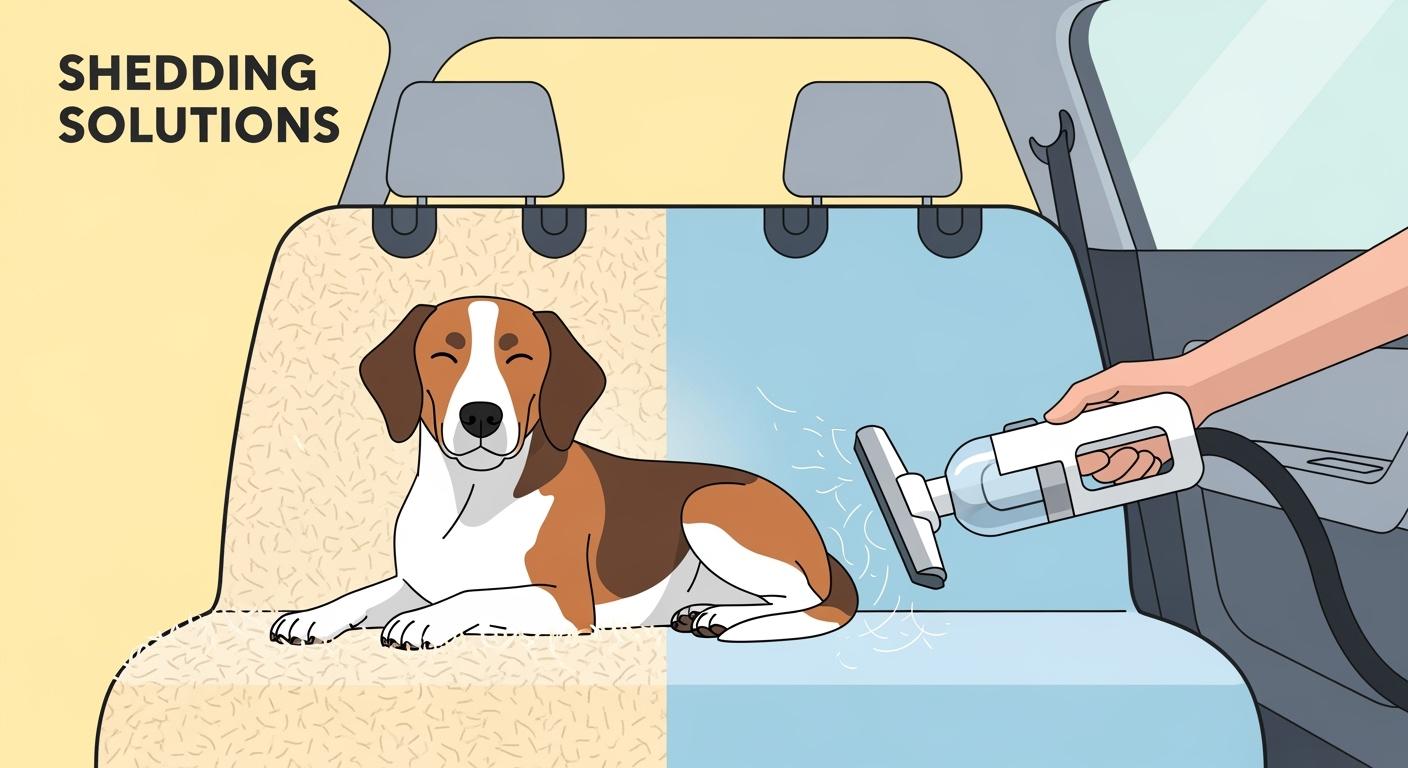
The difference between a car seat cover that fights you and one that lets dog hair wipe off in seconds comes down to two design choices: what the surface does with static electricity, and whether the construction gives hair somewhere to hide. Most covers get both wrong. Fuzzy fabrics build a static charge that pins hair to every fiber. Raised seams, quilted stitching, and loose edges create a grid of traps that hold fur long after the dog has left the car. A dog car seat cover built around a slick, flat surface and a tight edge fit reverses both problems at once.
Why Slick Surfaces Release Hair Faster Than Fuzzy Fabrics
Static, Friction, and Why Fabric Choice Decides Cleanup Speed
When a dog shifts position on a back seat, fur slides against the cover surface. On a fuzzy polyester or nylon fabric, that friction strips electrons from the hair shaft. Both surfaces end up with opposite charges. Lightweight shed hair gets pulled into the fabric pile and held there by electrostatic adhesion — the same force that makes a balloon stick to a wall after you rub it. The rougher the fiber surface, the more contact area exists for electron transfer, and the stronger the charge builds.
A slick coated surface interrupts this chain at two points. First, lower surface roughness means less real contact area during fur-to-cover friction — fewer electrons move, and less charge accumulates. Second, the coating layer itself sits on top of the textile substrate rather than exposing raw fiber ends. Hair lands on a continuous film instead of a field of microscopic hooks. After a 20-minute drive, run a dry microfiber cloth across the cover. On fuzzy fabric, hair resists and clings. On a coated slick surface, hair rolls into clumps and lifts off in one or two passes.
This is not about the cover repelling hair through some chemical trick. It is about not giving hair anywhere to anchor in the first place. A smooth, low-energy surface simply denies the mechanical and electrostatic grip that textured fabrics provide by default. The same principle applies to in-car protection designs that prioritize fast daily reset over deep-weekend-scrub durability.
When Smooth Surfaces Work — and the Limits
Slick covers perform best in dry conditions where static buildup peaks. Humidity reduces static, but it does not fix the mechanical trapping problem — fuzzy fabric still catches hair in its pile even when no charge is present. So the surface advantage holds across weather, though the gap widens in arid climates and during winter months when heated cabin air drops humidity further.
The one condition where a smooth surface loses its edge: heavy mud. Wet, clumped hair mixed with dirt can adhere to any surface through surface tension and dried-on bonding. A slick cover still cleans up faster than a textured one in this scenario — the coating prevents mud from soaking into the substrate — but you will not get the one-wipe result that dry hair allows.
Disclaimer: The wipe-clean behavior described here depends on the coating remaining intact. Scratches from untrimmed claws can create micro-grooves that catch hair over time. For dogs that dig or scratch at the cover before settling, inspect the coated surface monthly under angled light. Hair sticking in the same spots every time signals coating wear that wiping alone can no longer fix.
Where Car Seat Covers Trap Hair — and How Design Fixes Those Traps
Seams and Quilted Channels Act Like Tiny Fur Combs
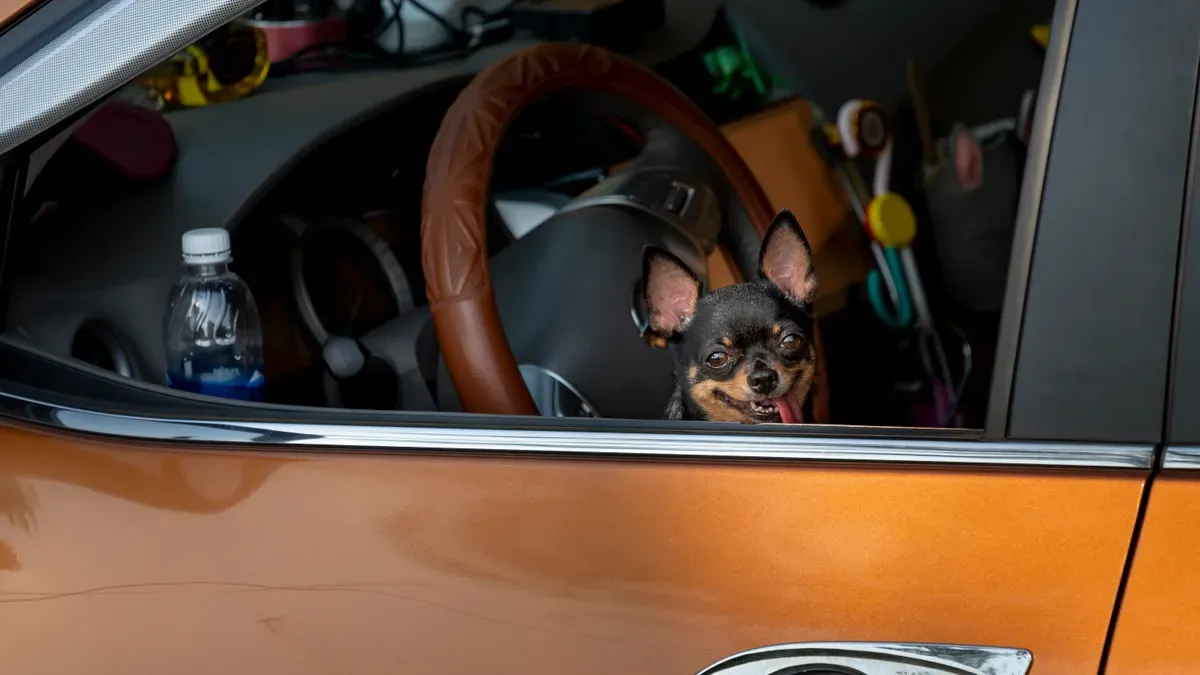
Every raised seam on a car seat cover is a linear hair collector. As a dog settles, adjusts, and braces during turns, loose fur slides laterally across the cover. When it hits a seam ridge, the fiber ends catch. The deeper the stitch line, the more effectively it combs fur out of the coat and locks it into the groove. Quilted covers multiply this effect across a grid of channels. What looks like a comfortable padded surface in product photos becomes a network of fur traps after two rides with a heavy shedder.
Flatter construction with fewer seams changes the physics entirely. Without a ridge to catch against, shed fur continues sliding until it reaches an edge or falls away. A cover with a hard, flat bottom surface also prevents the fabric from bunching under dog movement — bunching creates temporary ridges that function the same way as permanent seams. The difference in cleanup time between a quilted cover and a flat one is not marginal. It is the gap between vacuuming every seam line with a crevice tool and running a lint roller across a smooth plane in under a minute.
| Failure Signal | Likely Cover Design Cause | Better Design Direction |
|---|---|---|
| Hair sticks after vacuuming | Fuzzy, static-prone fabric | Smooth, anti-static surface |
| Hair collects in grooves | Ribbed or quilted texture | Flat, seamless construction |
| Stray hair hides in gaps | Loose fit, folded edges | Secure fit, full edge coverage |
Seat Belt Openings, Anchor Points, and Folded Edges
Openings for seat belt pass-throughs and child-seat anchor points create gaps in what should be a continuous barrier. These cutouts are necessary for function, but their edges collect hair the same way seams do. Folded edges along the cover perimeter add another set of collection points. When you vacuum the center of the cover and call it done, you miss the hair packed into these perimeter traps.
Covers with reinforced, bound-edge construction around openings reduce the fraying that creates hair-grabbing texture. Tight stitching along cutout perimeters keeps edge fibers from fanning out into miniature brushes. The design goal is not to eliminate openings — seat belt access and anchor compatibility are non-negotiable in a back-seat dog cover built for daily use. The goal is to make those openings as hair-neutral as the rest of the surface.
Why a Loose Fit Becomes a Hair Conveyor
A cover that does not anchor securely does more than look sloppy. It creates a migration path. Dogs rarely sit still. They adjust, lean into turns, brace against bolsters, and push off seat backs. Each movement shifts a loose cover by a fraction of an inch. Over the course of a drive, that incremental movement pumps hair toward the edges and underneath. You clean the visible surface and think the job is done. Two weeks later, you lift the cover and find a mat of compressed fur underneath.
A stable seat protection setup eliminates three issues at once: it prevents hair from migrating underneath, it maintains consistent coverage over entry points, and it reduces edge exposure where claw wear typically begins. A cover that stays put during movement also means you are not constantly resetting it between rides — a friction cost that fuzzy, loose covers impose without making obvious.
Three Cover Design Features That Cut Cleanup Time
Wipe-Clean Coated Surfaces
The fastest cleanup comes from a surface that does not engage with hair at all. Polyester base fabrics with PVC or TPU coatings create a continuous film that blocks both liquid absorption and fiber entanglement. Hair sits on top. Mud, drool, and paw prints sit on top. A damp cloth or a quick pass with a vacuum removes everything on the surface without the cover holding onto a residue. The coating also prevents stains from penetrating the substrate — a secondary benefit that keeps the cover looking functional rather than permanently grimy.
Not all coated surfaces behave the same way. A coating that is too soft scratches easily, and scratched coating creates the micro-grooves that start catching hair. A coating applied too thinly wears through at high-friction points — typically where the dog’s hips pivot during entry and exit. The best-performing designs use a coating thick enough to resist abrasion but flexible enough to not crack when the cover is folded for storage.
| Material Type | Hair Release Behavior | Cleaning Tradeoff |
|---|---|---|
| Polyester with PVC/TPU coating | Hair slides off; surface stays dry underneath | Coating durability varies; inspect high-wear zones |
| Heavy-duty canvas (uncoated) | Hair grips the weave; vacuuming required | Claw-resistant but holds fur in fiber gaps |
| Quilted padded fabric | Hair collects in stitch channels and fold lines | Comfortable under the dog but high-capture texture |
| Breathable mesh panels | Hair passes through or snags on grid edges | Airflow benefit undone by hair-through migration |
Flat, Low-Seam Construction
Every seam is a cleaning tax. Flat construction with minimal stitching eliminates the places hair can wedge itself. Materials like ballistic nylon and densely woven polyester with fused-seam techniques keep the surface continuous. Hair cannot find a ridge to catch on, so vacuuming or wiping covers the entire surface in one motion rather than requiring targeted attention to each seam line.
This matters most for double-coated breeds — huskies, German shepherds, golden retrievers — whose undercoat sheds in fine, lightweight tufts that find every microscopic catch point. A single raised center seam on an otherwise flat cover can collect enough undercoat fuzz in one week to form a visible line. With flat construction, that same hair ends up loosely on the surface where a lint roller handles it.
Removable Design With Full Edge Coverage
A cover you cannot take off and shake out forces you to clean inside the car — bent over, working around the center console, with limited vacuum reach. A removable cover lets you pull it out, shake loose hair onto the ground outside, and either wipe it down or machine-wash it depending on the level of soiling. Full edge coverage matters here too: covers that leave seat edges exposed let hair migrate into the gap between seat and door sill — one of the hardest areas to clean in any vehicle.
In practice: After a week with a shedding dog, flip the cover and check the underside edges. If you find hair that migrated underneath, the edge fit is too loose. A finger-width gap is all a shedding dog needs to seed a hidden hair layer that builds up ride after ride.
Non-slip backing keeps the cover in position across the seat surface, which matters just as much for hair containment as it does for dog stability. When the backing grips, the cover does not shift. When the cover does not shift, hair stays on top where you can reach it. Seat covers and booster designs share the same anchoring principle — if the base moves, everything above it becomes harder to manage.
A dog car seat cover for shedding dogs that combines a wipe-clean coated surface, flat low-seam construction, and a removable design with snug edge coverage cuts post-ride cleanup from a chore to a thirty-second routine. The design pieces are straightforward. Most covers just don’t put them together.
FAQ
Does a slick car seat cover work for dogs with long hair versus short, fine hair?
Both benefit, but the mechanism differs. Long hair tends to weave into fuzzy fabric mechanically; a slick surface denies it purchase. Short, fine hair from breeds like boxers or pugs is lighter and more static-responsive — it floats toward charged surfaces. A slick coated cover dissipates charge faster than raw polyester, so fine hair is less likely to get pulled onto the surface in the first place.
How often should you deep-clean a removable car seat cover?
Machine-wash every two to four weeks for a daily-driving heavy shedder. Between washes, shake the cover out after every third or fourth ride. The surface wipe handles surface hair, but skin oils and dander build up in the coating’s microscopic texture over time and need a wash cycle to fully reset.
Can you use a dog car seat cover on leather seats without damaging them?
Yes, provided the cover uses a non-slip backing that does not rely on adhesive grip. Rubberized or silicone-dot backings hold position through friction without transferring residue to leather. Avoid covers with PVC backings on light-colored leather — prolonged contact in high heat can cause plasticizer migration that leaves a dull patch.
What is the first sign a cover’s hair-release performance is degrading?
You will notice hair collecting in the same spots after every wipe-down. Run your fingernail lightly across those areas. If the surface feels rougher than the surrounding coated sections, the coating has micro-abraded. The fix is not a different cleaner — it is replacing the cover once the smooth film layer is compromised enough to catch hair consistently.






