
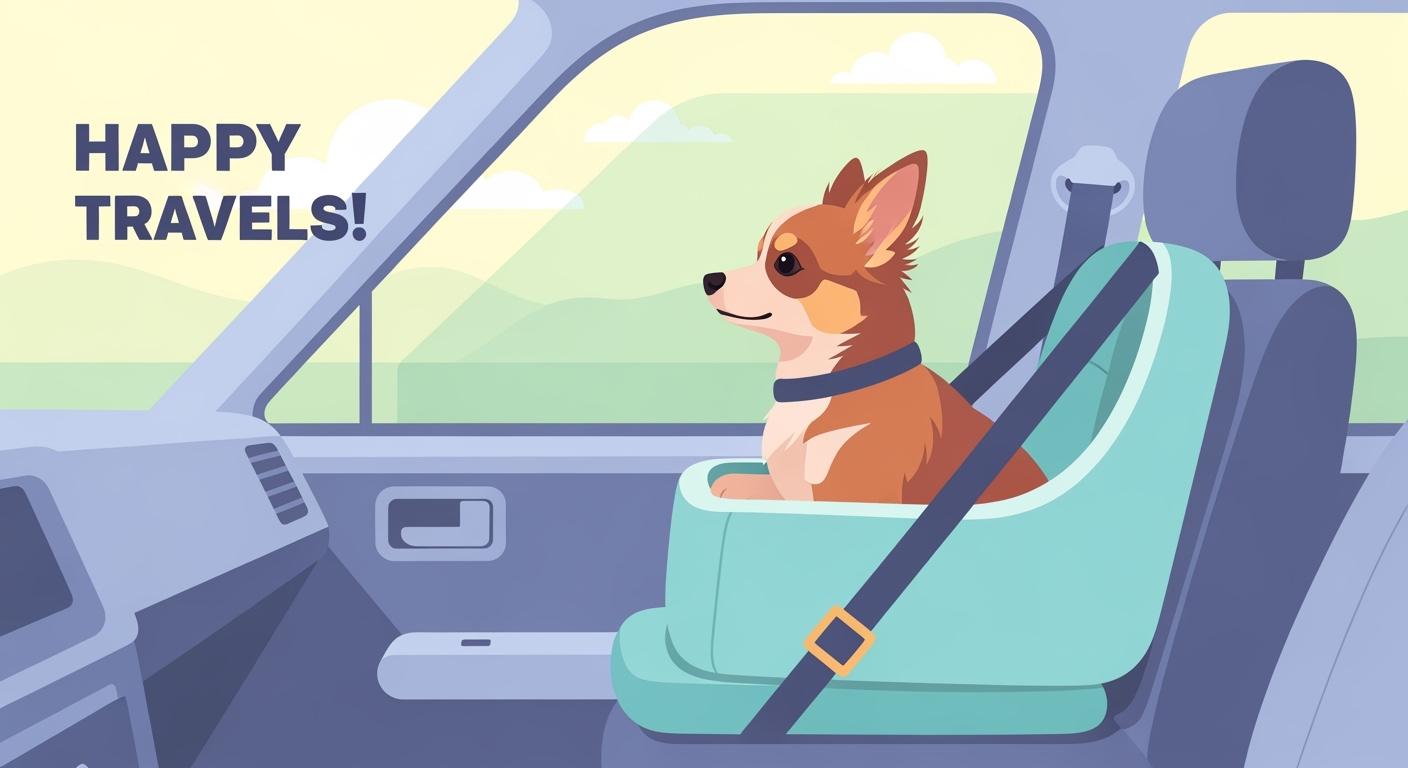
Thick cushions look generous. But inside a moving car, they create a problem most owners feel before they can name it: the dog sits on top of the seat, not inside it. Every turn shifts the dog’s weight against the side wall. Every stop pushes the dog forward. The seat stops containing and starts becoming something to brace against.
A lower cushion changes how a small dog experiences a car ride. The dog settles deeper into the shell. The side walls wrap higher around the body. The tether pulls against the harness, but the seat itself absorbs more of the lateral force before it reaches the dog. That is the design difference that separates a stable small dog car seat from one that wobbles on every corner.
Why a Thick Cushion Makes a Small Dog Less Stable
Raised Seating Changes the Physics of Every Turn
A thick cushion lifts the dog’s center of gravity above the seat’s structural base. When the car turns right, the dog’s body wants to continue straight. That is inertia. The side wall applies a reaction force, but because the dog sits high, the force hits below the dog’s center of mass. The result is a rotational moment — the dog tips over the side wall rather than pressing into it.
That fails fast. The dog braces. Paws press against the edge. The tether goes taut at an angle. Instead of containing the dog, the seat becomes a platform the dog fights for balance on.
This same mechanism plays out under braking. Weight shifts forward. If the cushion compresses unevenly — and memory foam does, especially at the front edge where the dog’s chest presses hardest — the sitting surface tilts into a slope. The dog slides. The harness catches the slide, but the dog has already left the stable zone.
Usable Depth Versus Advertised Depth
Manufacturers list the external height of the side walls. That number tells you nothing useful. What matters is internal depth after the cushion is in place. A 5-inch wall with a 3-inch cushion leaves 2 inches of containment. That is not enough for a dog with short legs and a barrel chest.
A deeper sitting area keeps the dog’s hips contained. The side walls rise above the dog’s shoulder line. The dog can still see out — and should, since a view that is too blocked or too exposed can both cause restlessness — but the body stays inside the structural envelope.
| Design Difference | How It Affects Stability | Main Limitation |
|---|---|---|
| Thick cushion, shallow walls | Dog sits above the wall line; every turn produces a tipping moment | Looks plush, but sacrifices lateral containment for perceived comfort |
| Thin cushion, deep walls | Dog sits inside the structural shell; side walls absorb lateral force at shoulder level | Less perceived padding; dogs with prominent bones may benefit from an added fleece liner |
| Medium cushion, tapered depth | Front is deeper for chest containment; rear cushion rises for hip support | Less effective for dogs that stand during the ride — standing shifts weight to the shallower zone |
What Changes When the Cushion Sits Lower
Lower Center of Gravity Absorbs More Road Motion
When the dog sits closer to the vehicle seat, the car’s suspension does more of the work. The seat does not need to dampen every road imperfection because the dog’s body mass couples more directly to the chassis. Bumps travel up through the car’s dampers first, then through the cushion. The higher the dog sits, the more the seat itself amplifies residual vibration.
You can verify this. After a 10-minute drive on a familiar route, check whether the dog’s position inside the seat has shifted. If the dog has slid forward or tilted to one side, the cushion is either too thick, too soft, or both. A stable seat keeps the dog in roughly the same position it started in. Road stability in a small folding car seat depends less on strap count and more on where the dog’s weight sits relative to the base.
Flat Base and Deep Sitting Area Work Together
A flat base does one thing: it gives the dog’s paws a predictable surface. No slope. No tilt. No foam compressing unevenly under the front paws while the rear stays firm. That predictability matters for dogs that are already anxious in the car. An unstable surface triggers micro-adjustments — a paw shift here, a lean there — and those small movements accumulate into restlessness.
A deep sitting area complements the flat base. If the base is flat but the walls are short, the dog still perches. If the walls are tall but the base is domed, the dog rocks. Both details have to be right at the same time.
Non-slip fabric on the base panel adds another layer. On a leatherette or smooth fabric vehicle seat, even a well-designed car seat can slide unless the bottom surface grips. Flip the seat over before installing. Run a hand across the base fabric. If it feels slick against the vehicle seat material — especially leatherette — the whole assembly will shift under braking regardless of how well the LATCH straps are tightened.
Side Wall Height and Tether Angle Depend on Each Other
The tether connects to a body harness, not a collar. That is non-negotiable. But the tether’s effectiveness depends on where the dog’s body sits relative to the attachment point. If the cushion lifts the dog so high that the tether angles upward from the seat anchor to the harness clip, the restraint pulls the dog up and forward during braking instead of holding the dog down and back.
Flat tether angle. Dog low in the shell. Harness clipped at the chest or mid-back. Those three things together keep the dog inside the seat during a hard stop. A well-designed in-car safety seating system does not just restrain the dog — it keeps the dog in a position where restraint actually works.
Tip: After installing the seat, run your hand along the inner wall height at the dog’s shoulder level. If the wall is below the dog’s elbow when seated, the cushion is too thick for the dog to be contained.
When a Lower-Cushion Car Seat Fits Best — and When It Does Not
Dogs That Benefit Most
A lower-cushion car seat tends to work well for small dogs that sit or lie down during drives. Short-legged breeds — Dachshunds, Corgis, French Bulldogs — get more containment because their center of gravity already sits low. Adding a thick cushion raises that center of gravity disproportionately. A 2-inch cushion lift on a 6-inch-tall dog changes the balance point far more than the same lift on a 12-inch-tall dog.
Senior dogs also respond well. Joint discomfort makes them less willing to brace against wobble. A stable, flat platform lets them settle without constantly adjusting. Dogs with anxiety or motion sickness often show fewer stress signals — panting, paw lifting, repositioning — when they can feel the seat holding them rather than needing to hold themselves.
When a Higher Seat Makes More Sense
Some dogs genuinely prefer to see out the window, and blocking that view can increase restlessness more than cushion height ever would. A dog that stands for most of the ride and watches passing scenery may settle better in a booster-style seat with firmer materials and a higher sight line — as long as the tether system still keeps the dog contained during sudden stops.
The tradeoff is straightforward. A lower cushion trades window visibility for lateral stability. A higher booster trades containment for a better view. Neither is wrong. The wrong choice is a seat that claims to do both and does neither well.
Disclaimer: The stability checks described here assume a smooth-coated dog with typical small-breed proportions. Double-coated breeds may show subtler signs of sliding — check for fur compression marks along the inner wall fabric rather than relying on visual position shifts alone. If the dog’s chest shape falls outside the breed norms this seat type was patterned for — particularly barrel-chested or very deep-keeled dogs — the fit checks may not catch every pressure point. In those cases, a folding car seat with a lower-profile shell paired with a properly fitted harness is still the safer starting point.
FAQ
Does a lower cushion help with motion sickness?
It can. Motion sickness in dogs is partly triggered by conflicting sensory signals — the inner ear detects movement the body did not initiate. A lower cushion reduces the micro-movements the dog has to correct for, which may lower the intensity of that conflict. This is not a guarantee. But dogs that show fewer stress behaviors on stable surfaces often show fewer nausea signs too.
Should the tether connect to a collar or a harness?
Always a body harness. A collar concentrates crash or braking force on the neck. A harness spreads that force across the chest and shoulders. The tether should keep the dog centered in the seat without pulling upward.
What breeds benefit most from deeper sitting areas?
| Breed | Why Depth Matters |
|---|---|
| Dachshund | Long spine needs full-body containment to reduce twisting under braking |
| Chihuahua | Light body mass is easily thrown by lateral forces; deep walls act as a catch |
| Yorkshire Terrier | Small frame benefits from the predictability of a non-slip, flat surface |
| French Bulldog | Front-heavy build shifts weight forward under braking; deep front wall prevents sliding out |
Is a thicker cushion ever safer?
Thicker foam can absorb more impact energy in a collision — but only if the dog stays on the cushion during the event. If the dog has already slid or tipped before impact, that extra thickness does nothing useful. A contained dog enters a collision in a better position. The more immediate safety question is whether the seat keeps the dog contained during normal driving.






