
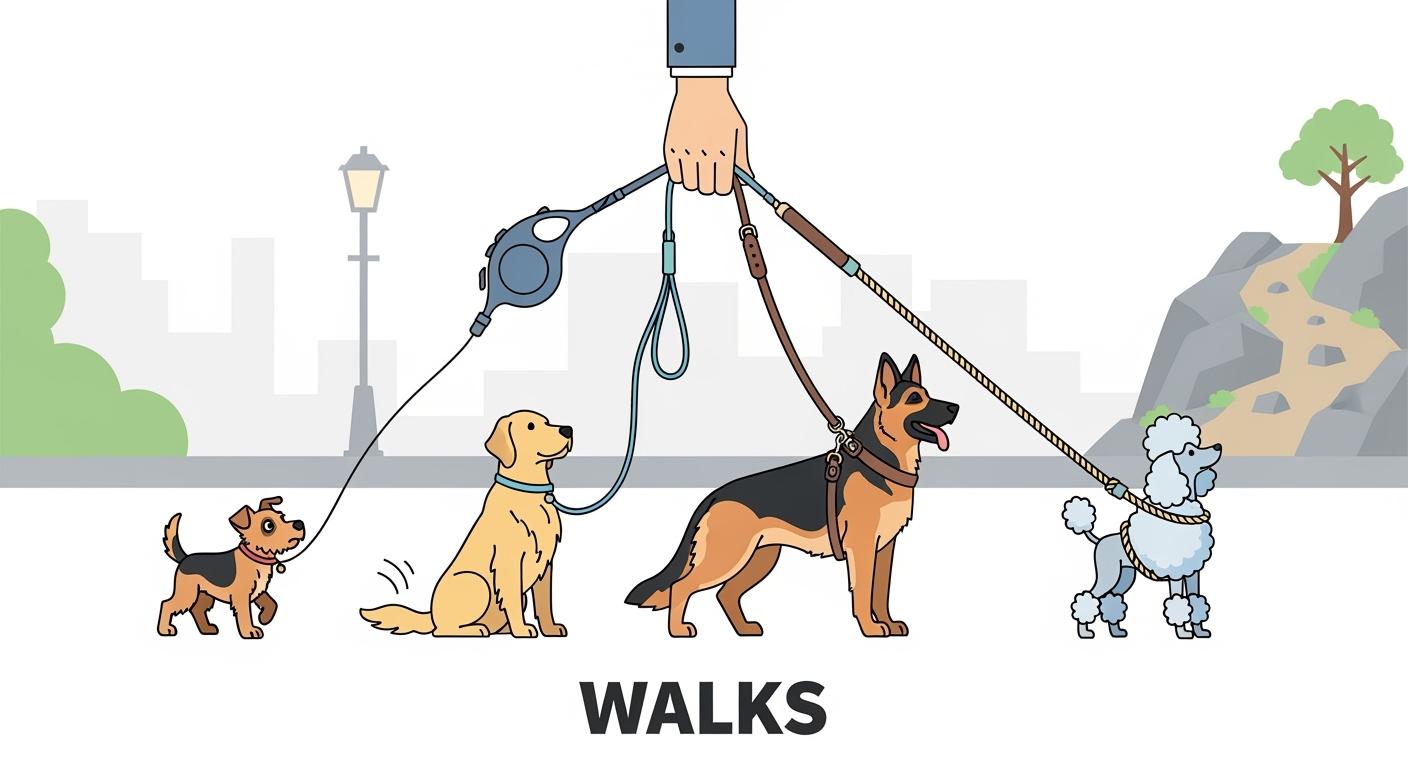
A good dog leash should feel predictable before the walk becomes difficult. If your dog moves calmly beside you, a standard flat leash may be enough. If your route includes traffic, crowded sidewalks, running, pulling, or more than one dog, the better choice depends on control speed, hand comfort, hardware strength, and how much slack you can manage safely.
Key Takeaways
- Start with your most common walk type, not the most feature-heavy leash.
- A standard flat leash works well for calm dogs on simple daily routes.
- Shorter leashes and traffic handles help when you need fast close control.
- Hands-free, bungee, long-line, and multi-dog designs fit specific routines but can add handling complexity.
- Check clips, stitching, grip comfort, and leash length before relying on any setup.
When one everyday leash is enough
One leash can handle most daily walks when your dog is calm, responsive, and not likely to lunge at people, dogs, bikes, or wildlife. In that situation, a standard flat leash gives enough range for sniffing while keeping the line simple and easy to read. It is also the easiest style for most owners to clean, store, and replace.
The best fit is usually a leash that lets you keep gentle slack without dragging on the ground. If the leash is too long for sidewalks, you may spend the whole walk gathering extra line. If it is too short for a quiet park path, your dog may feel crowded and pull more often.
| Everyday need | What works well | Watch for |
|---|---|---|
| Calm neighborhood walks | Standard flat leash | Too much slack near roads |
| Basic loose-leash practice | Fixed-length leash | Leash tension that rewards pulling |
| Easy cleaning | Nylon or similar washable webbing | Fraying, odor, or weak stitching |
| Simple retail assortment | One clear daily-use option | Missing choices for pullers or runners |
If you sell or organize multiple leash options, custom dog leash specs should match the size range, route type, and handling skill of the buyer rather than using one specification for every dog.
When different walks need different leash types
A second leash starts to make sense when the same setup fails in predictable situations. Crowded sidewalks need fast shortening. Trails may need extra range. Running often needs shock control and a steadier hand position. Multi-dog walks need a layout that reduces crossing and tangling.
For city walks, a short leash or a standard leash with a traffic handle gives quick close control at curbs, elevators, parking lots, and narrow sidewalks. For open spaces, a long lead can support recall practice, but it requires more attention because loose line can wrap around legs or obstacles. For running, dog running leash choices should account for pace changes, side pull, and whether the handler needs both hands free.
| Leash type | Best fit | Main benefit | Main tradeoff |
|---|---|---|---|
| Standard flat leash | Daily walks with calm dogs | Simple, readable, easy to control | Limited flexibility for special routes |
| Short or traffic-handle leash | Crowds, curbs, busy streets | Fast close control | Less sniffing range |
| Long lead | Open spaces and recall practice | More distance while attached | Can drag, tangle, or trip people |
| Hands-free leash | Running or walking with carried items | Frees the hands and spreads force | Less ideal for reactive dogs in tight spaces |
| Bungee leash | Steady jogging or short shock absorption | Softens sudden tension | Can reduce crisp feedback during training |
| Double dog leash | Two compatible dogs | Reduces separate-line management | Can be difficult if dogs walk at different speeds |
A reflective bungee dog leash can suit short car-to-walk transitions and light outdoor use when the handler still checks that the elastic section does not create delayed control.
Control matters more than extra length
Extra length feels convenient only when you can shorten it quickly. A leash that looks versatile can become a problem if the handle is slippery, the line is too thin, or the clip twists when the dog changes direction. For dogs that pull, fixed-length options for pullers often make training feedback clearer than retractable or overly elastic designs.
If pulling is the main issue, the walk control setup should consider leash length, harness or collar attachment, the route, and the dog’s current response to distractions. No leash fixes training by itself, but the wrong leash can make timing harder and reward the behavior you are trying to reduce.
Tip: Test any leash in the easiest version of your normal walk before using it in traffic, crowds, or high-distraction areas.
How to check whether a leash setup is working
The right setup should let you shorten the line smoothly, keep your hand comfortable, and maintain control without constant bracing. If you repeatedly wrap the leash around your wrist, gather loose line in both hands, or struggle to stop sudden movement, the setup is not giving you enough control margin.
| Check item | Pass signal | Fail signal | Better adjustment |
|---|---|---|---|
| Quick shortening | Slack comes in cleanly | Line tangles or drags | Use a shorter leash or traffic handle |
| Hand comfort | No rubbing after repeated use | Soreness, slipping, or rope burn | Choose a wider or padded handle |
| Hardware security | Clip closes fully and swivels cleanly | Loose gate, rust, or sticking | Replace before the next walk |
| Dog behavior | Dog can return to slack after tension | Constant pulling or lunging | Use a clearer fixed-length setup and train in lower distraction areas |
| Route match | Leash length fits the space | Too much slack at curbs or too little range on open paths | Use different leashes for different routes |
Common mistakes that make walks harder
- Using a retractable leash everywhere: Retractable designs may be useful in open areas, but they can delay control in crowds, parking lots, and narrow sidewalks.
- Ignoring the handle: A strong leash still fails the walk if the grip causes fatigue or slips when wet.
- Choosing by dog size only: A small reactive dog may need more control than a large calm dog.
- Letting hardware age unnoticed: Clips, stitching, and attachment rings should be checked before walks, especially after chewing or hard pulling.
- Pairing the leash with the wrong attachment point: Harness fit, material, and strap placement affect how force moves through the dog’s body, so harness sizing and material choices should be checked along with the leash.
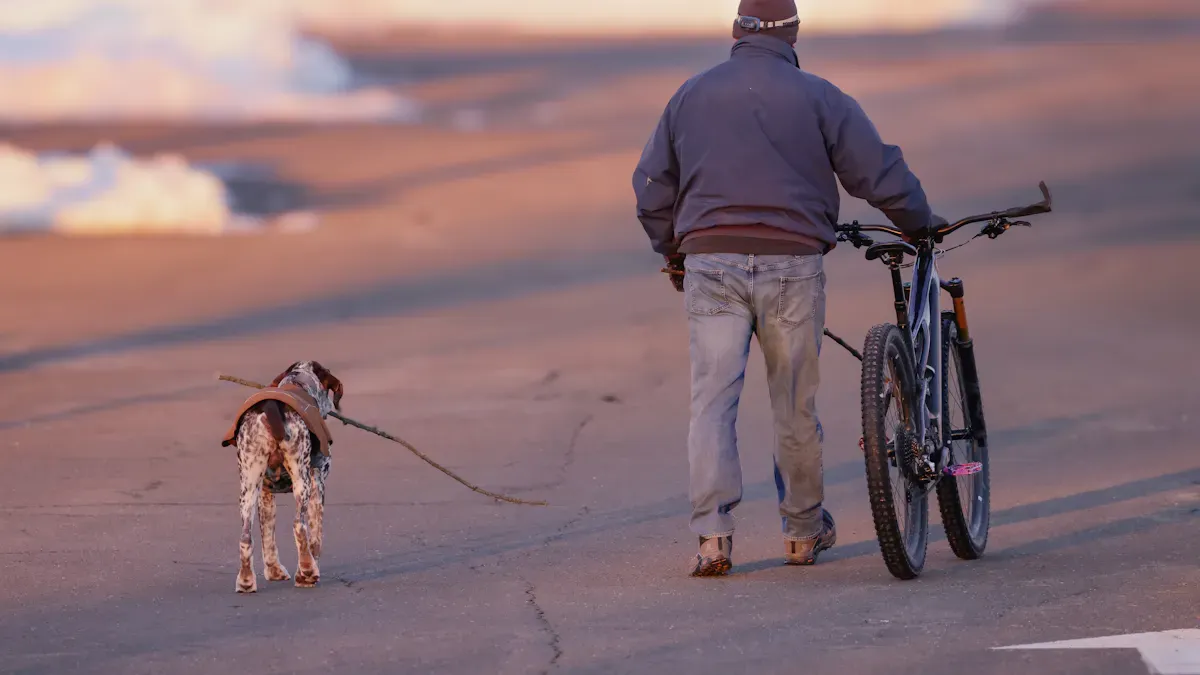
Final choice: match the leash to the walk
Choose a dog leash by starting with the route and the dog’s behavior. A calm dog on quiet sidewalks may only need a standard flat leash. A puller, runner, chewer, or multi-dog household may need a more specific option. The safest choice is the leash that gives the handler clean control, keeps the dog comfortable, and stays easy to inspect before every walk.
Disclaimer: Check leash hardware before each walk and ask a trainer or veterinarian if pulling, pain, or escape risk persists.
FAQ
Can one dog leash work for every walk?
One leash can work for calm daily walks, but running, crowded routes, pulling, or multi-dog walks often need a more specific setup.
What leash is best for a dog that pulls?
A fixed-length leash with a comfortable grip usually gives clearer control than a retractable leash for dogs that pull.
How often should I inspect a leash?
Check the clip, stitching, handle, and webbing before every walk, and replace the leash if you see fraying, cracking, sticking hardware, or chew damage.
Is a hands-free leash safe for city walks?
It can be safe for steady dogs, but close traffic, crowds, and reactive behavior usually call for a hand-held leash or a traffic handle.






