
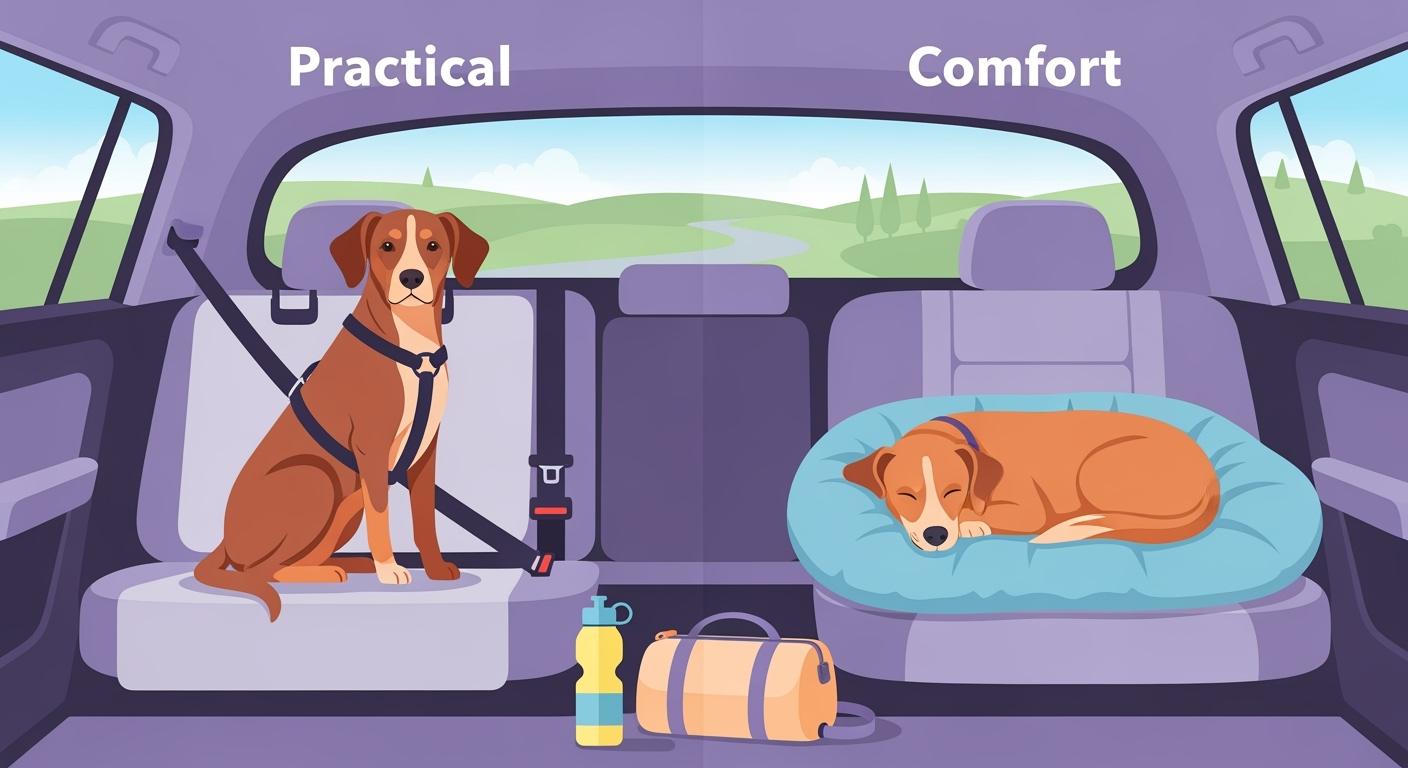
If your dog settles on the back seat without sliding, a rear dog seat cover is usually enough for everyday drives. If your dog braces through turns, paces, or looks sore after longer trips, a padded bed or more structured setup often makes more sense. The best choice comes down to four things you can actually judge in real use: stability, buckle access, cleanup time, and how your dog behaves once the car starts moving.
Key Takeaways
- Choose a rear dog seat cover for short trips, routine errands, and faster cleanup.
- Choose a padded bed when your dog needs more support, settles better with bolsters, or rides for long stretches.
- Move to a more structured setup if the cover sags, blocks buckles, or lets your dog slide toward the footwell.
- Use the cover or bed for comfort and seat protection, but use a body harness and tether for restraint.
- Let your dog’s posture decide the winner; calm lying down matters more than extra padding on paper.
When a rear dog seat cover is enough
Best for short rides and calmer dogs
A rear dog seat cover usually works well when your dog already rides calmly, the back seat stays easy to use, and you want something you can wipe down after muddy paws or shedding. It gives your dog a flatter surface than bare upholstery, protects against dirt and scratches, and keeps your routine simple. For school runs, quick errands, and regular vet trips, that simplicity often matters more than extra cushioning.
The cover still has to fit properly. If it will not lie flat across the back seat, bunches near the buckle openings, or leaves a gap at the seat crease, your dog may keep shifting even on short rides. A cover that looks fine in the driveway can still feel unstable once you brake, turn, or hit rough pavement.
When a padded bed earns the extra bulk
A padded bed starts making more sense when your dog needs a defined place to settle. That is often true for senior dogs, dogs that slide on slick surfaces, and dogs that stay on edge unless they can lean into soft sides. In those cases, a padded travel bed built for calmer rides can reduce bracing and help your dog lie down sooner.
The tradeoff is space. Beds take up more room, can block seat belt buckles, and usually take longer to dry after a messy ride. If your dog sprawls across the bench, rides beside a passenger, or does not need much help settling, the extra bulk may create more hassle than value.
Tip: Watch the first 10 minutes of a normal drive, not just the moment your dog gets in. If your dog circles, lies down, and stays put, the setup is probably close. If your dog keeps standing, perching on the edge, or leaning into the door, you likely need more support or a better fit.
What matters more than extra padding
Comfort and stability
Comfort in the car is really about stability. A dog that has to brace through every turn will not relax just because the fabric feels soft. Covers with a firm base, non-slip backing, and good side coverage usually beat loose, overstuffed options. If you want a more secure rear-seat travel setup, focus on rear-seat safety and seating that keeps the surface flat, the dog centered, and the restraint usable.
Cleanup and seat protection
Cleanup is where a seat cover usually wins. Surface hair, light drool, and damp paw prints are much easier to manage on a cover you can wipe or wash quickly. Owners who deal with frequent dirt, wet coats, or car sickness usually do better with waterproof coverage that is easy to wipe between rides than with thick padding that holds moisture longer.
A bed can still work if comfort is the bigger issue, but it often needs a protective layer underneath. That matters most when your dog tracks in mud, drools heavily, or rides after rainy walks.
Safety and buckle access
No cover or bed should be treated as restraint on its own. Use a body harness and tether, and make sure a correctly fitted training harness lets your dog sit or lie down without twisting the straps. Just as important, check that you can reach the buckle path without lifting half the setup. If you cannot clip in quickly, the design is working against you.
| Setup | Usually Best For | Main Advantage | Main Tradeoff |
|---|---|---|---|
| Rear dog seat cover | Short rides, routine errands, easy cleanup | Protects the seat and stays practical day to day | May not give enough support for anxious or older dogs |
| Padded bed | Longer rides, dogs that need more cushioning, dogs that like bolsters | Helps some dogs settle faster and stay more centered | Can block buckles and take longer to clean |
| Structured rear-seat setup | Frequent travel, dogs that slide or fall into seat gaps, owners who want more defined boundaries | Adds shape and support while improving stability | Usually costs more and takes up more room |
Everyday checks before you commit
Test the setup on an ordinary drive before you decide it works. A quick routine shows more than marketing claims do.
- Install the cover or bed so it lies flat and does not twist at the anchors.
- Clip your dog’s harness and confirm the buckle path stays clear.
- Drive through a few normal turns and stops.
- Watch whether your dog lies down, stays centered, and stops readjusting.
- Check how much hair, dirt, or moisture stays on the surface after the ride.
- Repeat after a longer drive if road-trip comfort is part of the goal.
| Check | Pass Signal | Fail Signal | What to Change |
|---|---|---|---|
| Dog posture | Lies down and stays relaxed | Keeps standing, pacing, or perching on the edge | Add support or switch to a bed with more structure |
| Cover position | Stays flat through turns and stops | Slides, sags, or bunches up | Retighten anchors or move to a firmer setup |
| Buckle access | Harness clips in without a struggle | Fabric or padding blocks the buckle path | Reposition the setup or choose a narrower design |
| Seat protection | Hair and light mess stay on the surface | Moisture reaches the seat or dirt gets trapped underneath | Use better waterproofing or add a protective layer |
| Cleanup time | Wipes down or washes without much hassle | Stays damp, holds odor, or takes too long to reset | Choose lower-bulk materials or removable covers |
Failure signs that matter in real use
The biggest warning signs are not subtle. Your dog slides toward the door or footwell, the center sags after a few minutes, the buckle openings disappear under fabric, or you start dreading cleanup after every trip. Those problems usually mean the fit is wrong, the base is too soft, or the setup is solving one problem while creating two more.
- A loose cover can make a calm dog look anxious because the surface shifts under every paw.
- A bed that blocks buckles may feel cozy but still be the wrong choice for daily use.
- Padding that never dries fully can trap odor and become harder to maintain over time.
- A setup that takes too long to install often gets used incorrectly or skipped altogether.
If a flat cover keeps collapsing into seat gaps, some dogs do better in a 3-in-1 travel seat with bolstered sides that gives them a clearer resting space. That kind of upgrade makes sense when the problem is support and shape, not just surface softness.
Note: If your dog shows repeated motion discomfort, breathing strain, pain, or unusual stress during rides, stop and talk with your veterinarian before changing travel gear again.
What to buy for your routine
Choose a rear dog seat cover when your dog already rides fairly well and you care most about speed, simplicity, and seat protection. Choose a padded bed when your dog only relaxes with extra support or you take longer rides often enough that comfort becomes the main issue. Choose a more structured rear-seat option when your dog keeps sliding, falls into seat gaps, or needs a more defined place to stay centered.
In other words, do not buy the bulkiest option by default. Buy the one that leaves your dog calmer, keeps the restraint usable, and still feels manageable after a wet, dirty, ordinary week of driving.
FAQ
How do I know if my dog needs a padded bed instead of a cover?
If your dog keeps standing, shifting, or sliding on a flat cover, a padded bed or more structured setup is usually the better next step.
Can I use a rear dog seat cover with a harness?
Yes, as long as the buckle path stays clear and the harness lets your dog sit or lie down without twisting.
What matters more, waterproofing or padding?
For short everyday trips, waterproofing and easier cleanup usually matter more; for longer rides or nervous dogs, extra support can matter more.
When should I upgrade from a basic cover?
Upgrade when the cover keeps sliding, blocks buckles, traps mess underneath, or does not let your dog settle within a few minutes of driving.






