
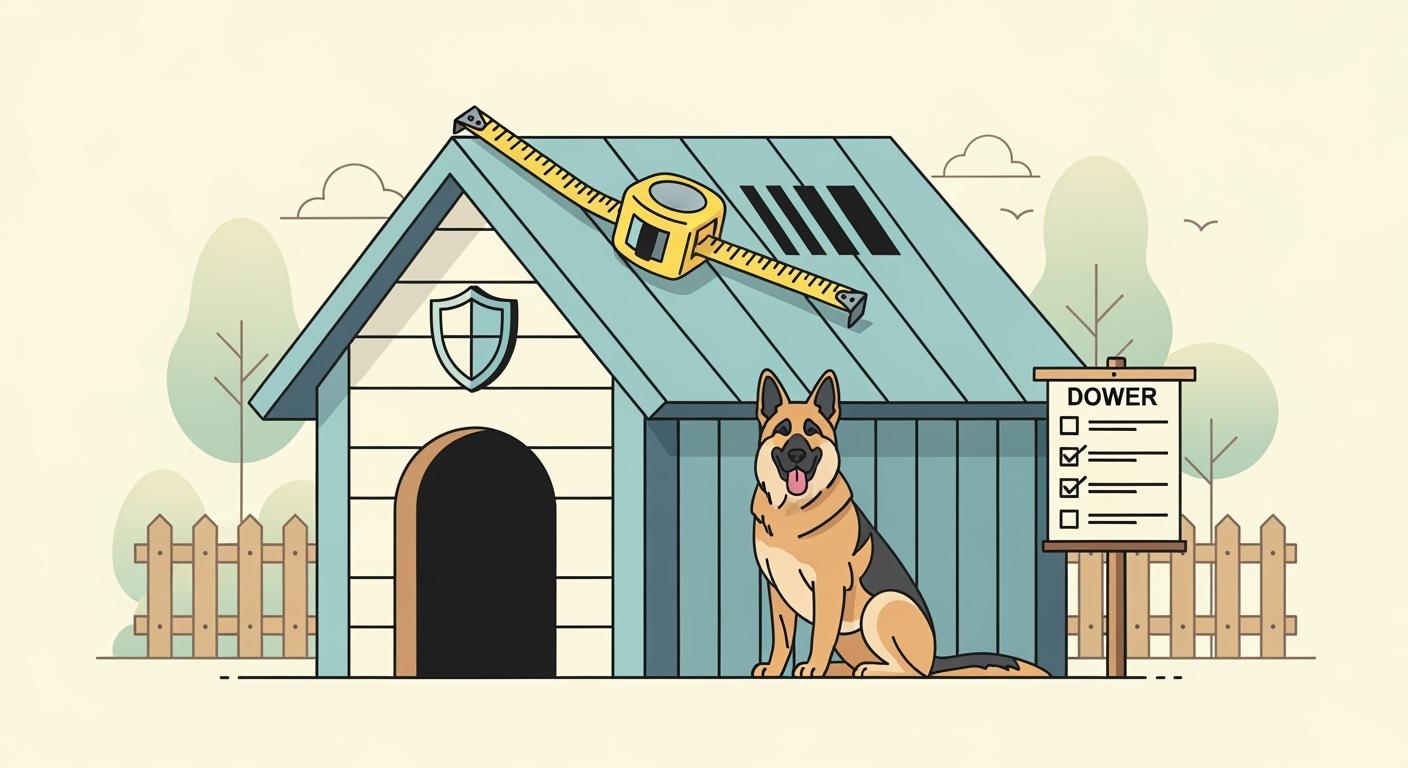
The best dog house for large dogs is usually not the biggest one on the shelf. A good setup gives your dog enough room to stand, turn, and lie down comfortably, but it also keeps the resting area dry, less drafty, and easier to use in real weather.
That balance matters more than raw square footage. Large breeds can end up avoiding the back of an oversized house if it feels cold, damp, or exposed, while a house that is too tight can trap heat and make daily use frustrating.
Key Takeaways
- Choose a house that fits your dog’s real resting posture, not the largest exterior dimensions.
- Raised floors, dry footing, insulation, and airflow usually matter more than extra empty space.
- If your dog stays near the entrance, pants inside, or avoids the house after rain, the setup needs work.
- Large dogs often do best with straightforward layouts that are easy to clean and easy to recheck after storms.
- No outdoor shelter replaces indoor care during extreme heat, severe cold, or dangerous weather.
What the best dog house for large dogs usually gets right
A large dog house should feel usable, not cavernous. Your dog should be able to step in without ducking awkwardly, turn without scraping the walls, and settle without having to sleep right at the door. If you already know how your dog uses a raised sleep surface, the sizing checks in large dog elevated bed fit tips can help you judge how much sleep space your dog actually uses instead of guessing from breed labels.
How to tell if the size is right
Watch your dog use the house instead of relying on product language alone. A good fit looks calm and natural. Your dog enters without hesitation, turns around without bumping into the walls, and lies down with enough room to stretch the front legs or curl up.
- Pass: your dog uses both the front and back of the house.
- Pass: your dog can stand fully and change position without looking cramped.
- Fail: your dog stays at the entrance, scratches to get out, or never settles deeply.
Why oversized houses can backfire
Too much empty interior space can make a dog house harder to keep comfortable. Wind reaches farther inside, body warmth disperses faster in cool weather, and cleaning takes more effort because moisture and dirt have more places to collect. Bigger is only better when the house still protects the sleeping area from drafts, splashback, and wet ground.
Weather protection matters more than extra volume
For most buyers, the real question is not whether the house looks roomy. It is whether the dog stays dry, gets enough airflow, and has a comfortable surface to rest on after the weather changes. Many of the same tradeoffs appear in outdoor dog bed size and weather-ready features, especially when you compare airflow, support, and ground clearance.
Features worth prioritizing
Insulation helps in colder or windy conditions, but it only works well when the structure also limits drafts. Ventilation matters in warm weather because a large dog can overheat quickly in a stuffy box. A raised floor helps on wet ground by separating the sleeping area from puddles, mud, and cold moisture that rises from below.
If your yard stays damp after rain, the same floor and seam checks you would use for a waterproof dog bed are useful here too. Check the resting surface, the corners, and the area just inside the doorway instead of assuming a weatherproof label means the interior stays dry.
Some large dogs in hot or humid climates do better with more open, elevated setups than with enclosed houses. In those cases, an elevated outdoor dog bed with canopy may make more sense than a closed structure because it improves airflow while still adding shade and ground clearance.
Note: If your dog shows heavy panting, shivering, weakness, or obvious distress, bring them indoors and reassess the setup before using the house again.
Failure signs that matter after real use
The easiest way to judge a dog house is to look at what happens after a week of normal use and one stretch of real weather. A house that looks fine on day one can still fail once rain, heat, dirt, and daily entry show up.
| Check Item | Pass Signal | Fail Signal | Likely Fix |
|---|---|---|---|
| Use of space | Dog rests throughout the house | Dog stays near the entrance | Reduce drafts, add insulation, or reassess size |
| Floor condition | Surface stays dry after rain | Damp spots, mud, or musty smell | Raise the floor, improve drainage, or move the house |
| Airflow | Interior feels fresh in warm weather | Heat feels trapped or stale | Add vents, improve shade, or choose a more open design |
| Entry and movement | Dog enters, turns, and lies down easily | Dog hesitates, crouches, or struggles to turn | Choose a better size or a simpler doorway layout |
| Cleanup | You can reach corners and remove bedding easily | Hidden grime, odor buildup, hard-to-reach areas | Use removable panels, simpler interiors, or less bulky bedding |
If your dog avoids off-ground sleeping surfaces altogether, why some dogs avoid raised beds can help you separate height discomfort from texture, instability, or placement problems.
Which style fits your climate and daily use
The best match depends on where the house will sit and how your dog actually uses outdoor space. If the setup needs to move between the yard, travel, and overnight outdoor use, a dog camping kit can help you think through bedding, shade, water, and cleanup as one system instead of treating the house like a standalone fix.
| House Style | Usually Works Best When | Main Benefit | Main Watchout |
|---|---|---|---|
| Compact insulated house | Weather is cool, windy, or mixed | Resting area feels more protected | Can trap heat if airflow is poor |
| Raised-floor weather-focused house | Ground stays wet after rain or snow | Helps keep the sleeping surface drier | Still needs good drainage around the base |
| Open-sided shaded setup | Climate is hot or humid | Better airflow and less trapped heat | Less protection from cold wind and blowing rain |
A simple rule helps here: if your biggest problem is cold or splashback, lean toward protection; if your biggest problem is trapped heat, lean toward airflow. Large dogs usually make that tradeoff obvious through their behavior within a few days.
FAQ
How big should a dog house be for a large dog?
It should let your dog stand, turn, and lie down naturally without leaving so much extra space that the resting area becomes drafty or hard to keep dry.
Is an insulated dog house always better for large dogs?
Not always. Insulation can help in colder weather, but it works best when the house also has sensible airflow and does not trap heat in warm conditions.
What matters most in rainy areas?
A raised floor, dry placement, solid drainage around the base, and a doorway layout that keeps water from blowing into the sleeping area usually matter most.
When should you skip a traditional dog house?
If your dog overheats easily, avoids enclosed spaces, or only needs shaded outdoor rest in warm weather, a more open elevated setup may be the better choice.






