
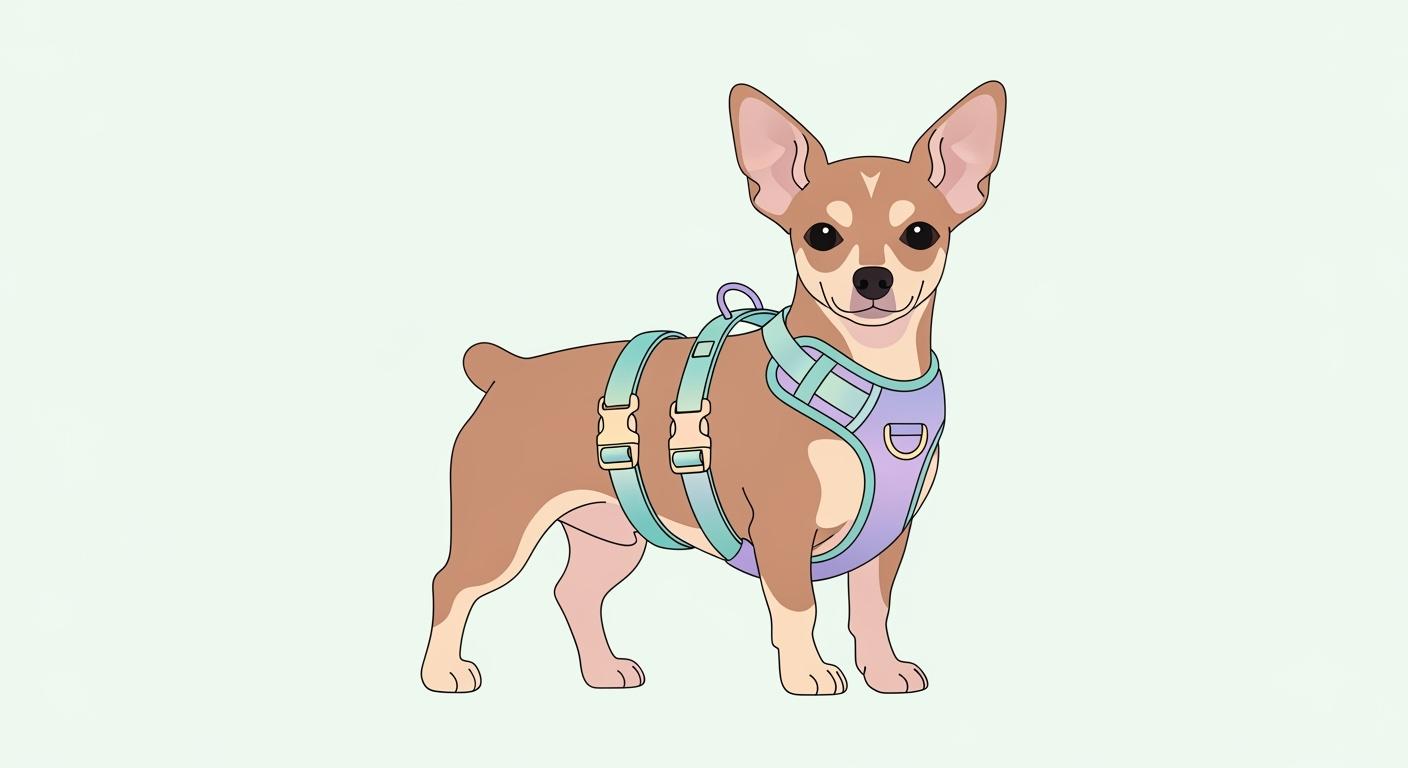
If your dog backs out of a harness when startled, stops suddenly in traffic, or twists hard at the end of the leash, extra security can matter. An escape proof dog harness for small dogs can reduce back-out risk, but the real difference usually comes from fit, body coverage, and how the harness behaves once the walk starts. On short frames, small-dog clip style, fit, and escape risk often matter more than thick padding or a long feature list.
A three-strap design is often the most secure choice for a dog that has already slipped a regular harness, but it is not automatically the best daily option for every small breed. Some dogs do better in a lighter Y-front or step-in style when they walk calmly and do not try to reverse out.
Note: No harness is truly escape-proof if it rides high on the neck, opens gaps at the chest, or shifts under leash tension.
Key Takeaways
- Choose a three-strap harness when your small dog backs out, spins hard, or gets overwhelmed in busy places.
- Reject any harness that twists, rubs, crowds the shoulder, or looks secure only while your dog is standing still.
- Measure chest girth and neck size before buying, then confirm the fit on a short real walk.
- A lighter harness is often the better everyday choice when your dog stays calm and does not test the setup.
When extra security helps and when it just adds bulk
Why small dogs slip out more easily
Small dogs can wriggle out of weak setups fast because the margin for error is small. A bulky buckle feels bigger on a toy breed, a loose chest section opens space faster on a narrow ribcage, and a high front panel can drift toward the throat once the dog pulls back. If you are between sizes, chest girth and neck measurement points usually tell you more than body weight alone.
- The chest area is too loose, so the dog can reverse and open slack.
- The harness shape does not match a narrow waist, deep chest, or short body.
- The front section sits too high and shifts upward during tension.
- The hardware is too heavy for the dog’s size and makes the harness sag or rotate.
- The harness looked fine indoors but was never checked in motion.
When a three-strap harness makes sense
A three-strap layout earns its keep when your dog has already escaped a regular harness or when the walking environment raises the stakes. The rear strap sits behind the ribcage and makes it harder for the harness to slide forward during a back-out attempt. Before choosing between mesh, padded, or heavier vest styles, start with dog harness size and material choices for daily walks so the extra coverage solves a real problem instead of adding unnecessary bulk.
| Situation | Usually a good match for three straps |
|---|---|
| Escape history | Your dog has backed out of a standard harness before. |
| Busy environments | You walk near traffic, crowds, elevators, or unpredictable noise. |
| Agile body shape | Your dog has a narrow waist, flexible body, or easy reverse motion. |
| Short training window | You need better management while loose-leash skills are still improving. |
When a lighter harness is enough
Not every small dog needs extra straps. A calm walker that does not lunge, twist, or reverse out may be more comfortable in a lighter build. If you are still sorting through dog harness styles for daily walks and better control, compare how much chest coverage, adjustment range, and hardware weight each style adds before assuming the most technical-looking option is the safest.
| Harness type | Usually best for | Main tradeoff |
|---|---|---|
| Three-strap escape-resistant | Dogs that back out, twist hard, or walk in stressful places | More setup time and more heat on longer walks |
| Standard Y-front | Most small dogs with steady walking habits | Can still shift if the chest fit is loose |
| Low-bulk step-in or vest | Calm puppies or easy walkers that dislike overhead gear | Less secure for determined escape attempts |
A calm puppy may do fine in a lighter design, but step-in harness fit mistakes on short frames show up quickly when leg openings drift or the chest panel slides sideways.
What extra straps change in daily use
Security improves only if the rear strap sits correctly
The third strap should sit behind the ribcage, not up in the armpit area and not loose enough to creep forward. When it stays in the right place, it helps the harness resist forward slide during a back-out attempt. When it rides forward, it creates rubbing and false confidence.
Comfort depends on hardware scale and strap balance
Small dogs usually notice bad harness design quickly. Heavy clips, stiff webbing, thick edge binding, or wide front panels can shorten stride or make the dog hesitate. In crowded sidewalks or parking lots, security also depends on harness and leash fit with leash-length pairing, because too much slack gives a startled dog more room to twist and reverse.
| Check item | Pass signal | Fail signal | What to change |
|---|---|---|---|
| Chest panel | Stays centered during turns | Slides to one side | Re-center and even out the straps |
| Rear strap | Sits behind the ribcage and stays there | Moves forward or twists | Shorten and refit the rear section |
| Shoulder movement | Dog walks with a normal stride | Hesitation, short steps, or stiffness | Loosen, resize, or change harness shape |
| Chest and neck gaps | No opening when the dog backs up gently | Visible slack appears | Tighten evenly or try a more secure layout |
| Post-walk position | Harness still sits flat and balanced | Sagging, drifting, or rubbing marks | Refit before the next walk |
Tip: The right harness should feel quieter after the first few minutes. If you keep re-centering it, correcting the leash path, or stopping to fix drift, the style may not match your dog’s shape.
How to fit an escape-resistant harness without over-tightening
Fit the harness while your dog is standing naturally. Start with the chest panel centered, then adjust the chest and belly sections so the straps lie flat without bunching. Avoid the common mistake of tightening one area to compensate for a shape mismatch somewhere else.
- Measure the chest at the widest part, just behind the front legs, and measure the neck at the base.
- Put the harness on and center the front section before tightening anything.
- Adjust each strap evenly so the harness stays low on the chest and clear of the throat.
- Check that the rear strap sits behind the ribcage and does not crowd the elbows.
- Walk a short route and watch for twisting, rubbing, shortened stride, or low-hanging hardware.
- Test a gentle backup moment in a controlled area to see whether gaps open at the neck or chest.
- Check the fit again after the walk, because some harnesses settle differently once the dog has moved.
Common mistakes that create escape gaps
- Buying by size label, color, or padding before checking chest shape and strap path.
- Assuming extra straps automatically mean better security.
- Over-tightening the front to stop movement instead of fixing the overall fit.
- Ignoring how much hardware weight a very small dog can comfortably carry.
- Skipping the post-walk recheck after the coat compresses and the harness settles.
Failure signs that mean you should switch styles
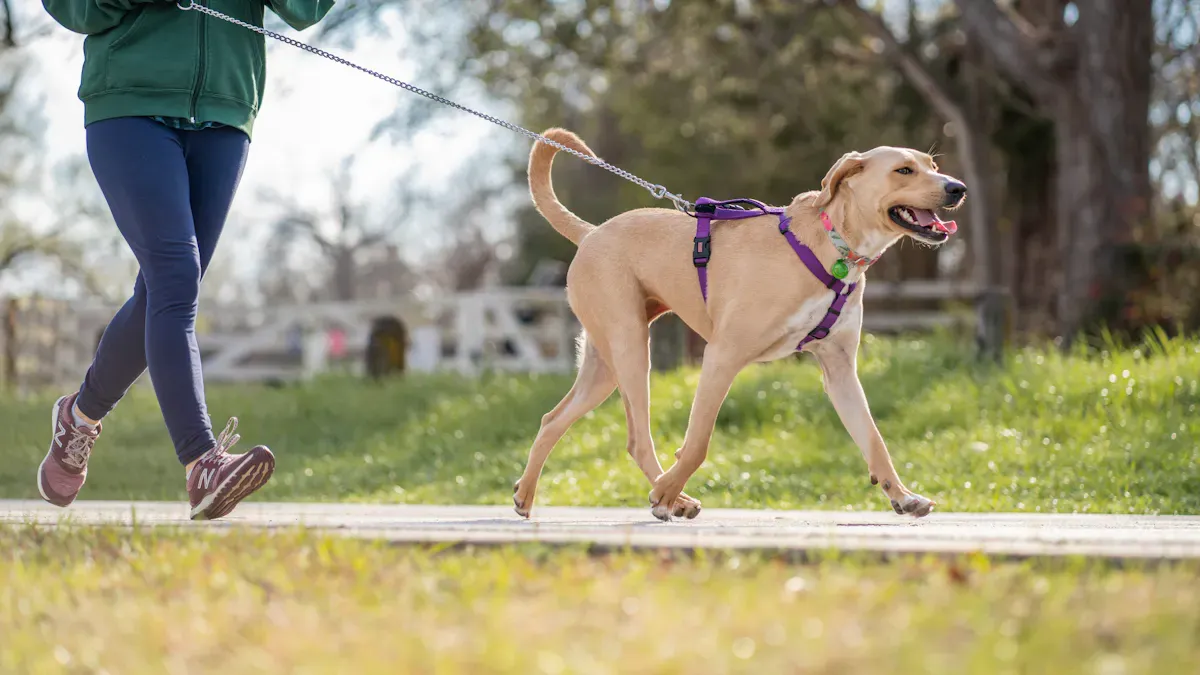
Sometimes the problem is not the adjustment. It is the harness style itself. If a three-strap model keeps drifting, crowds the shoulder, or makes daily checks harder than they need to be, a simpler design may be safer in real life because you will use it more consistently and catch fit problems faster.
| Symptom | Likely cause | Fast check | Best next step |
|---|---|---|---|
| Harness twists during turns | Uneven adjustment or poor shape match | Check both sides for equal strap length | Refit once, then switch styles if it keeps happening |
| Dog slows down or resists walking | Too much bulk or shoulder crowding | Watch the stride on a short straight walk | Try a lighter, lower-profile harness |
| Red marks or hair wear | Rubbing at the chest, elbows, or rear strap | Inspect the skin after each walk | Change material, edge finish, or layout |
| Rear strap creeps forward | Harness is too long, too loose, or wrong for the body shape | Check position after five minutes of movement | Resize or move to a different structure |
| Back-out gaps still appear | Neck and chest balance is wrong | Do a controlled reverse test | Use a more secure layout that fits the ribcage better |
If your dog coughs, shows obvious pain, limps, panics, or keeps fighting the harness, stop using that setup and talk with your veterinarian about the comfort issue before trying to force a better fit.
FAQ
Can a small dog still escape from a three-strap harness?
Yes, if the harness is loose, rides high, or shifts during a back-out attempt, so the fit still matters more than the number of straps.
How tight should an escape-resistant harness feel?
It should stay flat and secure without pinching, rubbing, or changing your dog’s natural stride.
When should you choose a lighter harness instead?
Switch when the extra strap keeps drifting, adds heat, crowds the shoulder, or makes your dog move less naturally on normal walks.






