
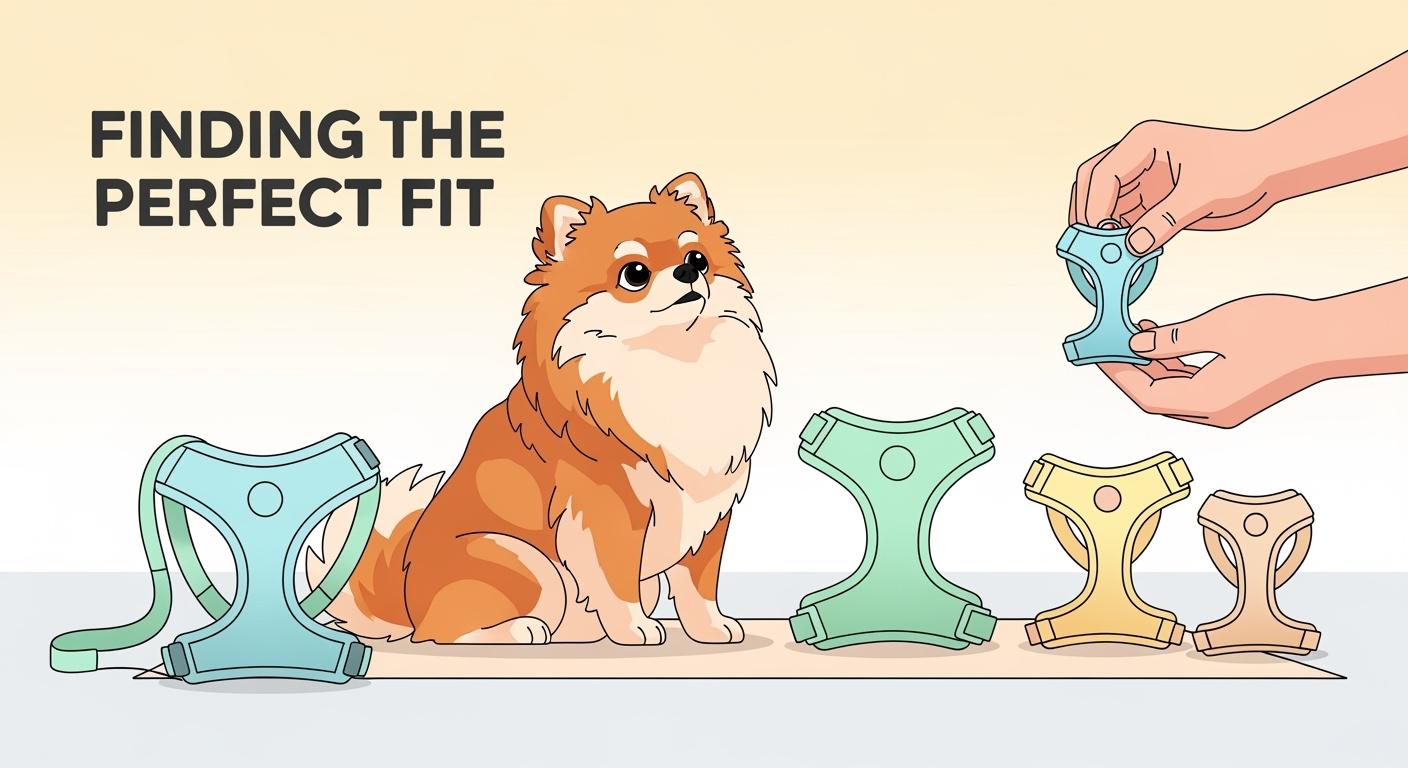
The best dog harness for Pomeranian walks is usually the one that stays light, sits low on the chest, and does not disappear into all that fur. A harness can look soft and still fit badly on a toy breed. When the front opening rides too high or the hardware feels oversized, the harness starts twisting, rubbing, or pressing into the throat.
For most Pomeranians, comfort and security come from clean fit more than extra padding. You want a harness that stays centered when your dog turns, pauses, or backs up, while still leaving enough room for a full stride and a fluffy coat.
Key Takeaways
- Look for a low-bulk harness that keeps leash pressure on the chest instead of the throat.
- Judge fit after movement, because twisting, rubbing, and escape gaps often show up on the walk, not when your dog is standing still.
- Soft material helps, but the best result usually comes from the right shape, light hardware, and even strap adjustment.
What Usually Works Best on a Pomeranian
Pomeranians are small, compact, and heavily coated, which makes some harnesses feel much bigger on the body than they look in product photos. A thick vest or oversized buckle can pull the harness off center, trap heat, or hide a poor fit under the coat. Many owners do better with a simpler layout that stays stable without adding unnecessary weight.
Why bulk becomes a problem fast on toy breeds
A bulky harness often creates two problems at once. First, it crowds the front of the dog and makes the chest piece sit higher than it should. Second, it hides the real contact points, so you may not notice rubbing or throat pressure until after the walk. If your Pomeranian freezes, scratches, or takes shorter front steps, the harness may be too much structure for that frame.
If sizing still feels uncertain before you buy, measure a dog for a harness first instead of relying on weight alone. Small differences in chest depth and coat thickness can change how the same size label behaves.
Low-bulk Y-front vs vest vs extra-secure multi-strap
No single layout works for every dog, but the tradeoffs are usually clear once you match the harness to your Pomeranian’s walking style.
| Style | Usually Works Best For | Main Strength | Main Risk |
|---|---|---|---|
| Low-bulk Y-front | Most everyday walks on a small fluffy dog | Good shoulder freedom and lighter feel | Needs accurate sizing to stay centered |
| Light vest | Dogs that tolerate a little more surface coverage | Soft contact across the chest | Can trap heat or hide poor fit under the coat |
| Extra-secure multi-strap | Dogs with a real back-out risk | More security around the ribcage | Can feel bulky on a tiny frame if overbuilt |
For many Pomeranians, a low-bulk Y-front is the easiest place to start because it keeps the harness visually simple and leaves less material to bunch up in the coat. A more secure multi-strap design can make sense if your dog slips gear when startled, but extra structure only helps when it still fits low and clean.
Fit Details That Matter More Than Padding
The front of the harness should sit below the throat and stay on the upper chest when the leash tightens. If it creeps upward when your dog leans back or pulls forward, that is a fit problem even if the harness looked fine indoors. Because small breeds can be sensitive around the neck, many owners prefer a harness that keeps load on the chest instead of the throat.
If your Pomeranian pulls into the leash, front-clip harness training steps usually help more than switching to a thicker harness. Added bulk does not fix leash habits by itself.
Clip weight, coat bulk, and underarm clearance
On a larger dog, a chunky buckle may be a minor issue. On a Pomeranian, the same buckle can drag the harness sideways. Thick fur adds another layer of confusion because the coat can make a loose harness look snug or make a high front opening harder to spot. After each walk, part the coat behind the front legs and at the chest so you can check for flattened fur, warm spots, or red skin.
If rubbing starts showing up behind the front legs, prevent chafing on active outings usually comes down to strap path and clearance, not simply adding more padding.
Quick pass or fail checks
| Check Item | Pass Signal | Fail Signal | Best Next Move |
|---|---|---|---|
| Neck opening | Sits below the throat during a normal walk | Rises toward the airway under leash tension | Lower and recenter the front section |
| Chest position | Stays centered on the sternum | Twists or slides toward one shoulder | Equalize the side straps or try a different shape |
| Underarm clearance | No rubbing behind the front legs | Redness, hair breakage, or repeated scratching | Adjust the strap path or change layout |
| Hardware feel | Harness stays light and balanced on the body | Clips sag, tip, or pull the harness sideways | Choose a lighter build |
| Back-out security | Dog cannot reverse out during a calm test | Gaps open near the neck or ribcage | Move to a more secure design |
Note: If your dog coughs, gags, or seems short of breath in the harness, stop and refit it. If that keeps happening, ask your veterinarian before using it again.
When a Harness Is the Wrong Match
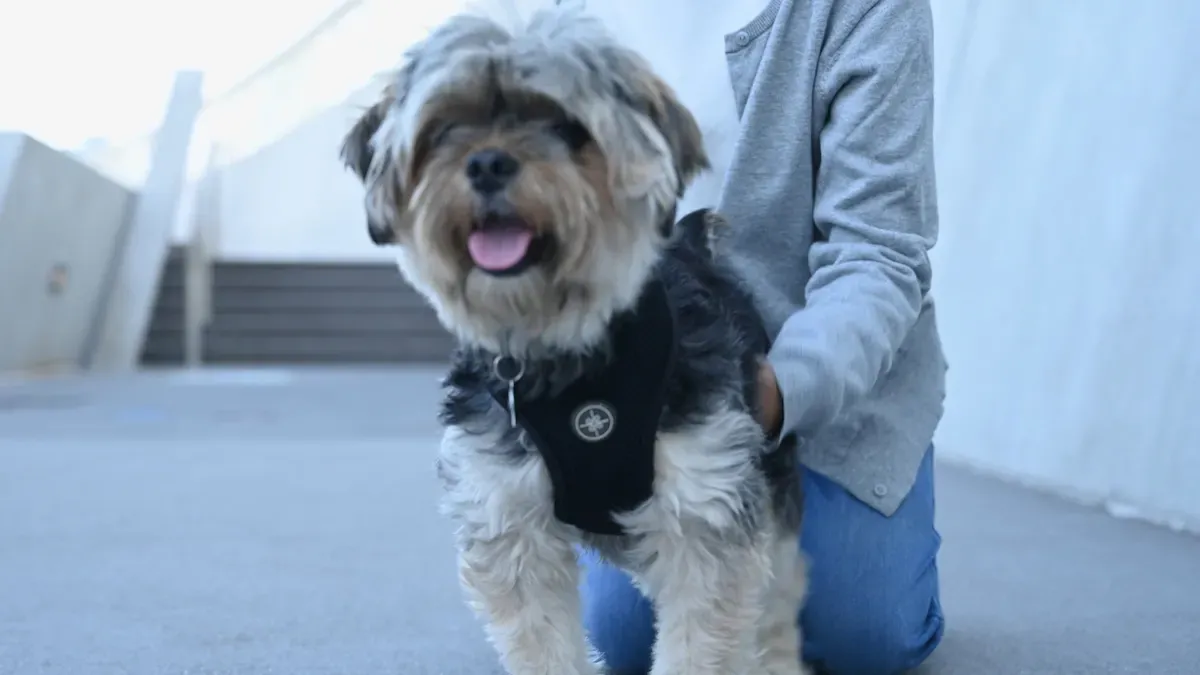
Failure signs worth noticing on the walk
The wrong harness usually tells on itself within the first few minutes. You do not need a long test to notice the main problems.
- Throat crowding when the leash tightens
- Redness or hair breakage behind the front legs
- Harness twisting off the middle of the chest
- Visible gaps when your dog backs up
- Shorter front steps or reluctance to keep moving
Step-in layouts can work on some small dogs, but step-in harness fit on small dogs is worth thinking about if elbow clearance keeps disappearing or the harness rotates when your Pomeranian turns quickly.
Fast troubleshooting for common problems
| Symptom | Likely Cause | Fast Check | Better Response |
|---|---|---|---|
| Coughing or gagging | Front opening sits too high | Watch where the harness rises when the leash tightens | Refit lower on the chest or switch styles |
| Rubbing under the legs | Strap path is too close to the armpit | Check skin and coat after a short walk | Change the strap angle or try a different cut |
| Harness keeps twisting | Too loose, too heavy, or wrong shape | Look at the chest piece while your dog turns | Tighten evenly or use a lighter layout |
| Dog backs out | Gaps at the neck or ribcage | Do a calm reverse-movement test indoors | Use a more secure design with better rear stability |
When to change size or style
If you keep correcting the same problem after every walk, the harness is probably the wrong match rather than slightly misadjusted. Frequent twisting, repeated throat rise, or ongoing chafing usually means the front opening, panel length, or weight distribution is wrong for your dog’s shape.
Comparing everyday harness fit and sizing checks can help you judge front opening shape, chest panel length, and adjustment range before you buy again. When the current harness is clearly the wrong build, comparing dog harness styles side by side is often more useful than tightening the same straps another notch.
The best dog harness for Pomeranian use is usually light, low on the chest, and boring in the best possible way. It should not twist, rub, or make your dog move differently. If a harness only seems comfortable when your Pomeranian is standing still, it is not fitted well enough for real walks.
FAQ
What style is usually best for a Pomeranian?
A low-bulk Y-front often works well because it stays lighter on the body and usually leaves better shoulder movement than a bulky vest.
Can a harness be too padded for a Pomeranian?
Yes, because extra padding can add heat, hide fit problems under the coat, and make the harness feel oversized on a tiny frame.
How do you know the harness is secure enough?
A secure harness stays centered on the chest, clears the throat, leaves no rub marks after a short walk, and does not open escape gaps when your dog backs up.






