
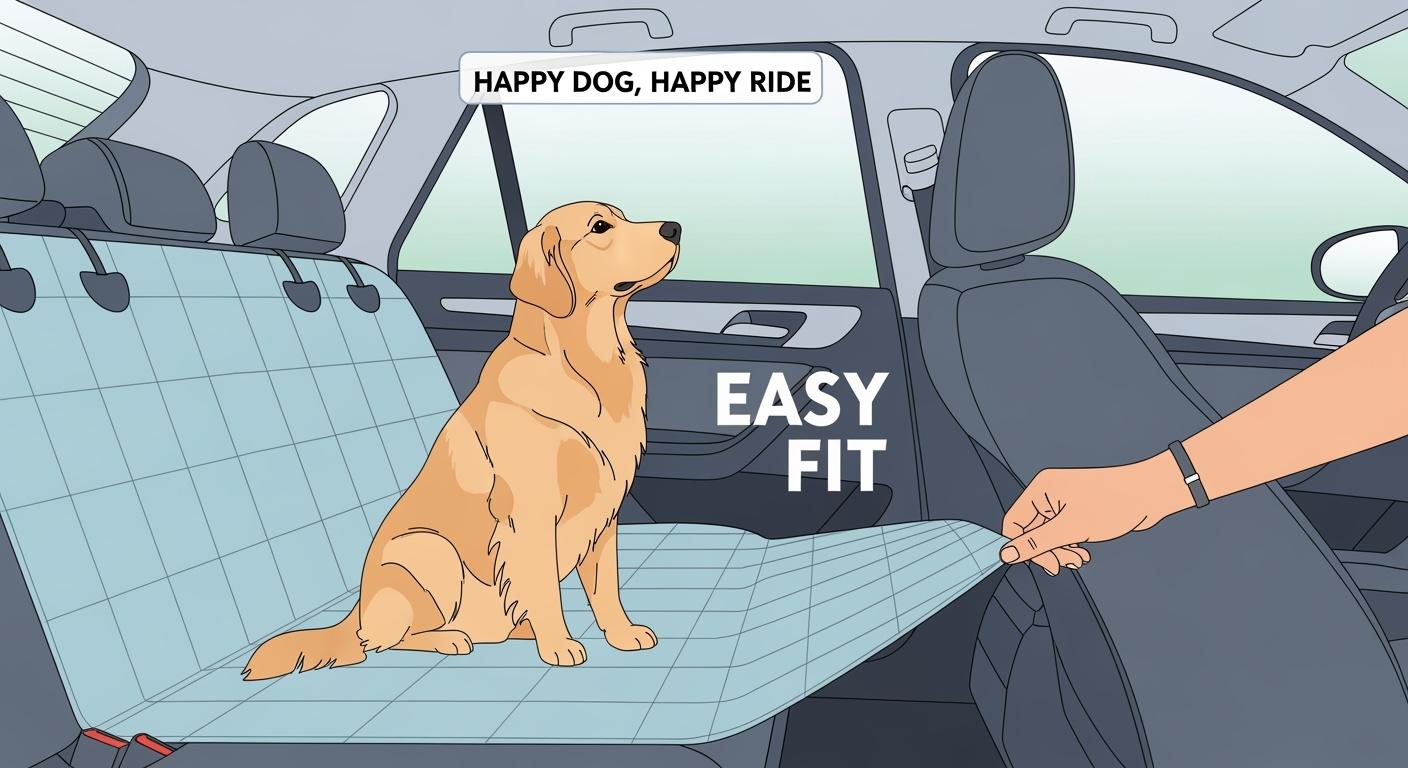
You may wonder if you should remove car seat covers for dog after each trip or leave them installed. The better answer depends on how often your dog rides, how often people use the back seat, how dirty the cover gets, and whether the cover stays flat and dry between trips. Both choices can work. The real goal is to keep the seat protected without turning the cover into a daily hassle or letting it block normal seat use.
Key Takeaways
Think about removing or leaving your dog car seat cover based on travel frequency, passenger use, and how messy your dog usually gets. Clean the cover often enough to prevent dirt, odor, and grit from building up. Pick a cover that fits your car seats well. Make sure it is simple to put on or take off. That matters more in daily use than extra material or bulk.
Car Seat Covers for Dog: Remove or Leave Installed
Pros of Removing After Each Use
Some people take off their dog car seat cover after every ride. This works best when the dog does not ride daily, when the back seat is also used by people often, or when the cover gets muddy, wet, or hairy enough that leaving it installed becomes annoying.
- Your car stays closer to normal passenger use between trips.
- Dirt, loose hair, and dampness do not sit on the seat for days.
- You notice trapped mess or wear sooner because you handle the cover more often.
- Seat belt buckles and rear-seat access stay easier to use for other passengers.
Removing after each use usually makes the most sense when the cover gets dirty fast or when you need the car to switch back to people use right away.
Cons of Removing After Each Use
Taking off car seat covers for dog after every ride can also create friction in your routine.
- You spend more time removing and reinstalling the cover.
- Repeated handling can wear straps, anchors, buckles, or seams faster.
- You may forget to reinstall the cover before the next dog trip.
- Storing a damp or dirty cover is inconvenient if you do not have a good drying space.
- Hard-bottom or more structured covers usually take longer to reset correctly.
Pros of Leaving Installed
Leaving your dog car seat cover installed all the time can be the easier option when your dog rides often and the back seat is mostly dog space. Your car’s inside is always safe from dirt, scratches, and dog hair.
- You save time because the seat is always ready.
- Your dog gets the same riding surface every time.
- You avoid repeated reinstall mistakes before short trips.
- You do not need to keep folding, storing, and unfolding the cover.
Many people find that leaving the cover installed is easier when the dog rides several times a week and the seat rarely needs to switch back to passenger use.
Cons of Leaving Installed
Keeping car seat covers for dog installed between trips can create its own problems:
- Covers can shift or wrinkle if the fit is not tight enough.
- Some covers block seatbelt buckles or make the rear seat less practical for people.
- If you leave the cover on too long without cleaning, dirt and odor can build up.
- Large or thick covers can make the seat feel bulky for non-dog use.
- A badly fitted cover may protect less well over time because it keeps sliding out of place.
| Challenge | Impact |
|---|---|
| Passenger access | A cover left installed can make buckle access, seat folding, or regular passenger use less convenient. |
| Fit drift | If you do not tighten and recheck the cover, it can wrinkle, shift, or stop protecting the seat well. |
Tip: If your cover moves or bunches up, check the straps, anchors, and backing before the next trip. A cover that stays installed still needs fit checks.
Comparison Table: Bench, Hammock, Hard-Bottom Covers
Picking the best dog car seat cover depends on what you actually need from the seat. Here is a more useful comparison:
| Type | Use Case | Main Benefit | Main Watchout | Who Should Skip It |
|---|---|---|---|---|
| Bench | Families, older dogs, easier seat access needed | Flat surface and easier passenger/buckle access | No barrier to the front area | Owners wanting a front-seat barrier effect |
| Hammock | Active dogs, anxious dogs, longer drives | Protects seatbacks and creates a front barrier | Can block buckle access and feel awkward for passengers | People needing frequent rear-seat passenger use |
| Hard-bottom | Large dogs, senior dogs, dogs needing flatter footing | More stable support across the seat area | Heavier and slower to remove or reinstall | Owners needing fast, frequent removal |
A hard-bottom dog car seat cover can be useful when stability matters more than fast removal. It gives some dogs a flatter place to sit or stand, which may help during longer rides. But it is not always the best fit for people who need the seat to change back quickly after each trip.
Note: Bigger or thicker covers are not automatically better. The better choice is the one that fits your seat well, stays in place, and matches how often you switch between dog use and people use.
Decision Table: Remove or Leave Installed?
| Use Case | Main Benefit | Main Watchout | Who Should Skip It |
|---|---|---|---|
| Remove after each use | Cleaner seat between trips and easier passenger use | More handling time and more setup repetition | Those with daily dog travel |
| Leave installed between trips | Less hassle and always ready for the next ride | Can shift, collect dirt, and block normal seat use | Those needing frequent rear-seat passenger changes |
If your dog seems stressed, too hot, or has trouble moving during rides, ask your veterinarian for help. This blog does not give medical advice.
Dog Car Seat Cover: Real-World Use and Fit
Reinstall Time and Ease
You want a dog car seat cover that saves time. That matters most when you plan to remove it often. Some covers go back on quickly because the strap path is simple and the anchors are easy to reach. Others take longer because the material is stiffer, the side flaps are larger, or the base needs more careful alignment.
If you remove and reinstall often, do not judge only by material. Judge by how fast you can actually reset it correctly without leaving blocked buckles, twisted straps, or loose corners behind.
Seat Coverage and Shifting
A good dog rear seat cover should cover the main contact zones and stay put while your dog moves. Non-slip backing, adjustable straps, and seat anchors can help, but the real test is whether the cover stays flat after loading, turning, and normal in-car movement.
If the cover slides, bunches, or curls, the fit is not doing its job. Tighten the straps, reset the anchors, and check whether the seat shape and the cover shape actually match.
Wear from Frequent Removal
Taking off the cover a lot can cause wear, especially if the fabric is thin or the stitching and anchor points take repeated stress. Stronger fabrics and cleaner stitching usually last longer, but even a durable cover will wear faster if it is being folded, dragged, and reinstalled every day.
The real question is not only whether the cover is strong. It is whether your routine makes repeated removal worth the extra wear.
Pass/Fail Checklist Table
| Check Item | Pass Signal | Fail Signal | Fix |
|---|---|---|---|
| Cover lies flat | No wrinkles or bunching after loading | Folds, slack, or shifting | Smooth out and retighten straps |
| Anchors stay in place | Cover does not shift during normal use | Slides during travel | Reinsert anchors and recheck backing grip |
| Seat belt access aligns | Buckles stay easy to reach | Buckles blocked or awkward | Reposition cover before securing all straps |
| Side flaps stay in place | Edges stay covered during normal loading | Flaps fall, curl, or shift out | Tuck, smooth, or reassess flap length |
| No trapped dirt or dampness | Seat under the cover stays reasonably clean and dry | Debris or moisture builds up underneath | Remove, shake out, and dry fully before reuse |
Tip: Always measure your seat before you install the cover. Adjust straps and anchors for a better fit. Pick materials and structure based on your real use pattern, not only on the product type.
Pet Seat Covers: Failure Signs and Fixes
Common Mistakes and Consequences
Problems happen when covers are left loose, cleaned too late, or chosen mainly by appearance instead of fit. Some covers bunch up and leave parts of the seat exposed. Some buckle openings stop lining up after a dog gets in and turns around. Some covers stay damp after cleaning and go straight back into the car too early.
Here are mistakes people make and what can happen if you ignore them:
- Bad fit means the cover looks neat at first but shifts after real use.
- Dirt under the cover can rub against the upholstery over time.
- Moisture trapped under the cover can create odor and make the seat feel worse later.
- Blocked access points make rear-seat use more frustrating for people.
Tip: Always read the care label for cleaning and installation instructions. Then check the cover again after your dog gets in, not just before the trip starts.
Troubleshooting Table
This table helps you fix common problems with pet seat covers. These steps keep your car cleaner and make the cover easier to live with.
| Symptom | Likely Cause | Fast Check | Fix |
|---|---|---|---|
| Cover keeps slipping | Anchors not in or straps too loose | Pull cover forward and sideways by hand | Reset anchors, tighten straps, and check backing grip |
| Seat belt openings misaligned | Cover moved during setup or loading | Try to reach the buckle after loading your dog | Move cover back to center before travel |
| Side flaps curl or pop out | Flaps too short, stiff, or not tucked well | Check flap position after dog gets in | Tuck, smooth, or choose better side coverage |
| Door trim still scratches | Cover protects the seat but not the door-side area | Watch where your dog’s paws land when entering | Add door coverage or change entry routine |
| Cover feels damp after cleaning | Material did not dry all the way | Touch seams, corners, and padded spots | Let the cover air dry fully before reinstalling |
For best results, shake out dirt and wash covers with a pet-safe cleaner if the care label allows. Let the cover dry all the way before you put it back in your car.
You should decide to remove or leave your car seat cover based on how often your dog rides, how often people use the seat, and how much mess the cover collects between trips. A good cover works only when it fits well, stays in place, and does not make the back seat harder to use than it needs to be.
FAQ
How do you clean a dog car seat cover after a messy trip?
You should shake out loose dirt first, then wash the cover according to the care label. Let it dry fully before reinstalling so you do not trap moisture back on the seat.
Should you remove a hammock cover if you use your car for people often?
Usually yes. If rear passengers ride often, removing the hammock cover keeps the back seat easier to use and makes buckle access simpler.
Can a dog get stressed or too hot using a hammock cover?
Some dogs may feel crowded or warm, especially on longer trips or in hot weather. Watch for restlessness, heavy panting, or reluctance to settle, then reassess the cover style or trip setup.
Note: This answer does not give medical advice. Always check with your veterinarian for health concerns.






