
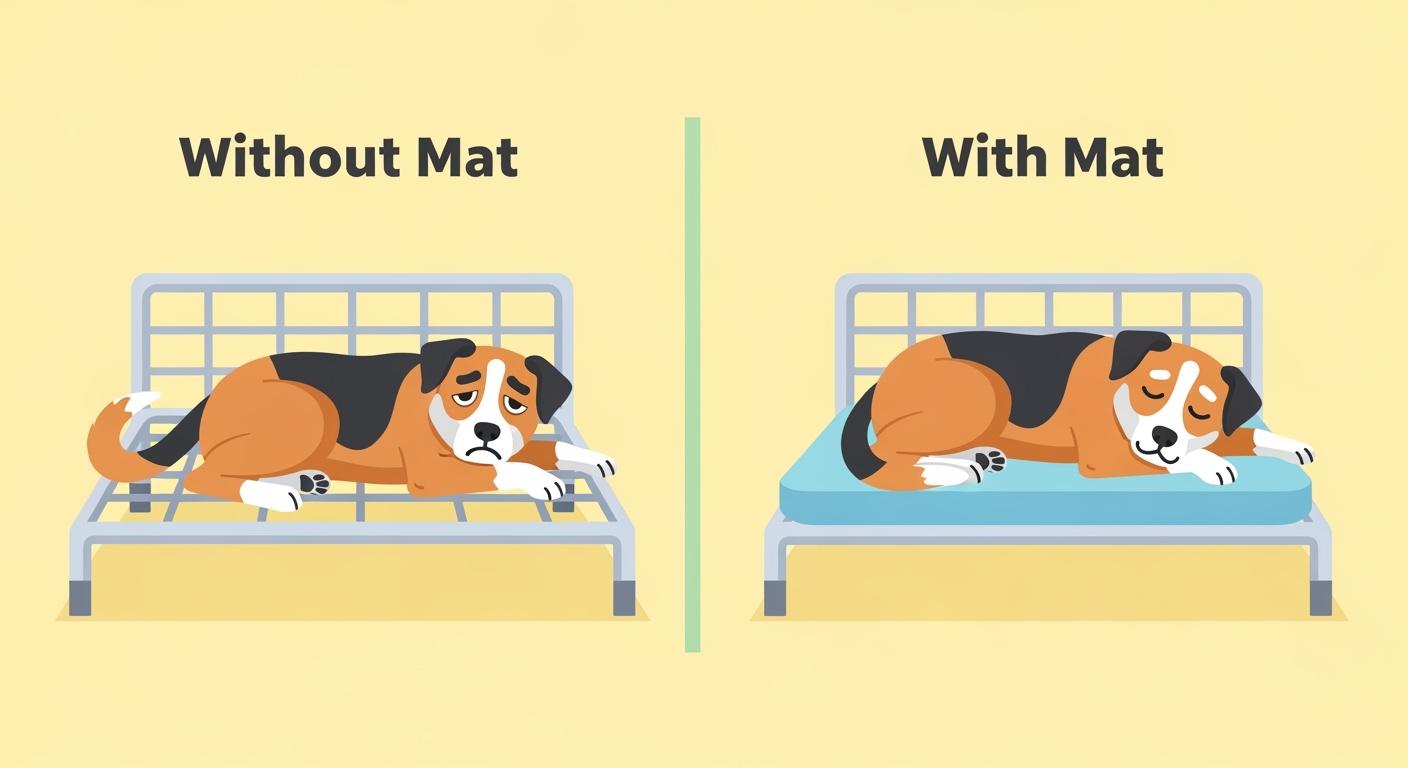
A metal dog bed works best when your dog needs airflow, steady support, and easier cleaning, but many dogs rest better with a secure padded layer.
When you bring a raised frame into the house, the real question is not whether metal is good or bad. The better question is whether the setup matches your dog’s heat load, body pressure, and ease of entry. The same size and support tradeoffs also show up in many outdoor dog bed setups, especially when raised frames are used for both cooling and cleanup.
Note: A firmer frame can help with airflow and cleanup, but the best setup usually depends on how your dog gets on, settles down, and stays asleep.
Key Takeaways
- A bare frame usually suits dogs that run warm, like open airflow, and step on without hesitation.
- A pad or mattress usually helps when your dog needs better pressure distribution, quieter footing, or longer overnight rest.
- If the setup is hard to enter, noisy, or ignored after a few days, change the surface first before assuming the whole bed type is wrong.
When the frame alone is usually enough
Airflow matters because a raised open surface usually releases heat faster than a dense padded bed. A bare metal dog bed can work well for dogs that seek cooler spots, step on confidently, and settle without repeated circling.
The main limit is pressure distribution. If your dog has a thin coat, bony elbows, slower movement, or obvious hesitation during entry and exit, the bare surface often stops feeling supportive before it becomes a true sleep spot.
What the bare frame does well
A bare frame usually makes the most sense for warm sleepers, messy homes, and dogs that already rest comfortably on firmer surfaces. It is often easier to wipe down, easier to keep dry, and easier to maintain when shedding, muddy paws, or damp fur are part of daily life.
What usually starts going wrong first
The first problem is often not full rejection. It is shorter naps, more circling, edge testing, or a dog that stands on the bed without really settling. Those small signs usually matter more than whether the frame looks durable or expensive.
| Setup | Feel in Use | Why It Helps | What to Watch |
|---|---|---|---|
| Bare frame | Cooler, firmer, more open | High airflow, simple cleanup | Can feel hard or noisy |
| Frame plus pad | Softer, quieter, steadier | Better pressure distribution | Pad can slide or trap heat |
| Chew resistant cot | Firm, durable, controlled | Better for destructive use | Comfort may still need testing |
For most dogs, the better choice is the one they use willingly for full rest, not the one that looks toughest in the room. The same entry and stability questions often show up with a large dog elevated bed, especially when the frame feels usable but not inviting enough for longer sleep.
When a comfort layer changes the whole setup
A pad or mattress usually helps when the frame is acceptable but not inviting. Dogs often stay longer when the comfort layer reduces noise, softens contact points, and keeps the body from guarding against a hard resting surface.
That matters even more for older dogs or dogs with mobility limits, because accessible padded bedding is often part of supportive home care rather than an optional extra. Some outdoor dog bed builds use the same raised base logic, but the daily result still depends on whether the top surface feels quiet, steady, and easy to step onto.
Why some dogs accept the frame only after padding is added
The frame may already be the right size and height, yet still feel too exposed or too hard. A secure topper can change that quickly by softening first contact and making the surface feel less noisy during entry, turning, and settling.
Why the wrong topper can create new problems
A loose blanket or sliding mat can make the setup worse instead of better. Once the layer bunches, drifts, or traps debris, the dog may stop using the bed even though the frame itself was not the main problem.
How to test the setup at home
The fastest way to get this right is a short home trial instead of a one-minute impression.
- Run an indoor entry test on day one. Put the bed where your dog already relaxes, then watch approach speed, first step confidence, and whether the frame shifts or sounds sharp.
- Run a 3 day rest trial. Let your dog choose the bed during normal naps and overnight rest, then watch settle speed, body position, and whether your dog returns to the bed without prompting.
- Run a real use cleanup test. Remove hair, wipe the frame, and wash the cover if you added one, because a setup that is comfortable but annoying to maintain often stops being used consistently.
Record for 3 days before deciding: session setting, entry behavior, settle time, resting posture, and any surface or cleanup note.
| Check Item | Pass Signal | Fail Signal | Usually Helps |
|---|---|---|---|
| Entry | Steps on without pause | Hesitates, tests edge, backs away | Lower visual barrier, add surface grip |
| Settling | Lies down within a few minutes | Circles, leaves, keeps changing spots | Add a secure comfort layer |
| Surface stability | Frame stays quiet and level | Rattles, shifts, tips slightly | Tighten frame, add floor grip |
| Rest duration | Returns for normal naps | Uses bed only briefly | Recheck pressure distribution and temperature |
| Cleanup | Hair and dirt clear quickly | Pad traps debris or odor | Use a removable washable cover |
Failure signs and fast fixes
Most failed trials come from one of five problems: the surface feels colder than expected, the frame sounds unstable, the comfort layer moves, the size feels restrictive, or the bed ends up in the wrong location.
| Symptom | Likely Cause | Fast Check | Fix |
|---|---|---|---|
| Dog avoids bed | Low comfort or poor location | Watch first approach after quiet downtime | Move the bed or add padding |
| Noisy entry | Loose frame or slick floor | Press corners and listen | Tighten joints and add floor pads |
| Mat slides | Poor fit or smooth underside | Watch entry and turning | Use a fitted non-slip layer |
| Unused bed space | Size mismatch or awkward edge feel | Check whether the dog curls tightly | Reassess footprint and entry room |
| Restless sleep | Weak pressure distribution | Compare nap length with old setup | Try a thicker or steadier topper |
Disclaimer: A bed can support comfort, but it is not a diagnosis or treatment plan for pain, skin disease, mobility loss, or heat stress.
The mistake that matters most
- Choosing the frame for toughness alone instead of for actual sleep behavior.
- Putting the bed on a slick floor where noise and drift start immediately.
- Adding a loose blanket that bunches under the chest and elbows.
- Ignoring entry and exit, especially for older or stiffer dogs.
- Keeping a hard setup after 3 days of obvious avoidance.
Tip: The most common mistake is skipping the comfort layer after the dog has already shown hesitation, because that usually turns a fixable setup into a rejected one.
Cleaning, durability, and when to change course
Easy cleaning only helps if the routine stays realistic. If hair, odor, or dampness build up quickly, a removable cover usually works better than wiping the whole setup every time, and the same wash-sooner pattern often shows up in a simple bed cleaning routine.
Durability also has to match behavior, not marketing language. If your dog scratches, digs, or chews edges, a more rugged frame or tighter woven sleep surface may make more sense than repeated soft topper replacements. The same tradeoff is easy to see in a chew resistant bed, where toughness may solve one problem without automatically fixing sleep comfort.
For most homes, the better long-term result comes from a setup that stays stable, stays clean, and still gets used after the novelty wears off. The same wear pattern also matters in a durable outdoor dog bed that has to handle more dirt, moisture, and repeated cleanup than an indoor setup.
If your dog sleeps cooler, enters confidently, and stays relaxed, the frame alone may be enough. If the bed is acceptable but not chosen, adding a secure comfort layer usually improves pressure distribution faster than replacing the whole idea. When your dog clearly needs more cushioning and easier maintenance, an orthopedic bed setup is often the better match.
| Dog Pattern | Usually Better Setup | What to Watch |
|---|---|---|
| Warm sleeper, easy mover | Bare frame | Noise and floor grip |
| Senior dog, slower entry | Frame plus padded topper | Stable entry and exit |
| Chewer or digger | More rugged cot-style surface | Comfort may still need upgrading |
FAQ
Should a metal dog bed always have a mattress?
No, many warm sleeping dogs do well on the frame alone when they enter easily and stay settled.
How long should you test the setup before deciding?
A 3 day home trial usually gives a more reliable answer than a single short nap.
What if the dog likes the frame but chews every soft topper?
A tighter chew-resistant sleep surface or a more protected orthopedic setup usually makes more sense than replacing loose toppers again and again.
Note: This FAQ is about bed choice and setup checks, not about diagnosing pain, anxiety, or ongoing sleep disruption.
- Choose the bare frame when airflow and easy cleanup matter most, and your dog already rests well on firm surfaces.
- Choose a padded version when sleep duration, quieter footing, and joint comfort matter more than maximum cooling.
- Change course when hesitation, short naps, or repeated avoidance continue after a short home trial.
Disclaimer: This guide helps you choose a sleeping setup, not determine the medical cause of limping, heat seeking, night waking, or pain-related behavior.






