
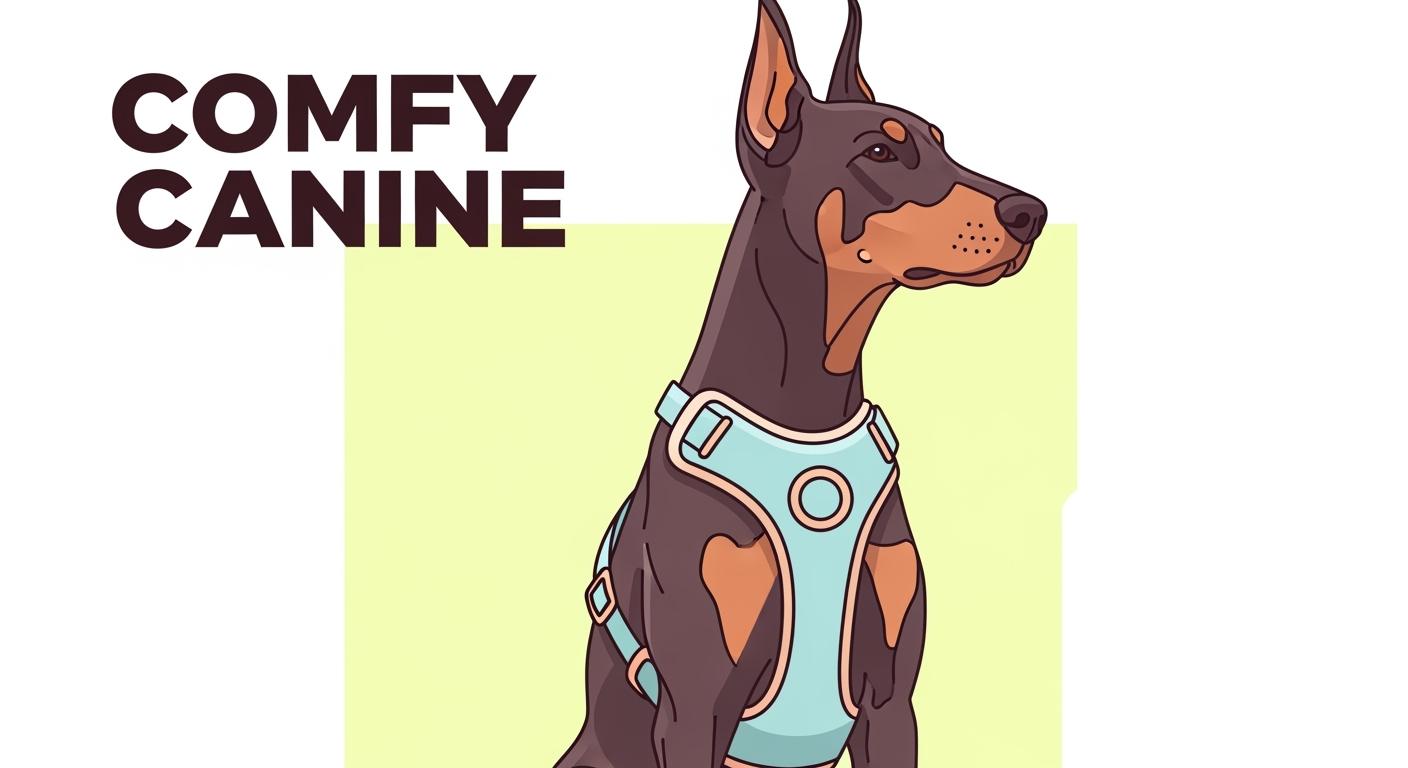
A doberman dog harness needs more than a strong strap layout. Because Dobermans have short, close-lying coats, rough edges, raised seams, buckle corners, and shifting straps can show up quickly as hair flattening, red marks, or repeated licking after walks. Softer edges help, but they only work when the harness also stays centered, clears the armpits, and keeps the leash attachment from pulling one contact point into the skin.
Key Takeaways
- Choose a doberman harness with soft edges to prevent skin irritation and discomfort. This matters most at the chest, behind the front legs, and near buckle or strap-end contact points.
- Check the harness after real walking, not only while your Doberman is standing still. Friction often appears after leash tension, turns, and repeated stride movement.
- If your dog licks one spot, shortens stride, avoids the harness, or shows red marks, treat it as a fit or edge-contact warning before the problem gets worse.
Why Softer Edges Matter for Doberman Dog Harnesses
Short coats show contact problems faster
Dobermans have a short, smooth coat that sits close to the body. That makes the breed look sleek, but it also means harness contact is easier to see and feel. A rough edge that might be hidden under a thicker coat can press directly against the skin on a Doberman, especially at the chest, sternum, shoulder line, and armpit area.
The goal is not just a soft-looking harness. The edge should feel smooth when you run your fingers along the inside. The harness should also stay in position once your dog moves, because even soft material can rub if it shifts back and forth on the same spot.
Chafing and irritation risks
Chafing usually starts as a small pattern: hair flattening, a pink line, light scratching, or your dog turning the head toward one strap after the walk. If you ignore that pattern, the same contact point can become more irritating over time. Short-coated dogs make these early signs easier to spot, so use that visibility as an advantage.
Watch the harness during leash movement. If the front strap rides up, the buckle presses into one side, or the armpit strap drifts forward with each step, the issue is not only material softness. It is the combination of edge finish, strap position, and movement under leash load.
Tip: Run your fingers along the inside edges before each walk. Then check the same contact zones after the walk. A harness can feel fine in your hand and still rub once the leash adds movement.
A recent look at harness materials shows that nylon and mesh harnesses with rough edges can cause chafing. Padded harnesses with soft linings lower the risk of irritation. You want to choose a doberman harness that offers a perfect fit and smooth contact points.
Harness Comparison Table
You have several harness options for your Doberman. Each type has strengths and watchouts, especially for short coats. Use this table to compare the most common styles:
| Harness Type | Use Case | Main Benefit | Main Watchout | Who Should Skip It |
|---|---|---|---|---|
| Soft-edge Y-front | Everyday walks, leash training | Cleaner shoulder room and smoother chest contact | May still shift if the chest and girth fit are not balanced | Dogs needing very close handling or extra structure |
| Padded vest | Longer outings, dogs that mark easily | More surface area and softer contact | Can feel warmer or bulkier in hot weather | Dogs that dislike coverage or need maximum airflow |
| Stiff reinforced | Higher control needs, stronger leash load | More structure and less collapse under tension | Harder edges can create pressure marks if placement is wrong | Short-coated dogs that already show rubbing or harness avoidance |
When you look for a doberman dog harness, focus on edge softness and how the harness touches your dog’s skin. A good fit means the harness does not slide, twist, or dig in when your dog moves. Always check the contact points after walks, especially where the leash clips on. If you see redness, hair flattening, or repeated licking, adjust the fit or try a different harness style.
Note: A harness should fit closely enough to stay secure without pinching, rubbing, or changing your dog’s normal stride. If your dog has skin irritation, pain, or unusual movement, ask your veterinarian for advice.
Doberman Harness: Problem Areas for Rough Edges
Chest and sternum
Check the chest and sternum area first. Place the harness on your Doberman and run your hand along the front strap. The front should sit flat without a hard seam pressing into one narrow line. If the strap edge feels stiff, raised, or sharp to your fingers, it is likely to feel worse after leash pressure and repeated walking.
Watch your Doberman from the side during the first few steps. If the front section climbs, bunches, or pulls the skin forward when the leash tightens, the harness may be too high, too stiff, or poorly balanced for your dog’s body shape.
Armpits and shoulders
The armpit and shoulder areas often show the first signs of rubbing. The belly strap should not sit so close to the front legs that it catches the moving skin behind the elbow. Your dog should be able to reach forward naturally without the harness edge sliding into the armpit on every step.
Do not rely only on a still fit check. Let your dog walk, turn, and lower the head as if sniffing. If the strap shifts forward during those normal motions, soft edges may not be enough. The harness cut or adjustment may need to change.
Buckles and strap ends
Buckles and strap ends can create small but repeated pressure points. Make sure each buckle sits flat and does not land directly on a bony area or on a fold created by strap tension. Strap ends should be secured so they do not poke outward or rub against the body during movement.
Keep hardware and contact areas clean. Dirt, grit, and dried moisture can make a smooth edge feel rougher over time. Use gentle cleaning based on the harness care label, rinse residue well, and let the harness dry fully before the next walk.
Pass/Fail Checklist Table
| Check item | Pass signal | Fail signal | Fix |
|---|---|---|---|
| Chest strap edge | Feels smooth and stays flat | Redness, hair loss, raised seam, or hard edge | Adjust placement or try a smoother-edge harness |
| Armpit contact | Clearance stays stable during walking | Licking, scratching, chafing, or strap creeping forward | Open the fit or switch to a better-cut style |
| Buckle/strap ends | Flat, tucked, and away from pressure points | Poking, pressure marks, or uneven skin contact | Reposition, secure strap ends, or change layout |
| Leash attachment | Moves cleanly without bunching skin | Skin pulls, harness twists, or dog pulls away | Recenter harness and reassess attachment point |
Tip: Check your Doberman’s harness after every walk. Early marks are easier to fix than a dog that has already started avoiding the harness.
Signs of Harness Edge Issues
Skin marks and hair flattening
You may notice small changes on your Doberman’s coat after using a harness. Look for flat spots where straps touch the skin, especially on the chest, behind the front legs, and near buckle areas. A single light mark may come from normal pressure, but repeated marks in the same place usually mean the contact point needs attention.
Run your hand along the coat after each walk. If one area feels warmer, looks pink, or has broken or flattened hair, do not wait for the dog to protest before changing the setup.
Licking, short steps, refusal to wear
Behavior can show a harness problem before the skin does. If your Doberman licks the same spot, takes short steps, turns stiffly, or pulls away when you reach for the harness, check for rubbing or pressure points. Some dogs do not yelp or stop walking. They simply move differently or avoid the gear.
Also watch the first few minutes of the walk. A harness that feels acceptable at the door can become uncomfortable after leash tension, quick turns, or repeated sniffing posture.
Troubleshooting Table
| Symptom | Likely cause | Fast check | Fix |
|---|---|---|---|
| Red skin or hair loss | Rough harness edge or repeated pressure | Feel the inside edge and check the same spot after walks | Try a softer edge or change the strap position |
| Licking at harness area | Strap rubbing, pinching, or heat buildup | Watch whether licking follows harness use | Adjust fit, clean the harness, or switch style |
| Short, stiff steps | Shoulder crowding or armpit contact | Compare movement with and without the harness | Use a cut with cleaner shoulder and leg clearance |
Note: If you see skin irritation, pain, swelling, open skin, or changes in movement, talk to your veterinarian for advice.
Common mistakes and consequences
Many owners miss early signs of harness edge issues. Ignoring small marks can lead to bigger skin problems. Using a harness that shifts during leash walks may cause your Doberman to avoid walks or become stressed. Not checking the fit often can let rough edges go unnoticed, leading to discomfort or even escape attempts.
Picking a doberman dog harness with soft edges protects your dog’s short coat from repeated friction. It also makes it easier to spot fit problems early because you know exactly where to check: chest, armpits, buckles, strap ends, and leash attachment points. If the same mark keeps returning, change the fit or style instead of assuming your dog will get used to it.
| Contact Area | What to Check | Why It Matters |
|---|---|---|
| Chest and sternum | Raised seams, hard edges, front lift | This area takes visible pressure when the dog leans forward |
| Behind front legs | Strap creep, rubbing, short stride | Repeated stride movement can turn a small edge issue into chafing |
| Buckles and adjusters | Flat placement, no pressure point, no poking end | Small hardware pressure can leave marks on short coats |
| Recommendation | Description |
|---|---|
| Use smoother edge finishes | Choose edges that feel smooth by hand and stay smooth after cleaning and wear. |
| Check fit in motion | Watch walking, turning, sniffing, and leash tension rather than relying on a still fit check. |
| Recheck after walks | Look for repeated marks, licking, hair flattening, or changes in stride. |
| Key Features | Description |
|---|---|
| Adjustability | Helps balance the harness so one edge does not carry all the pressure. |
| Measuring Guide | Accurate chest and neck measurements reduce gaps, shifting, and over-tightening. |
| Calm Introduction | Let your dog adjust to the leash and harness in a low-pressure setting before longer walks. |
Tip: Check your dog’s harness often. The right doberman dog harness should stay secure without leaving the same pressure marks after every walk.
FAQ
How do you check if a harness edge is too rough for your Doberman?
Run your fingers along the inside edges, seams, buckles, and strap ends. Then check your Doberman’s chest, armpits, and shoulders after the walk. If the same area shows redness, hair flattening, or licking, the edge or fit needs attention.
What should you do if your Doberman resists the leash or harness?
Do not assume your dog is being stubborn. Check for skin marks, rough edges, pressure from buckles, and shoulder or armpit restriction. If discomfort continues after adjustment, try a different harness cut.
Can a harness with soft edges help with leash comfort?
Yes, soft edges can reduce friction, especially on short coats. But soft edges alone are not enough. The harness also needs to stay centered, clear the armpits, and keep the leash attachment from pulling one pressure point into the skin.






