How Should a Harness Fit on a Dog Without Armpit Rub

Scope: everyday dog harness fitting and comfort checks for active pet owners – this guide does not cover sport harnesses, working dog equipment, or vehicle restraint harnesses.

A harness that fits on paper can still rub, rotate, or restrict movement on an actual walk. The difference usually comes down to three contact zones – the throat, the armpits, and the shoulder blades – and whether the straps stay clear of each one when your dog is actually moving. This guide walks you through where to measure, how to adjust, and what signals to watch for during and after the first few walks.

Note: Harness fit affects comfort and movement, but it does not replace leash handling skills or training. A well-fitted harness still works best alongside consistent walking technique.

Key Takeaways

  • A harness fits correctly when it clears the armpits and shoulder blades, rests on the chest rather than the throat, and stays centered during a full walk. For more on how fit connects to leash handling and walk quality, see our harness and leash fit guide.
  • Check the fit after each walk – redness, hair thinning, shortened stride, or coughing are early signals that something needs adjustment.
  • Re-check whenever your dog gains or loses weight, or after a visible puppy growth phase.

Who This Guide Is For

This guide is for dog owners fitting a new harness for the first time, troubleshooting discomfort signs in a current harness, or deciding whether an existing setup is the right style for their dog. It assumes you have a harness in hand and want to know how to check whether it fits well. It is not written for professional trainers, sport competitors, or anyone fitting a working dog – those use cases have their own requirements.

A Short Glossary

These terms are used consistently throughout the guide. Knowing them makes it easier to compare notes across products or with a trainer:

  • Girth: the circumference measurement around the widest part of your dog’s chest – usually the primary number used in harness sizing charts.
  • Scapular clearance: the gap between the harness strap and your dog’s shoulder blades. When this gap is missing, the strap limits the natural range of shoulder motion during walking.
  • Chafing: skin irritation caused by strap friction, typically appearing as redness, hair loss, or sores along the strap line after repeated use.
  • Brachycephalic: describes dogs with shortened skull and facial structure – Bulldogs, Pugs, French Bulldogs. These dogs are more sensitive to throat pressure from a harness front that sits too high.

How This Guide Was Written

The fitting checks and pressure-point observations in this guide are based on hands-on harness testing across multiple styles – step-in, Y-front, H-style, and front-clip designs. Recommendations on scapular clearance and girth placement reflect principles commonly taught in force-free training frameworks, including those used by CCPDT-certified trainers and IAABC-affiliated behavior consultants. No laboratory biomechanical data was used; treat these checks as a practical starting framework, not clinical measurement standards. The observation log and test protocol below are designed to give you verifiable results from your own walks, not from a controlled lab setting.

Where a Harness Should Not Press

Avoiding Armpit Rub

Strap friction in the armpit area (axilla) is one of the most common harness fit problems. When the chest strap sits too close to the front legs, it contacts the soft skin and tissue behind each leg on every stride. Over repeated walks, this usually produces a clean line of redness or hair loss along the strap path – different from the scattered redness of allergies or infection. For a closer look at how to prevent rubbing and shoulder restriction, that guide covers harness design choices that reduce contact in this zone.

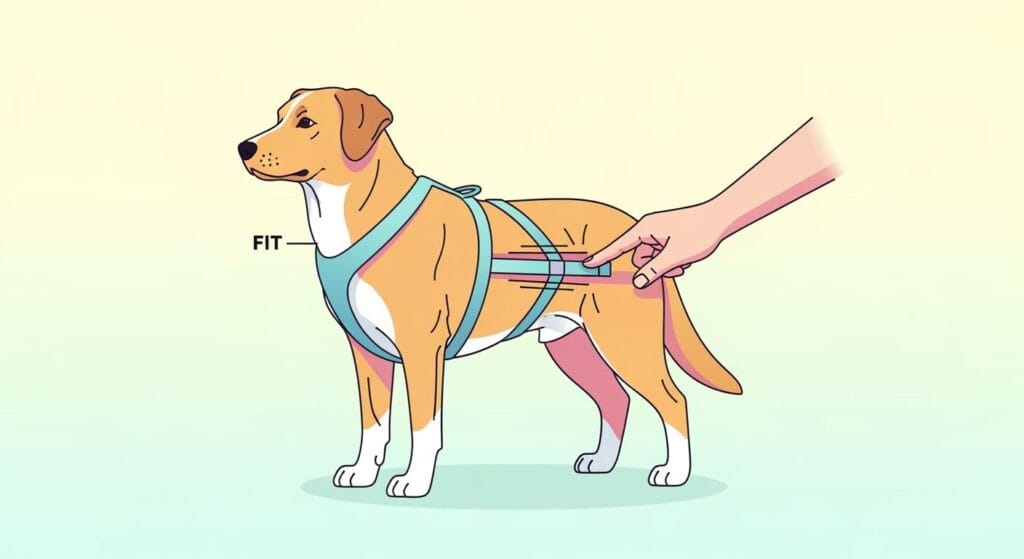
When you put the harness on, check for a visible gap between the strap and the armpit. Then walk a few steps and watch whether the strap migrates toward the leg during movement. Padding can help with minor friction but does not fix a strap sitting in the wrong position.

Tip: Redness or a clean streak of hair loss along the strap line usually means chafing. Scattered redness or odor across the whole area is more likely an allergy or skin condition – those need veterinary evaluation, not harness adjustment.

Throat, Shoulder Blade, and Belly Strap Pressure

Throat pressure matters because a chest plate or front strap sitting too high contacts the trachea, not just the skin. For brachycephalic dogs – breeds with shortened airway structure – this risk is higher than for dogs with a normal muzzle length. Watch for coughing or gagging during walks, especially when your dog pulls against the leash.

Scapular clearance matters because the shoulder blades rotate backward on each stride. When a strap crosses the shoulder blades, it interrupts that motion and often shortens the forelimb stride noticeably. Watch your dog walk away from you – if the front steps look clipped or asymmetric, shoulder restriction is a likely cause.

The belly strap should sit far enough behind the front legs to clear the armpit, but not so far back that it slips toward the waist and digs into the ribs. Check for indentation marks in the skin after a walk.

Note: Coughing, short strides, or skin marks that persist after adjustment are signals to stop using that harness configuration and try a different fit or style. If your dog shows pain or breathing difficulty, talk to your veterinarian – harness adjustment cannot address underlying medical causes.

Pressure Point Summary

Pressure PointWhat to CheckCommon SignsFast Fix
ThroatFront plate sits on neck, not chestCoughing, gagging, stressLower front to sternum level
Armpit (axilla)Strap contacts skin behind front legsRedness, hair loss, scratchingAdjust or switch to a design with a higher strap angle
Shoulder blade (scapula)Strap crosses shoulder bladesShort or asymmetric steps, stiff walkTry an open-shoulder or Y-front design
Belly strapStrap presses into ribs or shifts toward waistSkin indentation, rotation, escape riskReposition strap roughly one hand-width behind front legs

Measuring Your Dog for the Right Fit

Measuring a dog's chest girth and body dimensions for harness sizing

The right measurements help you match the harness to your dog’s body before you ever try it on. Girth is usually the most important number, but a complete fit requires measuring at several points. For a deeper look at measuring your dog for a harness – including how to handle dogs that move during measurement and how to read sizing charts accurately – that guide covers additional breed-specific considerations.

Use a soft fabric measuring tape. If your dog moves a lot, ask someone to help keep them still. Treats help.

  • Chest girth: wrap the tape around the widest part of the chest, roughly two to three inches behind the front legs. This is your primary sizing number.
  • Neck circumference: measure around the base of the neck, snug but not tight.
  • Back length: from the base of the neck to the base of the tail – useful for vest-style harnesses.
  • Belly circumference: one hand-width behind the front legs, around the belly – for setting the belly strap position.
  • Chest bridge: from the top of the sternum down to where the belly strap will sit.
  • Back bridge: from the neck to the belly strap position – helpful for H-style harness adjustment.

Write down each number and compare to the manufacturer’s sizing chart before committing to a size. When measurements fall between two sizes, usually choose the larger one for girth and check the adjustment range.

Fitting the Harness: Step-by-Step Adjustment

  1. Choose the size that matches your dog’s chest girth measurement first, then check against neck and back bridge measurements.
  2. Loosen all straps fully before putting the harness on.
  3. Place the harness on your dog and position the front plate so it rests on the chest, below the throat.
  4. Buckle the belly strap and slide it so it sits roughly one hand-width behind the front legs, clear of the armpit.
  5. Tighten each strap until the harness stays in place without pinching – snug but not constricting.
  6. Check that you can slide a finger under any strap without forcing it.
  7. Look for any contact at the armpits, throat, or shoulder blades.
  8. Confirm your dog can extend both front legs through a full step without the strap pulling back.
  9. Secure all buckles and clips, checking that none press directly into the skin.
  10. Take a short walk and watch for harness rotation, strap migration, or stride shortening.
  11. Examine all strap lines for redness or indentation after the walk.

Three-Step Fit Testing Protocol

Use this sequence the first time you fit a new harness, and repeat whenever you suspect the fit has changed:

  1. Static check: with the harness on and your dog standing, check all four pressure zones – throat, armpit, shoulder blade, belly strap. Confirm clearance at each point. Adjust any strap that feels too tight or too loose before moving on.
  2. Loaded walk: walk for about 10 minutes at a normal pace, including turns and direction changes. Watch for harness rotation, strap migration toward the armpit or throat, and any shortening of the front stride.
  3. Post-walk inspection: remove the harness immediately after and check all strap lines for redness, coat disturbance, or skin indentation. A fit that passes this check after three consecutive walks is usually stable.

Observation log – record for 3 walks before deciding to adjust or switch: strap position drift (yes/no), post-walk skin marks (location), stride quality (normal/shortened), dog resistance level (none/mild/strong), coughing or gagging (yes/no).

Pass/Fail Fit Checklist

Use this as a starting reference after each of the first few walks. The goal is to catch problems before they become sores or movement habits.

Check ItemPass SignalFail SignalFix
Chest ring stays centered on sternumDoes not rotate or drift off midlineTwists or drifts to one side within the first blockEqualize side straps; if drift continues, try a smaller size
Leash path clears the legsLeash moves straight without contacting legsLeash drags across a leg or shoulder during normal walkingShorten the leash; recheck chest ring position
No chafing at armpits or sternumSkin smooth after a full walkRedness, hair thinning, or skin fold irritationLoosen girth strap; confirm it clears the armpit
Normal stride on both front legsSteps look even and fullShortened or asymmetric stepsRaise chest strap for scapular clearance; consider a different design
Dog responds to gentle steeringTurns with light leash pressureStiffens, braces, or pulls harder against direction changeConfirm chest ring is at the sternum; consider a dual-clip style
No coughing or gagging during walkQuiet, normal breathingCoughing or gaggingLower the front plate away from the throat; recheck overall fit

Troubleshooting Common Fit Problems

If the checklist reveals a problem, use this table to narrow down the cause and a starting fix:

SymptomLikely CauseFast CheckFix
Harness sits high on neckFront strap too tight or harness too smallCheck if front plate presses on throatLoosen neck strap or try a larger size
Chest strap rubs armpitGirth strap positioned too close to front legsLook for redness behind front legs after walkMove strap back to clear the axilla
Harness rotates to one sideUneven strap tension left vs. rightWatch harness position during a full walkEqualize both side straps evenly
Dog resists putting on harnessPrevious discomfort or active pressure pointCheck for skin marks and stride quality on walkRefit all straps; try a different style if resistance continues
Buckle or clip digs into skinHardware positioned over a bony or soft areaFeel underneath the harness for hard contact pointsReposition hardware or try a different harness design

Common Fitting Mistakes

Most harness fit problems trace back to a small set of recurring errors:

  • Sizing by weight alone, skipping measurements: a harness sized only by weight may still sit incorrectly if chest and neck proportions differ from breed averages. Measuring girth first prevents most size-related problems.
  • Skipping all four pressure-point checks: putting the harness on without checking throat, armpit, shoulder blade, and belly strap means problems often go unnoticed until chafing appears.
  • Not testing movement: a harness can look correct when your dog is standing still and reveal real problems the moment your dog walks, turns, or backs up.
  • Missing fit checks as the dog grows: puppies and young dogs change body shape quickly – a harness that fit two months ago may already be causing restriction.
  • Overlooking hardware placement: clips and buckles resting over the shoulder or spine can create persistent pressure spots that are easy to miss without feeling underneath the harness.
MistakeReal-World Consequence
Sizing by weight only, no measurementsWrong girth fit, escape risk, or pressure marks
Skipping pressure-point checksChafing develops over days of undetected rubbing
No movement test after fittingStride restriction or harness rotation missed until damage occurs
No regular fit re-checksHarness becomes too tight or too loose as dog’s body changes

Tip: The most common single mistake is fitting the harness by size alone and skipping a movement check. A harness needs to be evaluated in motion – static positioning does not reveal rotation, strap migration, or stride restriction.

Signs the Fit Is Wrong

Check your dog’s skin along all strap lines after every walk for the first week with a new harness. The most consistent physical signs of a poor fit are redness, hair thinning, or a clean line of coat disturbance where a strap has been rubbing. These appear at the armpit, chest, or belly strap positions and are usually localized to the strap path – not scattered across the area.

Behavior changes are often the earlier signal. Dogs commonly show harness discomfort by coughing or gagging on walks, taking shorter front steps, slowing down, scratching at the harness area, or trying to back out. Any of these during or after a walk warrants a full fit re-check before the next outing.

When to Try a Different Harness Style

Adjusting straps can solve most minor fit problems, but some issues point to the harness design being the wrong match for your dog’s body shape. If you have corrected all four pressure zones and still see chafing or stride restriction after multiple walks, the style likely does not fit your dog’s proportions – and further strap adjustment will not resolve it.

Dogs with deep, narrow chests often fit better in a Y-front design than a standard H-style. Dogs with heavy shoulder muscle or wide chests may need a harness with broader webbing and more distributed surface area. For guidance on matching design type to body shape, the training harness fit and sizing checks guide covers how different harness styles interact with different builds. You can also browse dog harness styles by category to compare design types before making a switch.

What This Guide Will Not Tell You

  • Brand recommendations or price comparisons: those belong in a buying guide. This guide covers fit principles only.
  • Medical diagnosis: persistent sores, pain signs, or movement problems that do not resolve after a proper refit need veterinary evaluation – not more harness adjustment.
  • Professional fitting assessment: if you want a trained professional to evaluate your dog’s movement and harness compatibility, look for a CCPDT or IAABC-affiliated trainer in your area.
  • Sport or working harness standards: tracking, carting, canicross, and service dog harnesses follow different fit criteria that fall outside this guide’s scope.

FAQ

How often should you check your dog’s harness fit?

Check every few weeks, and always after noticeable weight change or a visible puppy growth phase.

Can a dog harness cause long-term skin problems?

Yes – repeated rubbing or incorrect strap placement can cause chafing, sores, or localized hair loss if the fit is not corrected.

What should you do if your dog resists wearing a harness?

Check all four pressure points first – resistance usually signals discomfort rather than a simple preference, and a refit or different style often resolves it.

Fitting Checks: Quick Summary

  • The harness should clear the throat, armpits, and shoulder blades, with the belly strap sitting roughly one hand-width behind the front legs.
  • Evaluate the fit during movement – stride length, harness rotation, and strap position during a walk tell you more than static positioning.
  • Re-check after weight changes, growth phases, or any sign of redness, hair loss, or reluctance to walk.

Disclaimer: This guide is for general fitting reference only and does not constitute veterinary or behavioral advice. If your dog shows signs of pain, breathing difficulty, or skin injury that persists after harness adjustment, consult your veterinarian.

Get A Free Quote Now !

Table of Contents

Blog

Doberman Dog Harness with Softer Edges for Short Coats

A doberman dog harness with softer edges stays in place on walks, reducing chafing and skin marks for short-coated Dobermans. Comfort and fit matter most.

How Should a Harness Fit on a Dog Without Armpit Rub

Learn how a harness should fit on a dog: clear the armpits, rest on the chest, allow full stride. Measurement steps, fit checklist, and troubleshooting.

Medium Dog Bed Washable Why Shape Recovery Matters Most

Learn how to choose a medium dog bed washable option that actually holds its shape after every wash - plus a post-wash checklist and replacement signs.

Best Harness for Dog That Pulls When the Wrong Harness Makes Pulling Worse

Choose the best harness for a pulling dog by matching clip design to pulling style - front-clip, back-clip, or dual-clip - and checking fit after every walk.

Body Harness Dog Does Extra Coverage Improve Walks

Learn when extra coverage in a dog body harness improves control and safety-and when it causes heat, bulk, or restricted movement. Fit checklist included.

How to Get Dog to Stop Pulling Leash Using the Stop and Wait Method

Stop leash pulling with the Stop and Wait method. Learn how to get dog to stop pulling leash for safer, calmer walks using positive training steps.
Scroll to Top

If you have any questions, please do not hesitate to contact us.

Get A Free Quote Now !

Welsh corgi wearing a dog harness on a walk outdoors