
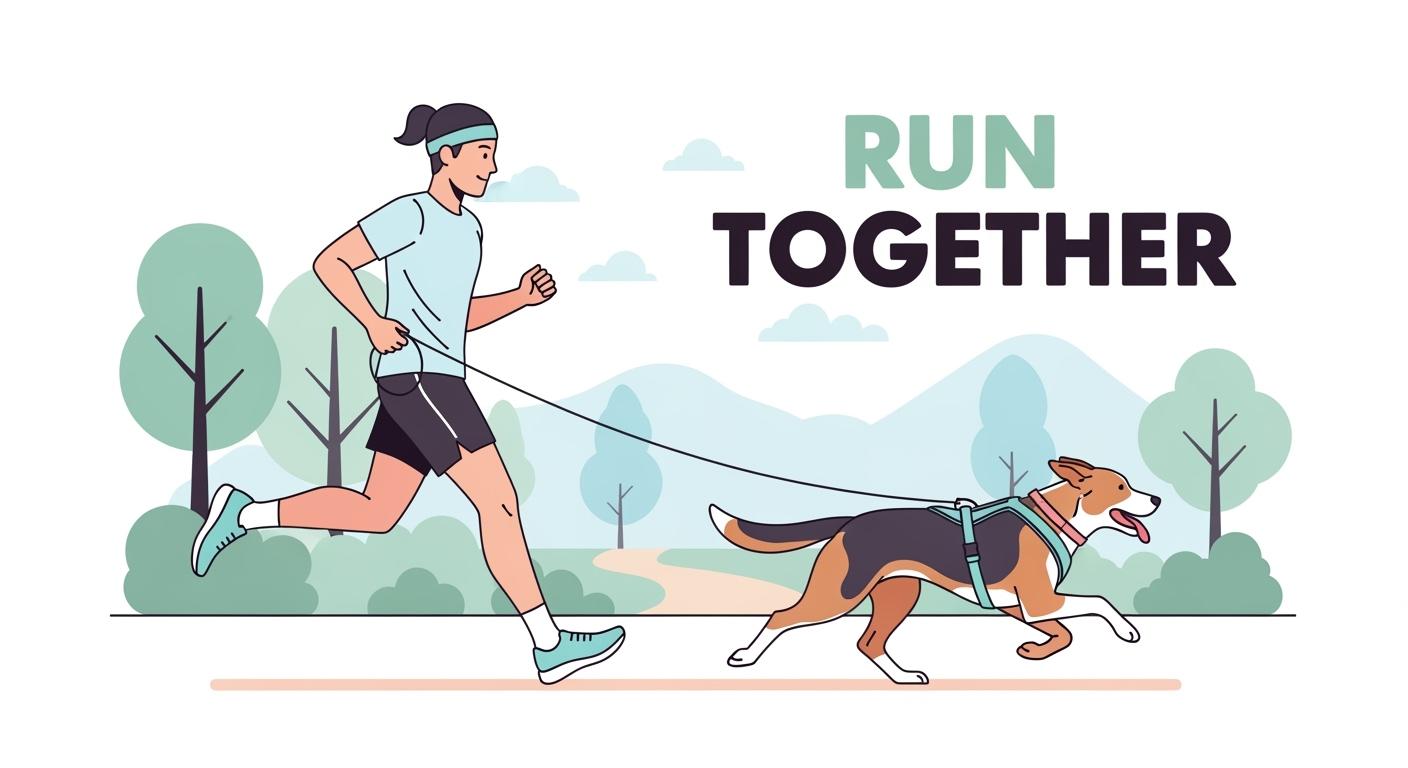
The best harness to run with a dog should stay quiet on the body when speed increases. A harness that feels fine on a slow walk can start bouncing, twisting, rubbing, or pulling off center once the dog settles into a running pace. The better running fit is not the heaviest or most controlling design. It is the one that keeps the chest stable, leaves the shoulders free, and holds a clean leash path without crowding the throat or front legs.
Key Takeaways
- Pick a harness that fits snug and stable. The goal is less bounce without squeezing the chest or limiting stride.
- Do not assume every no-pull harness is the best choice for running. Some front-heavy designs can interfere with shoulder movement or pull the harness off center during faster movement.
- Check your dog’s harness in motion, not only while standing still. Running fit should be judged by bounce, side shift, rubbing, heat, and recovery after the run.
Why Harnesses Bounce When Running
Movement changes the fit
When your dog runs, each stride creates repeated vertical and side-to-side force. That is why bounce shows up even when the harness looked fine before the run started. A loose chest fit, a high front section, uneven strap tension, or a harness shape that does not match your dog’s body can all turn small movement into repeated bounce.
Bounce is not just annoying. It often means the harness is moving instead of staying quiet against the body. Once that happens, rubbing, twisting, short steps, and unstable leash handling become more likely.
Tip: A good running harness should feel quieter after the first few minutes of running, not more chaotic.
Harness types and side shift
Different harness styles handle running force differently. A Y-front shape often leaves more room for shoulder movement, but it still needs correct strap balance. A vest-style harness can feel secure at first, but extra coverage may trap heat or shift if the body panel is too soft. A longer pull-style harness may work better for dogs that move forward steadily, but it is a poor match if the dog cuts sideways, surges unpredictably, or does not run in a straight, consistent line.
The best harness to run with dog depends less on labels like “running” or “no-pull” and more on whether the harness stays centered, keeps the chest stable, and leaves the shoulders free at your dog’s real running pace.
Comparison table: Y-front, vest, pull-style
| Harness Type | Main Use Case | Main Benefit | Main Watchout | Who Should Skip It |
|---|---|---|---|---|
| Y-front harness | General running and active walking | Usually better shoulder freedom | Can still twist or rub if the chest fit is off | Dogs whose body shape keeps opening neck gaps |
| Vest-style harness | Dogs needing softer body contact | Pressure spreads over a wider area | Can trap heat or limit motion if bulky | Dogs that overheat easily or take shorter steps in padded gear |
| Pull-style running harness | Steady forward running with consistent leash path | Can distribute forward force more evenly | Poor fit can increase side drift or awkward load | Dogs that zigzag, stop suddenly, or do not run forward steadily |
Best Harness to Run with Dog: Key Features
Shoulder room matters more than “control” claims
You want your dog to run safely and move easily. The first thing to protect is natural stride. A running harness should not sit across the front of the shoulder in a way that shortens reach or makes the dog run with choppy steps. If the harness creates “less pull” by interrupting movement, that is not the same as a good running fit.
The harness should also sit low enough at the front to keep pressure away from the throat. It should stay quiet on the chest when the dog speeds up, turns lightly, or changes surface.
What actually helps smoother runs
The best harness to run with dog usually shares the same practical traits: stable chest contact, clear shoulder room, breathable material, secure hardware, and a leash attachment point that does not keep dragging the harness to one side. Lightweight materials help, but they only matter if the harness still stays centered and strong enough under repeated motion.
| Feature | Why It Helps for Running | What to Watch Out For |
|---|---|---|
| Stable chest fit | Reduces bounce and side shift | Too tight can crowd breathing or front-leg motion |
| Shoulder clearance | Helps natural stride at faster pace | Some “control” designs reduce this clearance |
| Breathable materials | Lower heat buildup during sustained exercise | Light fabric alone does not fix poor fit |
| Secure hardware | Keeps the leash path steady under repeated load | Bulky hardware can add weight or swing |
| Soft edge contact | Helps reduce rubbing during long runs | Soft edges still fail if the strap path is wrong |
About no-pull harnesses and running
Not every no-pull harness is a true running harness. Some dogs do better with a front-clip option during training walks, but once you move into steady running, the harness still has to pass a movement test. If the front clip keeps pulling the harness sideways, shortens the dog’s stride, or adds bounce, it is not the right setup for running even if it helps during slower control work.
A running harness should improve rhythm, not just handler leverage. If your dog still needs strong redirection every few seconds, slow down and work on leash skills before expecting clean running form.
Pass/Fail checklist table
Check the harness before the run and again after a few minutes of movement.
| Check Item | Pass Signal | Fail Signal | Fix |
|---|---|---|---|
| Shoulder room | Dog runs with full, even stride | Short steps or stiff front movement | Use a harness with cleaner shoulder clearance |
| Chest stability | Harness stays centered with low bounce | Twisting, drifting, or repeated bounce | Rebalance straps or change harness cut |
| Leash path | Leash stays smooth without side drag | Leash keeps pulling the harness off line | Recheck attachment point and body fit |
| Heat control | Dog recovers normally and does not overheat | Heavy panting, dullness, or hot contact areas | Stop, cool down, shorten the run, or switch material and timing |
| Rubbing risk | No red marks or hair wear after the run | Redness, hot spots, or repeated scratching | Change strap path or use softer edge contact |
| Security | No escape gaps under motion | Neck gap or back-out risk appears | Refit or stop using that harness for running |
Note: If you see heat stress, breathing trouble, limping, gait change, rubbing, or repeated refusal to keep moving, stop the run and let your dog recover. This blog does not give medical advice.
Signs of Harness Failure and Fixes
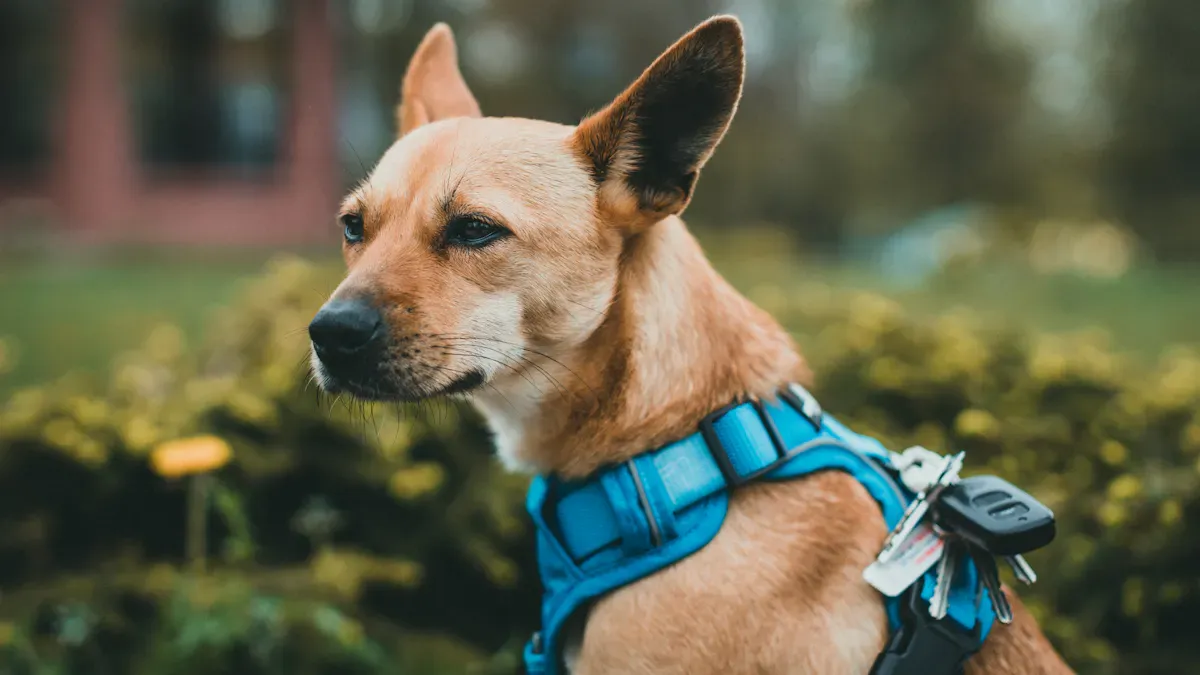
Troubleshooting table: symptoms and solutions
You need to catch harness problems early, because running repeats the same fit error over and over.
| Symptom | Likely Cause | Fast Check | Fix |
|---|---|---|---|
| Rubbing or chafing | Wrong strap path or repeated bounce | Look for red marks or flattened hair after the run | Adjust fit or change harness shape |
| Harness twisting | Chest mismatch or uneven strap tension | Watch the harness during turns and pace changes | Rebalance both sides or choose a more stable design |
| Shortened steps | Shoulder restriction or front panel crowding | Compare stride with and without the harness | Stop using designs that block front reach |
| Heat buildup | Too much coverage, hot timing, or poor ventilation | Watch for heavy panting, slowing, or poor recovery | Run in cooler conditions and use better airflow materials |
| Side drag on leash | Attachment point or dog movement pattern is mismatched | Notice whether the leash keeps pulling one side of the chest | Change leash point or switch harness style |
Common mistakes and real consequences
Many runners make the same mistakes with harnesses. They tighten the harness to stop bounce without checking stride. They choose a “control” harness and assume it must also be a running harness. They test the fit in the house but not at running speed. They keep running after the dog starts taking shorter steps or panting hard.
- Over-tightening can reduce comfort and freedom of movement.
- Wrong harness shape can increase bounce instead of reducing it.
- Ignoring heat and pace can turn a fit issue into a recovery issue.
- Leaving the harness on too long after the run can increase rubbing and skin problems.
- Using damaged or stretched gear makes every other problem harder to control.
When to stop and seek help
Stop the run if your dog shows limping, repeated short stepping, heavy panting that does not settle, abnormal gums, weakness, disorientation, or refusal to keep moving. These signs matter more than finishing the route. Move to shade, let your dog recover, offer water appropriately for the situation, and do not restart unless your dog is clearly back to normal. If symptoms continue or seem severe, contact your veterinarian.
Reminder: The best harness to run with dog should help the run feel smoother, not force your dog to work around the equipment.
Choosing the right harness helps you run with less bounce and fewer fit problems. Match the harness to your dog’s real running pattern, not just to a product label. Prioritize shoulder freedom, chest stability, lower heat buildup, and a leash path that stays clean under motion. If the harness keeps twisting, rubbing, overheating, or changing your dog’s stride, it is not the right running setup.
FAQ
How do you know if your dog’s harness fits right for running?
You should check it while your dog is moving, not only while standing still. A good running fit stays centered, keeps bounce low, leaves the shoulders free, and does not create red marks after the run.
What should you do if your dog stops or resists while running?
- Pause the run.
- Check for heat, rubbing, harness twist, or gait change.
- Let your dog recover before deciding whether to continue.
Can you use the same harness for walking and running?
Sometimes, yes. But a harness that works for walking may still bounce, twist, or restrict stride once speed increases. Always test the harness at actual running pace before treating it as a true running setup.






