
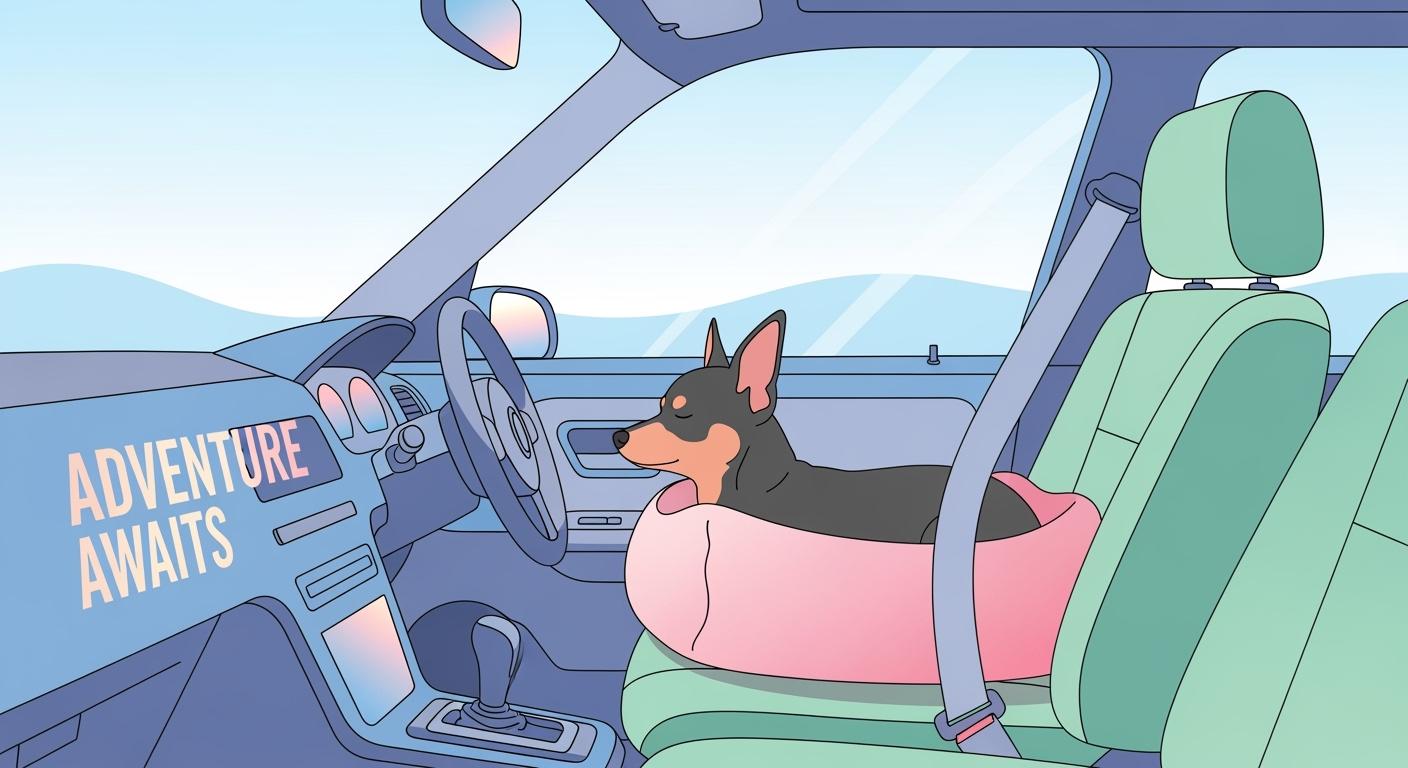
A dog bed for car front seat use may feel convenient because your dog stays close and can see you, but convenience is not the same as crash safety. A soft bed in the front passenger seat does not protect against airbags, sudden stops, or driver distraction. In most driving situations, the safer choice is a back-seat setup with a properly secured restraint system, carrier, or pet travel seat that matches your dog’s size and behavior.
Key Takeaways
- Prioritize your dog’s safety by using the back seat whenever possible. Front passenger space may feel easier, but it adds airbag and distraction risk.
- Use a dog car seat or harness to secure your pet during travel. A bed alone is for comfort, not for crash control.
- Check your travel setup before every trip. A bed or seat that slides, tips, or leaves the dog able to reach forward is not working well enough.
Dog Bed for Car Front Seat vs Back Seat
Why owners pick the front seat
A lot of people pick a dog bed for car front seat use because it feels simple. You can reach your dog more easily. Some dogs look calmer when they can see their owner, and some owners like being able to monitor facial expression, posture, or stress more closely.
That comfort can be real, but it does not change the front seat’s main problem. The front seat is still a passenger airbag zone, and it is also the area closest to the driver’s hands, lap, and dashboard. A bed can make the seat feel softer, but it does not turn the front seat into a restraint system.
Comparison table: front seat bed, back seat bed, dog car seats
| Setup | Main Benefit | Main Watchout | Who Should Skip It |
|---|---|---|---|
| Dog bed for car front seat | Easy to reach and easy to monitor | Airbag zone, distraction risk, not a restraint | Anyone trying to improve crash safety during normal driving |
| Dog bed for back seat | More separation from the driver and front airbags | Still needs a proper restraint path and stable placement | Owners expecting the bed alone to stop movement in a crash |
| Dog car seats | Better control of the dog’s travel zone when installed correctly | Fit and installation still matter | Dogs that do not match the product size or cannot tolerate the setup |
Who should avoid the front seat
You should avoid front-seat dog travel during normal driving if your vehicle has a passenger airbag, if your dog is active, if your dog can climb toward the driver, or if your dog does not stay calmly in one position. Small dogs, dogs that panic, and dogs that try to reach your lap are especially poor candidates for the front seat.
Tip: “Calm in the front seat” is not the same as “protected in the front seat.” A quiet dog can still be in the wrong position for a sudden stop or airbag deployment.
Safety Risks of Front Seat Travel
Airbag risk and front-seat force
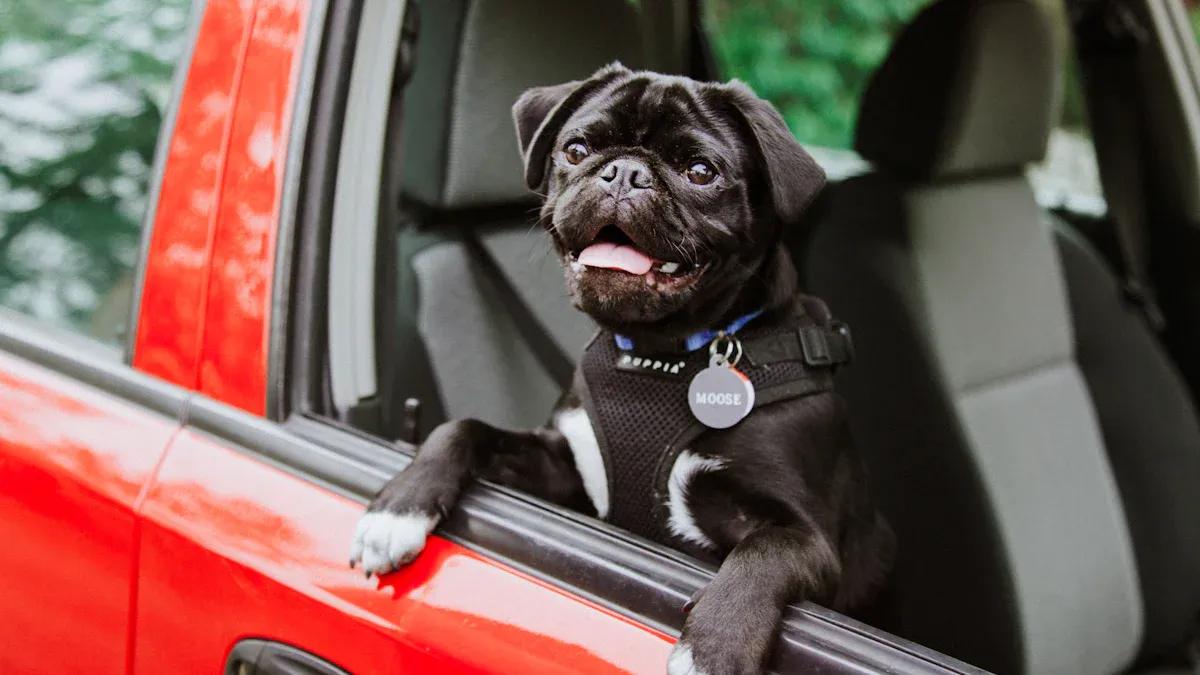
The biggest front-seat problem is not softness. It is placement. Passenger airbags are designed for adult human crash protection, not for dogs resting on a seat bed. That is why a front-seat dog bed should not be treated as a safety solution. If your dog rides in front, the bed does nothing to remove airbag risk.
A bed also does not control forward motion in sudden braking. If the dog is not properly restrained, the body can still slide, launch, twist, or strike the dashboard area even if the bed itself looks stable.
Note: A bed can improve comfort. It cannot replace a travel restraint.
Distraction and reach-forward problems
The second front-seat risk is distraction. If your dog can reach the dashboard, lean toward you, shift onto the console, or paw at your arm, the setup has already failed as a driving setup. This risk matters even before any crash happens.
Many owners underestimate how fast a quiet dog can move when startled by a horn, a stop, a new smell, or another dog outside the window. A front-seat bed may look contained while parked and still become unstable once the car starts moving.
Common mistakes and real consequences
Most front-seat mistakes come from confusing comfort equipment with safety equipment. The common pattern is: the dog looks relaxed, the owner assumes the bed is enough, and the actual weak points go unchecked.
- Using a front-seat bed with no restraint at all
- Letting the dog lean into the driver’s space
- Using a bed that slides on the seat during turns
- Assuming “small dog” means “low risk”
- Ignoring the airbag zone because the dog appears calm
| Check Item | Pass Signal | Fail Signal | Fix |
|---|---|---|---|
| Dog rides in back seat | Yes | No | Move the setup to the back seat |
| Dog is restrained | Yes | No | Use an appropriate restraint setup |
| Bed stays planted | Yes | No | Re-anchor or stop using that bed in the car |
| Dog cannot reach driver | Yes | No | Shorten the travel zone or change the setup |
| Travel setup supports safety | Yes | No | Switch to a safer back-seat option |
If you want a safer travel setup, focus on restraint and placement first. Comfort should come after those two decisions, not before them.
Dog Car Seats and Troubleshooting
Signs your setup is failing
You want your dog’s travel setup to stay calm and predictable. If the bed moves, the tether twists, the dog can lean forward, or the dog keeps shifting to find balance, the system is not doing enough. Those are early warning signs, not small annoyances.
- The bed slides during turns or braking
- The dog can step forward toward the dash or console
- The restraint twists or leaves too much slack
- The dog keeps bracing, standing, or changing position
- The dog appears calm when parked but unstable once driving starts
Troubleshooting table: symptoms, causes, fixes
| Symptom | Likely Cause | Fast Check | Fix |
|---|---|---|---|
| Bed slides in the car | Loose anchors or unstable seat contact | Push the bed side to side before driving | Tighten the setup or stop using that bed |
| Tether twists or tangles | Poor routing or too much slack | Check the restraint path after loading the dog | Shorten and reroute before the next trip |
| Dog reaches dashboard | Travel zone is too long or the seat choice is wrong | See whether your dog can lean far forward | Move the setup to the back seat |
| Dog keeps shifting or bracing | Bed is unstable or the setup does not support the body well | Watch what happens in gentle turns and stops | Choose a more stable travel solution |
| Harness feels loose | Fit changed or the setup was never right | Recheck fit before the trip | Refit or replace the restraint setup |
What to do if your dog is unsafe
If your dog looks unsafe during travel, stop solving it with small adjustments to the front seat. The better move is usually to change the travel position entirely. A front-seat bed that still leaves airbag exposure or driver reach-forward risk is the wrong setup even if you tighten one more strap.
The safer direction is usually:
- Move the dog to the back seat
- Use a travel setup designed to stay in place
- Make sure your dog cannot reach the driver
- Recheck fit and stability before every trip
Alert: Never leave your pet alone in a parked car. Heat can build dangerously fast, even when the outside temperature does not feel extreme.
A dog bed for car front seat use may feel easy, but it is usually the wrong place to solve pet travel comfort. A bed can soften the ride, but it cannot remove passenger-airbag risk or replace proper restraint. For most driving situations, the better plan is a secure back-seat setup that protects your dog, reduces distraction, and still gives enough comfort for the trip.
FAQ
Can you use a dog bed in the car front seat if it is crash-tested and certified?
You should not assume a bed is safe just because it sounds more serious or better built. The first question is still placement. A front-seat bed is still in the airbag zone and still needs a proper restraint strategy.
What is the safest way to secure your pet during car travel?
You should use a travel setup that keeps your dog restrained in the back seat and prevents movement into the driver’s area. The exact product can vary, but the safety priorities stay the same: placement, restraint, and stability.
Why do experts recommend the back seat for dog travel?
The back seat helps reduce front passenger airbag exposure and creates more separation from the driver. It is usually the safer place to build a stable travel setup for your dog.






