
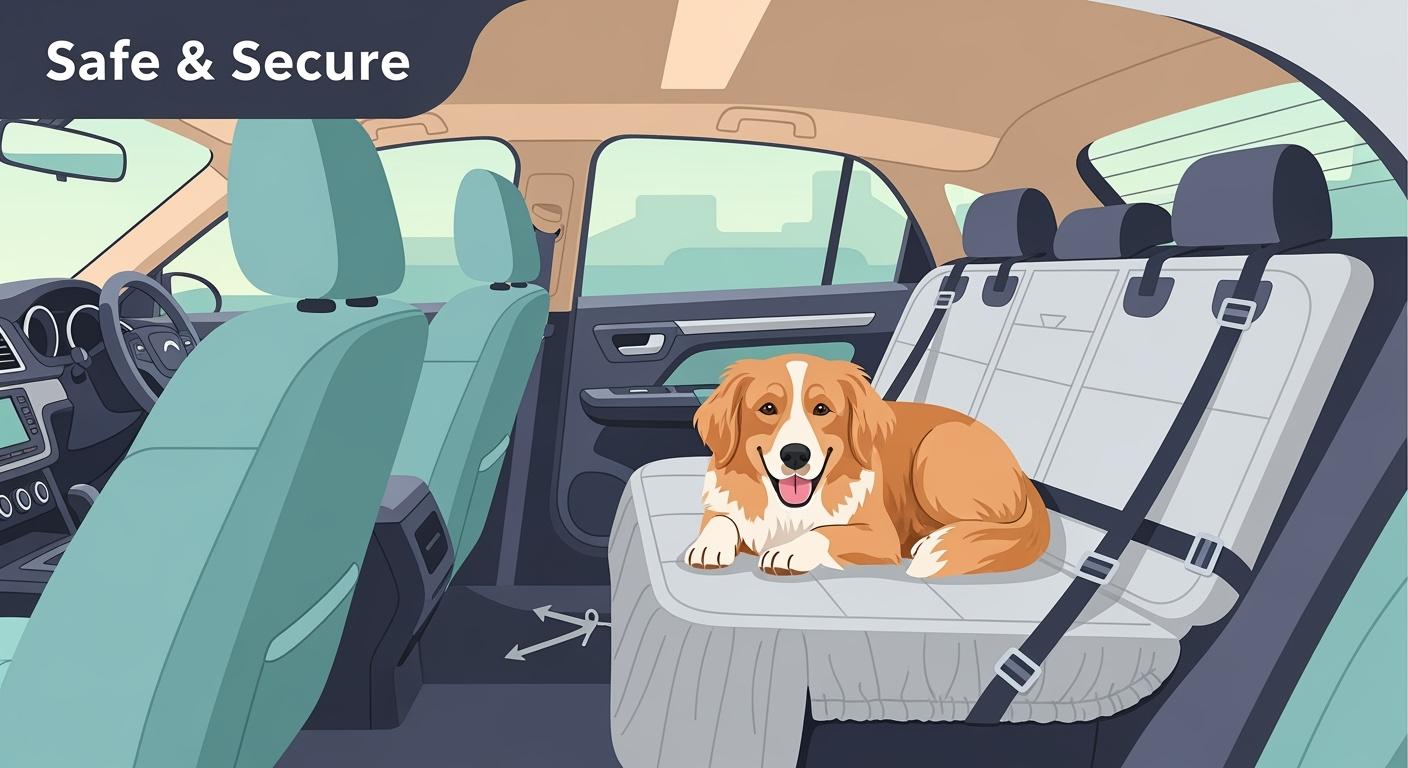
A dog car rear seat cover works best when it stays flat, keeps exposed edges under control, and gives your dog enough grip to settle in the back seat. The problem is that many covers look secure when parked but start shifting once the dog climbs in, turns around, or leans toward the door. That is when gaps show up, buckle openings disappear, and the surface starts to feel slick. A rear seat cover helps protect the seat and makes cleanup easier, but it does not replace a travel harness or crate. The better question is not just whether the cover is waterproof or padded, but whether it stays put in real driving conditions.
Key Takeaways
- Choose a rear seat cover with non-slip backing, usable anchors, and a shape that stays flat after your dog gets in. Stability matters more than just extra material.
- Use waterproof covers when muddy paws, wet coats, or repeated cleanup are part of normal travel. Waterproofing is most useful when the cover also keeps its shape.
- Always check buckle access, edge curl, and paw grip before you drive. A cover that blocks the buckle or slides underfoot quickly becomes a daily annoyance.
What a rear seat cover actually helps with
Seat protection and usable traction
You want your car to stay clean and your dog to feel secure. A rear seat cover helps with fur, dirt, drool, and the repeated wear that shows up on seat tops and edges. It is also useful when your dog jumps in with wet paws or turns in place before settling down. Protection matters, but traction matters just as much. A cover that looks durable but feels slick under the paws can make the dog brace, slide, or keep readjusting on every turn.
The most usable covers combine a surface your dog can stand on with a backing that grips the seat underneath. If the top is too smooth, or the lower side drifts across leather or cloth, the cover may still protect the car while making the ride feel less stable for the dog.
Tip: Do not judge traction by touch alone. Let your dog step, turn, and lie down on the cover before trusting it for a longer drive.
Side flaps and door-side gaps
Side flaps matter because many scratches and dirty contact points happen at the outer edges, not just on the middle of the seat. A flap can help cover the door-side edge when your dog jumps in, leans out, or braces one paw while turning. Gap control matters for the same reason. Even small exposed spaces near the door or seat edge can collect dirt quickly and make the layout feel unfinished.
The tradeoff is that extra coverage only helps if it stays where it should. Flaps that fold inward, curl upward, or bunch near the edge can look protective at first and then become one more thing to keep fixing. In real use, a flatter cover with slightly less fabric often works better than a wider one that never settles properly.
What a seat cover does not replace
A rear seat cover is not a restraint system. Its job is to protect the seat, improve surface stability, and reduce mess. It does not secure the dog by itself in a sudden stop or sharp maneuver. That is why buckle access still matters. If the seat cover makes it harder to reach the buckle opening, the setup becomes less useful the moment you try to attach a travel harness or need the seat for a passenger.
Safety reminder: A rear seat cover can reduce shifting fabric and exposed gaps, but it should work alongside a proper travel setup, not replace one.
| What It Helps With | What You Still Need to Check |
|---|---|
| Seat protection | Whether dirt, claws, and wet paws are reaching the edges or door side anyway. |
| Surface comfort | Whether your dog can stand and turn without slipping. |
| Cleaner layout | Whether buckle openings stay usable and the cover remains flat after movement. |
Which layout works best in real use
Bench, side-flap, and hammock styles
You want a good dog car seat cover that fits both your car and the way your dog rides. A bench cover usually keeps things simpler. It covers the seat bottom and back, and it often makes buckle access easier. That is helpful when the dog already rides calmly or when the rear seat still needs to work for people.
Side-flap covers add protection where dogs often step in and out. They are useful when the outer seat edge and door-side contact zone take the most abuse. Hammock styles add more containment by covering the front gap and helping block the footwell. They usually make more sense for dogs that move a lot, pace during the ride, or try to climb forward.
| Fit factor | Bench seat cover | Hammock | Real-world takeaway |
|---|---|---|---|
| Seat coverage | Covers the seat bottom and back without changing the cabin layout much | Covers the seat bottom, back, and front gap for a more enclosed setup | Bench feels simpler; hammock adds more containment |
| Door-side exposure | Depends more on seat shape and side-flap design | Helps more with broad coverage, but still needs edge control | Neither layout works well if the edges keep curling |
| Buckle access | Usually easier to keep usable | Works when the openings line up cleanly | Check this before every trip, not just once |
| Dog movement control | Works better for calmer dogs | Usually better for dogs that shift position often | Choose hammock when the dog keeps edging forward or toward the gap |
| Daily setup effort | Often faster to install and remove | Usually needs more alignment and rechecking | The best layout is the one you can reinstall correctly every time |
Bench covers often suit calmer dogs and shorter trips. Hammock styles help more when the dog moves around or when the front gap is part of the problem. Side flaps are useful, but only when they stay down instead of folding up every time the dog gets in.
Tip: Install the cover, then open and close the rear door once or twice. That quick check often shows whether the side flap is actually helping or just hanging there.
What waterproofing helps with
Waterproofing matters most when cleanup is part of regular use. Wet coats, muddy paws, snowmelt, and drool are all easier to manage when the top layer does not let moisture soak through quickly. That does not mean every waterproof cover behaves the same way in daily use. Some hold their shape well after cleaning, while others start curling, feeling stiff, or sliding more once washed.
- Waterproofing helps most on rainy, muddy, or repeated travel days.
- A wipe-clean surface is useful only when the cover still lies flat afterward.
- Cleanup gets easier when dirt stays near the surface instead of sinking into the fabric.
- If the cover becomes slick after cleaning, the surface protection may be working while the grip gets worse.
You usually get the best result when waterproofing, shape retention, and grip all work together. A water-resistant cover that stays stable can be more useful than a fully waterproof one that bunches every trip.
Note: A cover that protects against mess but becomes hard to reinstall neatly after washing is less practical than it first appears.
Slip control and surface grip
Slip control is where many rear seat covers either become useful or frustrating. A cover can have good materials, side flaps, and broad coverage, but if the lower side slides across the seat or the top makes the dog brace on turns, the whole setup starts feeling unstable. This shows up fast on leather seats, smooth cloth seats, and in vehicles where the bench shape is shallow or slightly angled.
- Non-slip backing helps only when it stays in full contact with the seat.
- Anchors and straps matter more when the dog jumps in with force or changes position often.
- Grip should feel usable under the paws, not just “rubbery” underneath the cover.
- A well-anchored cover still needs a top surface that your dog can stand on confidently.
Some covers look secure until the dog turns or braces during a stop. That is when the fabric starts shifting sideways, the edges lift, and the dog begins correcting for the cover instead of settling on it.
Safety alert: If your dog keeps sliding, bracing, or rebalancing through normal turns, stop and recheck the setup. The problem may be the cover, not the dog.
When each style helps and when it becomes annoying
You do not need the most coverage in every car. You need the layout that solves the problem your current setup actually has.
| Style | Where It Usually Works Best |
|---|---|
| Bench seat cover | Calmer dogs, simpler daily use, and cars where buckle access matters a lot. |
| Side-flap cover | Dogs that scratch or dirty the outer seat edge when climbing in and out. |
| Hammock | Dogs that move around a lot, edge toward the front gap, or need more contained rear-seat space. |
| Waterproof-heavy setup | Muddy weather, repeated travel, and cars where cleanup speed matters more than plush feel. |
- Bench seat cover: Good when you want easier buckle reach and a simpler layout. Less helpful when your dog keeps moving toward the front gap.
- Hammock: Good when you need more containment and more front-gap coverage. Less helpful when the openings never line up cleanly with your buckles.
- Waterproof cover: Good when dirt and moisture are a regular problem. Less helpful if the cover fits poorly and keeps exposing the same edges.
Pick the style that fixes the most annoying daily problem first, then check whether the install stays neat after real use.
Reminder: The better cover is not the one with the longest feature list. It is the one that still fits right after the dog climbs in, turns around, and rides for twenty minutes.
Setup mistakes and fast checks before you drive
Common installation mistakes
Most rear seat cover problems come from setup, not from one dramatic failure. Small errors are what make a cover drift, bunch, or expose the same dirty edge every time.
- Installing the cover over hair or debris so the backing never sits flat against the seat.
- Using only the obvious straps while leaving anchors loose or uneven.
- Pulling the cover tight in one direction and creating extra slack in another.
- Ignoring how the side flaps sit after the rear door opens and closes.
- Assuming buckle openings are usable without actually clipping in your travel setup.
Tip: After installation, sit in the back seat and use the cover like you would on a real trip. That quick test catches blocked buckles, loose sections, and awkward flap placement fast.
Pass/Fail Checklist for buckle access and paw grip
You need to confirm two things before each drive: the buckle opening is still usable, and the dog can stand and settle without slipping.
| Check item | Pass signal | Fail signal | Fix |
|---|---|---|---|
| Buckle access | Buckles stay easy to reach and clip without digging under fabric | Openings drift, collapse, or stay hidden under tension | Reposition the cover and recheck anchor balance |
| Paw grip | Dog can step, turn, and settle without bracing | Dog slides, spreads stance, or keeps readjusting | Retighten the cover or rethink the surface and fit |
A good rear seat cover should make the travel setup feel calmer, not busier.
Troubleshooting shifting and gaps
If the cover shifts, bunches, or keeps exposing the same trouble spots, the easiest fix is usually a targeted recheck rather than pulling everything off and starting over.
| Symptom | Likely cause | Fast check | Fix |
|---|---|---|---|
| Cover shifts sideways | Uneven anchors, loose straps, or a seat shape the cover is fighting against | Tug both sides and compare how much movement you get | Rebalance the install instead of only tightening one side |
| Edges curl up | Fit mismatch, wash-related memory, or tension pulling the cover inward | Check the corners and side flaps after reinstalling | Reshape, smooth the edges, and reset the strap tension |
| Buckles are hard to reach | Openings are misaligned or the cover shifts after your dog moves | Clip in the restraint before you start driving | Realign the cover and confirm the opening stays usable under load |
| Dog slides on the cover | Top surface is slick, the base is moving, or both | Watch the dog through a short low-speed test drive | Recheck the install and surface grip before blaming the dog’s behavior |
Always do a short test drive after installation or washing. If the cover shifts, the dog braces, or the edges start opening up, stop and fix the layout before the next longer trip.
Choosing a rear seat cover with good anti-shift behavior, useful gap control, and stable paw grip makes daily car travel easier to manage.
- Non-slip backing and a balanced install reduce the constant need to pull the cover back into place.
- Usable buckle openings matter just as much as wide coverage.
| Feature | What It Improves |
|---|---|
| Non-slip backing | Helps the cover stay where you installed it. |
| Well-placed flap and edge coverage | Reduces exposed dirty zones and repeated edge contact. |
Recheck your cover after the dog gets in, not only before. That is when most shifting and gap problems finally show themselves.
Never leave your pet alone in a parked vehicle, even for a short time.
FAQ
How do you keep a dog car seat cover from sliding?
Use all anchors and straps, then check whether the cover still stays centered after your dog climbs in and moves around. A stable install depends on both the backing and the way the cover is tensioned across the seat.
Can you wash a dog car rear seat cover in a machine?
Many covers can be machine washed, but you should check the care label first. After washing, pay attention to whether the edges curl, the shape changes, or the grip feels different when you reinstall it.
Does a seat cover block seat belt access?
It can, especially when the buckle openings drift out of place after installation or movement. Always clip in your travel setup before driving so you know the buckle opening is actually usable.






