
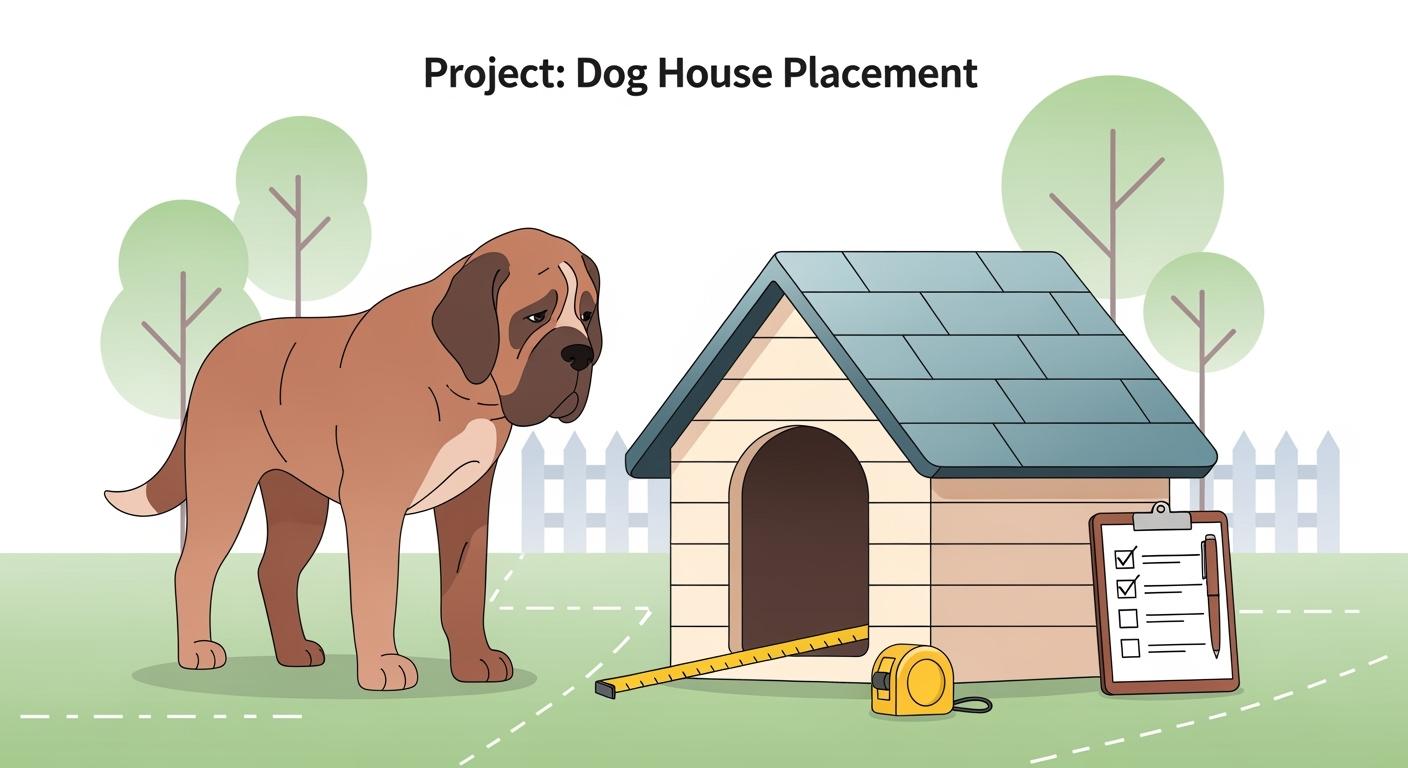
A giant dog house that looks massive in the store can still fail your dog if the floor sags under weight, the entry forces an awkward step-up, or the roof traps heat because the vents are too small. Large breeds spend more time lying flat and shifting positions, so a house that barely fits a standing dog usually creates pressure points, restricted airflow, and a floor that stays damp longer than it should. Getting fit, support, and placement right before you commit saves you from fixing problems after the house is already in the yard.
Note: This guide covers sizing, structural checks, and yard placement for outdoor dog houses. It does not replace veterinary advice for dogs with joint conditions, heat sensitivity, or anxiety that affects outdoor comfort.
Key Takeaways
Measure your dog’s actual body dimensions and compare them to the usable interior space — not the outer shell size. A stable floor and enough roof clearance matter more than extra square footage. Place the house on higher ground with shade and drainage, and run a short observation check to see how your dog actually settles before leaving the setup long-term. For more on weatherproofing and smart sizing, check our placement guide.
Fit and Support Checks
Interior Space and Entry
Interior room determines whether your dog can settle naturally or ends up sleeping in a cramped position that stresses joints over time. A house that looks large from outside often loses usable space to thick walls, sloped rooflines, or a raised entry lip.
Start with three measurements from your dog:
- Measure shoulder height while your dog stands naturally on flat ground.
- Measure body length from the base of the neck to the base of the tail along the spine.
- Measure the widest point of the chest so you can judge how the dog will fit when lying on its side.
Compare these to the usable interior length, width, and wall height. Your dog should be able to turn around fully, sit up without the head touching the roof, and stretch out flat without pressing into the walls.
Entry matters too. The step-over lip should be low enough that your dog walks in without jumping or ducking. If your dog hesitates at the entry, the opening is usually too narrow or the step is too high for comfortable daily use.
Tip: Watch your dog enter and exit several times on the first day. Hesitation or awkward ducking usually means the entry dimensions need adjustment.
Floor Stability and Roof Clearance
Floor strength matters because a large dog’s weight concentrates on a smaller area when lying down, and a floor that flexes or sags can create pressure points and trap moisture underneath. Press firmly on the floor surface — it should stay rigid and level under load.
Roof clearance should allow your dog to sit fully upright without the head touching. If the dog has to crouch or lower its head inside, the house usually becomes a place the dog avoids rather than chooses.
Signs the House Does Not Fit
Watch your dog during the first few uses for these signals:
- Dog cannot turn around inside without pressing against walls.
- Dog sits with head lowered or tilted to avoid the roof.
- Dog sleeps with legs pressed into walls or hanging out the entry.
- Dog looks restless, avoids the house, or chooses to sleep outside it.
- Dog develops stiffness, rashes, or soreness after sleeping in the house.
A house that is too small creates physical stress. A house that is too large can feel exposed and may not retain enough body heat in cold weather. The right fit falls in between — enough room to move, not so much that the interior feels open and drafty.
Pass/Fail Fit and Support Checklist
Use this as a quick reference when evaluating a new house:
| Check Item | Pass Signal | Fail Signal | Improvement Plan |
|---|---|---|---|
| Interior Room | Dog turns, sits, stretches easily | Dog cramped, restless, or avoids house | Size up or reduce thick interior inserts |
| Entry/Exit | Dog walks in and out without hesitation | Dog ducks, jumps, or avoids entry | Lower step-over lip or widen opening |
| Floor Stability | Floor stays rigid under full body weight | Floor sags, flexes, or wobbles | Reinforce base or choose sturdier build |
| Roof Clearance | Dog sits fully upright without touching | Dog crouches or bumps head | Choose taller roof or peaked design |
| Structural Stability | House does not shift when dog moves inside | House tips, rocks, or slides on ground | Anchor base or add weight to bottom |
Design Feature Comparison
Use this table as a starting point when comparing house styles:
| Feature | Raised Base | Ground-Level Base | What to Watch |
|---|---|---|---|
| Moisture protection | Floor stays dry in rain and snow | Floor can wick moisture from soil | Ground-level needs waterproof barrier underneath |
| Ventilation | Air circulates under and through house | Relies on side or roof vents only | Closed designs trap heat in summer |
| Structural weight | Lighter, easier to reposition | Heavier, stays put in wind | Light houses may shift in storms without anchoring |
| Interior surface | Non-porous, easy to clean and dry | Soft liners add comfort | Soft liners absorb moisture and odor over time |
| Cleaning access | Removable roof or side panel | Single front entry only | Single-entry designs make deep cleaning harder |
Common Mistakes
These errors come up often when sizing and setting up a large dog house:
- Assuming “giant” means it fits any large dog — interior dimensions vary widely between products.
- Choosing the biggest option available — an oversized house can feel exposed and loses warmth in cold weather.
- Ignoring floor rigidity — thick padding on a weak floor still sags under a heavy dog.
- Placing the house in direct sun or wind without shade or wind breaks.
- Skipping regular cleaning because the entry is hard to reach through.
Tip: The most common mistake is picking by outer dimensions without checking usable interior space. Thick walls, sloped roofs, and interior insulation all reduce the room your dog actually gets.
Record for 3-5 days after setup: dog enters willingly (yes/no), body position inside (relaxed/cramped/avoiding), floor condition after rain (dry/damp/wet), interior temperature feel (comfortable/stuffy/drafty).
Weather, Ventilation, and Outdoor Safety
Airflow and Shade
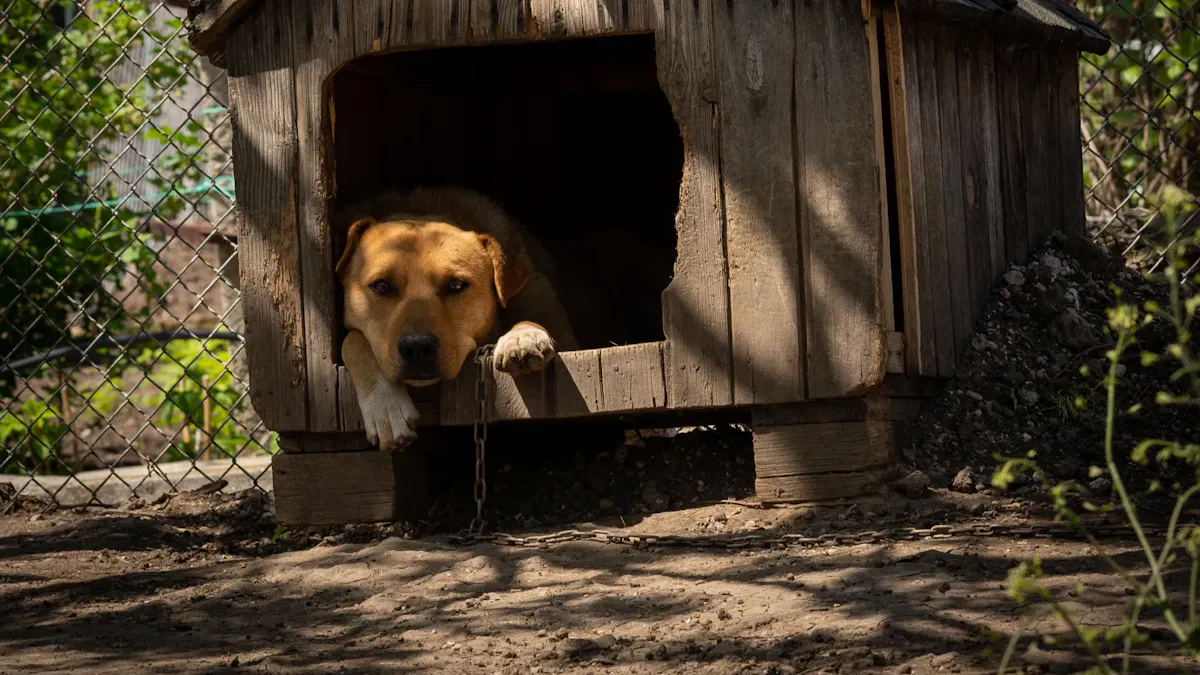
Heat buildup is the most common comfort problem in large dog houses because the bigger interior volume takes longer to ventilate naturally. Without active airflow, a closed house can get significantly hotter than the outside air temperature on a sunny day.
Place the house where trees or buildings provide shade during the hottest part of the day. Vents or mesh openings on at least two sides usually create enough cross-ventilation to keep the interior comfortable. In winter, the same vents help prevent condensation buildup inside while still allowing body heat to warm the space. A raised floor adds airflow underneath, which helps in both seasons.
Drainage and Moisture Control
Standing water under or inside a dog house leads to mold, odor, and eventually rot in wood-based structures. A raised base keeps the floor above ground moisture, and a slight slope to the floor surface helps any water that enters drain toward the opening rather than pooling inside.
For weatherproof placement and drainage setup, use non-porous flooring that does not absorb water. Position the house so natural runoff flows away from the entry, not toward it. If your yard holds water after rain, a gravel pad underneath generally improves drainage enough to keep the floor dry.
Troubleshooting Weather and Comfort Issues
| Symptom | Likely Cause | Quick Check | Fix |
|---|---|---|---|
| Wet floor or musty smell | No raised base or poor drainage | Feel the floor after rain | Raise base, add gravel pad, slope floor |
| Dog panting inside the house | Blocked airflow or no shade | Hold hand near vents, check shade coverage | Clear vents, move to shaded spot |
| Dog avoids the house entirely | Interior too hot, cold, or drafty | Sit near the entry and feel the interior air | Reposition house, add bedding or wind break |
| Condensation on walls or ceiling | Poor ventilation trapping moisture | Check vent openings for blockage | Open or enlarge vents on opposite sides |
| Floor stays damp days after rain | Porous floor or water pooling underneath | Check underneath the house after rain | Switch to non-porous floor, improve ground drainage |
Disclaimer: No outdoor dog house is a substitute for bringing your dog inside during extreme heat, freezing temperatures, or severe storms. Monitor conditions and your dog’s behavior, and bring the dog indoors when weather exceeds comfortable limits.
Cleaning, Upkeep, and Yard Placement
Cleaning Access and Routine
Cleaning frequency determines whether a dog house stays healthy or becomes a source of odor and pests. Easy cleaning access — through a removable roof, hinged side panel, or wide entry — is what makes the difference between a routine you actually follow and one you skip.
- Remove debris and scoop waste daily.
- Wash food and water bowls daily.
- Scrub walls, floor, and entry weekly with a stiff brush and pet-safe cleaner. Let the cleaner sit before rinsing, then dry fully.
- Wash bedding and any soft inserts weekly. Replace only after the house interior is completely dry.
- Deep clean the full interior monthly — scrub every surface, rinse, and air dry before returning any items.
A regular routine helps you catch mold, pest entry points, and worn materials early. If your house design only has a single front entry, cleaning the back corners usually requires pulling the house forward or tipping it, which makes upkeep much harder to maintain consistently.
Yard Placement and Risk Zones
Where you put the house affects drainage, temperature, and how willingly your dog uses it. The right spot balances shade, airflow, ground drainage, and distance from high-traffic areas. Similar principles apply to outdoor pet shelters of any size.
- Higher ground — avoids puddles and mud pooling around the base.
- Shade coverage during peak sun hours — trees or building shadows work well.
- Wind break on the entry side — fence, wall, or hedge reduces drafts.
- Away from fences, gates, and roads — reduces stress from passing traffic and noise.
- No standing water or pest activity nearby — check after rain for pooling.
Troubleshooting Upkeep and Placement Issues
| Issue | Quick Check | Fix |
|---|---|---|
| Leaks or drafts | Inspect seams, roof edges, and joints | Seal gaps with pet-safe weatherstripping |
| Pest activity (rodents, insects) | Look for droppings, chew marks, or entry holes | Seal openings, clean thoroughly, use safe deterrents |
| Persistent odor after cleaning | Smell floor and corners after full dry | Switch to non-porous floor, extend dry-out time |
| Mold on walls or bedding | Inspect hidden corners and under bedding | Improve ventilation, raise base, replace absorbent materials |
| Dog stopped using the house | Observe entry behavior and check interior comfort | Reposition, adjust bedding, check for drafts or heat |
Tip: Clean the house more often during wet seasons. Moisture accelerates mold and odor buildup, and large houses take longer to dry out fully.
A giant dog house works when three things line up: interior space that matches your dog’s actual body size, a structure that stays stable and dry through weather, and a yard position that balances shade, drainage, and airflow. Run the fit and support checklist before your dog starts using it, and recheck placement after the first heavy rain.
- Measure interior space against your dog’s body — not just the outer shell dimensions.
- Floor stability and drainage matter more than extra padding or size.
- Watch your dog’s behavior during the first week to catch fit or comfort problems early.
Disclaimer: Large breeds with thick coats often handle outdoor conditions well, but no outdoor shelter replaces indoor access during extreme weather. Always monitor your dog and bring them inside when conditions become unsafe.
FAQ
How do I choose the right size for a large dog?
Measure shoulder height, body length, and chest width, then compare to the usable interior dimensions — your dog should be able to turn, sit upright, and stretch flat without touching the walls or roof.
Can one giant dog house work in every climate?
Most houses need seasonal adjustments — more ventilation in summer, wind breaks and extra bedding in winter — so a single setup rarely works year-round without changes.
What is the most important feature for year-round outdoor use?
A raised base with good drainage usually matters most because it prevents the floor problems that lead to mold, odor, and structural damage over time.
How often should I clean a large outdoor dog house?
Daily waste removal, weekly surface scrubbing, and a full monthly deep clean generally keeps the house healthy for regular use.
How do I know if my dog is comfortable in the house?
A dog that enters willingly, settles into a relaxed position, and sleeps through the night is usually comfortable — avoidance, restlessness, or sleeping outside the house are signs to recheck fit and placement.






