
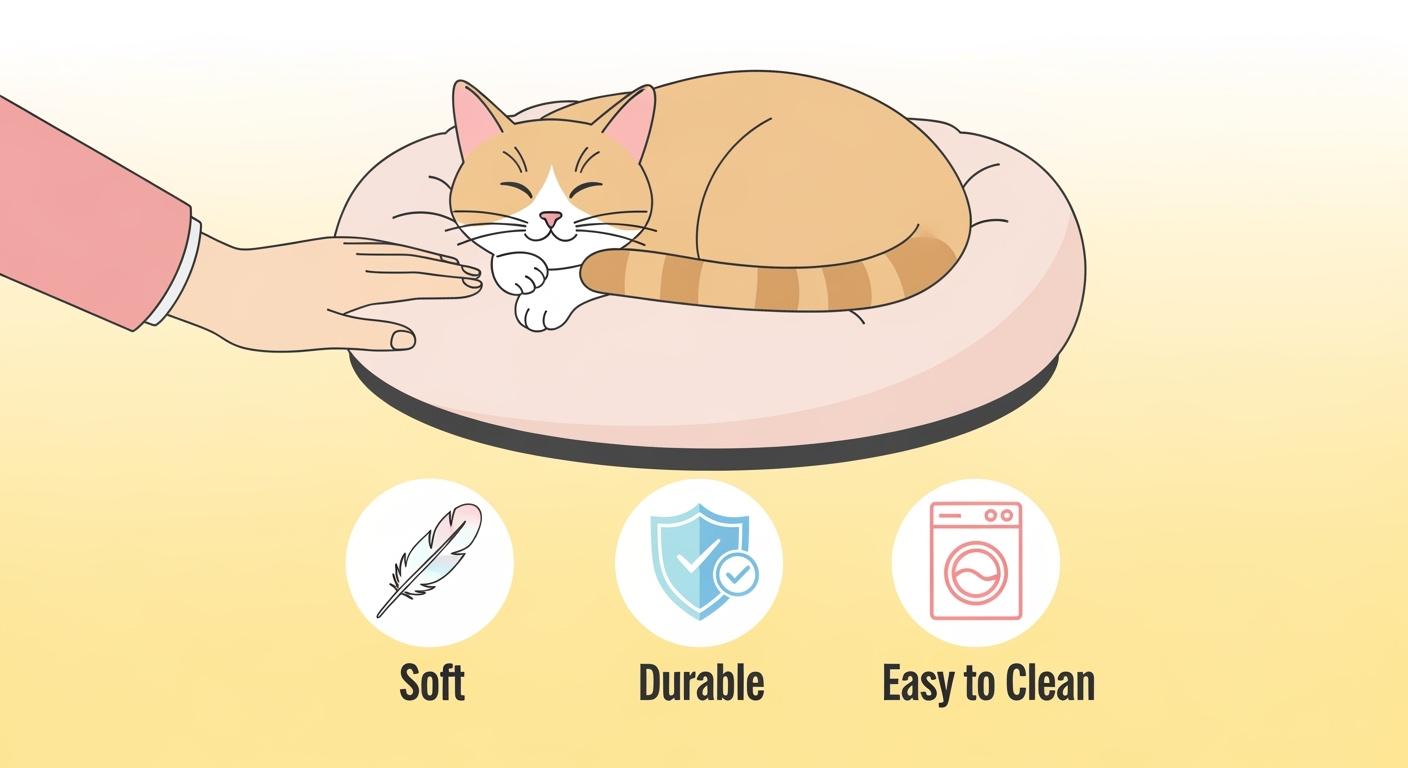
A cat bed can look cozy in a product photo and still go unused at home. The better check is how your cat already rests, how easily they enter the bed, and whether the surface stays dry, stable, and easy to clean.
Key Takeaways
- Observe your cat’s resting style. Choose an open bed for cats that like to stretch and an enclosed bed for those that prefer cozy, secure spaces.
- Look for signs that your cat enjoys the bed. If your cat sleeps, kneads, or returns to the bed often, it’s a good fit. If not, consider changing the style or location.
- Prioritize comfort and safety. Select beds made from non-toxic materials, with easy cleaning options, and ensure they fit your cat’s size and needs.
Cat Bed for Cats: Matching Resting Style
Open vs. Enclosed Cat Bed
Your cat’s resting style is the best starting point. Some cats curl up in tight spaces, others stretch out in the open, and some want a perch where they can watch the room without being disturbed.
Open and enclosed beds solve different problems. When you compare a cat bed for cats, the real question is not just the shape. An enclosed bed adds privacy and warmth. An open bed gives more room to stretch and makes it easier for a cat to monitor the room. The better choice depends on how your cat already chooses to rest.
Tip: Watch where your cat naps now. If your cat hides under furniture, try an enclosed bed. If your cat sleeps on the couch or windowsill, an open bed may work better.
Signs of a Good Fit or a Bed Your Cat Ignores
The simplest fit test is whether your cat chooses the bed without being coaxed. A good match usually means your cat steps in, settles, kneads, or returns to it on their own.
Look for these signs that the cat bed is a good match:
- Your cat sleeps in the bed for long periods.
- Your cat looks relaxed and stretches or curls up.
- Your cat uses the bed during both day and night.
If your cat avoids the bed, try moving it to a quieter spot or switching to a different style. Some cats need time to adjust, but most will show interest quickly if the bed feels right.
Height, Access, and Resting Preferences
Age, mobility, and temperament change what feels comfortable. Young, agile cats may like higher sides or elevated spots. Older cats usually do better with lower entry, steady footing, and a base that does not collapse under weight.
Cats also like to rest in places where they feel safe. Many prefer beds placed in quiet corners or near windows. If you have more than one cat, each cat should have its own bed or safe spot. This helps prevent stress and gives every cat a place to relax.
Here are some common resting styles and matching bed styles:
| Cat Type | Preference Description |
|---|---|
| Cave Dweller | Prefers enclosed, cozy spaces for privacy and warmth. |
| Sprawler | Likes to stretch out fully on flat, open surfaces. |
| Percher | Enjoys elevated spots to observe surroundings. |
| Cuddler | Seeks warmth and closeness, often snuggling with others. |
Pass/Fail Checklist Table
Use this checklist to judge if a cat bed matches your cat’s needs:
| Check Item | Pass Signal | Fail Signal | Fix |
|---|---|---|---|
| Cat uses the bed willingly | Sleeps, kneads, returns | Ignores, avoids, leaves fast | Try a new style or move the bed |
| Bed matches resting style | Cat curls, sprawls, perches | Cat looks uncomfortable | Choose open or enclosed as needed |
| Entry is easy for your cat | Cat enters without trouble | Cat struggles or hesitates | Pick lower entry or wider opening |
| Bed stays in place | Bed does not slide or tip | Bed moves or tips easily | Place on stable surface or add grip mat |
| Bed is in a quiet, safe spot | Cat uses bed often | Cat avoids area | Move bed to a low-traffic location |
Comparison Table
Use this table to compare privacy, access, structure, and cleaning before you buy. The best option is usually the one that matches how your cat already sleeps rather than the one that looks cutest on its own.
| Feature | Open Bed | Enclosed Bed | Softer Shell | Structured Shell | Lower-Entry Bed | Higher-Sided Bed | Washable Cushion | Fixed Cushion |
|---|---|---|---|---|---|---|---|---|
| Best for | Sprawlers, perchers | Cave dwellers, shy cats | Cozy, flexible | Holds shape | Older, less mobile | Young, agile cats | Easy to clean | May need spot clean |
| Security | Less private | More private | Soft, cuddly | Firm, supportive | Easy access | More enclosed | Removable, washable | Not removable |
| Placement | Open areas, windowsills | Quiet corners, under furniture | All cats | Cats needing support | Floor or low shelf | Higher shelf | Machine washable | Wipe clean only |
| Maintenance | Simple, less fabric | May trap more fur | May flatten | Keeps shape longer | Less bending needed | May need jumping | Quick to refresh | Takes longer to dry |
You can use these tables to compare enclosed and open beds, softer or more structured shells, and other important features. Always check if the cat bed fits your cat’s habits and your home setup.
How to Choose the Right Cat Bed: Materials & Comfort
A good cat bed should feel comfortable to your cat, stay easy to maintain, and hold up to regular use. Material, base support, and cleaning method usually matter more than decorative details.
Breathable vs. Warm Fabrics
Fabric changes how warm, breathable, and easy to maintain the bed feels. Fleece and faux fur feel cozy and hold warmth. Cotton blends usually feel more breathable. Memory-foam bases can feel supportive, but the cover still needs to be easy to clean and pleasant against the fur.
Look for materials that feel clean, low-odor, and easy to maintain. The care label should be clear, and the surface should not leave loose fibers or rough edges where your cat rests.
| Material Type | Softness Level | Washing Instructions | Durability |
|---|---|---|---|
| Fleece | Very High | Machine wash cold. Air dry to prevent shrinking. | High durability. Resists tearing. |
| Cotton Blend | Medium High | Machine wash warm. Tumble dry on low heat. | High durability. Holds shape well. |
| Memory Foam | High | Spot clean only. Do not put foam in the washer. | Medium durability. Requires care. |
| Faux Fur | Very High | Machine wash gentle. Air dry to keep fibers soft. | Medium durability. Can mat over time. |
Tip: Pick a cat bed with a removable cover. This makes cleaning easier and helps keep the bed fresh.
Padded Base and Easy Cleaning
A padded base improves comfort, especially for cats that spend long stretches resting in one place. The base should feel supportive without flattening too quickly, and it should dry fully after cleaning.
- Padded bases improve comfort for all cats.
- Orthopedic or memory foam bases help senior cats and those healing from surgery.
- Even support keeps your cat’s joints healthy and reduces pain.
A removable, washable cushion makes routine cleaning easier. Mild, low-odor cleaners are usually easier to live with than strongly scented products. Let the bed dry fully before putting it back in your cat’s resting area.
Note: A high-quality material in the base and cover means better comfort and longer-lasting quality.
Soft Walls: Support or Collapse?
Some cats like soft walls they can lean into, while others do better with a bed that keeps its shape. Soft walls can feel cozy, but if the sides collapse too easily, the bed may feel less stable and harder to enter.
| Feature | Supportive Foam Bed | Basic Cushion Bed |
|---|---|---|
| Support | Denser foam or structured fill | Polyester stuffing or lighter fill |
| Base Feel | More stable under weight | Softer, simpler feel |
| Comfort | Better for longer resting sessions | Good for casual daily lounging |
| Materials | Higher-density base with soft cover | Basic fabric with standard stuffing |
| Shape Retention | Usually keeps shape longer | May flatten faster over time |
| Cleaning | Often easier with removable cover | Varies by design |
| Best For | Cats needing more support | Cats that prefer a simple soft bed |
If your cat likes to knead or burrow, a soft-sided bed may feel more inviting. If your cat needs easier entry or steadier support, look for firmer sides and a base that stays level after repeated use.
Troubleshooting Table
If a bed starts to smell, flatten, tip, or go unused, the problem is usually style, support, placement, or cleaning. Use this table to narrow down the cause before replacing it.
| Symptom | Likely Cause | Fast Check | Fix |
|---|---|---|---|
| Cat avoids bed | Wrong style or location | Watch where your cat naps | Try a different bed or move to a quiet spot |
| Bed smells bad | Needs cleaning | Smell the bed and check for stains | Wash cover and cushion as label directs |
| Bed flattens quickly | Low-quality filling | Press on the base to test support | Choose a bed with high-quality material or memory foam |
| Cat scratches a lot | Fabric, odor, or surface irritation | Check for rough spots, strong smells, or loose fibers | Wash the bed, dry it fully, or try a different material |
| Bed slides or tips | Unstable placement | Push the bed gently | Place on a non-slip mat or stable surface |
Reminder: Always use safe material and follow care labels for cleaning. This keeps your cat healthy and the bed in good shape.
The best cat bed is usually the one that matches your cat’s habits, fits your space, and stays easy to keep clean. Focus on comfort, support, and placement before appearance.
Cat Bed Buying Guide: Placement & Use Cases
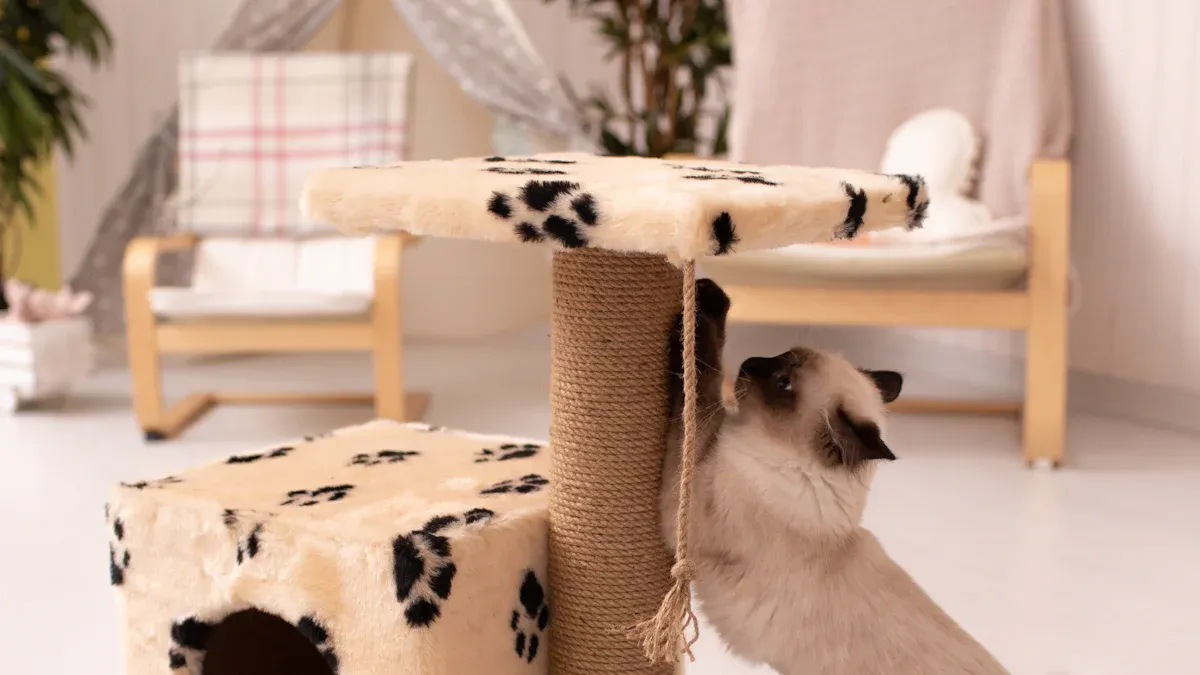
Best Bed for Your Cat: Quiet Spots and Privacy
Placement affects whether a cat bed gets used at all. Many cats settle best in quiet, low-traffic spots where they can rest without being stepped around or startled.
Common Mistakes in Cat Bed Placement
A bed can look attractive to people and still miss what the cat wants. Common mistakes include placing it in a noisy walkway, choosing a stuffy enclosed style for a cat that likes open views, or using a high-sided bed for a cat that wants easy entry.
Tip: Always check for heat buildup, damp bedding, or strong cleaning-product smells before letting your cat use the bed.
When to Try Other Resting Options
If the bed keeps going unused, try a different setup before assuming your cat dislikes beds in general. A blanket in a favorite corner, an open mat by a window, or a lower-entry bed may work better than a more enclosed option.
Use this checklist before you buy:
- Hidden-but-not-trapped feel
- Padded, dry base
- Breathable interior
- Easy entry
- Simple cleaning
- Stable placement
- Shy, older, or multi-cat use
Watch where your cat already chooses to rest, then place the bed in a similar kind of spot. Small changes in style, height, or location often matter more than buying a more decorative bed.
FAQ
How do you check if a cat bed fits the right size for your cat?
Measure your cat in a relaxed resting position, then allow enough room to curl up or stretch without hanging over the edge. The bed should feel roomy without becoming oversized and unstable.
Can you use a cat bed for kittens and adult cats?
You can use a cat bed for kittens and adult cats, but the size and entry height need to match the cat using it now. As a kitten grows, recheck whether the bed still gives enough room and support.
What signs show the cat bed is not the right size?
A bed is too small if your cat hangs off the edge, avoids stretching out, or hesitates to climb in. A bed can also be a poor fit if the base tips, slides, or flattens too quickly.
Note: Always check the cat bed for loose threads or sharp edges before use.






