
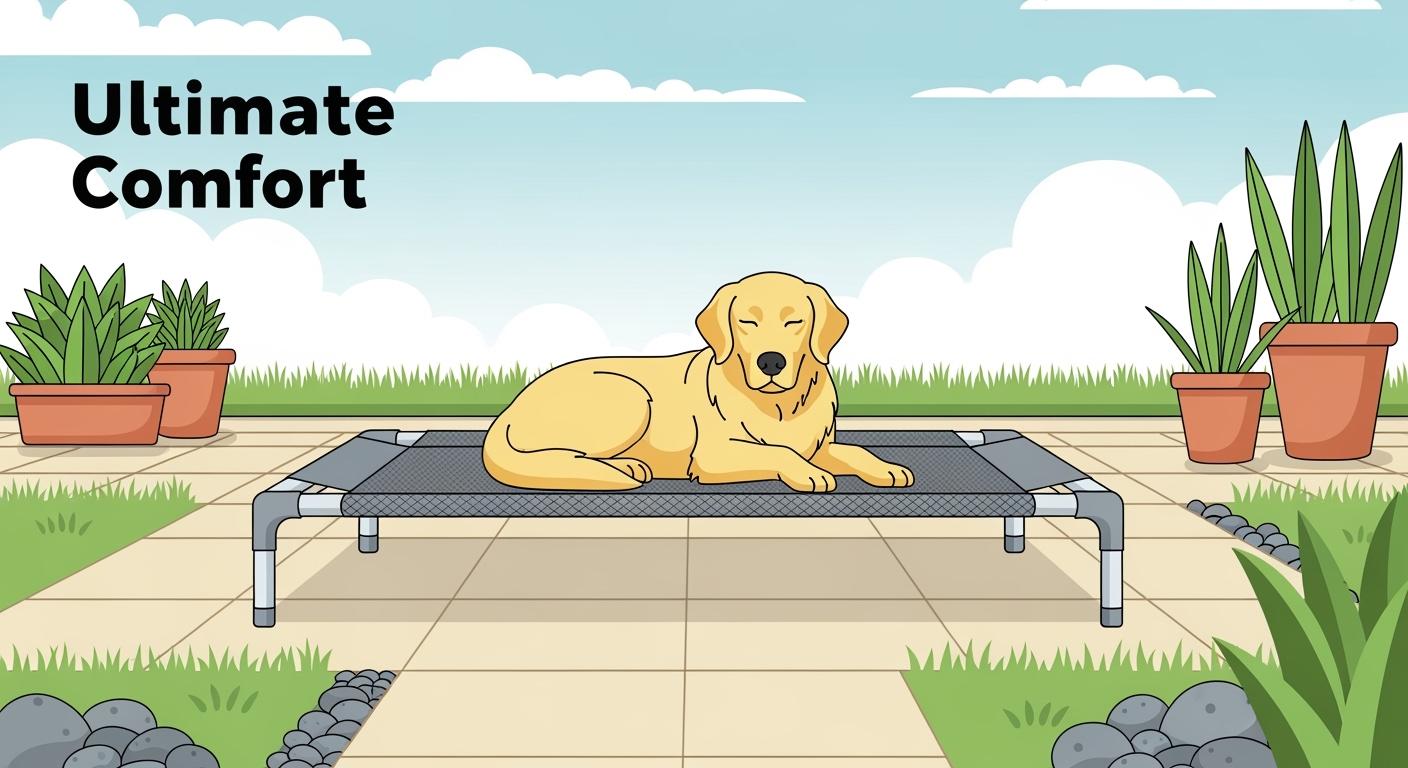
An exterior dog bed should stay stable, dry, and comfortable after dirt, dew, and repeated cleanup. The right choice depends on airflow, support, surface feel, and how well the bed fits your outdoor space. Comfort matters, but so do shade, drainage, and easy maintenance.
Key Takeaways
- Pick a bed that fits your dog well. Make sure your dog can stretch out without sliding off the edge. Use breathable materials such as mesh when airflow and faster drying matter. Clean the bed regularly and let it dry fully before the next use.
Exterior Dog Bed Fit and Comfort Checks

Surface Fit and Dog Comfort
You want your dog to settle easily on an outdoor dog bed. Start by checking the surface fit. Lay the bed flat and watch how your dog steps on, turns, and lies down. The bed should support the body without tipping, sagging, or leaving your dog half on and half off the edge.
- Some dogs prefer a softer, lightly cushioned surface for longer rest periods.
- Larger breeds or two-dog setups often need a broader, firmer surface that stays flat under weight.
- Beds that stay cooler and drier through repeated use usually work better in warm weather.
A good fit means your dog does not slide, sink too deeply, or avoid the bed. If your dog steps on, circles once or twice, and settles without hesitation, the surface is probably working.
Entry, Support, and Sagging Signs
Check how your dog gets on and off the bed. The edge should not be too high, too soft, or unstable under weight. Easy entry and exit matter most for older dogs, heavier dogs, or dogs that do not like stepping onto a narrow surface. Press down with your hand and then let go. The bed should recover its shape instead of staying compressed.
Support matters just as much as softness. A firmer outdoor bed usually holds its shape better, while a softer one may feel better at first but flatten faster with repeated use. Whatever style you choose, the surface should not trap heat, stay damp, or develop low spots that make your dog brace to stay comfortable.
Outdoor Placement: Patio, Deck, Yard, Campsite
Choose the placement with as much care as the bed itself. Put the bed on a flat, stable surface first. Patios, decks, yards, and campsites all create different problems for grip, drainage, and cleanup.
- On a patio or deck, check that the bed does not slide. Non-slip bases or textured bottoms help.
- In the yard, keep the bed off wet grass when possible. Raised beds can improve airflow and drying.
- At a campsite, look for shade and a clean, level spot. Avoid low areas where water collects.
Always check the bed after rain, washing, or overnight dew. A bed that dries slowly, traps grit underneath, or stays damp along the seams will feel worse over time and take more work to keep usable.
Pass/Fail Checklist Table
Use this table to judge the fit and comfort of any outdoor dog bed before you buy or use it:
| Check Item | Pass Signal | Fail Signal | Solution |
|---|---|---|---|
| Surface Fit | Dog stretches out, settles quickly | Dog hangs off, avoids bed, or slips | Choose a larger or firmer bed |
| Body Support | Bed springs back, no sagging | Deep dips, bed stays compressed | Try an orthopedic dog bed or firmer fill |
| Breathable Surface | Bed stays cool and dry | Bed feels hot, damp, or sticky | Pick materials with better airflow |
| Easy Entry/Exit | Dog steps on/off with no struggle | Dog stumbles, edge too high or soft | Lower the bed or pick a stable edge |
| Outdoor Placement | Bed stays put, dries fast after rain | Bed slides, stays wet, or traps dirt | Use non-slip base, raised style, or move bed |
Tip: Check the surface, seams, and underside for trapped dirt or moisture. Clean as needed and make sure the bed dries fully before the next use.
A good exterior dog bed should match your dog’s size, resting style, and the way you actually use outdoor space. Focus on support, airflow, drying speed, and placement stability before anything else.
Outdoor Dog Bed Materials and Build
Breathable vs. Heat-Holding Surfaces
Pick materials that make outdoor use easier, not harder. Breathable surfaces let air move through the bed and usually dry faster after washing or light rain. Mesh and raised designs often work well in warm weather because they reduce heat buildup and keep the sleeping surface off damp ground.
- Mesh usually dries faster and holds less moisture than thick padded fills.
- Raised beds help keep your dog off wet ground and improve airflow underneath.
- Cooling mats may feel useful in hot weather, but they do not replace shade, water, or supervision.
Materials change how the bed feels through the day. More airflow usually means a cooler, drier surface, while thicker padded styles often feel warmer and take longer to dry.
Easy-Clean Covers and Drying
Cleaning matters because outdoor beds collect dirt, moisture, fur, and dust quickly. Wash removable covers as often as needed for your dog’s routine, and check the care label before using anything aggressive. Some materials, such as mesh or wipe-clean synthetics, are easier to maintain than thick foam-filled styles.
- Easy-clean materials save time and make regular upkeep simpler.
- Mesh and thinner covers usually dry faster after rain or washing.
- Foam and padded beds often hold moisture longer and need more drying time.
Pick covers that handle your real messes, whether that means muddy paws, grass, or damp fur. Quick-drying materials are usually easier to live with outdoors than anything that stays wet or takes hours to air out.
Tip: Let every part dry completely before your dog uses the bed again. This helps reduce stale odor and moisture buildup.
Frame, Base, and Edge Durability
Strong materials matter outdoors because the bed has to handle weather, dirt, repeated cleaning, and daily stepping on and off. Metal or heavy plastic frames usually hold their shape better than softer unsupported builds. Non-slip bases help the bed stay put on decks, patios, or campsite surfaces.
- Good frames reduce sagging and keep the sleeping surface off wet ground.
- A stable base helps stop sliding on smooth outdoor surfaces.
- Reinforced edges and seams usually hold up better through repeated use and cleanup.
Outdoor materials should stay usable after real exposure to weather and dirt. Skip any bed that sags quickly, slides too easily, or stays wet longer than you expect.
Comparison Table
Use this table to compare the best outdoor dog bed materials and features:
| Feature | Elevated Bed (Mesh) | Ground Bed (Padded) | Removable Cover | Fixed Cover | Travel Model | Stationary Model |
|---|---|---|---|---|---|---|
| Airflow | High | Low | Depends on material | Depends on material | Usually high | Varies |
| Drying Speed | Fast | Slow | Fast if mesh | Slow if foam | Fast | Varies |
| Cleaning Ease | Easy | Moderate | Easy | Harder | Easy | Varies |
| Durability | Durable | Less durable | Depends on cover | Depends on cover | Durable | Durable |
| Placement Stability | Stable | May slide | Stable | May slide | Stable | Stable |
| Comfort | Firm, cool | Soft, warm | Depends on fill | Depends on fill | Firm | Varies |
| Portability | Moderate | Low | High | Low | High | Low |
Note: Mesh and raised beds usually offer better airflow and faster drying. Padded beds can feel softer, but they need more attention to stay dry and clean. Removable covers usually make upkeep easier.
Good materials and a stable build help an exterior dog bed last longer and feel better day to day. Match the bed to the outdoor setting first, then to your dog’s size and comfort preferences.
When to Use or Avoid an Exterior Dog Bed
Best Uses: Relaxing, Muddy Areas, Porch, Camping
You can use an exterior dog bed on patios, porches, in yards, or on camping trips, but the best setup depends on the ground, the weather, and how long your dog will stay there. Raised cots often work well in shaded outdoor spots because they improve airflow and keep the surface off damp ground.
Common Mistakes Outside
Many buyers focus on the word outdoor and ignore what actually makes the bed usable. Common mistakes include overlooking drainage, choosing materials that trap heat, or expecting one bed style to work equally well in every season and every location.
Raised, Padded, or Sheltered Bed Options
Raised beds improve airflow and help with damp ground. Padded beds can feel softer but usually need more drying time. Sheltered bed setups can add protection from light weather, but they still need breathable materials and a stable base.
Troubleshooting Table
| Symptom | Possible Cause | Quick Check | Solution |
|---|---|---|---|
| Bed stays damp | Poor drainage | Press surface for moisture | Use raised bed, mesh materials |
| Bad smell | Dirt or moisture | Smell bed after rain | Wash cover weekly at high heat, dry fully |
| Bed sags | Weak frame or fill | Press down, check support | Choose a good frame or orthopedic bed |
| Dog avoids bed | Heat or discomfort | Touch surface, check temp | Pick breathable materials, move to shade |
| Allergies flare | Dirty cover | Look for hair or dander | Vacuum often and wash the cover with a mild detergent |
Tip: Follow the care label and dry every layer completely before your dog uses the bed again.
You want your exterior dog bed to stay comfortable and usable after real outdoor wear. Focus on these essentials:
- Measure your dog so the bed gives enough room to stretch out and turn.
- Pick durable materials that can handle dirt, moisture, and regular cleanup.
- Choose materials that dry quickly and clean without much effort.
- Look for airflow if the bed will sit in warm outdoor conditions.
- Raised designs help keep the surface off wet ground.
Matching the bed to your space and your dog’s habits makes outdoor rest easier and helps you avoid the most common fit, drying, and maintenance problems.
FAQ
What features help an outdoor dog bed stay comfortable in hot weather?
Look for breathable surfaces, raised designs, and materials that dry reasonably fast. These features usually make the sleeping surface cooler and less damp outdoors.
How often should you clean an exterior dog bed?
Clean the bed as often as your dog’s use requires. If it gets muddy, wet, or starts to smell, clean it sooner and let it dry fully before reuse.
Can you leave an exterior dog bed outside all year?
Do not leave the bed outside through harsh weather for long periods. Heavy rain, snow, and prolonged sun can shorten the bed’s usable life and make it less comfortable for your dog.






