
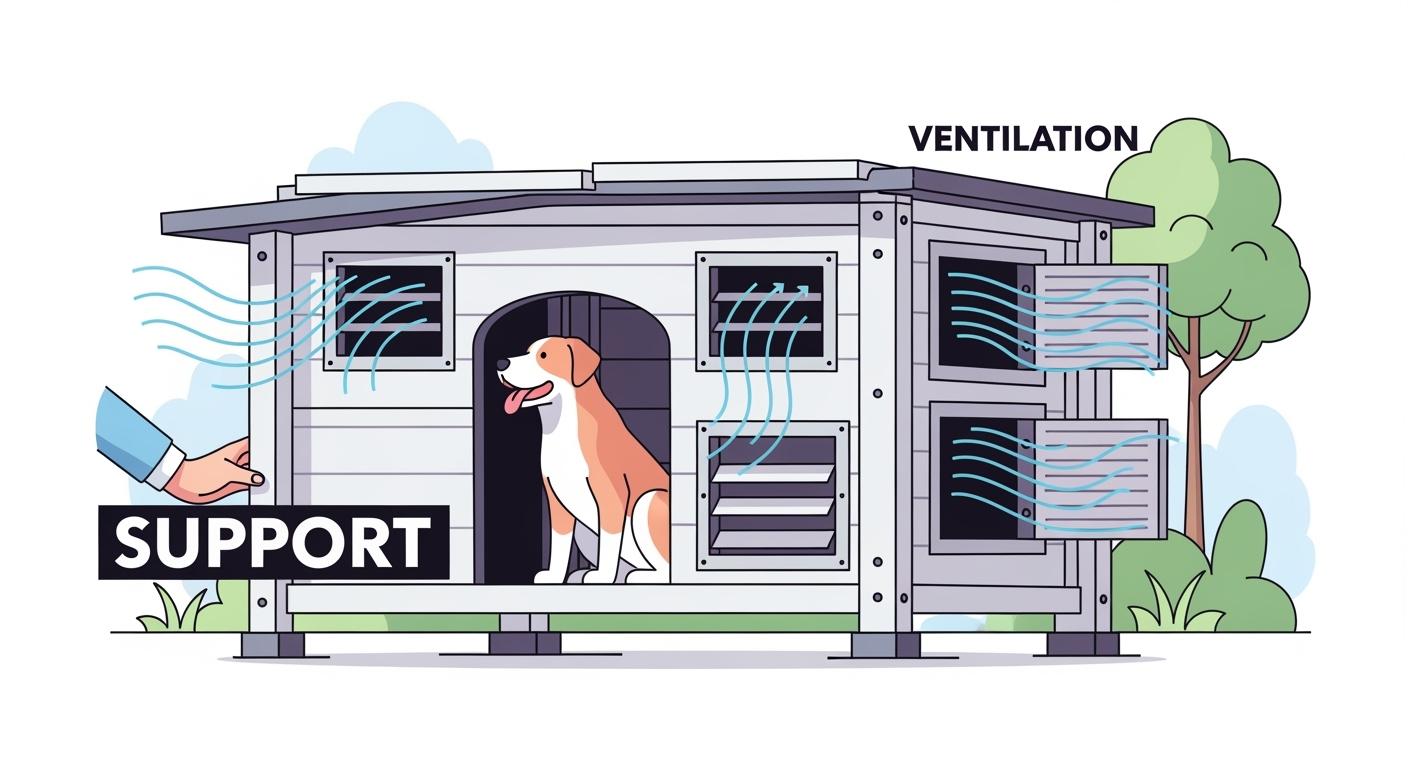
A big outdoor dog house should do more than look roomy. The floor needs to stay firm, the opening should be easy to use, and the shelter should let heat and moisture escape. If support is weak or airflow is poor, your dog may avoid the space even when the size looks right.
Key Takeaways
- Choose a big outdoor dog house with a firm base, usable entry, and enough room for your dog to stand, turn, and lie down without crowding.
- Look for raised support, breathable panels, or open-sided coverage that helps air move and keeps the resting area drier.
- Dry the shelter fully after outdoor use, shake out dirt, and practice folding or packing it before your next trip.
Big Outdoor Dog House Support Checks
Stable floor and easy entry
You want your big outdoor dog house to feel stable under your dog’s paws. A strong floor keeps your dog from sinking or sliding. When you set up a portable shelter outdoors, check the floor by pressing down with your hand. If the surface stays flat and does not bend, your dog will feel secure. Easy entry matters, especially for large dogs. The door should be wide enough so your dog does not need to duck or squeeze. You can test entry by watching your dog walk in and out. If your dog moves without hesitation, the entry works well.
Tip: Place the shelter on level ground. Avoid slopes or uneven spots. This helps the floor stay stable and makes entry easier.
Room to settle comfortably
Comfort depends on more than size. Your dog needs enough space to turn around and stretch out. A big outdoor dog house should let your dog lie down without curling up awkwardly. You can measure the space by watching your dog inside the shelter. If your dog can stand, turn, and settle without bumping the walls, the fit is right. Portable shelters often list size in inches. Compare these numbers to your dog’s length and height. Choose a shelter that matches your dog’s natural posture.
- Check if your dog can:
- Stand up fully
- Turn around easily
- Lie flat without touching the sides
Signs of poor support
You can spot poor support by looking for sagging floors, cramped spaces, or hard-to-use doors. If the floor bends when your dog steps in, the shelter lacks stability. If your dog struggles to enter or exit, the door may be too small. If your dog cannot stretch out, the shelter is too tight. These problems reduce comfort and can cause stress during outdoor trips. You want to fix these issues before your dog spends time in the shelter.
- Common signs:
- Floor sags or feels soft
- Entry is narrow or blocked
- Space is too small for your dog to settle
Pass/fail checklist table
| Check Item | Pass Signal | Fail Signal | Fix |
|---|---|---|---|
| Stable floor feel | Floor stays flat and firm | Floor bends or sags | Add a mat or choose a firmer shelter |
| Easy entry/exit | Dog enters/exits without trouble | Dog ducks or hesitates | Adjust door or pick wider entry |
| Room for natural posture | Dog stretches out comfortably | Dog curls up or bumps sides | Select larger or better-shaped house |
Comparison table
| Feature | Open Shelter | Enclosed Shelter | Elevated Floor | Ground-Contact Floor | Softer Shell | Firmer Shell | Portable Shelter | Simple Outdoor Bed |
|---|---|---|---|---|---|---|---|---|
| Airflow | High | Moderate | High | Low | Moderate | High | High | High |
| Support | Moderate | High | High | Low | Moderate | High | High | Low |
| Comfort | Good | Good | Good | Poor | Good | Good | Good | Moderate |
| Setup Time | Fast | Moderate | Moderate | Fast | Fast | Moderate | Moderate | Fast |
| Portability | High | Moderate | Moderate | High | High | Moderate | High | High |
| Dryness | Moderate | High | High | Low | Moderate | High | High | Low |
Step-by-step guidance for checking support
- Measure your dog’s length and height.
- Compare these numbers to the shelter’s listed size.
- Set up the shelter outdoors on level ground.
- Press the floor to check for firmness.
- Watch your dog enter and exit the shelter.
- Observe your dog inside. Look for stretching, turning, and settling.
- Check for sagging, cramped space, or entry problems.
- Adjust or replace the shelter if you find any issues.
When you choose a portable big outdoor dog house, focus on floor firmness, easy entry, usable interior space, and proper airflow and protection from wet ground. These checks matter more than size wording alone. A good shelter should let your dog step in calmly, turn without bumping the sides, and rest without the base sagging underneath.
Best Outdoor Dog Beds: Materials and Airflow
When you look at outdoor resting options, softness alone is not enough. A useful setup needs breathable materials, a surface that dries reasonably fast, and enough structure to stay comfortable during supervised outdoor use. Heat buildup, trapped moisture, and slow cleanup are usually bigger problems than a lack of padding.
Breathable panels and shade
You want your dog to stay cool and relaxed outside. The best outdoor dog beds use breathable panels or mesh sides. These let air flow through the bed, so heat does not build up. Open airflow is the first thing you should check. If you see mesh or vented fabric, air can move in and out. This helps your dog avoid overheating, especially in the sun.
Shade also matters. Place your dog’s bed under a tree, tarp, or canopy. Shade keeps the bed cooler and protects your dog from direct sunlight. Some beds work well with portable shade tents. Always check if the bed fits under your shade setup before your trip.
Tip: Test airflow by placing your hand under the bed after setup. If it feels cool and dry, airflow is good. If it feels warm or damp, move the bed or pick a more breathable design.
Raised floors and dryness
Outdoor ground can get wet or muddy fast. Raised floors help keep your dog dry. The best outdoor dog beds often use an elevated frame. This design lifts your dog off the ground, so water drains away and air can flow underneath. Beds with mesh or wipe-clean surfaces dry faster and resist mold.
Raised designs can help limit moisture buildup in a few simple ways:
| Design Check | Why It Helps |
|---|---|
| Raised support keeps the resting surface off damp ground. | Air can move underneath, so dampness clears faster after light moisture or morning dew. |
| Water-resistant surfaces are easier to wipe after muddy or wet use. | Faster dry-out makes it easier to reset the shelter before the next use. |
Pick a shelter or bed with a frame and surface that match your dog’s size and the conditions you expect. Raised fabric designs usually dry faster than dense padded bases, while firmer frames often hold shape better for larger dogs. Check the listed load guidance and inspect the surface after setup instead of assuming every elevated style will feel equally stable.
Easy-clean vs. comfort-touch
Outdoor beds get dirty. Mud, hair, and water can build up fast. You need a bed that cleans up easily. The best outdoor dog beds use wipe-clean or removable covers. Mesh dries fast and resists mildew. Some beds use PVC-coated fabrics for extra toughness, but these may trap more heat than mesh.
Clean the shelter whenever it looks dirty, smells damp, or picks up mud, sand, or standing moisture. Let all parts dry fully before reuse. A simple routine helps the bed last longer and keeps the resting area more comfortable.
Note: Never use harsh cleaners that leave residue. Always follow the label and let the bed dry in the sun or a well-ventilated spot.
Troubleshooting table
If you notice problems with your outdoor dog bed, use this table to find fast fixes:
| Symptom | Likely Cause | Fast Check | Fix |
|---|---|---|---|
| Bed feels hot or stuffy | Poor airflow, heat-trapping fabric | Touch bed after setup | Move to shade, switch to mesh panel bed |
| Bed stays wet after rain | No raised floor, slow-drying fabric | Check underside for dampness | Use elevated bed, pick fast-dry material |
| Bed smells musty | Mold or mildew from poor drying | Smell and inspect for spots | Clean, dry fully before reuse |
| Dog avoids bed outdoors | Uncomfortable, too hot, or cramped | Watch dog’s behavior | Try larger, more breathable bed |
| Fabric tears or frays | Low durability material | Inspect seams and corners | Choose durable outdoor dog bed |
Outdoor beds and portable shelters work best when they match the setting. Some designs pack flat and dry quickly, while others prioritize more structure or side coverage. Compare them by airflow, surface dryness, packability, and how easily your dog settles once the bed is set down.
When you choose an outdoor bed or shelter, check for airflow, ground clearance where needed, and a surface you can clean without much trouble. Place it in shade when possible, and pack it only after it has dried.
Packing and Using a Big Outdoor Dog House
Campsite, patio, and trailhead use
A big outdoor dog house or portable shelter should match how and where you use it. At campsites, patios, and trailheads, the most important checks are stable placement, shade, supervision, and whether the site allows dogs and temporary gear.
| Rule | Description |
|---|---|
| Site Rules | Check whether dogs, portable shelters, or temporary setups are allowed before you unload your gear. |
| Supervision | Do not leave your dog alone in the shelter during outdoor use. |
| Space Limits | Make sure your setup leaves enough room for people, gear, and safe dog movement. |
| Setup Boundaries | Keep the shelter stable and easy to remove when you break camp or leave the site. |
| Noise and Behavior | Choose a quieter placement if your dog is stressed, reactive, or unable to settle. |
Check the site rules before your trip, and choose a setup that keeps your dog supervised, shaded, and away from vehicle paths or foot traffic.
Foldability and carry tips
A portable outdoor dog house should fold flat and fit in your car or pack. Choose a lightweight design for hiking or moving between sites. Look for handles or a carry bag. After outdoor use, shake out dirt and brush off hair before packing. Always let the shelter dry fully before you fold it up. This prevents mold and keeps your dog comfortable.
Tip: Practice folding and unfolding your shelter at home. This saves time and avoids stress at the campsite.
Common packing mistakes
Many buyers choose a shelter by size wording alone and overlook support, airflow, and packability. Others assume any enclosed option will stay comfortable in warm weather, even when side panels trap heat or the base dries slowly. Bigger is not always better if the shelter becomes awkward to carry or hard to air out.
Packing strategies for hiking
For hiking or trailhead use, carry only the shelter you can set up, dry, and repack without fuss. Brush off dirt, check for damp spots, and inspect your dog after use for burrs, ticks, or signs of overheating before you pack everything away.
Note: Outdoor shelters do not replace supervision. Always watch your dog and follow local rules.
A big outdoor dog house works best when the floor stays firm, the airflow stays open, and the shelter dries without much trouble after use. Keep checking the fit, base support, and site placement instead of relying on size wording or plush looks alone.
- Raised support can help limit ground moisture and improve dry-out.
- Open panels or shaded placement help heat escape more easily.
- A shelter that folds, dries, and stores easily is simpler to use on repeat outings.
| Benefit | Description |
|---|---|
| Dry Resting Area | A firmer, raised, or better-draining base helps keep the resting spot more usable outdoors. |
| Better Airflow | Breathable panels and shaded placement help reduce trapped heat around the shelter. |
| Easier Packing | Portable designs are easier to shake out, dry, and store between outdoor uses. |
Use the checklists and tables each time you go outside.
FAQ
How can you check if your dog house is safe for outdoor trips?
Inspect the floor for sagging, check that the entry is easy to use, and make sure your dog can stand, turn, and lie down without crowding. Confirm airflow and dryness before each outing.
What should you do if your dog avoids the outdoor shelter?
Move the shelter to a shaded, quieter spot and check for trapped heat, dampness, unstable flooring, or cramped interior space. Let your dog approach and settle at their own pace after you adjust the setup.
Are there health risks with outdoor use?
Outdoor use can expose your dog to heat, dampness, insects, and dirty water. Check for ticks after each trip and watch for signs of overheating or discomfort. Ask your veterinarian about health concerns.






