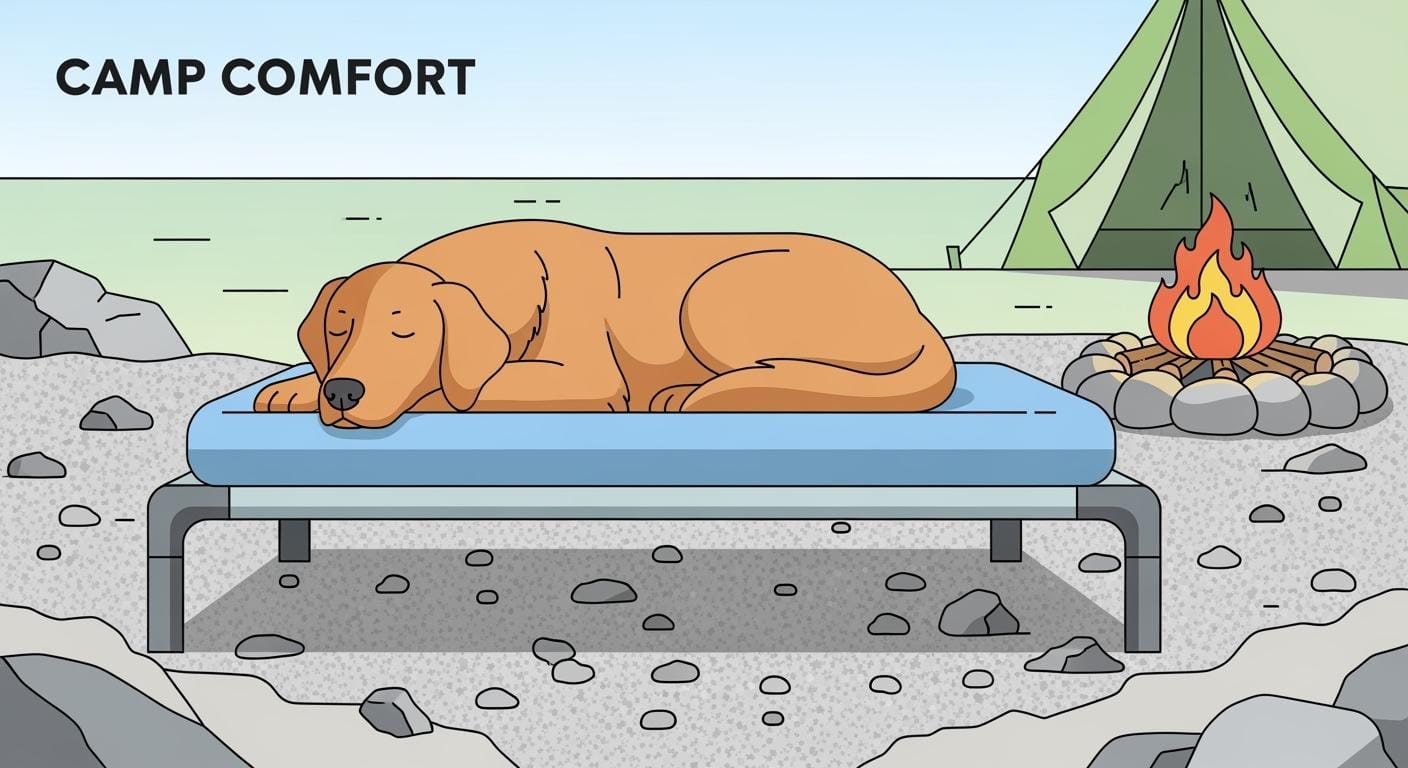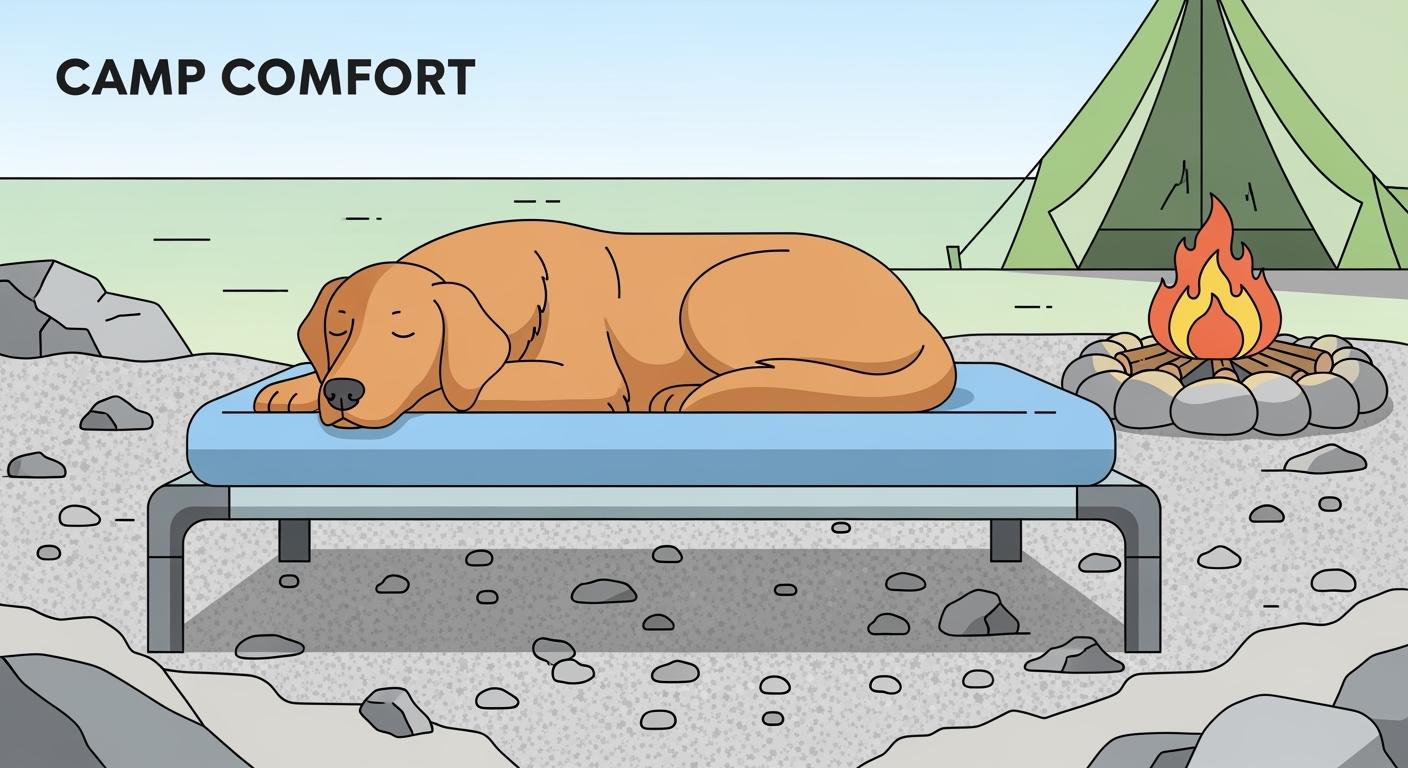
A flat dog bed on gravel fails for the same reason sandpaper works. The bottom fabric presses into sharp stone edges under the dog’s weight. Every shift drags the fabric across those edges. The damage accumulates through hundreds of small abrasive cycles per trip. A raised frame changes the equation by removing the contact entirely.
The difference between a bed that lasts one season and one that lasts five is not padding thickness. It is whether the sleeping surface touches the ground at all.
Why Gravel Chews Through Ground-Level Beds
The Friction Mechanism
A ground-level bed makes full contact with whatever sits underneath. On gravel, that means hundreds of small, irregular contact points, each a potential abrasion site. When the dog repositions, the fabric slides across those points under load. The friction concentrates at the weave crowns first — the raised intersections where warp and fill yarns cross. Those crowns abrade down, exposing the inner yarns to direct stone contact. Once the weave opens up, the fabric loses tensile strength fast.
You can spot this before outright tearing. Run your palm across the bottom fabric after a few trips. A surface that started smooth and now feels fuzzy means the weave is degrading. On a gravel campsite, this can happen within a single weekend if the fabric lacks enough yarn density to resist point loads from individual stone edges.
Low-denier nylon or lightweight polyester — common on indoor and budget beds — cannot spread those point loads effectively. The stone pushes between yarns rather than being resisted by multiple yarns working together. A bed that holds up fine indoors looks worn after two nights on gravel. If the fabric is already thin enough to see light through when held up, it will abrade through on gravel within weeks, not months.
Where Thin Fabric and Edge Seams Fail First
Edge seams take disproportionate damage on ground-level beds. When a dog steps on or off, body weight concentrates along the perimeter, driving the seam into whatever stones sit below. The stitching thread — typically thinner than the base fabric — becomes the primary wear surface. One frayed stitch creates a cascading failure: the loosened thread allows adjacent stitches to take more load, which accelerates their wear, which opens the seam further.
Thin fabric also collapses into the gaps between stones. Instead of bridging across the gravel surface, the material conforms to every irregularity. The dog feels each high point as a pressure spot. Over hours of rest, that uneven support creates discomfort that a thicker pad cannot fix — because the problem is the ground shape, not the cushion depth.
| Failure Point | Root Cause | Why Thickness Does Not Fix It |
|---|---|---|
| Bottom fabric fuzzing | Weave crowns abraded by stone edges under load | More fill cannot stop the outer fabric from rubbing against gravel |
| Edge seam splitting | Perimeter stitching carries concentrated step-on/off loads against stones | Thicker foam adds weight, which increases abrasion force at seams |
| Pressure points under the dog | Fabric conforms to gravel contours instead of bridging across them | Additional padding compresses under body weight and still transmits stone shapes |
The recurring pattern is the same: the sleeping surface touches abrasive ground. That single fact drives every failure mode. The decision between a ground pad and a raised cot on a campsite is not about which offers more cushion — it is about whether the bed’s most vulnerable surface stays in contact with the thing that wears it down.
How a Raised Frame Changes the Equation

Elevation Breaks the Contact Cycle
Raise the sleeping surface a few inches off the ground and the abrasion problem disappears. The fabric never touches gravel. It cannot drag across stones. The wear mechanism that destroys flat beds has nothing to act on.
But the design advantage goes deeper than simple separation. A steel-frame elevated bed creates a tensioned fabric panel stretched across a rigid perimeter. That tension does more than keep the surface flat — it changes how the fabric responds to load at a structural level.
Tension-Based Support Evens Out Rough Ground
When a dog lies on a tensioned panel, body weight pulls the fabric into a shallow curve. The curve distributes the load outward to the frame through each perimeter attachment point. Every point shares a fraction of the total weight. On a ground-level bed, by contrast, the dog’s weight presses the fabric directly into whichever stones sit highest. Load concentrates at those few points.
This is why tension matters more than thickness on gravel. A tensioned panel bridges across an irregular surface — the frame touches the ground at four discrete leg positions, not across the entire sleeping area. If one leg sits on a stone and another settles into a depression, the frame stays roughly level. The fabric absorbs the difference. A flat bed simply follows every contour underneath.
For a direct check: after 10 minutes of the dog resting on a raised bed set on gravel, run your hand across the center of the sleeping surface and press down. It should feel uniformly taut with consistent give. Then reach under the fabric. No grit should have migrated upward through the weave. On a flat bed used in the same spot, you will feel dirt and fine stone dust pressed into the surface within the first hour — and the support will feel uneven, with hard spots where stones push through the compressed fill.
In practice: A raised outdoor bed shifts the comfort question from “how much padding” to “how well the frame isolates the dog from the ground beneath it.” Elevated bed comfort depends on frame rigidity and fabric tension, not on fill depth.
Airflow, Drying, and the Cleanliness Dividend
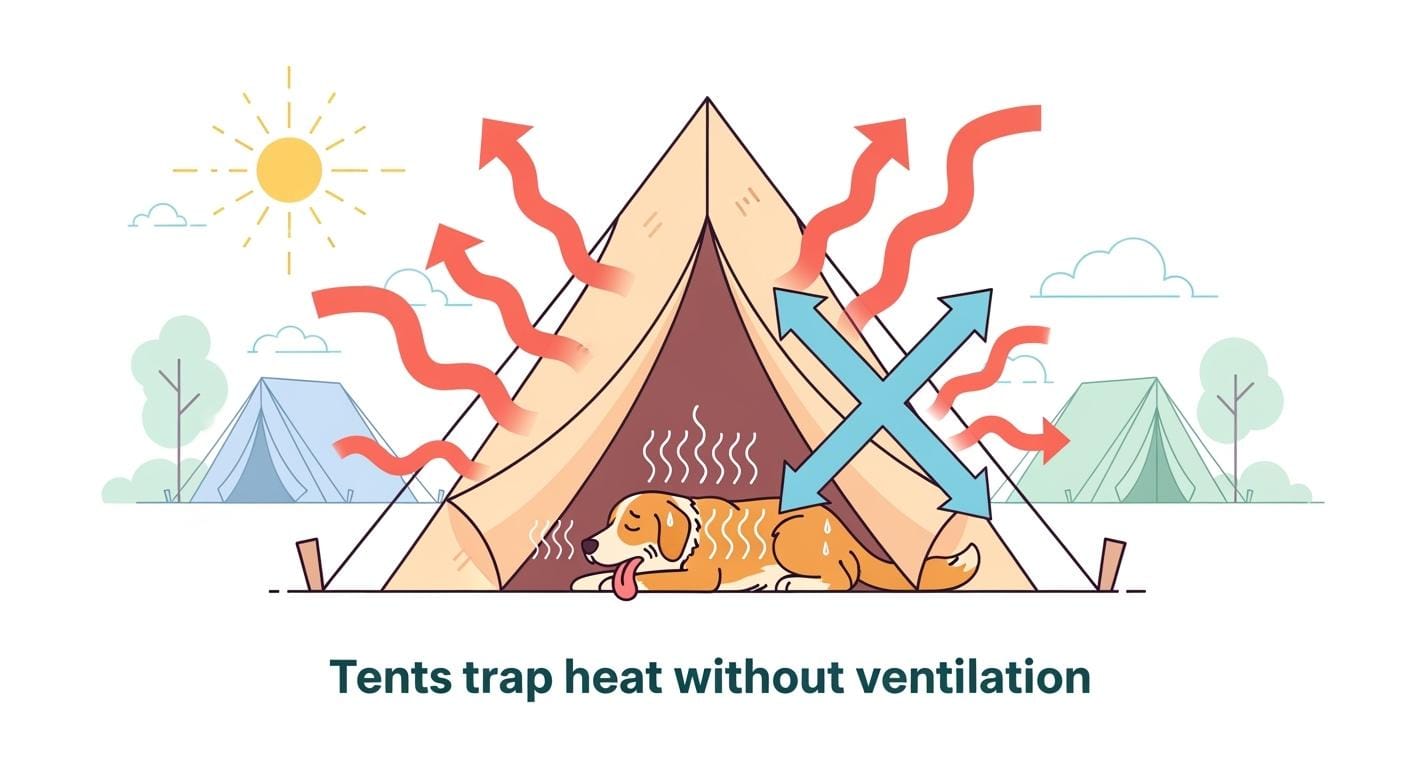
The air gap under a raised bed produces side benefits that matter more on gravel than they do on grass. Gravel campsites tend to hold heat — stone absorbs solar radiation and radiates it back upward. A raised sleeping surface breaks that direct heat path, because the air gap acts as a thermal break between the ground and the dog. On cold mornings, the same gap prevents body heat from conducting down into cold stone.
Dirt management also improves. On a flat bed, grit and fine dust work into the fabric from below. On a raised design, debris falls through the open space. After a dusty weekend, you can usually wipe the surface with a damp cloth instead of scrubbing embedded dirt out of the weave. Less trapped grit means less abrasive material working against the fibers over time. Outdoor bed fabric durability depends as much on what the fabric is exposed to between uses as on the material itself.
Where a Raised Design Works — and Where It Falls Short
A raised outdoor dog bed performs best on dry, firm, abrasive surfaces — packed gravel, hard dirt, rock slabs, compacted campsite pads. These conditions play directly to the design’s strengths: the frame keeps fabric off the ground, and leg-based contact handles minor unevenness.
Performance drops on surfaces that compromise frame stability. Loose sand lets individual legs sink at different rates, tilting the sleeping surface. Deep mud removes the friction the legs need to stay put when a dog steps on or off — a flat bed actually holds position better in mud because its full-bottom contact creates more surface grip. On slopes steeper than roughly 10 degrees, a rigid frame cannot conform to the angle, and the dog’s weight shifts unevenly across the tensioned panel.
Sharp rock fields create a subtler problem. The raised design protects the sleeping surface, but the frame legs become the vulnerable contact points. On surfaces where individual rocks are large enough to catch or tip a leg — broken shale, talus, fist-sized riprap — the bed can become unstable even on otherwise level ground. The failure mode shifts from fabric wear to frame stability.
Getting the sizing right for the dog and the campsite conditions matters more than the material spec sheet. A bed sized for the dog but with legs too narrow for the terrain will tip. A bed with a wide stance but fabric tension too low for the dog’s weight will sag. Outdoor bed sizing and support checks should account for both the dog’s dimensions and the surface the bed will sit on — a fit that works on a patio may fail on gravel.
| Condition | Raised Bed Performance | Main Limitation |
|---|---|---|
| Packed gravel / hard dirt | Strong — minimal leg sink, full fabric protection | None significant |
| Loose sand / soft soil | Reduced — legs sink unevenly, bed tilts | Flat bed may be more practical if ground is uniformly soft |
| Mud / wet clay | Poor — legs slide during entry/exit, limited ground friction | Full-bottom contact resists sliding better than four legs |
| Steep slope (>10°) | Poor — rigid frame cannot conform, weight shifts to downhill side | No bed design works well here; level the site first |
| Jagged rock / talus | Conditional — sleeping surface protected, but leg stability at risk | Check each leg’s footing before use |
Disclaimer: The stability checks described here assume a level or gently sloped gravel campsite with standard compacted surface. If the site has exposed tree roots, deep ruts, or a grade steeper than a standard wheelchair ramp, the leg-to-ground interface changes — press down firmly on each corner and check for rocking before letting the dog on. For dogs with mobility issues or arthritis, a lower frame height may serve better even on gravel, because the step-up clearance matters as much as the sleeping surface protection. If the dog’s chest shape or leg length falls outside typical breed proportions — particularly barrel-chested or very short-legged dogs — the standard cot height may create an entry barrier that outweighs the abrasion protection benefit.
The raised bed is not a universal solution. It is a design optimized for a specific surface problem — abrasive, dry, firm ground — and it trades away performance on soft, slick, or steep terrain to solve that problem well. For a complete camping shelter and rest setup, the bed is one component in a system that includes shade, wind protection, and a level site selection — none of which the bed can compensate for on its own.
FAQ
Why does a raised bed feel cooler on gravel than a flat bed?
The effect is thermal separation, not active cooling. Gravel absorbs and radiates solar heat — ground-level stone can reach temperatures well above the ambient air on a sunny afternoon. A raised bed’s air gap breaks that direct conductive path from hot stone to sleeping surface. On cold mornings, the same gap works in reverse: body heat is not conducted down into cold gravel. A flat bed’s fabric layer becomes a thermal bridge in both directions — the fill compresses under weight and offers little insulation against ground temperature.
What frame material resists gravel-campsite wear best?
Steel tubing with a powder-coated finish tends to resist the grit-blasting effect of wind-driven sand and gravel dust better than bare aluminum, which can develop surface pitting over time. The more practical concern is the leg-end design: capped, flared, or footed leg ends spread the load and reduce sinking on softer ground. Open tube ends dig in faster and collect debris. Check the leg ends after each trip — if the coating is chipping and exposing bare metal, rust follows, especially in humid or coastal environments.
How do I know if the fabric tension is set correctly?
Press the center of the sleeping surface with your palm using moderate force — roughly the weight of a gallon of water. The fabric should deflect less than an inch and rebound immediately when you release. If it sags and stays sagged, the tension is too low and the dog will bottom out onto the frame crossbar. If the fabric is drum-tight with zero give, the corner seams may carry excess stress during dynamic loads — like a dog jumping on — which can pull stitching over time. Most cots allow tension adjustment at the attachment points; check them after the first few uses, as new fabric often stretches slightly during break-in.
Will a raised bed tip over when a dog jumps on it?
On level gravel, a raised bed with a stance width at least 70% of the sleeping surface width typically stays stable during normal entry and exit. Tipping risk increases when the frame stance is narrow relative to the bed size, or when the dog launches onto the bed from one side at speed rather than stepping up gradually. If the bed shifts during use on gravel, the legs are likely settling into loose spots rather than tipping — check each leg’s footing before the dog gets on.
Can a raised bed also work for car camping or just tent camping?
A raised outdoor bed works wherever you have enough level ground to place it — car camping, tent camping, picnic stops, and backyard use all fall within the design’s operating range. The portability dimension comes down to whether the frame folds or disassembles. Fixed-frame beds take up more cargo space but tend to be stiffer. Folding frames pack smaller but may develop joint looseness over time. Neither design is inherently better — the tradeoff is between packability and long-term rigidity under repeated setup and breakdown.