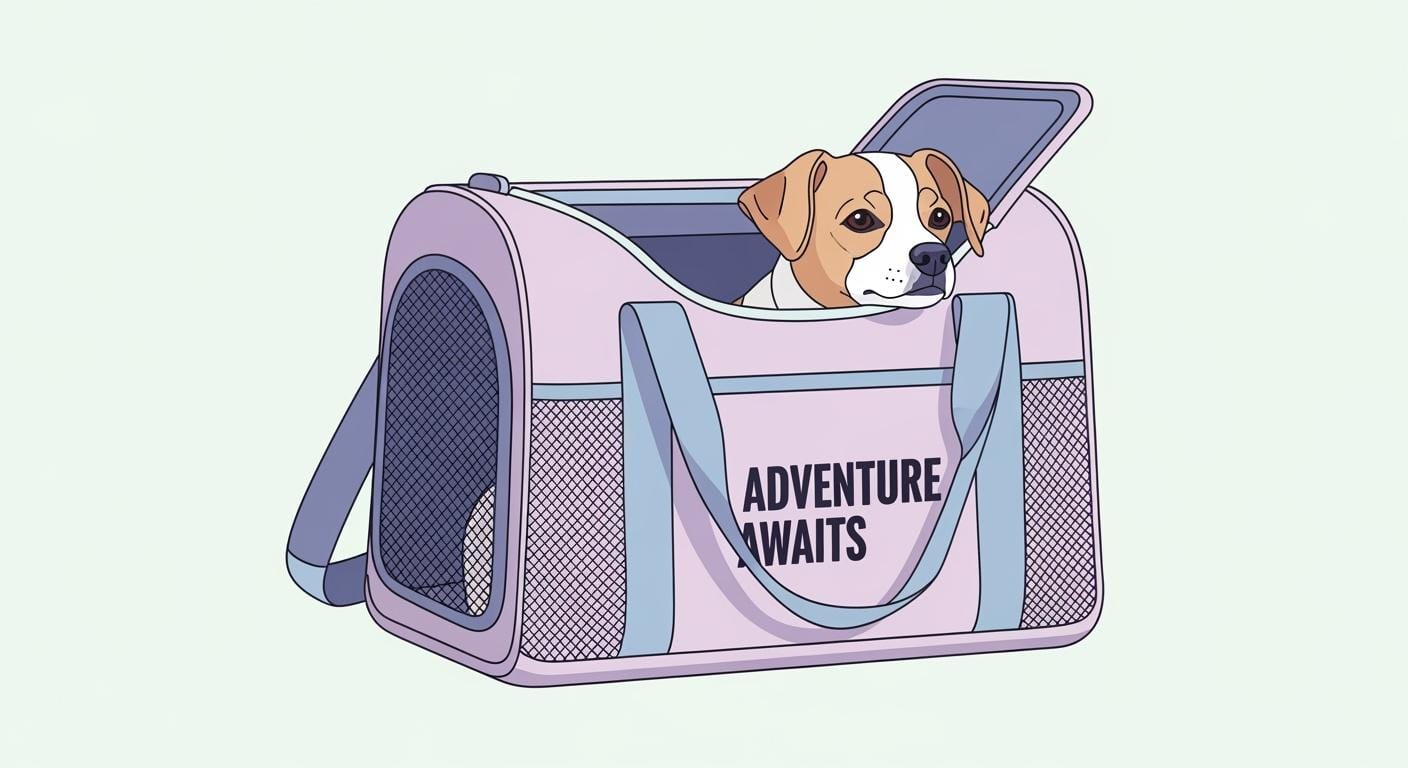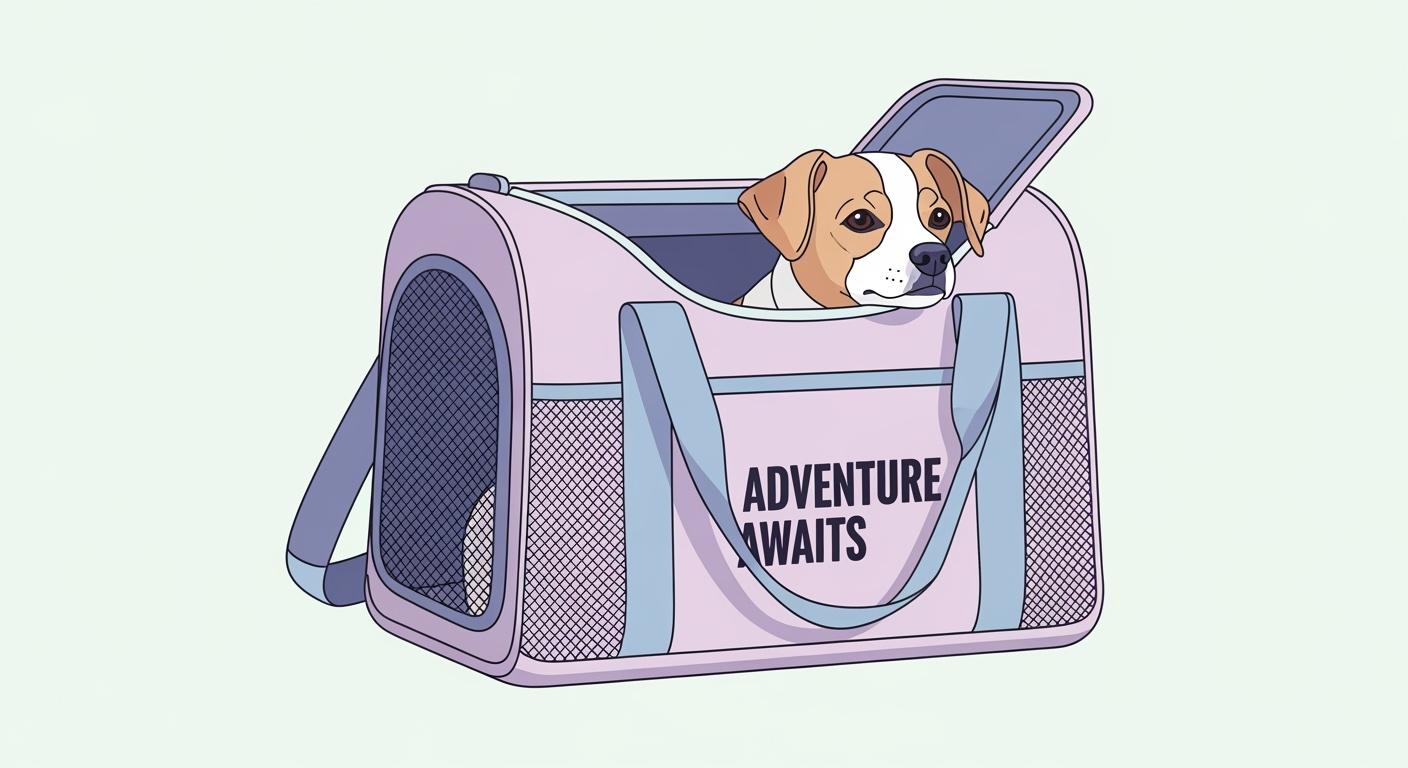
A mesh window that looks generous in product photos can become near-useless in under a minute of real use. The issue is not the mesh fabric itself. It is the structure around it — and whether that structure holds its shape when a dog leans, shifts, or settles against the side wall.
When a dog moves inside a tote carrier, the side panels take lateral force. A soft-sided carrier without internal reinforcement transfers that force straight into the mesh panel. Mesh is flexible by design. It has no resistance to compression. It folds. It presses against fur. The ventilation area that looked like broad coverage on the product page shrinks to whatever small gaps remain around the dog’s shoulders and head. A carrier can have mesh on every panel and still trap heat if none of those panels stay open under load.
The structural chain runs like this: the dog shifts weight → the side wall bows inward → the mesh loses edge tension → the panel collapses against the dog’s body → airflow at the contact point drops to near zero. Understanding that chain matters because each link points to a different design decision — and fixing only one link leaves the rest ready to fail. How the carrier handles day-to-day movement is shaped by the same design choices that determine whether the mesh stays open during a short trip to the vet or a longer outing, as covered in the daily-use checklist for tote carriers.
Why Mesh Ventilation Collapses in a Dog Tote Carrier
The Bottom Board as the Root Cause
The most overlooked part of a carrier’s ventilation performance sits at the bottom. When you lift a loaded carrier, the dog’s weight pushes down on the base panel. If that panel flexes — even slightly — it creates a hinge effect at the corners. The side walls get pulled inward, and every mesh panel attached to those side walls follows the movement.
This is not a material failure. It is a geometry problem. A bottom board that bends under load converts a vertical force into an inward horizontal pull at every attachment point along the perimeter. The force travels from the base edge up through the side wall fabric, reaches the mesh panel stitching, and pulls the mesh out of plane. Once the mesh loses tension, it cannot resist folding — it goes wherever the dog’s body pushes it.
You can verify this without a dog. Load the carrier with 15 pounds of weight, lift it by one handle, and watch the opposite side wall. If it bows inward by more than half an inch, the bottom board is too flexible. The mesh on that side will collapse the same way under a dog’s weight during any lifted carry.
| Failure Signal | Structural Cause | Where It Leads |
|---|---|---|
| Mesh pressed flat against dog’s body | Side wall bows inward under lateral load | Ventilation area drops to near zero at contact point |
| Mesh folds when carrier is lifted | Bottom board flex creates corner hinge effect | Side panels pull inward, mesh loses tension |
| Carrier twists during a one-shoulder carry | Offset handle placement creates rotational torque | One side compresses, mesh on that side folds |
Handle Placement and the Twist Problem
Handle attachment points determine whether mesh panels stay flat or get pulled out of shape during a carry. A single handle centered on the top panel pulls upward evenly — the load distributes across both side walls, and the mesh on each side stays under roughly equal tension. Offset handles, or straps attached too close to one edge, create a twisting moment. The carrier tilts. One side wall compresses more than the other. The mesh on that side folds inward.
A crossbody strap amplifies this effect. The angle of pull is diagonal rather than vertical, so the torque at the attachment point is larger. The carrier body rotates, and the mesh panel on the compressed side presses directly against the dog. The same design principles that affect support and balance in a one-handed carry also determine whether the ventilation openings stay usable when the carrier is not sitting flat on the ground.
Mesh Openings Too Low or Too Close to Pressure Points
The position of a mesh panel matters as much as its size. A large mesh window mounted low on the side wall sits right where a dog’s shoulder or hip presses outward. Instead of providing ventilation, it becomes a contact surface. The mesh pushes flat against fur, and airflow stops. The same panel placed higher on the side wall — above the dog’s shoulder line — stays clear even when the dog leans.
A mesh panel near the front edge of the carrier tends to get blocked by the dog’s chest or nose when the dog faces forward. Panels positioned toward the rear of the side wall stay open more reliably because the dog’s body creates a small air gap there during a normal sitting or lying position. This is not about more mesh. It is about mesh in the right places — where the dog’s body does not naturally press against it.
What Keeps the Mesh Open Under Real Load
The difference between a mesh panel that stays open and one that collapses comes down to two design choices: what supports the panel from behind, and how the panel’s edges resist deformation.
Semi-rigid side panels act as a skeleton. They take the lateral force from the dog’s body and spread it across the panel surface instead of letting it concentrate at the mesh attachment points. The mesh itself does not need to be stiff — it stays open because the frame behind it holds its shape. This is the same principle that makes sling carrier sizing and material choices matter: the structural layer carries the load, so the comfort layer can do its job without being crushed.
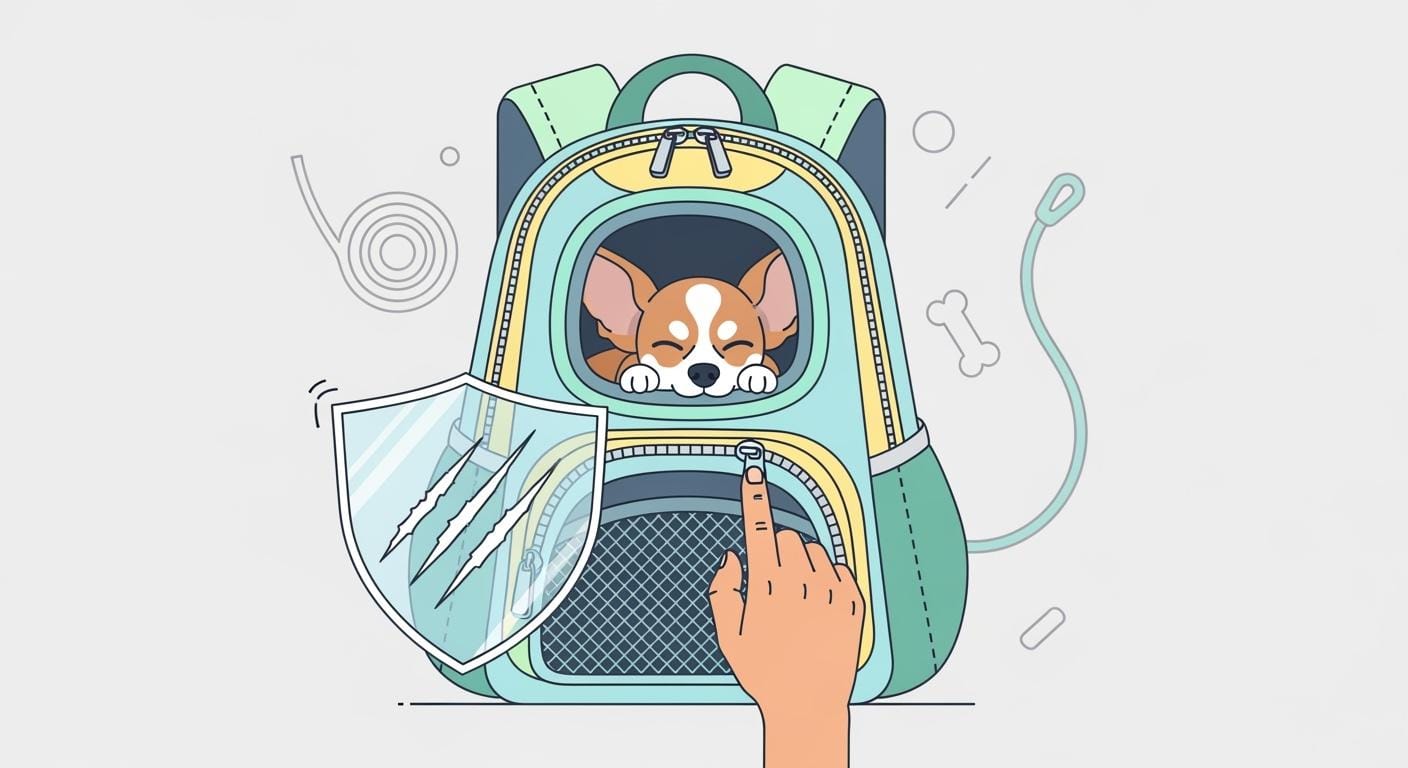
Reinforced mesh edges handle a different problem. Even with a semi-rigid panel behind it, mesh fabric can sag or pull away from its stitching over time — especially at corners and along zipper tracks where tension concentrates. Edge binding — a folded strip of nylon or polyester sewn over the raw mesh edge — distributes tension along the entire seam line rather than letting it focus at individual stitch holes. This keeps the mesh panel flat and prevents gap formation at the edges where hot air would otherwise escape unevenly.
After a 10-minute carry, run your hand along the inside of each mesh panel. If the mesh is still taut and the edges have not pulled away from the stitching, the reinforcement is doing its job. If you feel the mesh sagging inward or see the edge binding starting to separate at the corners, the panel will continue to degrade with each use.
A Bottom Board That Does Not Flex
A stable bottom board is the single most important structural element for keeping mesh ventilation open. When the base stays flat, the side walls stay vertical. When the side walls stay vertical, the mesh panels attached to them stay in plane.
Stiffness matters more than thickness. A thin panel of high-density polyethylene can resist bending better than a thick panel of low-density foam. In manufacturing terms, the material’s flexural modulus — how much it resists bending under load — determines whether the carrier holds its shape, not how heavy or padded the base feels. This is a production-side consideration that directly affects real-world performance: a breathable tote carrier built on a base that resists flex will keep its mesh panels open through hundreds of lift-and-carry cycles, while one built on a softer board will start showing mesh collapse within the first few weeks of regular use.
Lift the loaded carrier and hold it at carrying height for 30 seconds. Set it down and check whether the mesh panels on the side walls are still the same shape they were before lifting. If the panels look puckered, wrinkled, or pulled inward compared to their resting shape, the bottom board flexed during the lift and transmitted that movement to the side walls.
Mesh Placed Where the Dog Does Not Press
Mesh panel placement that accounts for how a dog actually sits inside a carrier keeps airflow paths open. Dogs in tote carriers typically face forward with their chest near the front panel and their hindquarters toward the back. The highest pressure points are the shoulders against the side walls and the chest against the front.
Mesh on the upper half of the side walls — above the shoulder line of the dog — stays clear because the dog’s body curves inward above the ribcage. Mesh on the rear half of the carrier stays clear because most dogs sit with their weight forward, leaving a small air pocket behind the hindquarters. The carrier design for urban carrying scenarios where the carrier gets lifted, set down, and carried at different angles throughout the day benefits most from this kind of placement — the mesh openings that are not in the dog’s primary contact zones stay functional regardless of carry position.
| Mesh Placement | Real-Use Outcome | Design Fix |
|---|---|---|
| Low on side wall, near dog’s shoulder | Blocked by body on contact, zero airflow at that panel | Raise mesh above shoulder line, reinforce panel edges |
| Front panel, near dog’s chest | Nose and chest press against mesh when facing forward | Move mesh to upper portion of front panel or add top-panel ventilation |
| Upper rear side wall, above hip | Stays open, consistent airflow in most sitting positions | Maintain — this is the highest-value mesh placement zone |
When This Design Works — and When It Falls Short
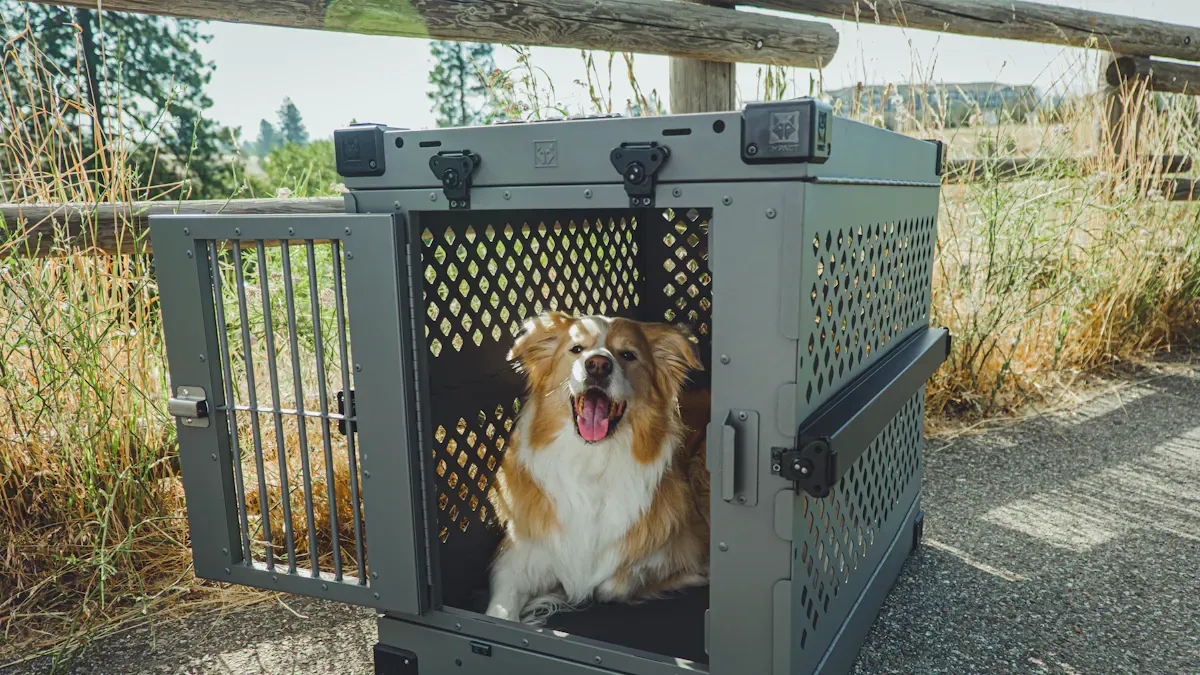
A semi-rigid tote carrier with reinforced mesh edges, a stable bottom board, and mesh placed away from pressure points handles most everyday use well. Short car trips, walks into the vet, errands where the carrier gets lifted and set down a few times — in these conditions, the structure holds its shape and the ventilation stays open.
The design advantage narrows under two conditions. The first is extended stationary use. If the dog spends over an hour inside without the carrier being moved — during a long wait at an airport gate, for example — body heat accumulates even with good ventilation. The mesh panels are open, but the air inside the carrier is only as cool as the surrounding environment. In a warm room, the carrier interior still warms up. The structural design prevents mesh collapse, but it does not create airflow where none exists.
The second is oversized dogs. A dog at the upper limit of the carrier’s weight rating puts more lateral force on the side panels than the semi-rigid structure was designed to resist. The panels may hold initially but begin to bow inward over repeated use as the internal frame fatigues. A small dog tote carrier stays steadier when the dog’s weight sits well within the design range — the structural margin absorbs day-to-day shifts without deformation. When the dog fills the carrier to its stated limits, that margin disappears.
Disclaimer: The fit and ventilation checks described here assume a smooth-coated dog under 20 pounds. Double-coated breeds retain more body heat and may show signs of overheating even with all mesh panels fully open — hand-check the carrier interior temperature after 10 minutes of use rather than relying on visual checks of mesh position alone. For brachycephalic breeds, any enclosed carrier — regardless of mesh coverage — should be monitored closely, as these dogs are more sensitive to temperature and airflow changes than the mesh panel design can compensate for.
FAQ
How can I tell if the carrier’s bottom board will flex before buying?
Press your thumb into the center of the base panel with moderate pressure. A board that gives more than a slight depression under thumb pressure will flex significantly under a dog’s weight. The material’s resistance to point loading at the center predicts how it behaves under distributed load — a soft center means soft edges, and soft edges mean the side walls will pull inward when you lift the carrier.
Does more mesh coverage always mean better ventilation?
Only if the mesh stays open. A carrier with 30% mesh coverage that holds its shape ventilates better than one with 50% coverage where half the panels collapse under load. Mesh that presses against the dog ventilates nothing. The structure supporting the mesh matters more than the total mesh area.
What is the difference between a reinforced mesh edge and a standard one?
Reinforced edges have a folded binding strip sewn over the raw mesh edge. Standard edges typically use a single-row stitch directly through the mesh fabric without binding. Under repeated tension — from the dog leaning, from the carrier being lifted — raw-edge mesh pulls at individual stitch holes and develops gaps. Bound edges distribute tension across the full seam length and resist pulling away from the attachment point.
Can a soft-sided carrier ever ventilate as well as a semi-rigid one?
In the specific case where the carrier stays on a flat surface and the dog does not move, a soft-sided carrier with well-placed mesh can ventilate adequately. As soon as the carrier gets lifted or the dog shifts position, the soft walls deform and the mesh openings change shape. For urban carrying — where lifting, setting down, and angle changes happen repeatedly — semi-rigid construction keeps the ventilation area consistent. Soft-sided carriers cannot match that consistency because their wall geometry changes with every movement.