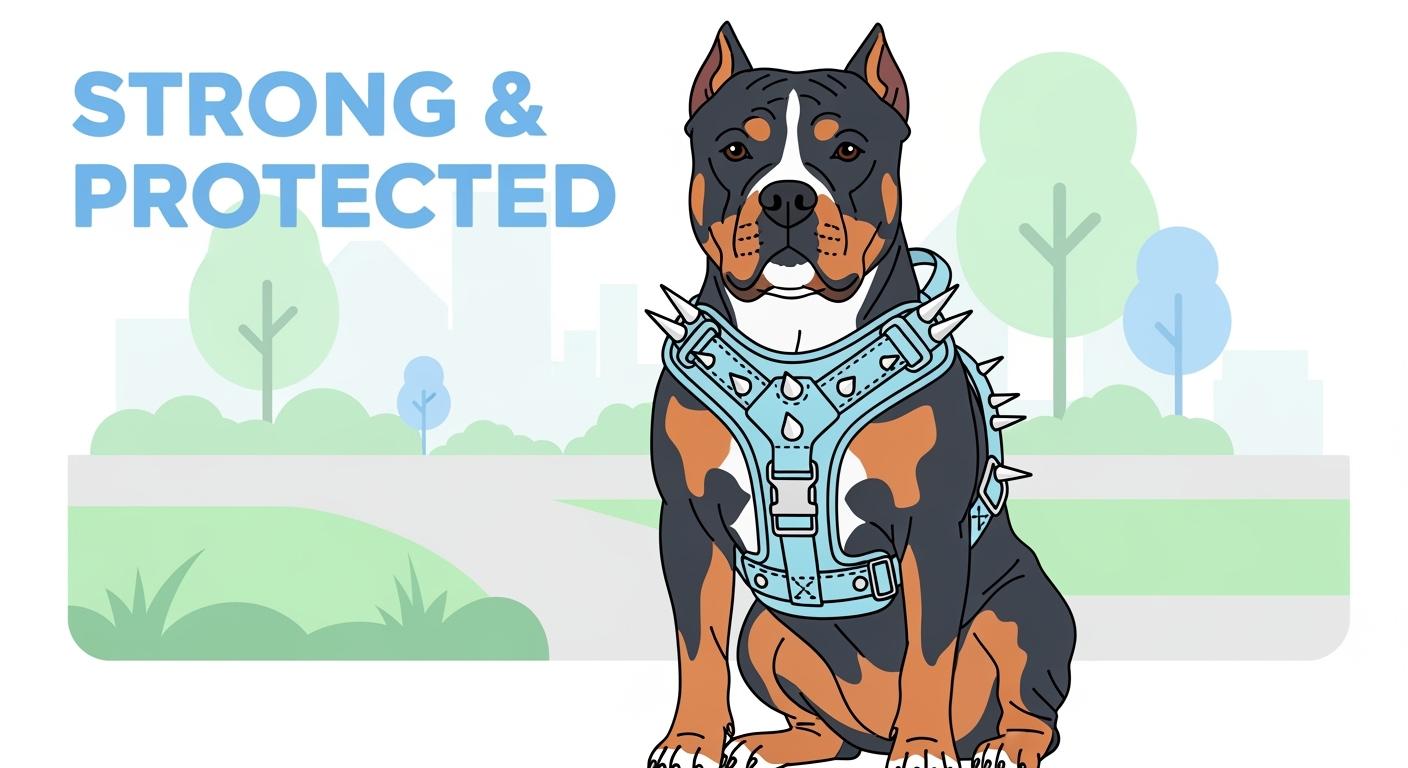
A spiked dog harness can look bold, but the styling only works if the base harness fits well. Before you buy, check chest fit, neck opening, shoulder clearance, edge finish, and how the spikes are attached. Decorative hardware should never create extra rubbing, bulk, or escape gaps.
This page is a daily-walk fit guide. It is not a medical, training, or bite-protection claim. If your dog shows pain, limping, skin damage, or panic in any harness, stop using it and speak with your veterinarian.
Key Takeaways
- Measure your dog’s chest before you shop, then confirm the neck opening and adjustment range before you choose a size.
- Prioritize flat straps, soft edge finish, and shoulder freedom before style details. Spikes should sit away from the neck, spine, and front-leg movement zone.
- Do a short walk test and a backward slip check before everyday use. If the harness shifts, rubs, or opens a gap near the head or elbows, the setup is not ready.
Spiked dog harness fit: what to check first
Start with the base shape of the dog harness, not the spikes. A decorative harness that sits too high on the throat, crowds the shoulders, or leaves a large escape gap will cause more problems than it solves.
Chest and neck measurement tips
Measure the widest part of the chest just behind the front legs. Then measure the lower neck where the harness will actually sit. If a size chart also asks for back length, use it as a secondary check rather than the main sizing point.
- Stand your dog naturally and wrap a soft tape around the chest without pulling it tight.
- Measure the lower neck near the shoulders, not high up under the jaw.
- Compare both numbers with the size chart and choose the size that gives you adjustment room without starting at the loosest setting.
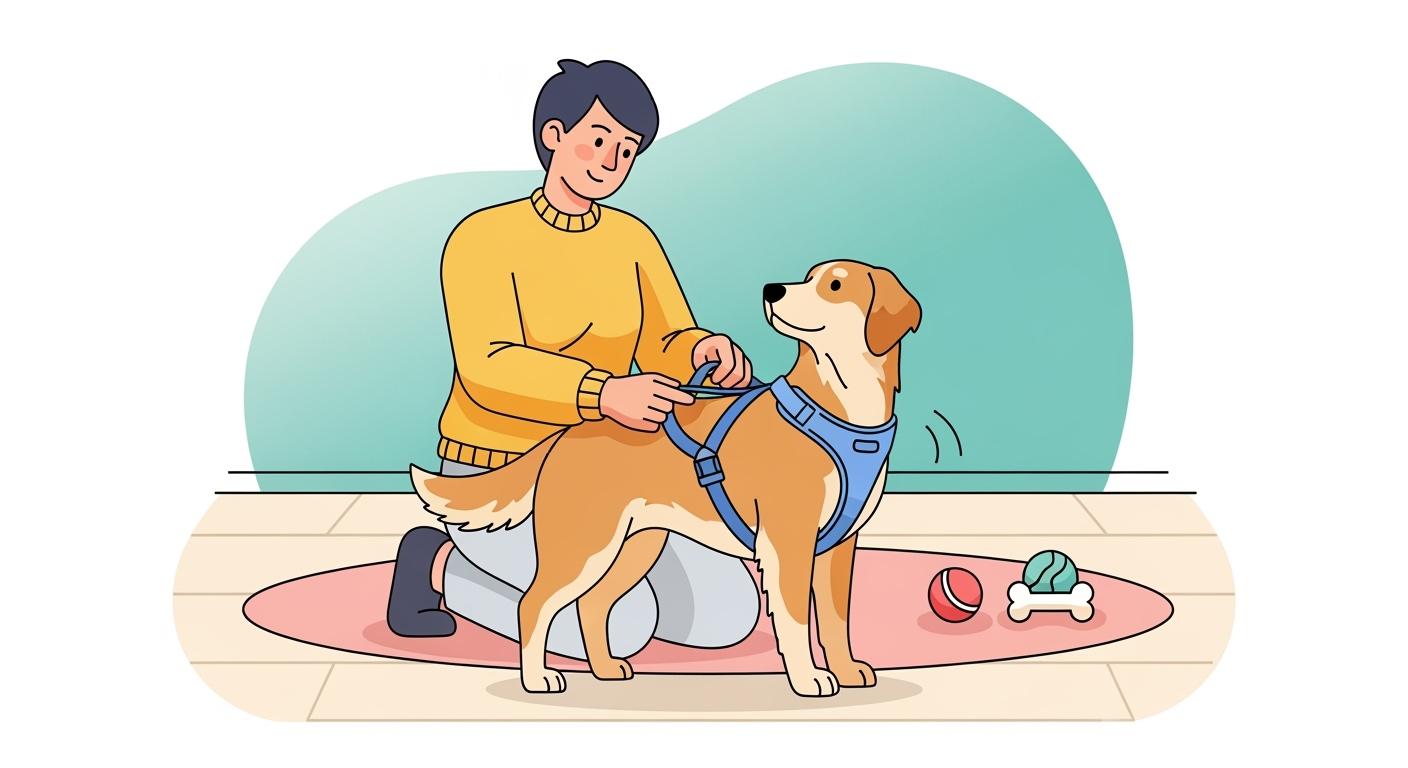
After fitting, the straps should feel secure without digging in. For most dogs, you should be able to slide a finger or two under the strap with slight pressure. If the harness lifts away easily or rotates when you touch it, it is too loose. If the skin bunches, the coat compresses sharply, or the straps leave clear pressure marks, it is too tight.
Quick check: Recheck the fit after a short walk. Coat, movement, and excitement can change how the harness settles on the body.
Adjustment, shoulder clearance, and spike placement
Once the size is close, adjust both sides evenly so the harness stays centered. The chest panel should sit low enough to avoid the throat, and the strap line should not cut into the area behind the elbows. Your dog should be able to step forward, turn, and lower the head without the harness rolling or climbing.
Spikes or raised hardware should stay on the outer panel, away from the neck edge, spine pressure points, and front-leg movement path. If the spikes are removable, check that they stay attached and do not wobble into a rubbing point. If your dog walks in crowded spaces or plays closely with other dogs, removable spikes are easier to manage than fixed, oversized hardware.
| Fit area | Pass signal | Fail signal |
|---|---|---|
| Chest fit | Harness stays centered and does not roll | Panel shifts sideways or rides up |
| Neck opening | Sits below the throat with no choking feel | Presses high into the neck |
| Shoulder clearance | Front legs move freely | Stride shortens or dog hesitates |
| Underarm area | No rubbing after a short walk | Redness, flattening, or hair wear appears |
| Spike placement | Outer panel only, no hard contact points | Touches neck edge, spine, or leg path |
| Hardware security | Buckles and decorative parts stay closed | Loosens, rattles, or opens under tension |
Walk test and back-out check
Before daily use, clip the leash on and do a short hallway, driveway, or calm sidewalk test. Watch for rolling, rubbing, or a neck opening that gets bigger when the dog backs up. Check again after the walk to see whether the coat is flattened unusually behind the elbows or under the chest strap.
Safety reminder: Do not treat spikes as protection, restraint, or a substitute for fit. The harness should still work safely even if you ignore the styling completely.
Key features and materials that matter
When you review materials, focus on how the harness behaves in daily use. A practical daily-walk harness should balance comfort, cleanup, and steady adjustment before it tries to make a visual statement.
Padding, edge finish, and adjustability
Padding helps only when it is placed well and finished cleanly. Thick padding that bunches at the chest or behind the elbows can create more rubbing than a simpler harness with flatter seams. Look for smooth edge binding, even stitching, and enough adjustment points to fine-tune the fit without twisting the straps.
Nylon, mesh, and neoprene: when each works
Nylon often suits everyday use when you want a simple outer shell and easy wipe-down care. Mesh can feel cooler and lighter, which helps in warmer weather or shorter coats, but it still needs enough structure to stay stable. Neoprene or similar padded backings can feel softer against the body, but thicker layers may dry more slowly and can feel warmer on longer walks.
| Material choice | Where it helps | What to watch |
|---|---|---|
| Nylon shell | Simple daily use and easier wipe-down care | Check edge finish so it does not feel stiff |
| Mesh panels | Lighter feel and better airflow | Make sure the harness still stays stable |
| Neoprene or padded lining | Softer contact on the body | Can feel warmer and dry more slowly after washing |
Reflective details, hardware, and cleanup
Reflective trim can improve visibility in low light, but it does not replace ordinary walking caution. More important for daily use is hardware that closes securely, a leash attachment point that stays easy to reach, and a surface that can be wiped down or hand-washed without leaving soaked padding around the spikes or rivets.
Common mistakes and quick troubleshooting
Most buying mistakes happen when the style leads the decision. A harness can look dramatic online and still fail at entry, adjustment, clearance, or everyday comfort once it is on the dog.
Mistakes that lead to returns
- Buying by breed label alone instead of chest and lower-neck measurement.
- Choosing oversized spikes that add bulk near the shoulders or neck edge.
- Assuming thicker padding always means more comfort.
- Skipping the back-out check and only looking at the dog while standing still.
- Ignoring cleanup needs when the harness has multiple rivets, layers, or stitched decorative panels.
Pass or fail checklist before regular use
| Check item | Pass | Fail | What to do |
|---|---|---|---|
| Entry and fastening | Dog steps in or accepts fitting calmly | Dog freezes or resists before walking | Recheck size, bulk, and fitting sequence |
| Short walk stability | Harness stays centered | Harness rolls or twists | Readjust evenly or try another size |
| Back-out resistance | No opening gap when dog backs up | Neck opening grows or lifts | Tighten, reduce slack, or change layout |
| Rubbing check | No new rub marks after use | Hair flattening or redness appears | Stop use and switch to softer, better-placed edges |
| Spike hardware | All parts stay secure and quiet | Loose, rattling, or scraping parts appear | Tighten if designed to tighten, or remove that setup |
When to stop using it
Stop using the harness if you see skin damage, repeated rubbing, repeated escape attempts, limping, or hardware that no longer closes firmly. Decorative styling is never worth forcing daily use. A simpler harness that your dog moves well in is usually the better choice.
FAQ
1. Does a spiked dog harness make walks safer?
Not by itself. The fit, strap layout, and secure hardware matter more than the spikes. Treat the spikes as styling, not as a safety system.
2. How tight should a spiked harness be?
Snug enough to stay centered, but not so tight that it bunches skin or leaves strong pressure marks. You should usually be able to slide a finger or two under the strap with slight pressure.
3. Are removable spikes better?
They can be easier to manage if your dog walks in tight spaces, rides in a crate, or plays around other dogs. The benefit is flexibility, but only if the attachment stays secure.
4. What is the biggest buying mistake?
Choosing by style or breed label before measuring the chest and checking the lower-neck opening. Most fit problems start there.
5. What should you inspect after the first walk?
Look at the underarm area, chest strap line, neck opening, and spike attachment points. If you see rubbing, shifting, or loosening hardware, do not move straight into longer walks.
A good spiked dog harness starts with quiet basics: accurate chest measurement, stable adjustment, free shoulder movement, secure hardware, and edges that stay comfortable after a real walk. Once those points pass, the decorative details can be a bonus instead of a problem.
This guide offers general product-fit advice. If your dog shows pain, limping, skin damage, or panic in any harness, stop use and contact your veterinarian.