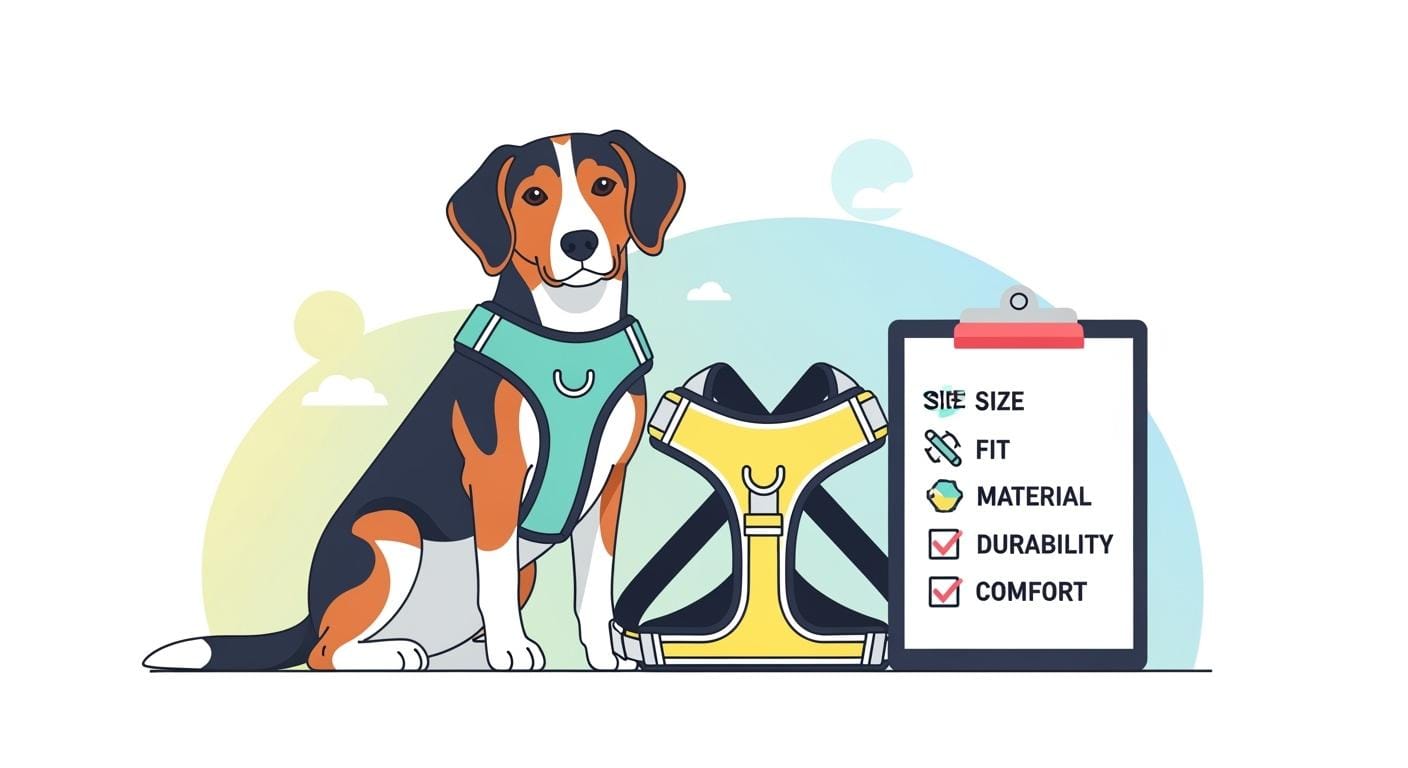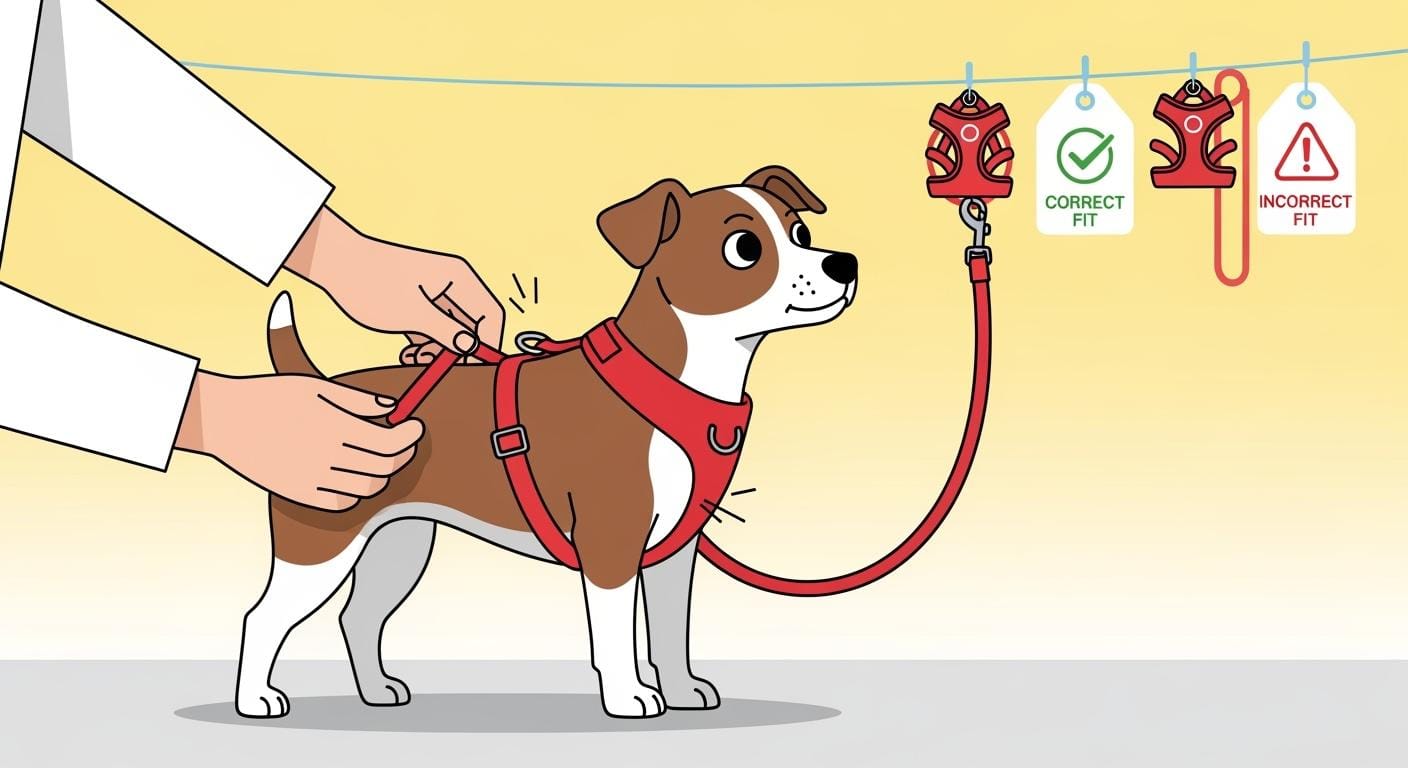
When you select a harness for your small dog, you protect their safety and comfort. You must measure at the neck base and chest to get a proper fit. A harness that sits wrong can cause rubbing or slipping. The right harness and leash work as a team. Use the checklists in this article to spot mistakes with your small dog harness and leash.
Key Takeaways
Always measure your dog’s neck and chest first. This helps the harness fit right and stops discomfort.
Check the harness fit often. Watch for rubbing or tight spots to keep your dog safe and comfy.
Pick a harness style that works for your dog. Think about how much your dog can move and feel good. This makes walks better for your dog.
Dog Harness Sizing: How to Measure and Choose
Measuring Neck Base and Chest
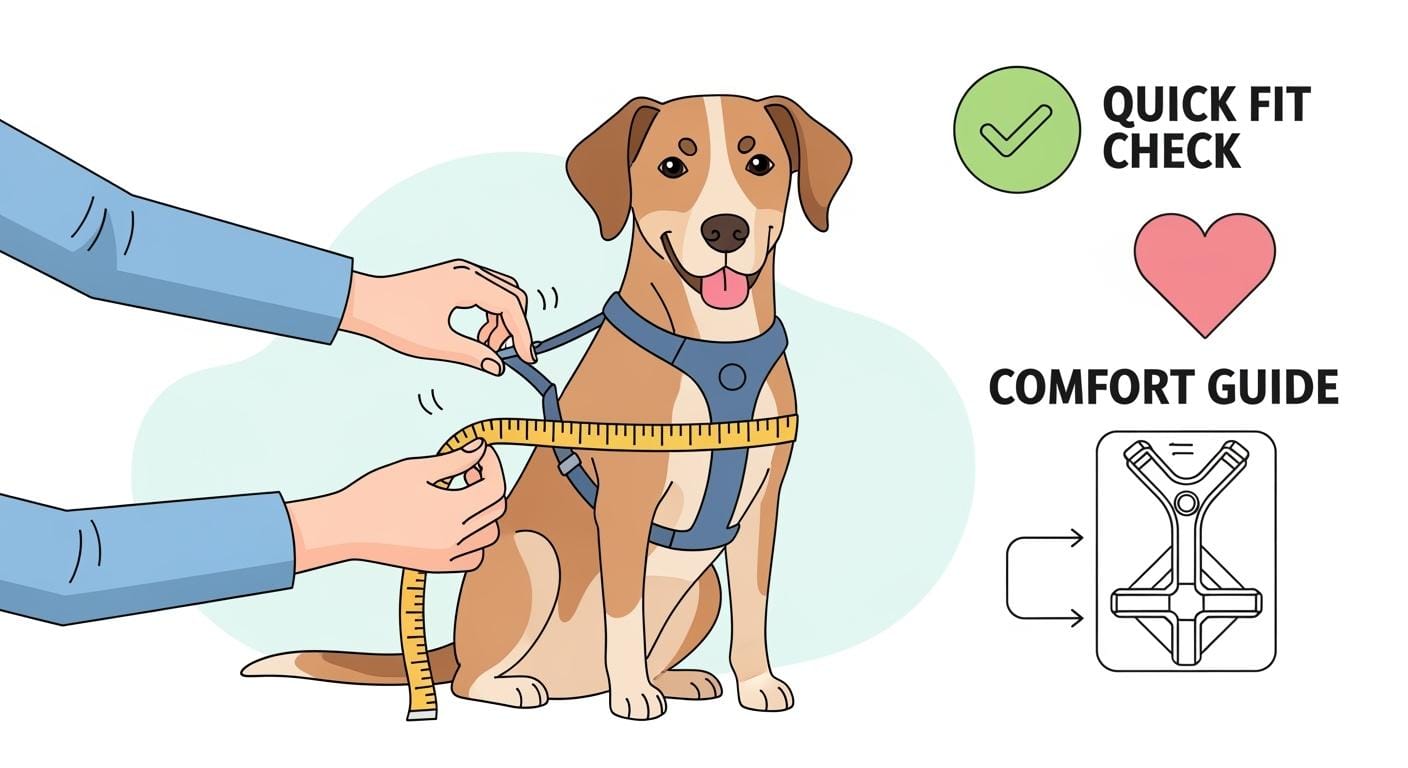
You need to measure your dog at the neck base and the widest part of the chest. Start by placing a soft tape measure where the neck meets the shoulders. This spot is not the narrowest part of the neck. Wrap the tape around the chest, just behind the front legs, at the broadest point. Write down both numbers. If your dog has a thick coat or a unique body shape, press gently to get a true measurement. Always measure a dog for a harness when they stand naturally. This helps you find the proper size and fit.
Tip: Double-check your measurements before you buy. Dogs can wiggle, so repeat the process for accuracy.
Using Dog Harness Size Charts
Dog harness sizing charts help you match your measurements to the right harness. Most brands use chest girth and dog weight as main sizing factors. You should not rely only on breed or weight. Always check the adjustment range for each harness. Some harnesses fit differently because of their shape or padding.
Here is a typical dog harness size chart used by major pet brands:
Harness Size | Chest Girth | Dog Weight | Typical Breeds |
|---|---|---|---|
XS | 12-16 in | 5-10 lb | Chihuahua, Toy Poodle |
S | 16-22 in | 10-20 lb | Pug, Dachshund |
M | 22-28 in | 20-50 lb | Beagle, Cocker Spaniel |
L | 28-36 in | 50-80 lb | Labrador, Boxer |
XL | 36-44 in | 80+ lb | German Shepherd, Great Dane |
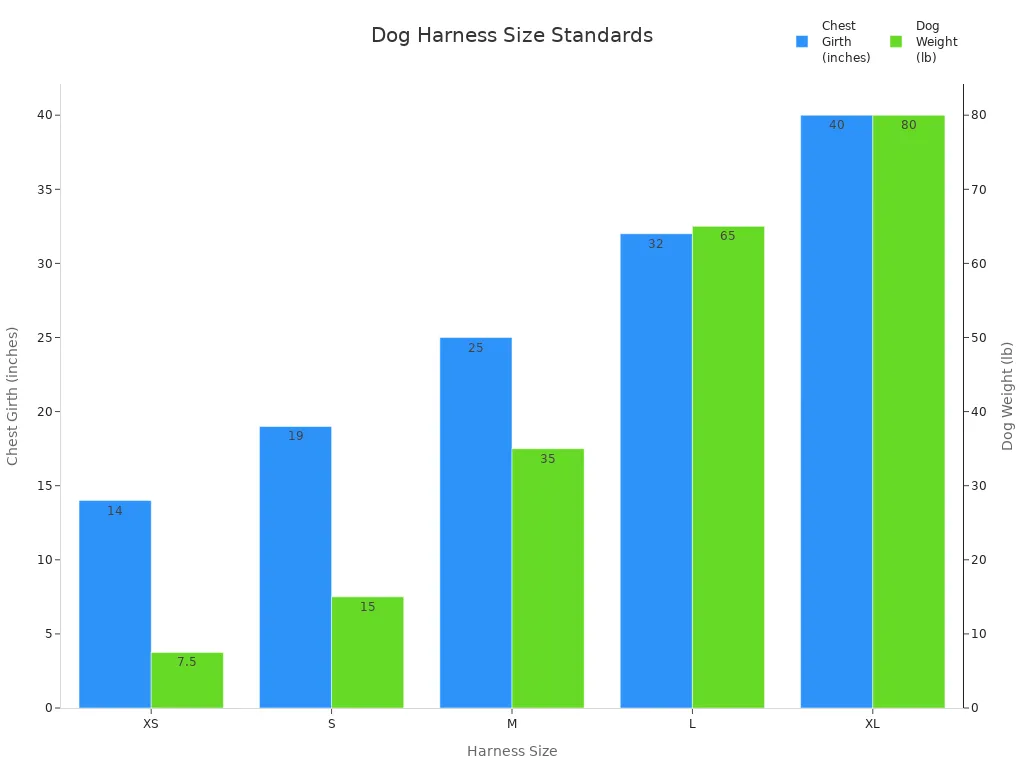
Dog harness size charts can differ between brands and regions.
You must measure your dog instead of relying on breed or weight.
Harnesses may have different adjustment ranges and shapes.
Always check the fit after adjusting the harness.
Common Sizing Mistakes
Dog owners often make mistakes with harness sizing. You might pick a harness based only on weight or breed. This can cause discomfort or poor fit. Some people choose a harness because it looks cute, not because it fits well. Others skip measuring and trust size labels. Thick padding can trap heat and make your dog uncomfortable. You may overlook shoulder or elbow freedom. Not all small dogs need the same harness style. You must consider your dog’s needs and body shape.
Choosing a harness by design, not fit or safety.
Using size labels without measuring your dog.
Missing shoulder or elbow clearance.
Picking thick padding that traps heat.
Assuming all small dogs need the same harness.
Pass/Fail Fit Checklist Table
Use this checklist to check your harness sizing and fit. If you find a fail signal, follow the solution to fix the problem.
Check Item | Pass Signal | Fail Signal | Solution |
|---|---|---|---|
Two-finger rule | Two fingers fit under each strap | Too tight or too loose | Adjust straps for snug but comfy fit |
Centered harness | Stays centered during walk and turn | Slides, rotates, or shifts | Re-adjust harness and check balance |
Shoulder freedom | Dog moves freely, no crowding | Restricts movement or rubs | Loosen straps or try a different harness |
Skin check | No redness or swelling after walk | Redness, swelling, or sores | Remove harness, check for irritation |
Escape risk | No visible gaps, secure clips | Gaps, loose straps, easy escape | Tighten straps, check clips, test backup |
Note: Always check harness fit before every walk. A well-fitted harness keeps your dog safe and comfortable.
You must focus on dog harness sizing and fit every time you use a harness. Measuring your dog and checking the harness size chart helps you prevent mistakes. The harness and leash work together as a system. You protect your dog by making sure the harness fits well and does not restrict movement.
Checking Small Dog Harness and Leash Fit
A small dog harness and leash work best when you treat them as a team. You want your dog to feel safe, comfortable, and easy to control on every walk. To do this, you need to check both the harness and the leash for proper fit and function. Start by looking at how the harness sits on your dog’s body, then check the leash hardware and how it feels in your hand.
Shoulder and Elbow Freedom
Your dog needs to move its shoulders and elbows without any restriction. If the harness presses against the joints or rubs behind the elbows, your dog may start to walk stiffly or even resist moving. Over time, limited movement can lead to joint pain or discomfort. When a harness blocks the shoulder or elbow, it can make walking hard and may even cause long-term problems. Osteoarthritis, for example, can break down the cartilage in your dog’s joints. This leads to pain, swelling, and less movement. Small dogs feel these effects quickly, so you must check that the harness does not crowd the front legs.
To test shoulder and elbow freedom:
Watch your dog walk, turn, and sit while wearing the harness.
Look for smooth, easy steps and a natural stride.
Make sure the harness does not bunch up or press into the armpits.
If you see your dog bracing, limping, or stopping often, the harness may not fit right. You should adjust the straps or try a different style.
Signs of Poor Fit (Too Tight, Loose, or High)
You can spot a poor fit by watching how the harness moves and how your dog acts. Here are some common signs:
The chest section shifts off center when your dog moves.
Your dog braces, resists, or moves stiffly if the harness is too tight.
The harness twists, rides up, or allows too much reach.
Too much slack causes awkward positioning or loss of balance.
Your dog lunges forward or the harness slides out of place.
If you notice any of these signs, stop and check the harness. A harness that is too tight can press on the spine or chest, causing discomfort. One that is too loose can slip off or let your dog escape. Always check the neck-base and chest straps before each walk.
Back-Out and Escape Risk
Small dogs can slip out of a harness if it does not fit well. This risk goes up if the harness sits too high on the neck or leaves gaps around the chest. You want the harness to sit low at the neck base and snug around the chest. The leash should attach to a secure clip that matches your dog’s size. Heavy or bulky leash hardware can pull on the harness and make it easier for your dog to back out.
To lower escape risk:
Use a harness with a snug neck-base and chest fit.
Choose a leash with light hardware and a secure clip.
Hold the leash close for better control, especially in busy areas.
Check the harness and leash together before every walk. Test by gently pulling back on the leash. If the harness stays in place and your dog cannot slip out, you have a safer setup.
Troubleshooting Fit Table
Use this table to solve common small dog harness and leash fit problems. Each row lists an issue, possible cause, quick check, and solution.
Issue | Possible Cause | Quick Check | Solution |
|---|---|---|---|
Harness presses on throat | Neck-base strap too tight or too high | Slide one finger under neck strap | Loosen strap or try a larger harness |
Harness squeezes chest | Chest strap too tight | Check for gaps or pinching at chest | Adjust chest strap or try a different harness |
Harness restricts movement | Straps block shoulders or elbows | Watch for stiff walk or rubbing | Loosen straps or choose a new harness style |
Dog coughs or pants | Neck pressure from harness | Listen for coughing during walk | Loosen neck strap or switch harness |
Skin redness or hair loss | Chafing from poor fit or rough material | Inspect skin after walk | Adjust fit or pick softer material |
Dog overheats or harness heavy | Bulky or non-breathable harness | Feel harness weight and check for heat | Choose lighter, breathable harness |
Leash feels heavy or awkward | Oversized hardware or thick leash | Compare leash weight to dog’s size | Use lighter leash with smaller clip |
Dog escapes or backs out | Loose straps or high harness position | Test by gently pulling leash backward | Tighten straps, check fit, or try escape-resistant style |
Tip: Always measure your dog’s neck base and chest before buying a new small dog harness and leash. Check the fit every time you walk. Watch for changes in your dog’s movement or skin. If you see any problems, adjust the harness or try a new style.
A well-fitted small dog harness and leash system keeps your dog safe, comfortable, and easy to handle. You lower the risk of skin problems, joint pain, and escape. By checking the harness and leash together, you prevent common mistakes and help your dog enjoy every walk.
Choosing the Right Harness: Styles, Comfort, and Use
Harness Clip Types (Front, Back, Dual)
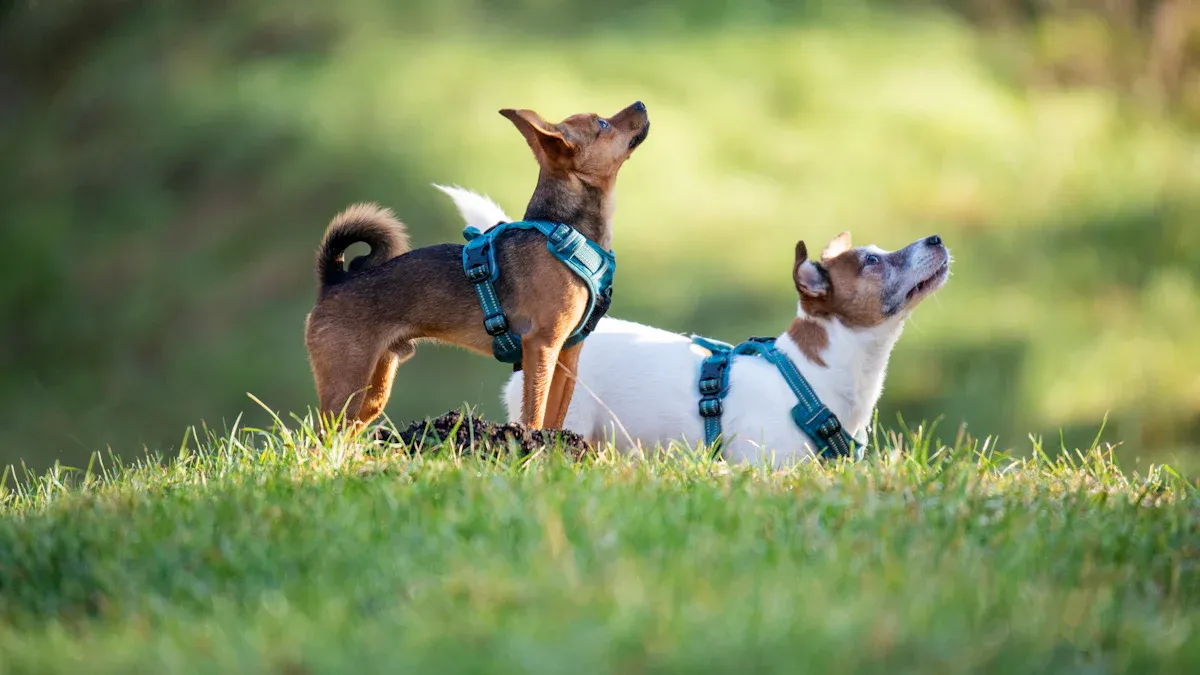
You should know how clip types change control. Front-clip harnesses help you guide your dog. They make pulling less likely and are good for training. Back-clip harnesses work best for calm dogs. They are easy to use for daily walks. Dual-clip harnesses let you switch between control and relaxed walking. You can pick the clip based on how your dog acts.
Front-clip harnesses help you steer your dog’s chest.
Back-clip harnesses are simple for calm dogs.
Dual-clip harnesses give you choices for training and walking.
Strap vs. Vest Styles
You can pick a harness style that fits your dog’s needs. Strap harnesses use less material and let air flow. Vest harnesses cover more of your dog’s body. They spread out pressure so your dog feels better. Step-in harnesses are easy to put on and help with pulling. Overhead harnesses go over your dog’s head and are quick to use. Step-in padded harnesses add comfort for dogs that are sensitive.
Comfort, Cleaning, and Material Choices
You should look for soft materials and easy cleaning. Mesh is light and lets air in. Nylon is strong and light. Neoprene is soft but can get hot. Padding stops rubbing but can make the harness bulky. Always check straps to make sure they fit snug. Follow care labels to clean and let harnesses dry before using again.
Comparison Table: Harness Types for Small Dogs
Types of dog harnesses | Clip Type | Strap vs. Vest | Hardware Weight | Leash Type | Fit & Comfort | Safety Features |
|---|---|---|---|---|---|---|
Step-in harnesses | Front/Back | Strap/Vest | Light | Short/Long | Easy fit, user-friendly | Secure clips, escape-resistant |
Overhead harnesses | Back/Dual | Strap/Vest | Medium | Short/Long | Quick setup, adjustable straps | Strong buckles, reflective trim |
Vest harnesses | Front/Back | Vest | Medium | Short/Long | Padded, comfortable materials | Wide coverage, low neck pressure |
No-pull harnesses | Front/Dual | Strap/Vest | Light/Medium | Short | Training support, step-in | Steering control, escape-resistant |
Many people pick small dog harnesses just because they look nice. They forget about fit or safety features. This can make your dog uncomfortable or let them escape. It can also make it hard to control your dog. The right harness means checking style, material, and safety features for your dog.
FAQ
1. How often should you check your small dog harness and leash fit?
You should check the fit before every walk. Dogs can change shape as they grow or gain weight. Always look for signs of rubbing, slipping, or discomfort.
2. What is the best way to clean a harness and leash?
Follow the care label on each item. Most harnesses and leashes can be hand-washed with mild soap and water. Let them dry completely before you use them again. If your dog rolls in mud or gets the gear dirty, clean it right away.
3. Can a harness help prevent neck injuries in small dogs?
A harness spreads pressure across the chest and shoulders. This reduces strain on the neck compared to collars. You should use a harness for puppies, seniors, and dogs with sensitive necks.
4. What should you do if your dog escapes from the harness?
Check the harness size and adjust the straps. Try a different style if your dog keeps slipping out. Use a leash with a secure clip and keep control close in busy areas.
5. Are there signs that your dog dislikes the harness or leash?
Watch for scratching, biting, or resisting when you put on the harness. Your dog may walk stiffly or try to back out. If you see these signs, check for fit problems or material discomfort.
Note: Always ask your veterinarian if you notice skin problems, pain, or behavior changes. This FAQ does not replace professional advice.
There are three big mistakes you can avoid. Do not use only your dog’s weight to pick a size. Always check how the harness fits when your dog moves. Do not make the straps too tight. Measure your dog’s neck and chest for the best fit. Check the harness often to keep your dog safe and comfy. Use the checklists and tables each time you walk your dog. A good harness and leash help your small dog stay happy and healthy for a long time.
Mistake | Correction |
|---|---|
Weight-only sizing | Measure neck and chest |
No dynamic fit check | Test movement and stride |
Overtight straps | Adjust for comfort |