
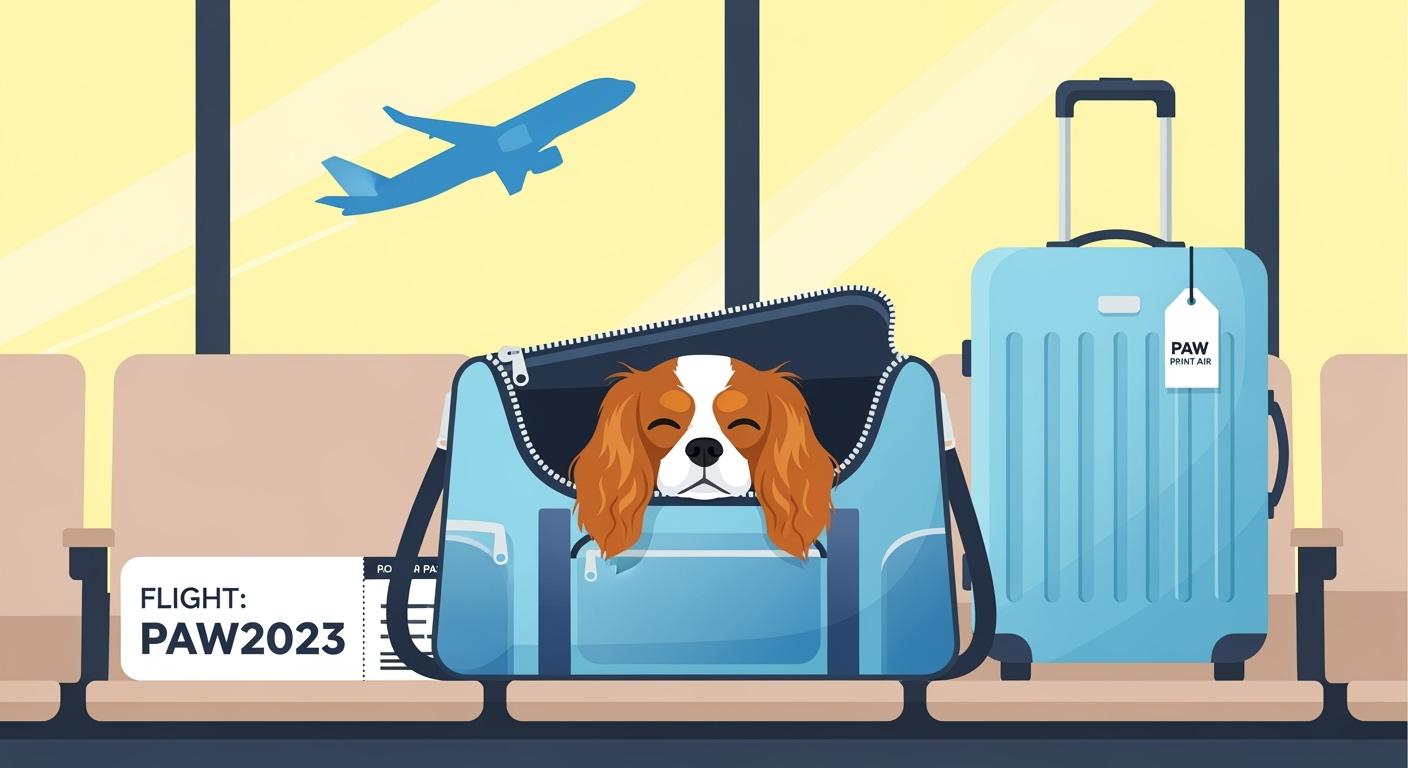
An airline-approved label on a small dog carrier bag tells you it was designed to slide under a seat. It does not tell you whether your dog can stand up, turn around, or settle once the normal pad goes in, the side pockets get packed, and the frame compresses inside the cabin. Two carriers with the same outside dimensions can feel completely different inside, and the one that photographs better is often the one that gives your dog less usable room. Before you trust the tag, check the interior shape, roofline behavior, and how much space disappears when the carrier is loaded for real travel.
Why the Airline-Approved Label Does Not Guarantee Enough Room
How Airline Rules Shape Carrier Dimensions
Airlines require pet carriers to fit under the seat in front of you without blocking aisles or exits. Most prefer soft-sided designs because they flex slightly to match different seat heights. But meeting the outside dimension rules says nothing about how much interior space survives once the carrier is packed and stowed.
| Airline | Max Carrier Dimensions (L x W x H) | Max Pet Weight | Carrier Type | Key Notes |
|---|---|---|---|---|
| Delta Air Lines | Varies by aircraft | No specific weight limit, but must fit | Soft or hard-sided | Call to confirm dimensions for your specific flight. |
| United Airlines | 18″ x 11″ x 11″ | No specific weight limit, but must fit | Soft or hard-sided | Soft-sided carriers are strongly recommended. |
| American Airlines | 18″ x 11″ x 11″ (soft) | 20 lbs (combined pet + carrier) | Soft or hard-sided | Hard-sided carriers have smaller dimensions (19″ x 13″ x 9″). |
| Southwest Airlines | 18.5″ x 13.5″ x 9.5″ | No specific weight limit, but must fit | Soft or hard-sided | Offers some of the largest dimensions for soft carriers. |
| Alaska Airlines | 17″ x 11″ x 9.5″ (soft) | 20 lbs (combined pet + carrier) | Soft or hard-sided | Hard-sided carrier dimensions are smaller (17″ x 11″ x 7.5″). |
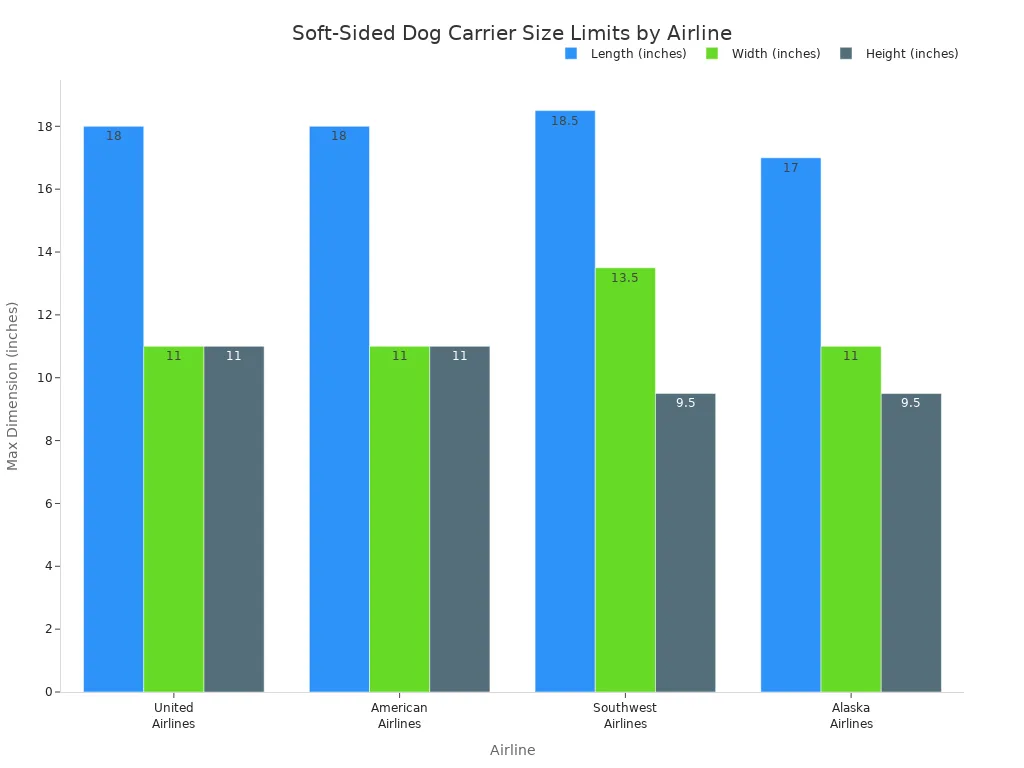
You should always check the requirements for your specific flight, since dimensions can change depending on the aircraft. An approved label on a small dog carrier bag does not guarantee it will fit every airline seat. The real under-seat fit for pet carriers on flights depends on the aircraft, not just the tag on the bag.
What You Need to Measure Before Comparing Carrier Interiors
Before you evaluate any carrier, measure your dog and compare the numbers to the recommended minimum interior dimensions. Do not rely on the outside dimensions printed on the listing.
| Measurement | Description |
|---|---|
| A | Length from nose to tail base |
| B | Height from floor to elbow |
| C | Width across shoulders |
| D | Height from floor to ear tip/head |
Container Length = A + 1/2 B
Container Width = C x 2
Container Height = D + bedding thickness
For snub-nosed breeds, add 10 percent more space.
Always place the normal pad inside the carrier before checking usable height. Load the side pockets as you would for real travel, then see if the roofline stays level. If your dog can stand, turn, and settle without being pushed up or crushed against the sides, the carrier is likely comfortable for flights. The same dimension logic used in carrier and car seat sizing checks applies here: what matters is the space your dog’s body actually occupies, not the space the product claims to have.
When a Low-Profile, Taller, or Expandable Carrier Makes More Sense
Choosing the right small dog carrier bag for airline travel means looking past the outside size. Each design type performs differently when packed, carried, and stowed under a seat.
| Feature | Low-Profile Soft Bag | Taller Soft-Sided Bag | Expandable Dog Carrier |
|---|---|---|---|
| Outside Profile | Slim, fits most under-seat spaces | Higher, may not fit all seats | Slim when closed, expands at destination |
| Usable Interior Space | Can shrink if roofline dips or sides flex | More headroom, less risk of roof dip | Expands for more space when allowed |
| Roofline Stability | May dip under compression | Holds shape better | Stable when not expanded, may sag if overfilled |
| Base Pad Comfort | Thin pad maximizes space | Thicker pad possible | Pad may shift when expanded |
| Side Pocket Impact | Loaded pockets reduce width | Pockets less likely to affect space | Pockets may bulge when expanded |
| Ease of Carrying | Lightweight, easy to handle | Bulkier, may feel heavy | Heavier when expanded |
| Dog Settling Ability | Good if dog is small and bag holds shape | Better for dogs needing more room | Best when expanded, but not always allowed in-cabin |
| Best Use Case | Short flights, small dogs, tight cabin spaces | Larger small dogs, longer flights | Layovers, destination comfort, not always for in-cabin use |
A low-profile soft bag works well for short flights and very small dogs, but you must check if the roofline stays firm after compression. A taller soft-sided bag gives more headroom but may not fit under every airline seat. An expandable carrier offers extra space at your destination, but you cannot always use the expanded feature during flight. The tradeoff between extra room and support in a travel carrier is easier to judge once you load the bag the way you would on travel day.
Tip: Test the carrier with your dog inside, normal pad in place, and pockets loaded. Compress the bag gently and watch whether the roofline stays level and your dog can still turn.
What Reduces Usable Space First Inside an Airline Dog Carrier
Roofline, Sidewall Flex, and Interior Shape
Soft-sided carriers flex to meet airline requirements, but the roofline can dip and sidewalls can collapse inward under pressure. This reduces usable space for your dog. Place the normal pad inside, load the pockets, and gently compress the carrier. Watch whether the roofline stays steady or dips toward your dog. If the sidewalls flex too much, your dog may lose settling room even though the outside dimensions still meet the airline rules.
| Design Feature | Impact on Usable Space |
|---|---|
| Size Limitations | Outside dimensions must fit under specific seat models, which caps the interior footprint. |
| Ventilation Requirements | Mesh panels for airflow can reduce structural rigidity and let the frame sag. |
| Structure of the Carrier | Soft-sided designs compress to fit under seats, which can collapse the roofline. |
Bed Pad Thickness and Base Inserts
Bed pads and base inserts add comfort, but they also take up vertical space inside the carrier. A thick pad can push your dog upward, making the roof feel tighter even when the carrier meets the listed interior height. Place the pad inside and check whether your dog can stand without pressing against the top. If the pad tilts or bunches, your dog may feel unstable. Base inserts help keep the carrier steady, but only use pads thin enough to leave headroom after accounting for compression during the flight.
Pocket Bulk and Storage
Many pet carriers include side pockets for storage. When you load them, the fabric can bulge inward and press against your dog. You should fill pockets as you would for real travel, then check the interior shape. Too much bulk can press against your dog and block mesh ventilation. Look for carriers with mesh panels on three or more sides to meet airline guidelines and prevent overheating.
| Essential Feature | What to Look For |
|---|---|
| Sufficient Ventilation | Mesh panels on three or more sides for steady airflow. |
| Leak-Proof Bottom | Waterproof base to contain messes. |
| Secure, Locking Zippers | Locking mechanism to prevent escapes. |
Pass or Fail Checks That Catch a Tight Carrier Before the Flight
Do not trust the outside look alone. Use this checklist to judge whether the carrier gives your dog enough safe space. Always test with the normal pad inside and pockets loaded.
| Check Item | Pass Signal | Fail Signal | Fix |
|---|---|---|---|
| Size | Dog stands, turns, and settles without crouching | Dog hunched, cannot turn, or lies awkwardly | Choose a larger carrier or thinner pad |
| Ventilation | Mesh panels clear, airflow steady | Mesh blocked by dog or bulging pockets | Remove pocket items or pick better design |
| Materials | Sides and roof hold shape under light compression | Roofline dips, sides collapse, bag sags | Use a carrier with stronger frame structure |
| Acclimatization | Dog enters and settles calmly | Dog resists, pants, or tries to escape | Practice at home before travel day |
| Paperwork | All documents ready and easy to access | Missing health certificates or ID | Prepare paperwork before check-in |
Common Mistakes That Shrink Space and Real Consequences
Most carrier fit problems come from a few predictable oversights.
- Choosing a carrier without checking the specific airline requirements for your flight and aircraft type.
- Measuring the carrier empty instead of with the pad, pockets, and your dog inside.
- Leaving zippers unsecured, which can let your dog escape during travel.
- Skipping acclimatization, so your dog panics or refuses to settle at the airport.
- Overlooking paperwork until check-in, when missing health certificates can stop the trip.
A carrier that squeezes your dog can cause stress, overheating, or restricted breathing. Focus on safe usable space rather than the approved label or a slim outside profile. The sizing logic that applies to carrier fit checks and breathable materials carries over here: the frame, the fabric, and the way the bag holds its shape under load matter more than the marketing badge.
Disclaimer: If your dog shows signs of breathing stress, overheating, panic, or limited mobility, consult your veterinarian before traveling.
Failure Signs That Matter During Real Use
Pushed-Up Posture, Blocked Mesh, and Base Tilt
Watch for warning signs before you use a carrier for airline travel. If your dog sits with a pushed-up posture, the carrier may not have enough vertical space. Blocked mesh panels can limit airflow. A tilted base pad can make your dog slide or feel unstable. These problems often appear only when you pack the carrier for real travel, not when it sits empty at home.
Troubleshooting Table
| Symptom | Likely Cause | Fast Check | Fix |
|---|---|---|---|
| Dog sits hunched | Roofline dips or pad too thick | Compress carrier, observe posture | Use thinner pad or firmer roof frame |
| Mesh blocked | Overfilled pockets or sagging sides | Check mesh after loading pockets | Remove items or pick better design |
| Base tilts or bunches | Weak insert or uneven packing | Press base, see if it stays flat | Replace insert, repack evenly |
| Dog pants or whines | Overheating or stress | Feel airflow, check for blocked mesh | Improve ventilation, try new carrier |
| Carrier sags when lifted | Weak structure or overloaded pockets | Lift carrier, watch for sagging | Reduce load, choose sturdier model |
What to Do If the Carrier Fails the Comfort Test
If your carrier fails the comfort test, do not use it for airline travel. Test the carrier at home before your trip. Place your dog inside with the normal pad and loaded pockets. Watch whether your dog can lie down, turn, and relax. If your dog cannot settle or seems cramped, choose a different carrier with more usable space. Make sure the door closes securely, the handles feel sturdy, and the ventilation panels stay clear. The carrier should allow you to remove your dog quickly in an emergency. For longer travel days, a separate travel essentials kit for flights and hotels helps keep wipes, treats, and paperwork out of the carrier so the inside space stays usable for your dog.
Look beyond the label when choosing a small dog carrier bag for airline travel. A slim profile means little if the usable space disappears once the pad goes in, the pockets fill, and the seat frame applies pressure. Measure your dog against the interior dimensions, test with the normal pad and packed pockets, check whether the roofline holds, and confirm the carrier matches your specific flight rules. If you are still comparing formats, pet car travel gear and carrier options can help you compare structured versus soft-sided designs side by side. The right carrier keeps your dog comfortable and safe, not just within the printed limits.
FAQ
How do you check whether a slim airline carrier still gives your dog enough room?
Place your dog inside with the normal pad and loaded pockets. Compress the carrier gently. If your dog can stand, turn, and settle without being pushed up or squeezed by the sides, the space is likely adequate.
Why does “airline approved” not mean the carrier fits every flight?
Airline-approved labels only show the carrier meets general guidelines. Each airline and aircraft has different under-seat dimensions. Always confirm fit for your specific flight.
What signals show a carrier is too tight for your dog?
Your dog sits hunched, mesh panels press against the body, or the base pad tilts. If your dog pants, whines, or cannot settle, the carrier may be too tight.
How can you fix a carrier that fails the comfort test?
Try a thinner pad, remove pocket items, or choose a carrier with a firmer roofline. Retest with your dog inside before travel.






