
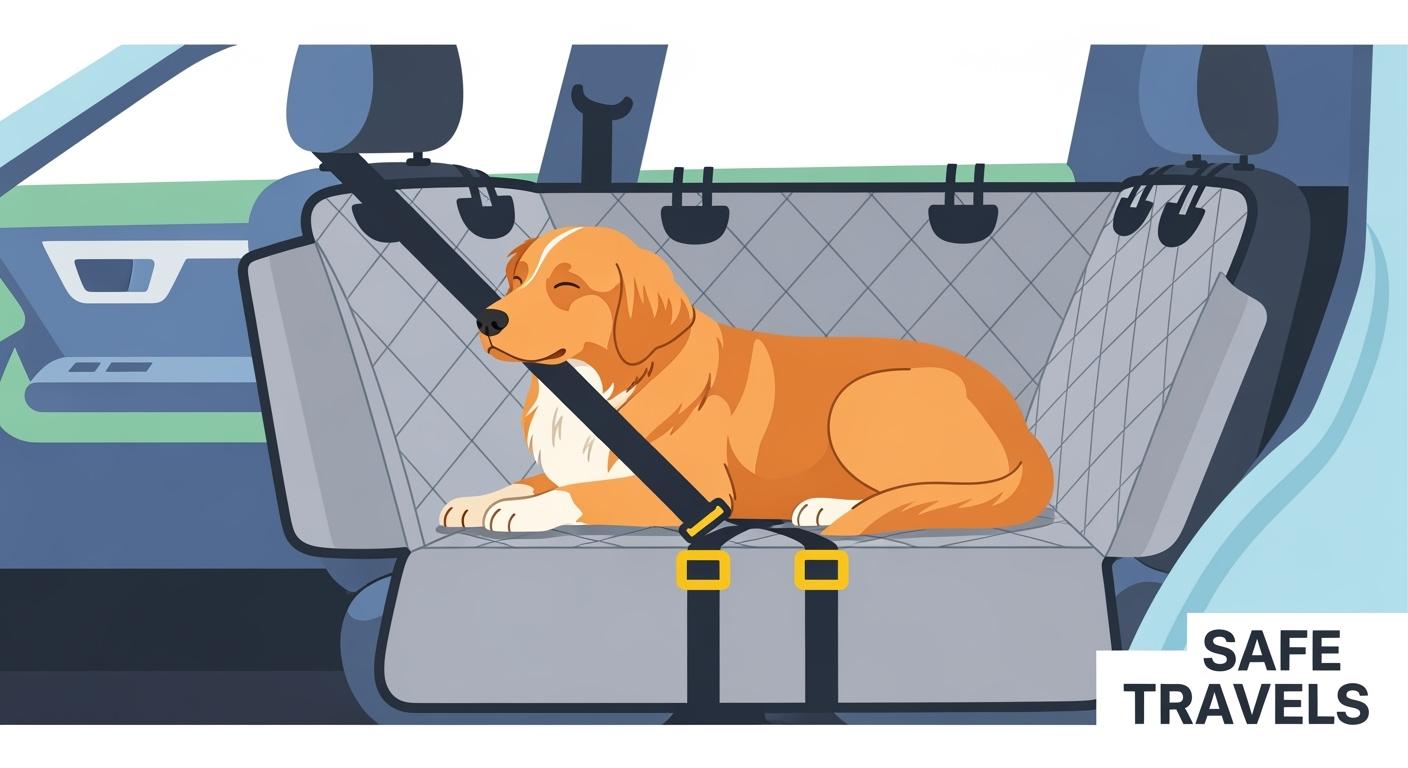
A dog car seat cover can look useful but still fail in daily car rides if the rear-seat fit is loose, buckle openings are blocked, or the surface slides and bunches under the dog. Bench and hammock layouts also change how easily you can keep seat belt access clear, clean the cover, and give the dog a steadier resting surface. This guide focuses on fit, buckle access, grip, layout and cleanup checks while keeping one safety boundary clear: a seat cover can help with comfort, upholstery protection, traction and mess control, but it does not replace a proper restraint.
What a dog car seat cover should do
A good cover should match the rear seat shape, lie flat without bunching, and let you reach every buckle opening without fighting the fabric. It should also help contain dirt, light moisture, shed hair, and everyday claw wear so cleanup is easier after short trips or longer drives.
What it should not do is create false confidence. If a cover blocks seat-belt access, slides across the seat, or turns the seating area into a slick surface, it can make setup harder instead of easier.
Use the cover as a comfort and upholstery layer. Keep restraint decisions separate, and make sure any harness routing or seat-belt access stays clear and easy to check before you drive.
Fit checks that matter before you buy
1. Rear-seat width and depth
Measure the usable width of the rear bench, then check the seat depth from the front edge back toward the seatback. A cover that is too narrow leaves exposed gaps near the doors. A cover that is too wide often bunches in the middle and shifts when your dog turns or lies down.
2. Headrest and anchor layout
Check where the rear headrests sit and whether the anchor straps can tighten evenly. If one side pulls tighter than the other, the cover may twist. You want the top edge to stay centered instead of sliding toward one side during a turn.
3. Buckle access
This is one of the easiest checks to miss. Before you commit to a cover, confirm that the buckle openings line up with your rear seat and stay easy to reach when the cover is fully installed. The fabric should not press over the buckle receiver or hide the opening under extra folds.
| Check item | Pass signal | Fail signal | What to do |
|---|---|---|---|
| Seat width fit | Cover reaches edge to edge without pulling | Side gaps or tight corner lift | Choose a size that matches the rear bench more closely |
| Seat depth fit | Front edge lies flat | Front lip curls or bunches | Recheck seat depth before purchase |
| Buckle access | Receivers stay visible and easy to reach | Fabric covers or buries the openings | Reposition or avoid layouts that block buckle slots |
| Anchor stability | Top edge stays centered after a short drive | Cover drifts sideways or sags | Tighten anchors and recheck the headrest layout |
Comfort checks for daily rides
Surface grip matters more than soft padding alone
A very slick cover can make even a calm dog brace with its paws every time the car turns or slows down. That constant shifting is uncomfortable and can also wrinkle the cover into the buckle area. A steadier top surface usually works better than an overly shiny or slippery finish.
Watch how your dog actually settles
After installation, let your dog step onto the cover, circle once, and lie down. Check whether the cover stays flat under the paws and under the chest. If the dog slides forward, bunches the cover at the front edge, or keeps repositioning, the surface or fit may need work.
Bench versus hammock layout
Bench layouts usually work well when you want simpler buckle access and a cleaner fit on the rear seat. Hammock layouts can help contain a more active dog and reduce the chance of stepping into the footwell, but they should still leave the necessary restraint access points usable. If you need help comparing layouts, this guide to back-seat cover types and fit checks is a good follow-on read.
Material and cleanup checks
You do not need a long material scorecard to make a good decision. Focus on what you can verify during normal use:
- Does the top surface feel too slick when you press and slide your hand across it?
- Does the underside help the cover stay put, or does it move too easily on the seat?
- Can you wipe off mud or damp paw marks without pushing moisture deeper into the seams?
- Do the high-contact seams look reinforced, especially near corners and anchor points?
If easy cleanup is a priority, focus on covers with simple wipe-down surfaces, removable loose hair, and a layout that does not trap dirt inside extra folds. If waterproof protection is one of your main concerns, this fit and easy-cleaning guide can help you compare what matters before you buy.
Common mistakes that cause problems
Choosing by label instead of seat shape
A “universal” label does not guarantee a clean fit. The real question is whether the cover matches your rear seat width, depth, and buckle layout.
Ignoring buckle clearance during installation
Some covers look fine until you try to reach the buckle receivers. Always test access with the cover fully installed, not half-fitted.
Expecting the cover to do the job of a restraint
A seat cover can improve traction and help protect the seat. It does not replace a proper restraint setup, and it should never interfere with one.
Waiting too long to clean or recheck
Hair, dampness, and grit build up fastest around seams, corners, and the front lip of the seat. Recheck those areas after messy rides so the cover stays easier to use and less likely to shift.
Quick driveway test before regular use
- Install the cover fully and tighten all anchors.
- Confirm both buckle openings are visible and reachable.
- Press on the center and front edge to see whether the surface slides.
- Let your dog get in, turn once, and lie down.
- Take a short, low-speed drive, then check for bunching, slipping, or buckle blockage.
If the cover shifts, blocks buckle access, or stays slick under your dog’s paws, stop there and fix the setup before making it part of your normal travel routine.
FAQ
Should a dog car seat cover block seat-belt buckles?
No. You should be able to see and reach the rear buckle openings after installation.
Is a hammock layout always better?
Not always. Hammocks can help contain a dog, but a bench layout may work better if you need simpler buckle access or a cleaner fit on your specific rear seat.
What matters more: thick padding or surface grip?
For many dogs, surface grip matters first. A cover that feels steady under the paws is often more comfortable in real use than one that looks soft but slides easily.
You get the best results when the cover fits the rear seat cleanly, keeps buckle access open, stays in place, and is easy to clean after real trips. That combination supports comfort, easier maintenance, and a more dependable setup for everyday rides.






