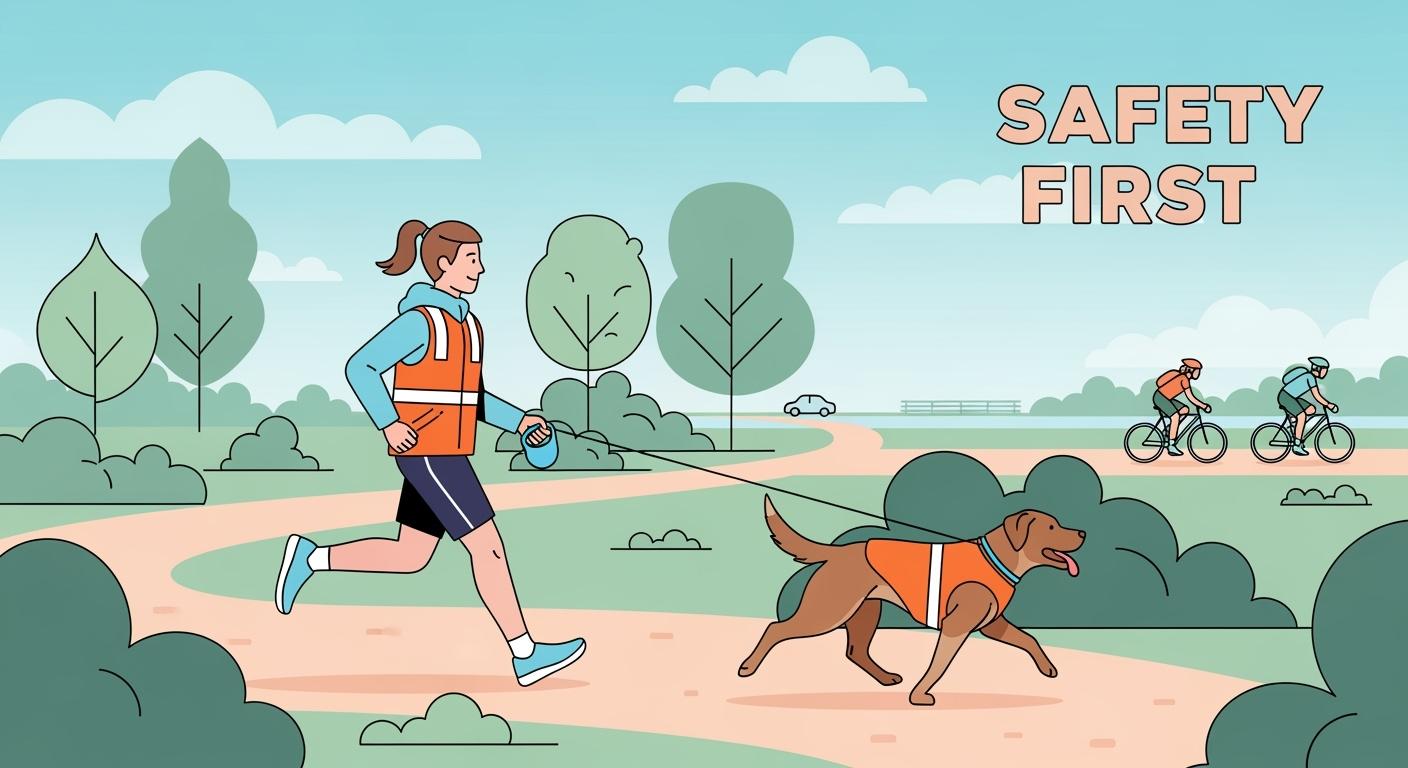
When you run with your dog in the city, visibility problems usually show up before you realize how close they are. A driver is turning at a side street, a cyclist is coming up behind you, or your dog blends into shadows near parked cars and busy crossings. An orange vest can help your dog stand out faster, but the benefit only matters when the vest fits well, stays visible while moving, and does not make your dog uncomfortable.
The goal is not just to make your dog brighter. It is to make your dog easier to notice in the moments that matter most on a run. That is why it helps to think about visibility as part of your wider activity gear setup, not as one color choice by itself.
Why urban runs create more visibility problems
City running creates short, fast changes in what people can see. Your dog can move from bright sidewalk light into shade in a few steps. Cars pull out from driveways, cyclists pass on the edge of your line, and crowds make smaller dogs especially easy to miss. An orange vest helps because it gives your dog a larger, clearer visual signal than fur color alone.
When visibility matters most
- Dawn and dusk when the light is changing quickly.
- Side streets, parking exits, and crosswalk corners.
- Runs in rain, mist, or heavy overcast conditions.
- Routes with bikes, scooters, and crowded pedestrian flow.
What the vest should help you do
- Make your dog easier to spot at a glance.
- Help other people track your dog’s position sooner.
- Reduce the chance that your dog visually blends into the background.
- Keep the run easier to manage in low-light or busy areas.
Quick rule: if your dog disappears visually whenever the route gets darker, busier, or more cluttered, visibility needs more attention before speed or distance does.
How to choose an orange vest that actually helps
A vest only improves visibility if it stays in place and remains easy to see while your dog is moving. The best choice is usually the one that covers enough of the body to stand out clearly without interfering with stride, shoulder movement, or heat release.
What to check first
| Check point | What good looks like | What needs fixing |
|---|---|---|
| Coverage | Enough visible orange area on the back and sides | Too little visible surface once the dog is moving |
| Fit | Secure without crowding the throat or shoulders | Shifts, twists, or rides up during the run |
| Movement | Dog can trot and turn naturally | Shortened stride or visible rubbing |
| Low-light support | Easy to spot even when the route gets dimmer | Visibility drops fast once the light changes |
Fit matters as much as color
A bright vest that rotates underneath the chest or bunches near the shoulders stops doing its job well. You want it to stay flat enough that the visible panels remain exposed from normal running angles. This becomes much easier when the vest is chosen as part of an outdoor running routine instead of a last-minute add-on before you head out.
Common choice mistakes
- Choosing by color alone and ignoring fit.
- Using a vest that is too small to stay visible in motion.
- Picking a heavier style that makes the dog run hotter than usual.
- Assuming one quick indoor try-on is enough to judge running comfort.
How to check comfort and visibility before a real run
The best time to catch problems is before you are halfway through a route. A short movement test usually tells you more than a standing fit check because it shows whether the vest shifts, traps heat, or becomes less visible once your dog starts moving naturally.
Use this quick pre-run check
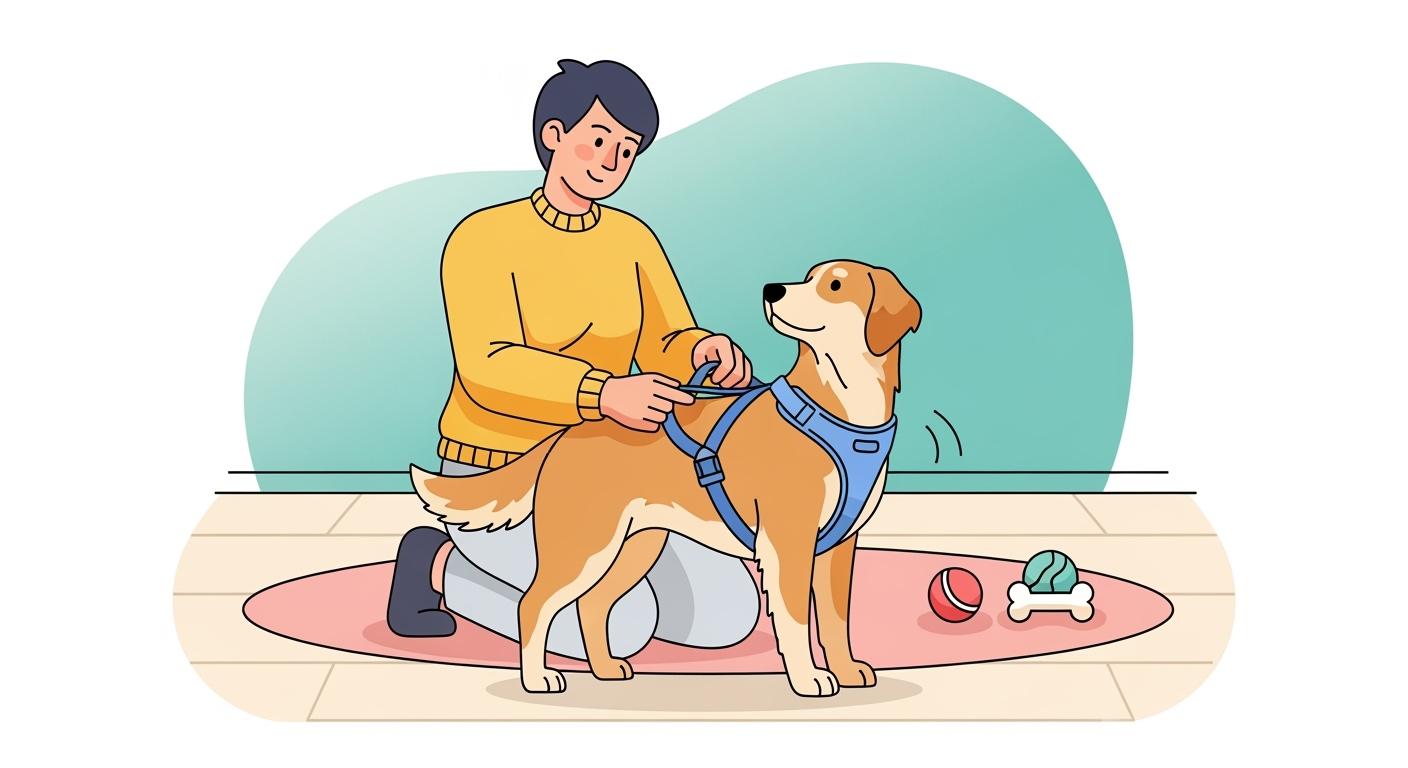
- Put the vest on and make sure it lies flat across the back and chest.
- Walk and jog your dog a short distance.
- Check whether the vest stays centered instead of twisting to one side.
- Look for rubbing near the shoulders, chest, and front-leg area.
- Step back and confirm the visible orange area still stands out clearly.
Warning signs to stop and readjust
- The vest shifts after only a few minutes.
- Your dog scratches, slows down, or resists wearing it.
- The chest or shoulder area looks crowded during movement.
- The vest covers too little of the dog to stay easy to notice at a distance.
If the low-light part of the setup is still unclear, it helps to compare your vest check against broader low-light visibility guidance so you are not relying on color alone when route conditions change.
When an orange vest is not enough on its own
An orange vest improves visibility, but it does not solve every city-running problem by itself. It will not replace leash control, route choice, or awareness of traffic patterns. If your dog pulls hard, darts toward distractions, or becomes difficult to guide in dense urban spaces, better visibility is helpful but not complete on its own.
When you should add more caution
- Your route includes frequent crossings and blind corners.
- Your dog is small enough to disappear behind parked cars or crowds quickly.
- Your dog gets overstimulated by city movement and noise.
- The run happens in poor light, wet conditions, or mixed traffic areas.
What a good outcome really looks like
A good orange vest setup makes your dog easier to notice, easier to track visually, and easier to manage in urban running conditions. It should feel like one more layer of clarity, not like something you hope will compensate for an unstable or uncomfortable overall setup.
FAQ
Why use an orange vest when running with a dog?
An orange vest helps your dog stand out more clearly in busy or changing light conditions, which can make it easier for drivers, cyclists, and pedestrians to notice your dog sooner.
Does a brighter vest matter if I only run during the day?
Yes. Daytime urban routes still include shade, visual clutter, traffic turns, and crowded areas where a more visible vest can help your dog stand out faster.
How snug should the vest be for running?
It should stay secure and centered without restricting shoulder movement, crowding the throat, or rubbing the front-leg area once your dog starts moving.
What if the vest twists during the run?
That usually means the fit, shape, or strap adjustment is not stable enough yet. Stop and readjust before relying on it for longer runs.
Is orange enough by itself for low-light runs?
Orange helps a lot with visibility, but the full setup still needs good fit, enough visible coverage, and route awareness so the dog remains easy to notice when conditions change.