
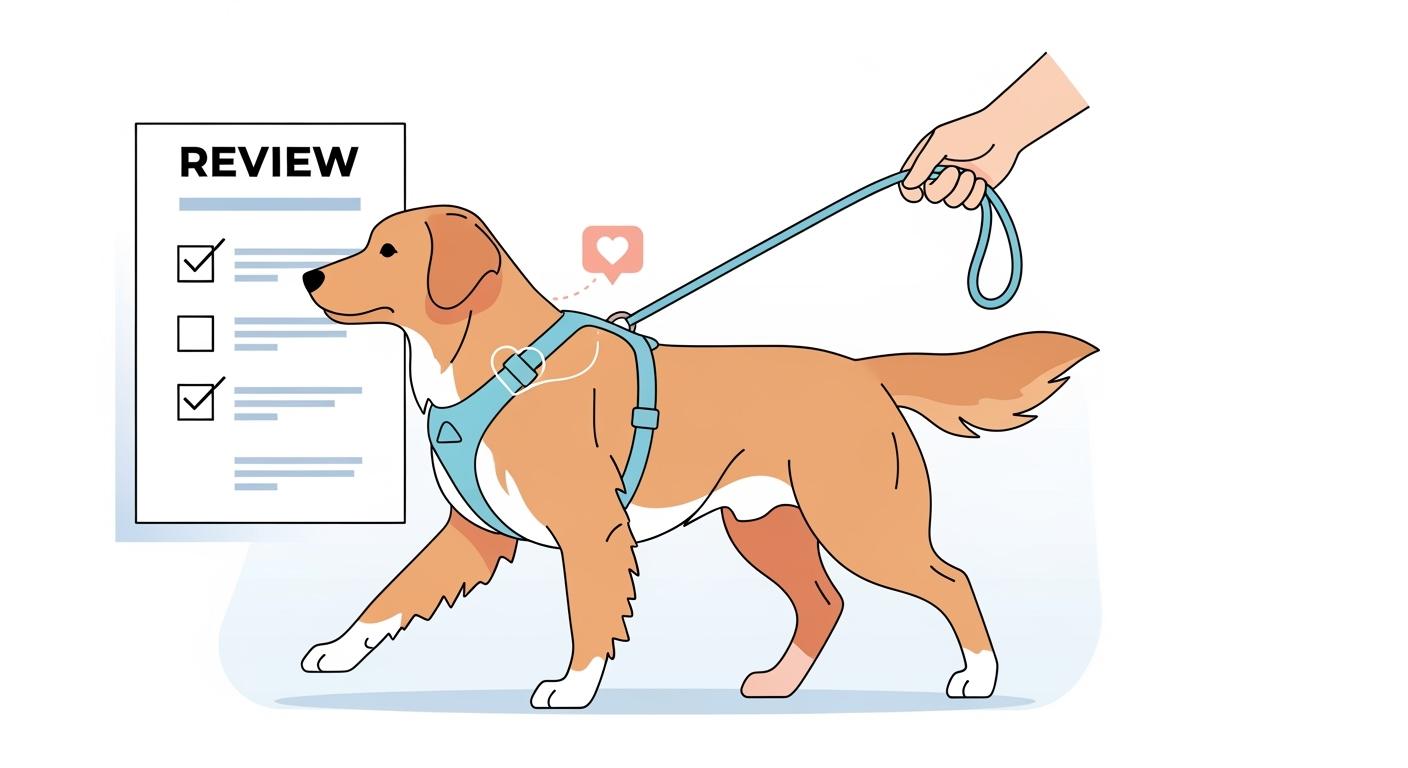
Most no pull dog harness reviews mix three different questions: Is the harness comfortable, is it easy to put on, and does it actually reduce pulling on walks? If your goal is calmer leash handling, the most useful reviews describe what changed after several real walks, not just how soft the padding felt on day one.
Look for comments about steering, body position, and whether the dog stayed easier to manage once distractions showed up. A harness can improve control without fixing leash manners overnight, which is why pairing equipment with front-clip harness training steps usually gives a clearer picture than relying on hardware alone.
What useful reviews actually tell you
The strongest reviews explain how the harness behaved under leash tension. They mention where the leash clipped in, whether the chest panel stayed centered, and how the dog moved through turns, stops, and short bursts of pulling. Reviews focused only on appearance, buckles, or first impressions can still be helpful, but they do not tell you much about real pull control.
| Review focus | Typical comments | What it tells you |
|---|---|---|
| Comfort only | Soft padding, easy on and off, looks nice | Useful for wearability, but not enough to judge pull control |
| Movement control | Dog pulls less, turns back toward me, easier to steer | Strong signal that the harness changes walk behavior |
| Fit stability | Chest strap stays centered, no twisting, no slipping out | Important for safety and consistent handling |
| Back-clip praise only | Dog seems happy, harness feels light, leash clips fast | May still allow strong forward pulling if control is the main problem |
Front-clip feedback is usually more relevant than back-clip praise when you are reading no pull dog harness reviews for walk control. A back clip alone often gives less steering leverage, especially with dogs that lean into the leash. If sizing still looks questionable, everyday harness fit and sizing checks make it easier to tell whether the problem is the product or the way it sits on the dog.
Signs a review is describing real control
Useful no pull dog harness reviews usually sound specific. Instead of saying the harness is amazing, they describe what happened on the walk. That often includes whether the dog stayed closer, pulled in shorter bursts, or stopped twisting the handler’s arm at the end of the leash.
- The review mentions more than one walk, not a single first try.
- It explains whether the dog stayed easier to steer around corners, dogs, or traffic.
- It notes if the chest section stayed centered instead of rotating under tension.
- It says whether the dog could still move naturally without shortened steps or visible rubbing.
- It separates control from training, rather than promising instant loose-leash walking.
- It explains whether the harness still worked on a strong puller or only on calm walks.
Realistic expectations for quick results vs training timelines matter because a harness can improve steering before it changes your dog’s habits. Comparing dog harness styles also helps you judge whether a review is talking about a front-clip control setup, a dual-clip design, or a comfort-first model that was never meant to do much redirection.
| Review claim | Likely meaning | Better way to judge it |
|---|---|---|
| Dog stopped pulling right away | Could be a calm dog, a short test, or a novelty effect | Look for repeated walk feedback over several days |
| Very sturdy and padded | Describes build quality and comfort, not control | Check for leash handling, turning, and chest stability details |
| Easy to put on | Good for usability, but not proof of better walks | See whether the dog’s behavior changed once moving |
| No rubbing after long walks | Good comfort signal if the fit is correct | Still confirm that the harness did not twist or ride up |
| My dog still pulls hard | The fit, clip position, or harness style may not match the dog | Check the review for body type, size, and leash setup |
| Dog slipped out once | Could be poor sizing or a design mismatch | Look for measurements, adjustment details, and escape context |
Warning signs that should lower your confidence
Some reviews sound positive but still leave out the information you actually need. Be cautious when a review spends most of its space on style, color, or packaging and barely mentions the walk itself. Be equally careful when the praise only applies to calm dogs that already walk well.
- No mention of where the leash clips in or how the harness behaves under tension.
- No details about repeated walks, distractions, or strong pulling.
- Reports of twisting, sliding, throat pressure, or the harness riding into the armpits.
- Comments that the dog looked comfortable at rest, with no description of movement.
- Claims that the harness works for every dog type without any limits or conditions.
If several reviews mention friction, hair loss, or hot spots, the problem may be fit, strap placement, or the design itself. In that case, the patterns covered in preventing harness chafing on active outings are more useful than a high star rating. Before trusting complaints about sizing or escape risk, measuring a dog for a harness gives you a better baseline than guessing from weight alone.
Note: Stop using any harness that rides into the throat, causes rubbing, or changes your dog’s normal stride. If discomfort continues, ask your veterinarian.
How to use reviews before you buy
Read reviews in this order: fit stability first, movement control second, comfort third. A soft harness that shifts out of place will not help much on real walks, and a control-focused harness that rubs is not a good long-term choice either. The best review set usually includes a mix of comments from dogs with similar size, energy level, and pulling style to your own.
- Start with dogs that match your dog’s body shape and pulling strength.
- Ignore vague praise until you find comments about leash tension, turning, and repeat walks.
- Check whether reviewers used the front clip, a back clip, or both.
- Treat star ratings as a shortcut, not as evidence.
- Rule out recurring complaints about twisting, rubbing, or escape risk before focusing on comfort extras.
A good no-pull harness review helps you predict what will happen on your sidewalk, not just on someone else’s first walk around the block. The right product usually shows up in reviews that balance control, fit, and comfort instead of overselling one feature and ignoring the rest.
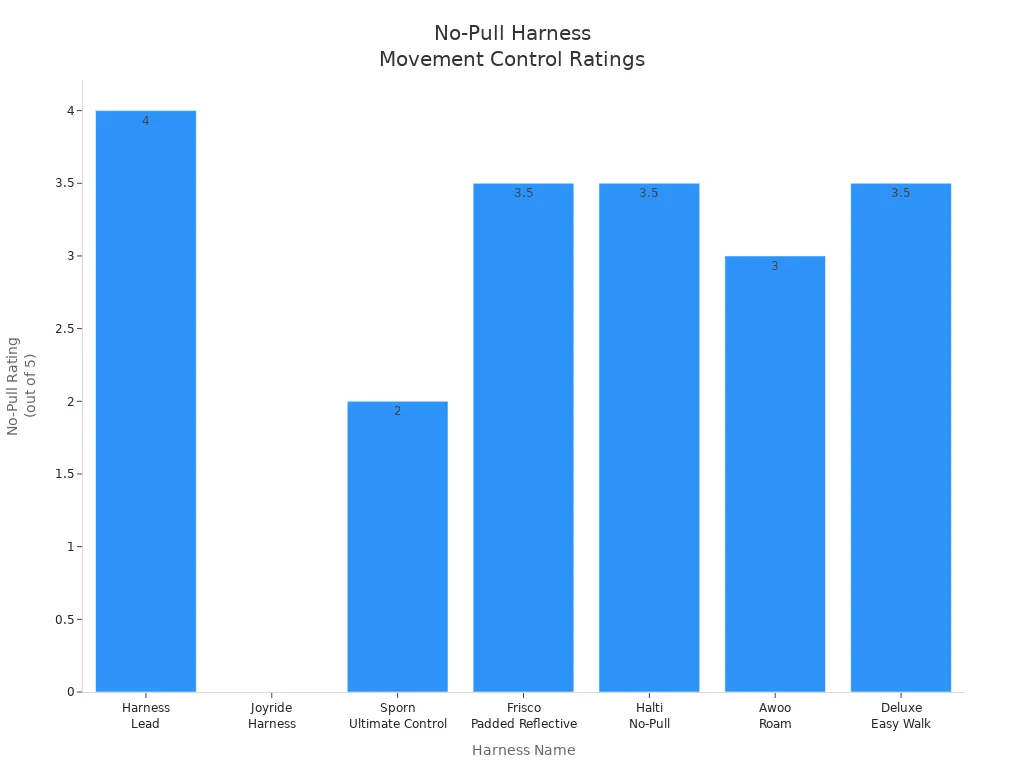
The chart below works best as a summary, not as proof on its own. Movement-control scores can point you in the right direction, but the written walk details still matter more than a simple ranking.
FAQ
How do you know if a no-pull harness review is actually useful?
A useful review describes repeated walks, steering, fit stability, and whether the dog pulled less under real distractions.
Can a no-pull harness stop pulling immediately?
It can improve control quickly, but most dogs still need practice and consistent leash training before pulling drops for good.
What matters more in reviews: comfort or control?
Control matters first if pulling is the problem, but the harness still needs a secure fit and enough comfort for regular use.






