Walking a strong puller feels very different from walking a calm dog. The wrong leash for a dog that pulls can leave you fumbling for grip, reacting late in busy areas, or finishing a short walk with sore hands. A better setup usually comes from matching leash length, handle feel, clip security, and quick close-control options to the places you actually walk.
Key Takeaways
- Choose a fixed-length leash that matches your everyday routes. Busy sidewalks and close passes usually feel easier with a controlled setup than with a leash that keeps changing length.
- Prioritize grip, clip security, and quick close-control options. A handle that feels good in your hand matters more than extra features you rarely use.
- Inspect the leash before walks. Webbing, stitching, the clip, and the handle should all feel dependable, but the leash still needs to be paired with handling practice and a secure attachment point.
Leash Control That Holds Up on Real Walks
Leash length, width, and handle feel
Choosing the right leash for a dog that pulls starts with understanding how length, thickness, and grip affect your daily walks. For most sidewalks, crossings, and routine neighborhood turns, a fixed-length leash usually feels easier to manage than a leash that keeps changing length. Choose a length that lets your dog move naturally without drifting so far that you lose close control. Thickness matters too. Very thin leashes can bite into your hand when a dog surges, while an overly bulky leash can slow hand changes when you need to shorten quickly.
Handle feel matters just as much as leash size. A grip that stays comfortable when your dog suddenly loads the line is usually easier to use consistently than one that feels good only when standing still. Some handlers prefer padded flat handles, while others prefer round rope or a secondary traffic handle. The better choice is the one you can hold, shorten, and reset without fumbling.
| Feature | Description |
|---|---|
| Handle shape | Should feel secure in your hand when the leash loads suddenly, not just when you first pick it up. |
| Grip reset | Should let you shorten, re-grip, and guide your dog without twisting the line around your hand. |
| Load comfort | Should stay usable during a sudden pull instead of cutting into your palm or forcing you to let go. |
Signs your leash is too long, thin, or uncomfortable
You can spot a poor fit by watching how the leash behaves and how it feels in your hand. If your leash is too long, your dog may dart into traffic or tangle around obstacles. A thin leash can dig into your palm or even snap under pressure. If the grip feels rough or slippery, you may lose control during sudden pulling.
Look for these warning signs:
- The leash wraps around your wrist or drags on the ground.
- Your hand aches or gets red after a short walk.
- The leash twists or kinks easily, making it hard to manage.
- Your dog can pull you off balance or escape your grip.
Quick-shortening for close control
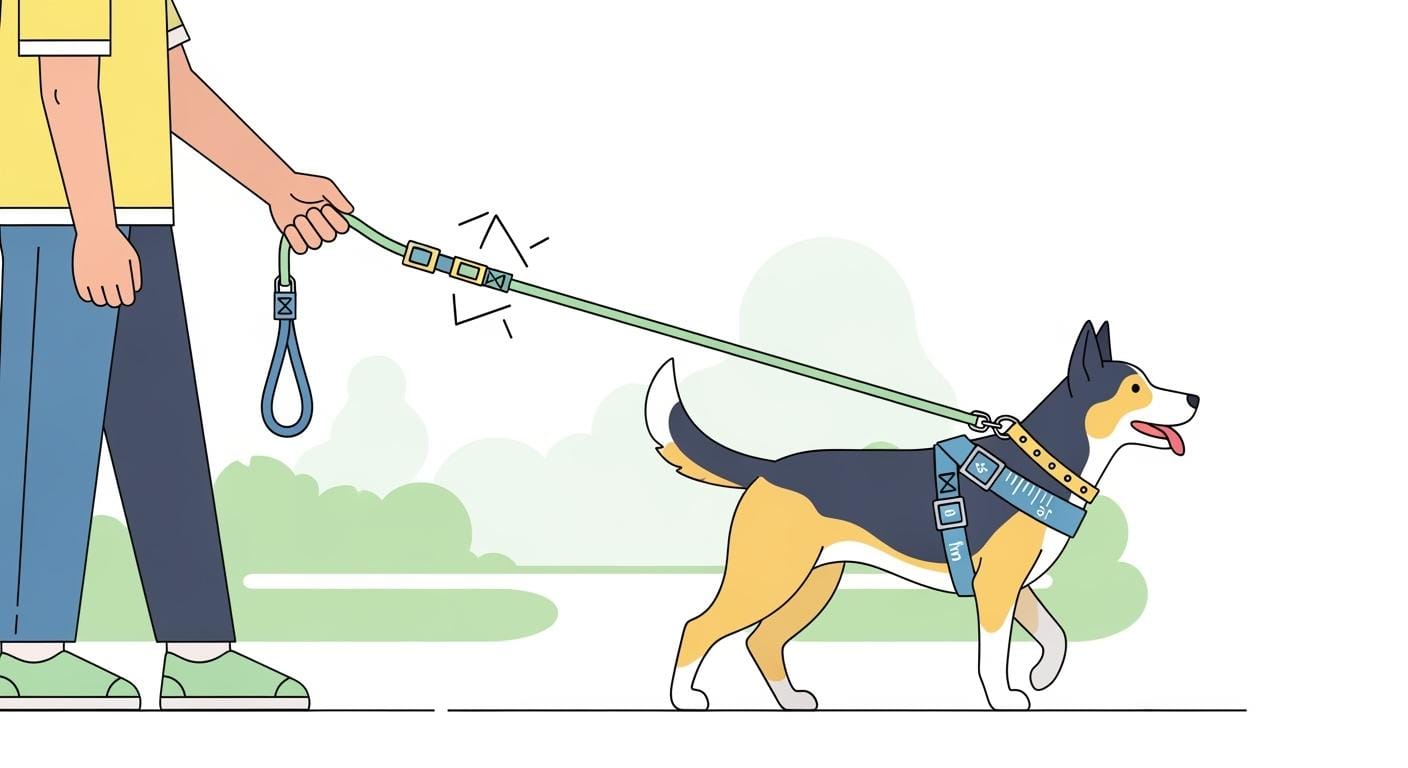
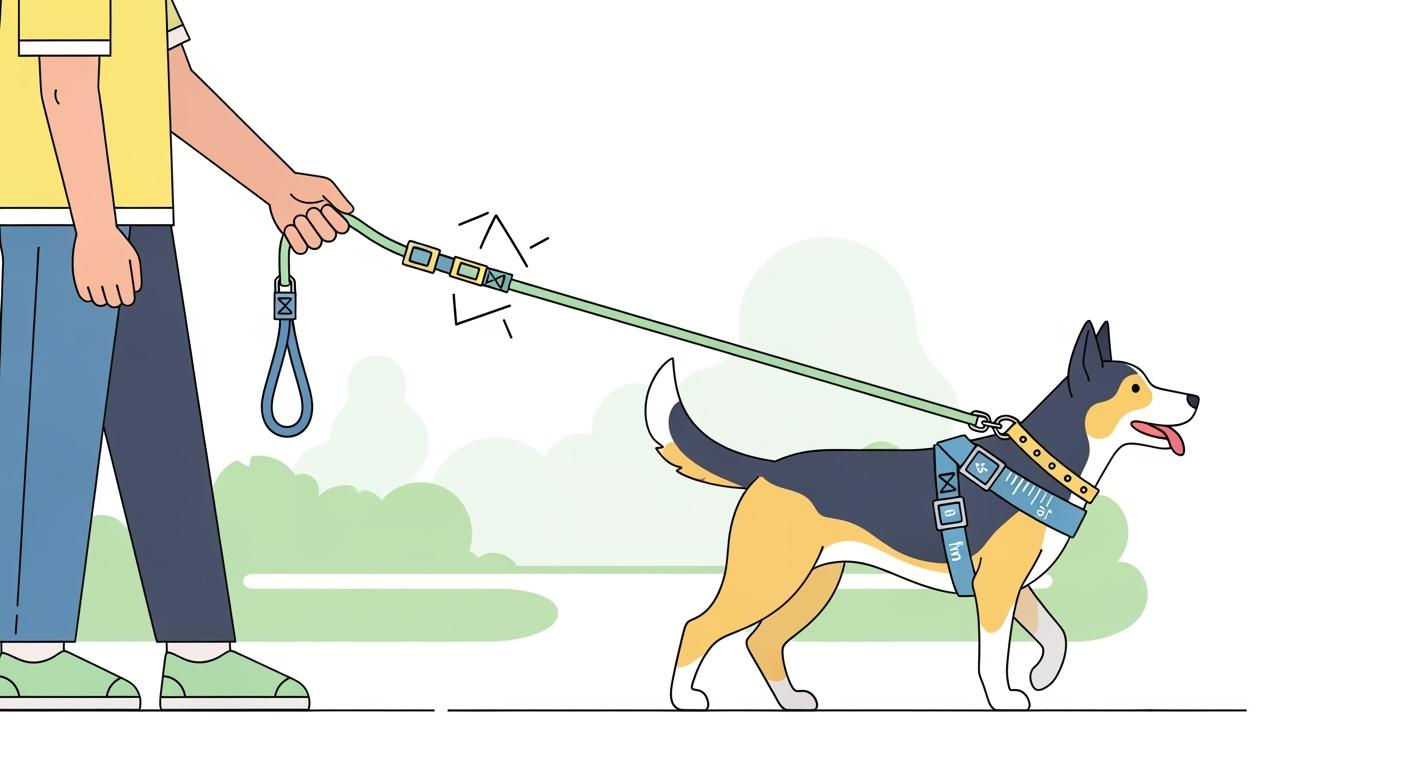
Sometimes you need to bring your dog close, such as when crossing busy streets or passing other dogs. A leash for a dog that pulls should let you shorten your hold quickly. Many fixed-length leashes have a second handle near the clip, called a traffic handle. This feature lets you grab close to your dog’s collar or harness for extra control.
To test quick-shortening:
- Hold the main handle and walk your dog as usual.
- When you need more control, grab the traffic handle or fold the leash in your hand.
- Make sure you can do this without fumbling or losing your grip.
If your leash does not let you shorten quickly, switch to a setup that gives you a clear second grip point or a line that bunches cleanly in your hand without slipping.
Common mistakes with leash selection
Many buyers make the same errors when choosing a leash for a dog that pulls. Avoid these pitfalls to improve safety and control:
- Picking a leash based only on dog weight, not on your walking habits or environment.
- Choosing a leash that is too long for crowded sidewalks or busy parks.
- Focusing only on handle softness and ignoring the strength of the clip or the width of the leash.
- Expecting the leash alone to solve pulling instead of treating it as one part of a broader walking setup.
- Using retractable leashes in crowded or high-distraction areas where quick shortening and close control matter most.
Tip: Always match your leash setup to your daily routine and the places you walk. Fit means how well the leash matches your handling style, not just your dog’s size.
Pass/fail checklist table
Use this checklist to test your leash for a dog that pulls before your next walk:
| Check Item | Pass Signal | Fail Signal | Solution |
|---|---|---|---|
| Leash length | Dog stays close, easy to guide | Dog wanders far, hard to control | Switch to a shorter fixed-length setup for that route |
| Leash width and grip | Feels sturdy, comfortable in your hand | Feels thin, cuts into palm, slips easily | Choose a leash with a fuller grip and more stable handle feel |
| Handle and clip security | Clip locks firmly, handle feels solid | Clip twists, handle bends or pinches | Upgrade to heavy-duty hardware and handle |
| Quick-shortening ability | Can grab close to dog quickly | Takes too long to shorten, fumble for grip | Use leash with traffic handle or thick rope |
| Setup with harness/collar | Leash clips easily, stays secure | Leash slips off or twists during pulling | Recheck the attachment point and handling setup before the next walk |
Note: No leash can prevent all pulling or guarantee safety. Always supervise your dog and check your gear before each walk.
Features That Help or Get in the Way
Fixed-length vs retractable leash for a dog that pulls
You want a leash that helps you control your dog. Fixed-length designs usually give more direct feedback because the amount of line in play stays consistent. Retractable designs can feel convenient in open, low-distraction spaces, but they are harder to shorten quickly around traffic, doorways, bikes, or close dog passes. They also leave more line to manage around obstacles and your own feet.
Traffic handles, clip security, anti-twist hardware
Traffic handles give you more control in busy places. You can grab the handle near the clip to keep your dog close. Clip security is important because strong dogs can twist or pull the clip loose. Anti-twist hardware stops the leash from getting tangled. This keeps your leash working well. Always check if all parts are strong before each walk.
Tip: Test the clip and handle before you leave. If you see twisting or loose parts, use a safer leash.
When stretch, bulk, or awkward grips make pulling worse
A thicker rope leash can feel easier to grab during a sudden surge, but more bulk is not always better. Extra-heavy clips, stiff material, or awkward grips can slow your hand changes and make the leash feel clumsy on shorter urban walks. Pick a leash that feels secure in motion, not just one that looks rugged on the product page.
- People say stiff grips make their hands tired.
- Big clips make it hard to move and stay balanced.
Comparison table
| Feature | Fixed-Length Leash | Retractable Leash | Traffic Handle Leash | Thick Rope Leash |
|---|---|---|---|---|
| Best use | Everyday sidewalks and routine handling | Open, lower-distraction spaces | Busy crossings and close passes | Handlers wanting a fuller grip surface |
| Control feel | Direct and predictable | Changes as the line extends or retracts | Direct with a fast second grip | Direct with a rounder hand feel |
| Hand feel | Depends on handle padding and webbing width | Depends on housing shape and line material | Two grip points to manage | Fuller round grip, sometimes heavier |
| Quick shortening | Usually simple | Often slower in busy moments | Usually easiest | Depends on rope stiffness and clip weight |
| Watch-out | Too short can crowd some dogs | More line to manage around obstacles | Extra handle can add bulk | Can feel heavier when wet or oversized |
| Hardware check | Clip and swivel should still be inspected | Reel, tape, and clip all need inspection | Check both grip points and the clip | Check clip weight and rope stiffness together |
| Bulk | Usually low | Housing adds hand bulk | Usually medium | Usually medium |
| Visibility | Depends on color and trim | Depends on line color and housing | Depends on color and trim | Depends on rope color and trim |
Note: No leash can keep your dog safe all the time. Always watch your dog and check your leash before every walk.
Materials and Setup: What Feels Secure in Hand

Webbing, rope, and thick rope dog lead feel
When you choose a leash for a strong puller, material changes how the line feels in motion. Rope can feel easier to hold because the grip surface is rounder, while flat webbing can feel lighter and easier to pack or layer in the hand. Neither option is automatically better. The better choice depends on hand comfort, leash weight, weather, and how quickly you need to shorten your hold on routine walks.
| Advantage | Description |
|---|---|
| Larger grip surface | Can feel easier to hold, especially with gloves or wet hands. |
| Slip resistance | Can give some handlers a steadier hold when the line loads suddenly. |
| Better leverage | May feel easier to guide with if the leash weight and clip size still suit your routine. |
| Untangles easily | Often stays straighter in hand, though stiffness varies by material. |
| Sense of security | Can make handling feel calmer, but it still depends on practice and attachment choice. |
| Comfortable grip | Round designs often feel natural in hand, but some handlers still prefer flat padded webbing. |
| Load feel | Some thicker leashes feel less sharp on sudden pulls, though they do not remove the force. |
| Durability | Depends on material, stitching, and hardware quality, not rope shape alone. |
| Secure attachment | Clip quality and stitching still need regular checks regardless of leash material. |
| Weather resistance | Finish and material matter more than rope shape alone when the leash gets wet. |
Hands-free setups can suit some low-distraction routines, but they are not ideal for every strong puller or every walking environment. Test them carefully before using them in crowded routes.
What the leash clips to: harness, collar, or martingale
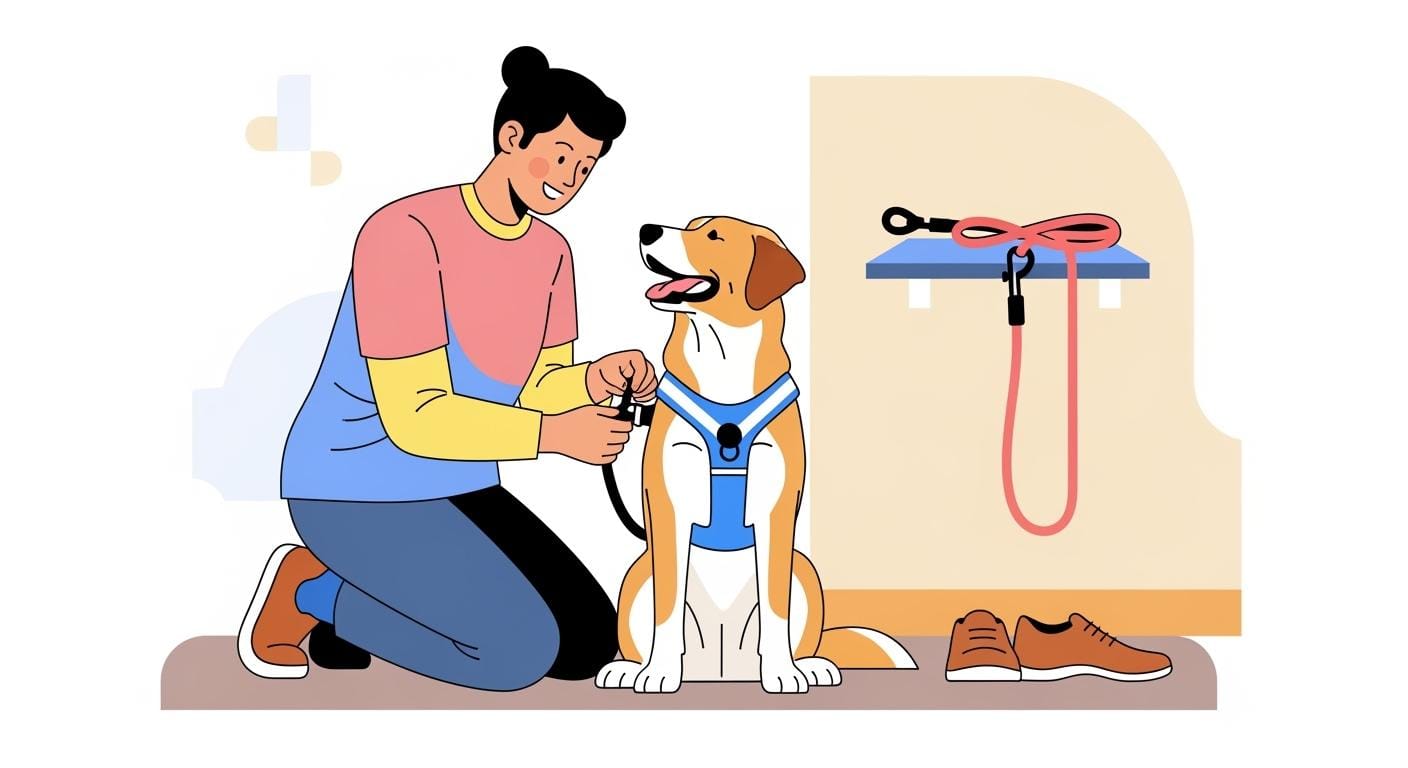
You must match your leash to the right attachment. For many strong pullers, a well-fitted harness can make close handling easier than clipping to a basic collar alone. If you do use a collar or martingale, the fit still needs regular checks so it stays secure without riding too loose or too high on the neck. Whatever attachment you choose, test the leash clip, your hand position, and your dog’s response before a full walk.
Cleaning and care for leashes
You need to clean your rope dog leash often. Dirt and germs can build up, especially after walks in rain or mud. Use mild soap and water, and let the leash dry fully before using it again. High-quality rope and weather-resistant materials make cleaning easier and help your leash last longer. A simple hands free leash or custom leash should always be dry before you put it away. Regular cleaning keeps your gear safe and comfortable.
Tip: If your dog has pain, breathing issues, or recovery restrictions, ask your veterinarian which walking setup and pace are appropriate before changing equipment.
Troubleshooting table
Here is a quick reference guide for common leash issues:
| Problem | Possible Cause | Quick Self-Check | Solution |
|---|---|---|---|
| Leash tangles or knots | Flat webbing twists easily | Shake leash out-does it stay straight? | Try a line that stays straighter in hand or retest your handling style |
| Leash slips in hand | Handle too thin or slick | Wet your hand-does grip weaken? | Use a leash with a fuller, less slippery grip surface |
| Dog pulls harder | Wrong attachment or length | Is leash clipped to collar only? | Recheck leash length and attachment choice |
| Leash smells or stains | Not cleaned often | Smell leash-any odor? | Wash with soap, dry fully before use |
| Hands get tired | Awkward grip or heavy leash | Does handle dig into palm? | Try a lighter setup or a handle that matches your grip better |
Note: No leash can prevent all accidents. Always supervise your dog and check your gear before each walk.
FAQ
When is a hands-free setup a poor match for a dog that pulls?
A hands-free setup is usually a poor match when your dog lunges hard, your walking route is crowded, or you need frequent close shortening. Test it first in a low-distraction space before relying on it outdoors.
How do you practice quick shortening without tangling the leash?
Start at a calm walking pace. Slide to your second grip point or gather the line in one smooth motion, then release back to your normal hold. Practice this before you need it near traffic or other dogs.
Can a leash fix pulling by itself?
No. A leash can improve grip, quick control, and handling comfort, but it does not replace fit checks, route choices, and consistent walking practice.
Note: Always check your leash, clip, and attachment point before each walk. Safety comes first.