
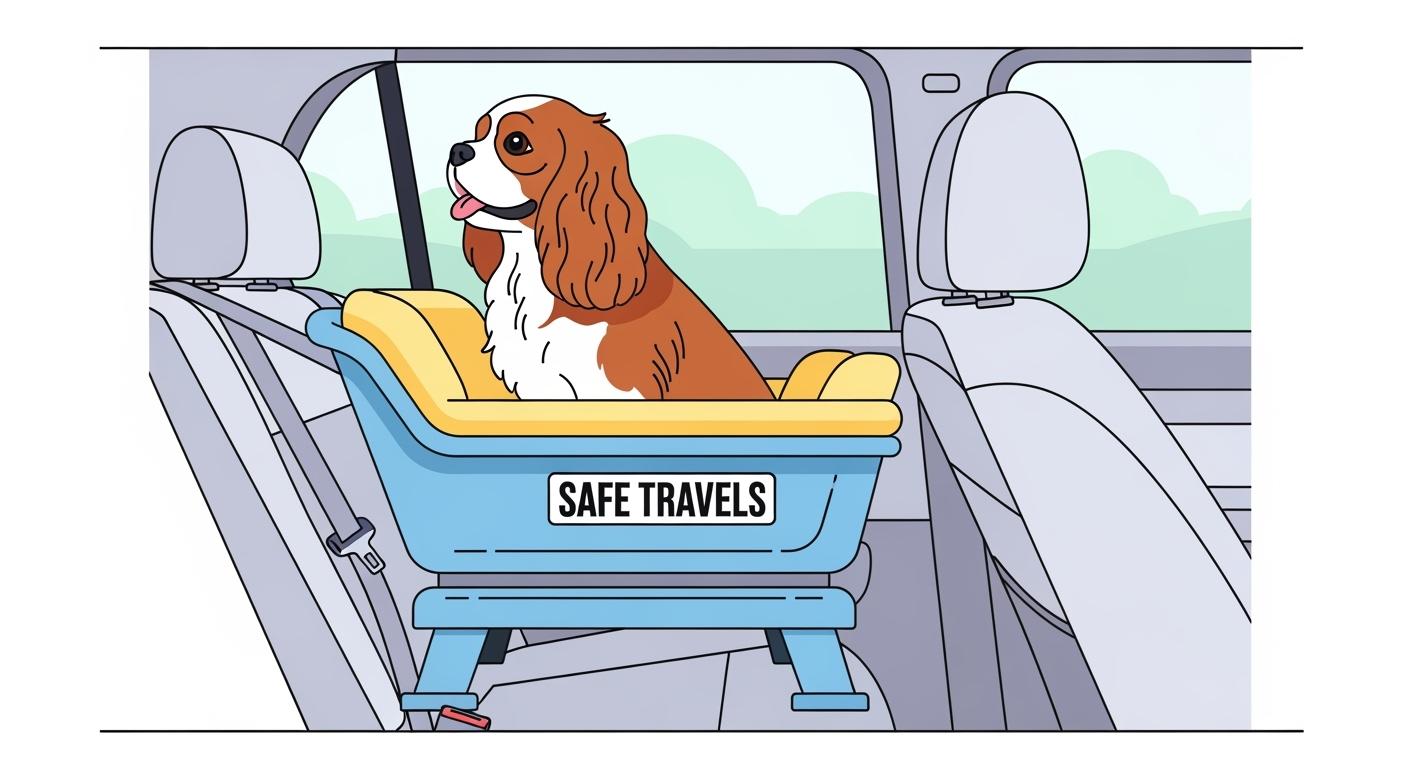
You want your dog to stay secure and calm every time you drive. A wide base on an elevated dog car seat spreads the weight and keeps the seat steady when the car turns or brakes. If the base is too narrow, the seat can wobble, tip, or lift at one corner. Your dog feels that instability and may startle, reposition constantly, or perch on the edge to brace itself. The base width is not just a dimension on a spec sheet. It is the single biggest factor in whether the seat stays put or becomes a source of stress the moment you leave the driveway.
When an Elevated Dog Car Seat Helps and When a Lower Setup Is the Safer Choice
Benefits of an Elevated Seat for Visibility and Comfort
Raising your dog off the seat cushion gives a clear view out the window, which can reduce anxiety and motion sickness for many dogs. A stable, non-slip platform helps the dog stay in place during turns and stops rather than sliding across the seat fabric. For senior dogs or those with joint stiffness, a supportive elevated surface can keep the spine aligned and reduce pressure on the hips during longer trips. The elevation also protects the car interior from scratches, dirt, and spills.
When a Lower Bed-Style Setup Works Better
A lower bed-style car seat often suits small and medium-sized dogs on short trips or in city traffic where sudden swerves are less common. The lower center of gravity makes the setup inherently more stable. If your dog moves around a lot or likes to curl up, a bed-style seat gives more room to shift without destabilizing the platform. Loading and unloading is also easier when the seat sits closer to the car seat cushion.
Comparing Narrow-Base Elevated, Wide-Base Elevated, and Lower Bed-Style Setups
| Feature | Narrow-Base Elevated | Wide-Base Elevated | Lower Bed-Style |
|---|---|---|---|
| Stability on turns | Wobbles easily | Stays steady | Very stable |
| Window visibility | High | High | Low |
| Comfort on long rides | Can shift | Supportive | Supportive |
| Tip risk | High | Low | Very low |
| Suited for small/medium dogs | Depends on breed | Yes | Yes |
| Ease of loading | Sometimes awkward | Easier | Easiest |
Note: Always test the seat in the rear seat of the car, not on a flat floor. A seat that feels stable on level ground can shift noticeably when the car cushion compresses under braking.
How Seat Height Changes Stability: Base Width, Side Pressure, and Tether Pull
Base Width and Why It Determines Stability
When you raise a dog car seat, the base width becomes the first thing to check. A wider base distributes the dog’s weight across more of the car seat cushion and resists the sideways force of a turn. A narrow base concentrates that same weight on a smaller footprint, so any shift from the dog or the car tips the seat more easily.
Run this stability check before you commit to a seat:
- Place the seat in the rear seat of the car.
- Press each corner firmly with your hand.
- Let your dog step in, turn around, and sit.
- Watch for any corner lifting or seat twisting.
- Take a short drive with normal turns and stops.
- Check whether the dog stays centered or leans to one side.
Narrow Base vs Wide Base: Stability at a Glance
| Base Type | Stability When Dog Moves | Stability on Turns | Ease of Repositioning | Tip Risk |
|---|---|---|---|---|
| Narrow Base | Low | Low | Sometimes difficult | High |
| Wide Base | High | High | Easier | Low |
Side Pressure and How It Creates Wobble
Side pressure builds when the dog leans or shifts its weight to one edge. The higher the seat sits, the more leverage that pressure has. A narrow base cannot counter that leverage. You may notice the dog perching on one edge, the opposite corner lifting, or the whole seat twisting under the dog’s weight. These signals mean the base cannot handle the side load.
Common mistakes that increase side-pressure risk:
- Placing the seat on a sloped or deeply contoured car seat cushion without checking for level contact.
- Using a narrow-base seat for a dog that moves frequently or leans to look out the window.
- Dismissing a single lifted corner as minor when it indicates the base is too small for the load.
Note: If your dog cannot sit comfortably without bracing against one wall, the seat likely needs a wider base or a lower mounting position.
Stability Pass/Fail Checklist
| Check Item | Pass Signal | Fail Signal | Fix |
|---|---|---|---|
| Corners stay flat | No lifting | One corner lifts | Use a wider base |
| Dog sits centered | Stays in the middle | Leans to one side | Lower the seat or widen the base |
| Seat stays steady | No twisting | Seat twists | Adjust base footprint or reposition |
| Tether runs cleanly | No snag or angled pull | Tether pulls sideways | Reposition the seat |
Tether Pull, Dog Movement, and Crash Safety
Tether geometry changes when the seat sits higher. You want the tether to run straight from the anchor point to the dog’s harness without pulling at an angle. If the dog leans or the seat twists, the tether can catch, pull sideways, or create slack at the wrong moment.
Not every restraint labeled “crash tested” meets the standard you may assume. Unless the product complies with FMVSS 213 or an equivalent child-restraint benchmark adapted for pet use, treat crash-performance claims cautiously. A properly fitted harness paired with a stable seat and a straight tether path reduces the forces on the dog during sudden braking and keeps the dog from becoming a projectile.
After the dog settles, check the tether path. If it pulls at an angle or snags on the seat frame, reposition the seat or switch to a wider base until the tether runs straight.
Troubleshooting Tether and Movement Issues
| Symptom | Likely Cause | Fast Check | Fix |
|---|---|---|---|
| Tether pulls sideways | Dog leans or the seat shifts | Watch during turns | Use a wider base or lower the seat |
| Tether gets tangled | Seat twists under load | Check after a short drive | Adjust seat position |
| Dog keeps repositioning | Unstable base | Press corners, observe the dog | Use a wider base |
Disclaimer: If your dog shows signs of motion discomfort, breathing stress, overheating, or limited mobility, consult your veterinarian. This content does not offer medical advice.
Failure Signs You Cannot Afford to Miss
Four failure signals tell you the setup is wrong before anything worse happens.
One corner lifting. Press each corner of the empty seat, then watch after the dog climbs in. If any corner rises off the car seat cushion, the base is too narrow for the load. That lifted corner is leverage working against you. On the next sharp turn, the whole seat can pivot around the lifted edge.
Edge perching. A dog that sits on the rim of the seat instead of settling in the middle is bracing against instability. The dog feels the platform shift and moves to the edge to control its own balance. That weight concentration on one edge makes the seat even more likely to tip.
Seat twist. When the base rotates under the dog’s body instead of staying square to the car seat, the mounting surface is too small or too flexible. Twist changes the tether angle and puts sideways stress on the harness connection.
Nonstop repositioning. A dog that cannot settle, that stands up and turns in circles repeatedly during a short drive, is telling you the platform feels unreliable. A stable seat lets the dog lie down within the first few minutes.
Common Mistakes That Mask These Signs
- Testing the seat only on a flat floor instead of in the rear seat of the car.
- Skipping the corner-press check before the dog climbs in.
- Dismissing leaning or edge-perching as a harmless preference.
- Forgetting to check the tether path after the dog has shifted position.
- Relying only on a parked check and skipping the short-drive test with normal turns and stops.
Diagnosing Instability: Symptom-to-Fix Table
| Symptom | Likely Cause | Fast Check | Fix |
|---|---|---|---|
| One corner lifts | Narrow base | Press all corners firmly | Use a wider base |
| Dog perches on the edge | Unstable platform | Observe during a drive | Lower the seat or widen the base |
| Seat twists on turns | Base too narrow for the load | Watch during turns | Adjust footprint or reposition |
| Dog keeps repositioning | Wobbly setup | Observe after stops | Lower the seat or widen the base |
| Tether gets tangled | Seat moves or twists | Check after a short drive | Reposition the seat |
What to Check Before Choosing an Elevated Dog Car Seat
Beyond base width, look for a seat that gives you access to the seat belt anchors and has a padded, easy-to-clean interior. The seat belt path should let you tighten the straps so the seat does not move more than roughly an inch in any direction. A seat that does not cinch down firmly will shift under braking regardless of how wide its base measures on paper.
| Step | Action |
|---|---|
| 1 | Locate the LATCH anchors or seat belt path in the rear seat. |
| 2 | Connect the clips or route the belt through the seat’s anchor points. |
| 3 | Press down on the seat with your body weight to compress the car seat cushion. |
| 4 | Tighten the straps while maintaining downward pressure. |
| 5 | Check for slack. The seat should not shift more than roughly an inch in any direction. |
A stable, properly secured seat with a wide base solves most wobble and tipping problems. If the dog keeps leaning or the seat twists despite a wide base, a lower bed-style setup may work better than forcing more elevation.
Frequently Asked Questions
How does a wide base make an elevated dog car seat safer?
A wide base spreads the dog’s weight across more of the car seat cushion, so the seat resists wobble and tipping during turns. The dog can stay centered rather than bracing against the edge.
How do I check whether my dog car seat is stable enough?
Press each corner firmly, let the dog climb in and settle, then take a short drive with normal turns and stops. If no corner lifts, the seat does not twist, and the dog stays centered, the setup is stable.
Can an elevated seat work for any dog size?
Most elevated seats are designed for small to medium-sized dogs. Larger dogs usually need a lower, bed-style setup because their weight creates more leverage on an elevated platform, increasing the tip risk.
Why does my dog keep shifting position in the seat?
Constant repositioning usually signals an unstable base. The dog feels the platform move and tries to find a secure position. A wider base or a lower seat often stops the behavior.
What signs show that my dog is uncomfortable in the car seat?
Nonstop repositioning, leaning onto one wall, perching on the rim, panting, whining, or attempting to climb out are all common signs. Check the seat’s stability and the tether path before assuming it is a behavioral issue.






