Many buyers look for a dog tactical harness because they want a top handle, more control, and a sturdier layout than a very light everyday harness. That does not mean the bulkiest option is the best one. A tactical-style harness only helps if it stays centered, clears the shoulders, and lets the dog move without rubbing.
Pick a tactical harness that fits your dog well. Fit matters more than a rugged look, extra webbing, or a long feature list. If the chest panel sits too low, the girth strap crowds the elbows, or the handle lands in the wrong place, the harness can feel unstable and harder to use.
This guide focuses on fit, layout, and everyday control. It is not a substitute for veterinary or behavior advice.
What a tactical harness should actually help with
A practical dog tactical harness should help with close control, stable leash handling, and easier adjustment during daily walks, training sessions, or short outdoor outings. It should not make the dog look overloaded, and it should not trade comfort for appearance.
Before you buy, check whether the harness helps with these basics:
- The chest panel stays flat instead of bunching.
- The handle sits where you can reach it quickly without twisting your wrist.
- The harness stays below the throat and does not ride into the neck.
- The girth strap sits behind the front legs without touching the elbows.
- The side layout feels balanced instead of bulky or floppy.
A tactical layout can be useful, but more webbing, more patches, or more attachment points do not automatically mean better control. A cleaner layout is often easier to fit, easier to clean, and easier to use well.
Layout features worth checking before you buy
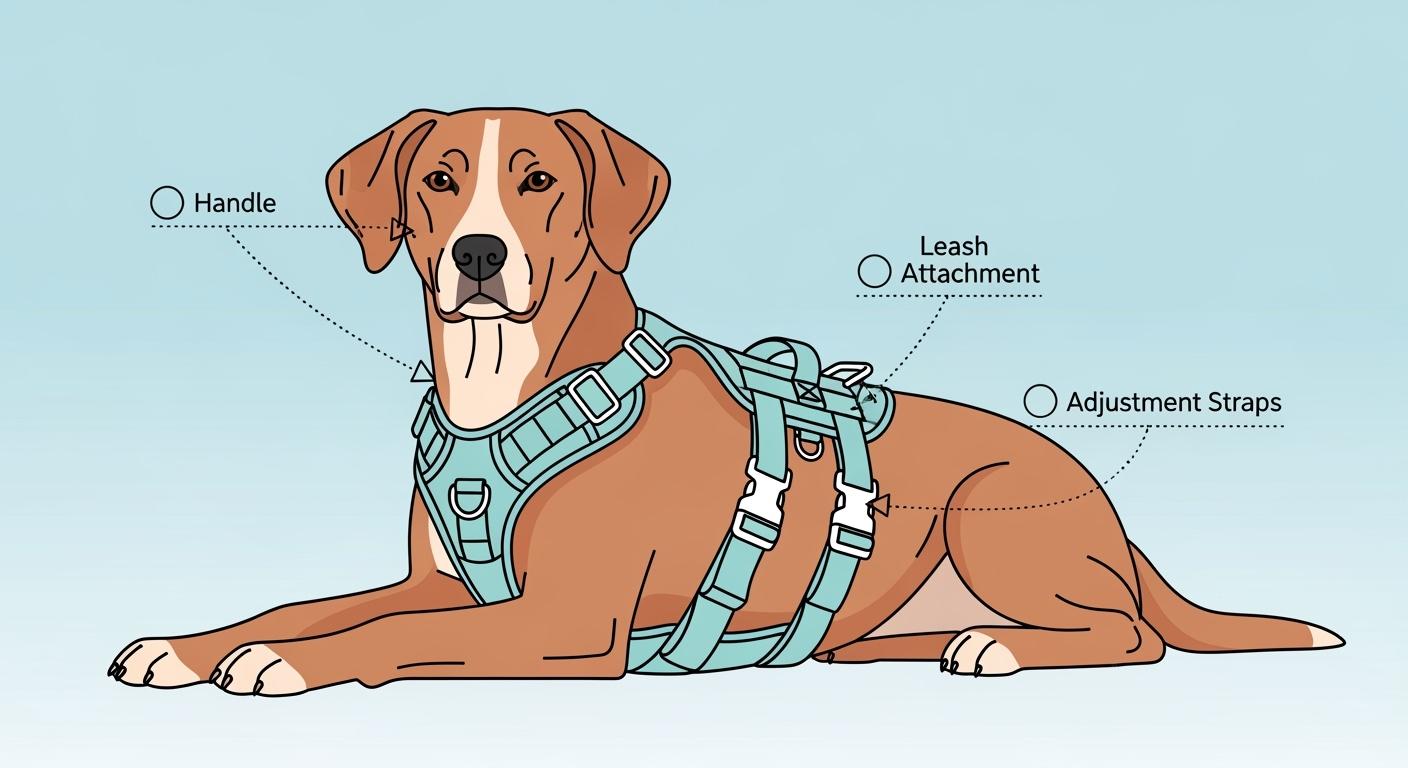
Handles, clips, and adjustment points matter most when they work together. A high handle that sits roughly over the upper back is usually easier to grab than one placed too far forward near the neck. The leash clip should sit in a spot that does not pull the harness off-center during normal walking.
| Feature | What to check | Watchout |
|---|---|---|
| Top handle | Easy to reach, easy to grip, does not collapse flat under your hand | Placed too far forward or stitched so stiffly that it is awkward to grab |
| Back clip | Sits centered on the back and does not tilt the harness sideways | Pulls the harness off-center during normal walking |
| Chest coverage | Wide enough to feel stable without blocking shoulder motion | Very broad front panel that crowds the shoulders |
| Side straps | Adjust smoothly and lie flat against the body | Loose strap tails, twists, or bunching near the ribs |
| Hardware | Feels solid, closes cleanly, and does not sit on a rubbing point | Hard edges or bulky clips pressing into the coat or skin |
Adjustability matters because tactical-style harnesses often have more structure than very simple walking harnesses. You want enough adjustment to center the harness, but not so many strap tails that the layout becomes messy. Padding should only sit where it helps comfort. Too much padding can trap heat and make the harness feel heavier than it needs to.
Reflective trim, quick-release buckles, and tidy strap keepers can be useful. They should support daily handling, not distract from fit.
How to size and fit it correctly
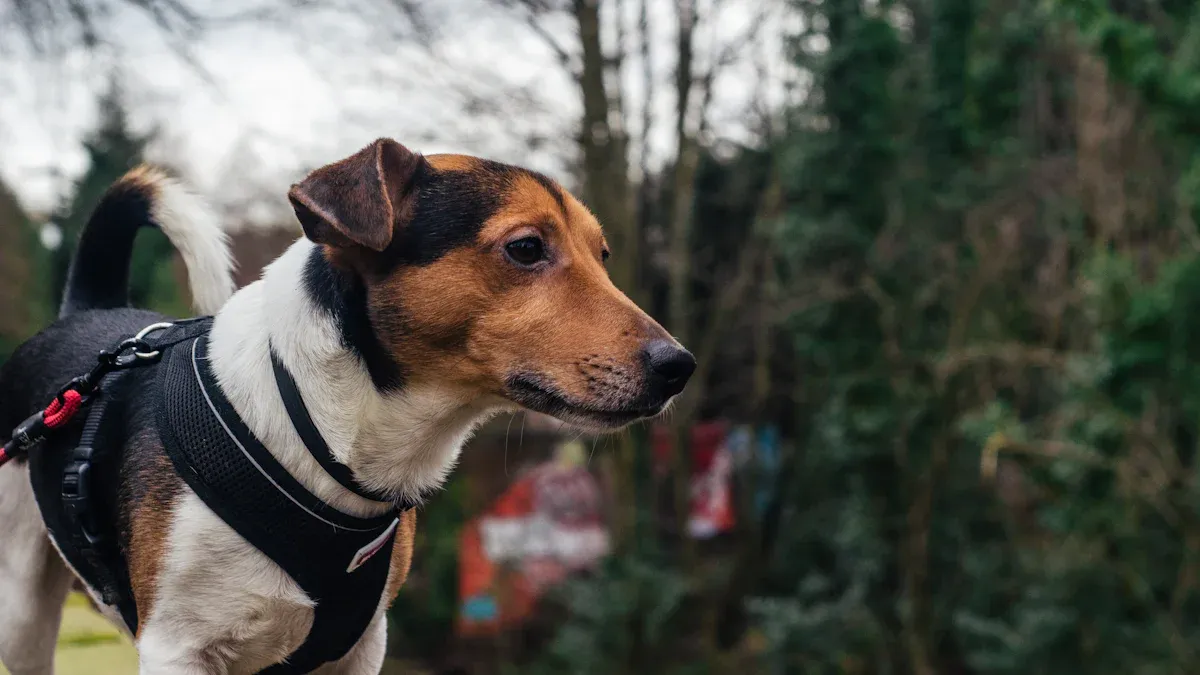
Choosing the right dog tactical harness starts with accurate sizing. Measure the chest at the widest part behind the front legs, then measure around the base of the neck where the harness will sit. Compare those numbers with the size chart, but do not stop there. Tactical layouts can fit very differently even when the chest number looks right.
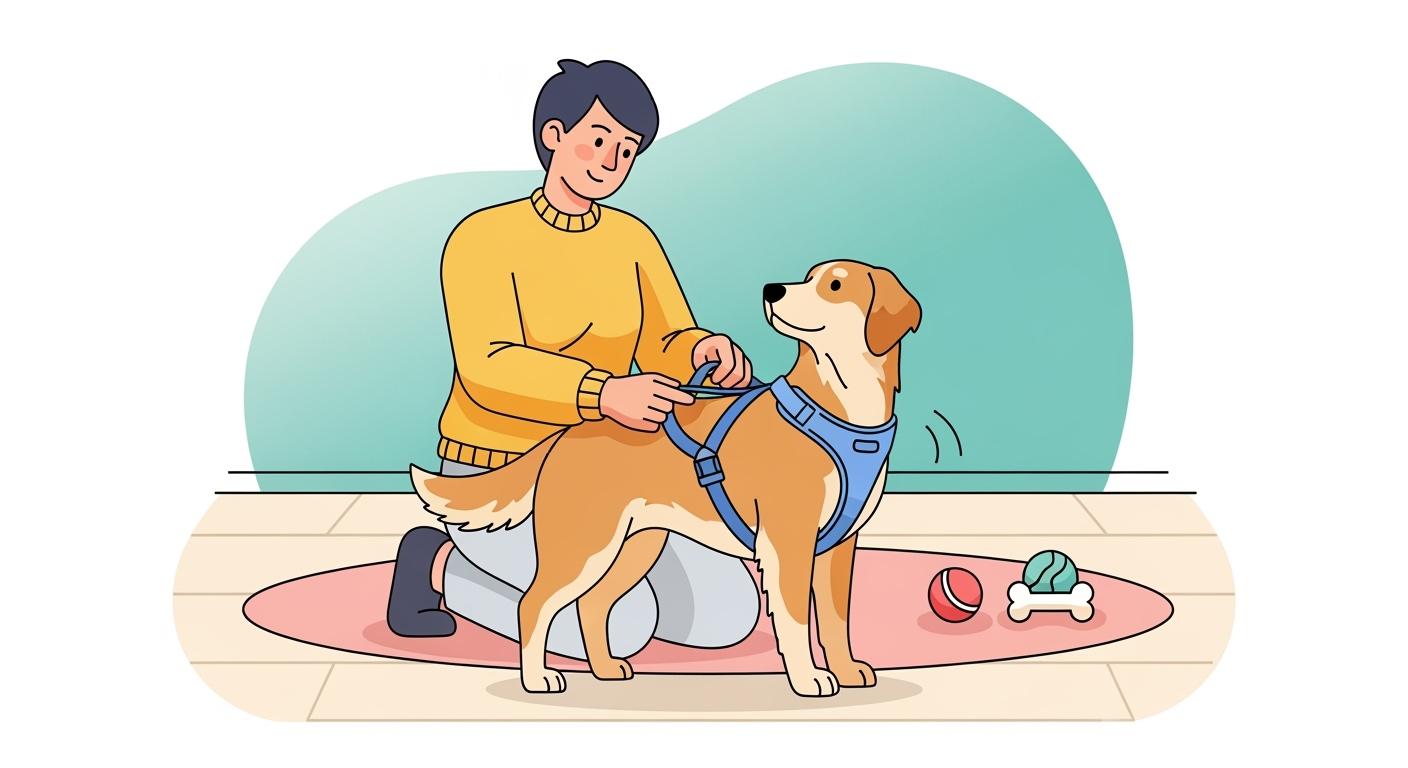
After you put the harness on, use this quick fit sequence:
- Buckle everything and center the chest panel.
- Check the neck opening. It should stay below the throat instead of riding up into it.
- Check the girth strap. It should sit behind the front legs with visible elbow clearance.
- Slide one to two fingers under the main straps. The fit should feel snug, not pinching.
- Walk the dog for a few minutes, then recheck shoulder motion, rubbing points, and whether the harness stayed centered.
- Do a gentle backward step check. The harness should feel secure without lifting toward the neck.
| Fit area | Pass signal | Fail signal |
|---|---|---|
| Neck opening | Sits low enough to avoid throat pressure | Rides up when the leash tightens |
| Shoulder clearance | Dog can stride and turn freely | Front movement looks shortened or stiff |
| Elbow clearance | Strap stays behind the front legs | Strap rubs close to the elbows |
| Centering | Harness stays balanced during walking | Twists, shifts, or drops to one side |
| Handle access | Easy to grab without bunching the harness | Hard to reach or pulls the harness upward awkwardly |
If you notice coughing, limping, skin irritation, or unusual distress, stop using the harness and speak with your veterinarian.
Common layout mistakes and quick fixes
Most tactical-harness problems come from layout mismatch, not just from size. These are the most common mistakes to catch early:
- Chest panel too wide: the front section looks stable, but it limits shoulder motion.
- Handle too close to the neck: lifting or steadying the dog pulls the harness upward.
- Girth strap too far forward: the dog starts rubbing near the elbows after a short walk.
- Too much side bulk: extra webbing or pouches make the harness swing instead of staying close.
- Hardware on a pressure point: clips or rings sit where the dog lies down or turns tightly.
| Problem | Fast check | What to do |
|---|---|---|
| Harness shifts sideways | Watch the back clip during a short walk | Re-center the straps or choose a cleaner layout |
| Dog shortens stride | Watch shoulder movement from the side | Reduce front bulk or try a different chest shape |
| Rubbing after use | Check elbows, lower chest, and underarm area | Reposition the girth strap or resize |
| Handle feels awkward | Grab it while the dog is standing still | Choose a layout with a more natural handle position |
A good tactical harness should feel organized, not overloaded. The best layout is the one that fits the dog well and lets you use the handle and clips without second-guessing them.
FAQ
Is a tactical harness always better than a simple walking harness?
No. A tactical-style harness can be helpful when you want a top handle, a sturdier layout, or more stable close control. It is not automatically better for every dog or every walk.
How tight should a tactical harness feel?
It should feel snug enough to stay centered, but not so tight that it pinches, presses into the throat, or limits shoulder motion. Recheck the fit after a short walk.
What is the fastest way to catch a bad fit?
Do a short walk test, then check the throat area, elbows, lower chest, and overall centering. Most fit problems show up quickly as shifting, rubbing, or restricted front-leg movement.