A dog sling carrier can make short outings easier, but it only works well when your dog stays supported, balanced, and calm inside it. The biggest problems usually come from poor body support, the wrong carry position, or a sling that looks soft and cozy but lets the dog slump or shift too much once you start walking. A good sling should feel stable for you and comfortable for your dog at the same time.
That is why it helps to compare different sling and crossbody carrier styles by posture support, strap behavior, and short-trip practicality instead of choosing only by looks.
When a dog sling carrier works well and when it does not
Sling carriers usually work best for small dogs, short errands, and calm everyday movement where you want hands-free carrying without a bulky structured bag. They are often most useful when your dog already settles fairly well and does not fight the carrier or overheat quickly. The closer, softer feel can help some dogs stay relaxed, but only if the sling actually supports posture instead of just suspending weight.
Situations where a sling often makes sense
- Short walks, quick errands, and moving through crowded places.
- Small dogs that like staying close to the body.
- Trips where easy loading and simple carry matter more than long-duration structure.
- Owners who want a lighter option than a full carrier bag for brief outings.
When a sling may be the wrong tool
- Your dog is too heavy for you to carry comfortably for even a short distance.
- Your dog keeps slumping, twisting, or trying to climb out.
- Your dog overheats easily or shows stress in semi-enclosed carries.
- You need longer carrying time and more structure than a soft sling can provide.
Quick rule: if the sling feels unstable on your body or your dog cannot stay upright with a neutral spine, the problem is usually not just adjustment. The sling may simply be the wrong carry format for that use.
Check fit, carry position, and support before every outing
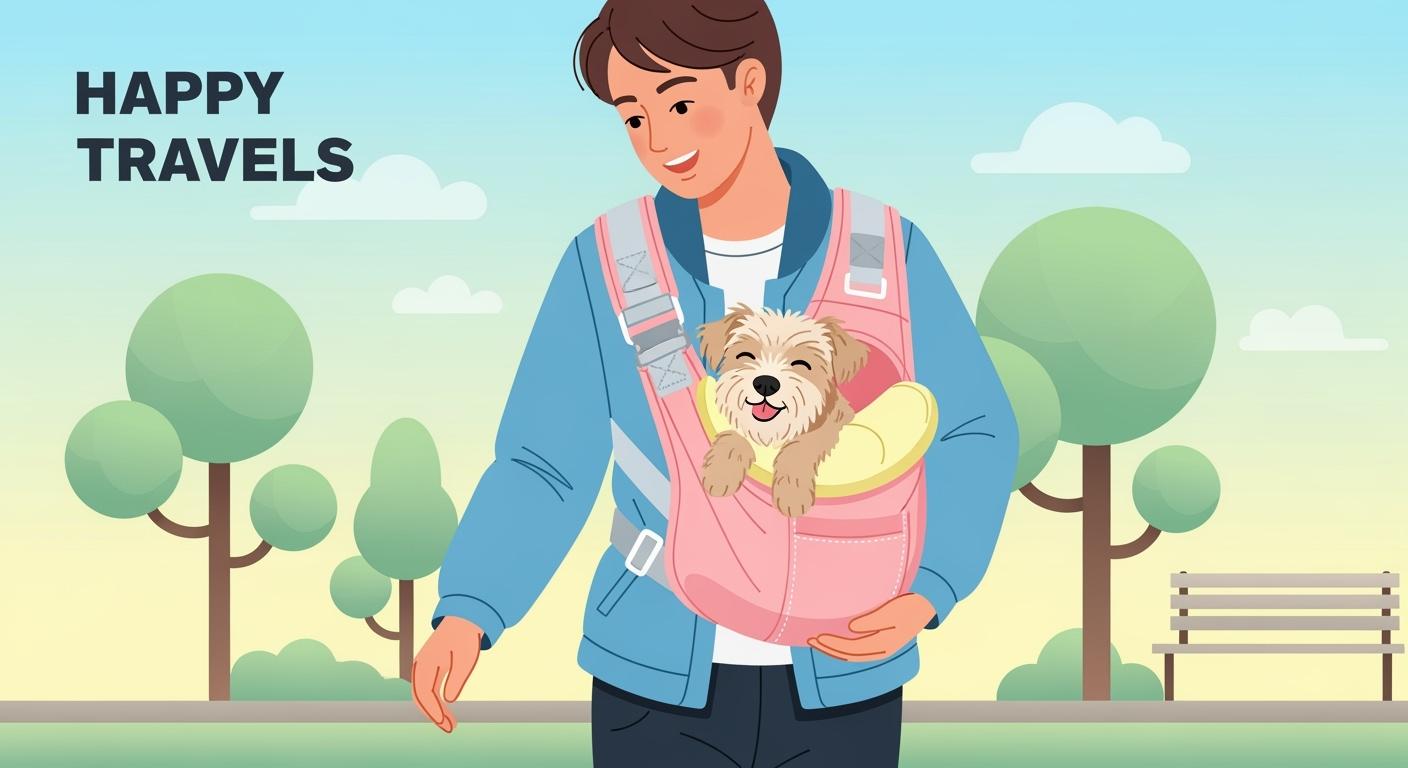
The best sling setup starts with how the dog sits inside it. Your dog should feel supported underneath the body, not pinched at the neck or folded into the bottom corner. Even a sling that fits on paper can feel wrong once you actually walk with it if the strap twists or the dog shifts toward the opening.
What good support should look like
- Your dog stays centered instead of sliding toward one end.
- The head and neck stay free without chin pressure from the fabric edge.
- The back looks neutral instead of curled sharply or sagging downward.
- The sling stays close enough to your body that it does not roll or bounce when you walk.
Front, side, and crossbody positions each feel different
| Carry position | Usually works best for | What to watch for |
|---|---|---|
| Front carry | Quick posture checks and very short trips | Heat buildup and a bulkier feel against the body |
| Side or hip carry | Errands where you want more arm freedom | Swinging if the strap sits too loose |
| Crossbody carry | Better weight spread on short to moderate outings | Twisting if the strap is not adjusted flat and centered |
What to recheck after you start walking
The sling should stay centered, the strap should lie flat, and your dog should not keep pushing to rebalance. Those simple checks matter even more as part of a repeatable daily travel routine, where small comfort problems become obvious only after a few minutes of real movement.
Materials, strap comfort, and safety details that matter most
A sling carrier should feel soft enough for close contact but sturdy enough to hold shape under real use. This is where many bags look appealing online but disappoint in practice. Breathable fabric, a wide enough strap, and dependable stitching usually matter more than decorative details.
Features worth checking closely
- Fabric that feels breathable rather than hot and clingy against the dog.
- A strap wide enough to spread weight instead of digging into one shoulder.
- Stitching that looks solid where the strap meets the body of the sling.
- An opening shape that keeps the dog secure without crowding the neck.
- An internal tether that clips to a harness, not to a collar.
Why strap design changes the whole experience
Many comfort complaints are really strap complaints. If the strap is too narrow, too slippery, or badly adjusted, the sling rotates and the dog has to brace. That quickly turns a short, calm carry into an awkward one. This also makes weight and carry-position decisions easier to compare alongside a fuller guide to weight limits and carry positions when you are trying to decide whether a soft sling still makes sense.
Use the internal clip correctly
If your sling includes a tether, attach it to a properly fitted harness. The clip should reduce sudden exits without forcing your dog into a stiff posture or creating excess slack that can tangle during movement.
Common mistakes, warning signs, and simple care checks
Most sling problems start small. A dog leans a little more on one walk, the strap twists a little sooner on the next, or the fabric holds more heat than expected during a longer errand. Those are not details to ignore. They are usually the first signs that the fit, support, or routine needs adjustment.
Common mistakes that make a sling feel worse
- Using the sling for longer carries than your dog or shoulder can handle comfortably.
- Letting the bag hang too low, which increases bouncing and rolling.
- Clipping the internal tether to a collar instead of a harness.
- Choosing fabric that traps heat or stays damp after cleaning.
- Ignoring slumping because the dog is quiet rather than obviously struggling.
Warning signs that mean stop and reassess
- Heavy panting, repeated escape attempts, or obvious distress.
- Rubbing around the chest, neck, or edge contact points.
- Your dog cannot stay centered and keeps sliding toward the opening.
- The strap digs into your shoulder almost immediately.
- The sling twists, bounces, or sags enough to change posture.
Keep friction and odor low with simple care
Shake out grit, wipe contact areas after real use, and let the sling dry fully before the next outing. Moisture, dirt, and roughened fabric surfaces can turn a normally comfortable sling into a rubbing problem very quickly. A clean, dry sling usually feels better for both the dog and the person carrying it.

FAQ
How do I know if my dog is too heavy for a sling carrier?
If the sling sags, your shoulder starts hurting quickly, or your dog cannot stay upright with a neutral spine, the carry is already beyond a comfortable range even if the sling technically holds the weight.
Which carry position is usually safest?
The safest position is the one that keeps your dog centered, the strap flat, and breathing easy. For many small dogs, front carry is easiest to monitor, while crossbody often spreads weight better for slightly longer short trips.
Should the internal tether clip to a collar?
No. If the sling includes a tether, it should clip to a properly fitted harness rather than a collar so sudden movement does not place force on the neck.
What are the first warning signs that the sling is not working well?
Watch for slumping, constant squirming, heavy panting, repeated attempts to climb out, rubbing at the edges, or a sling that rolls and bounces instead of staying centered.
How should I clean a dog sling carrier?
Remove loose dirt, wipe down the areas that contact your dog and your shoulder most often, and dry the sling fully before reusing it. A clean, dry sling usually stays more comfortable and causes less friction.