
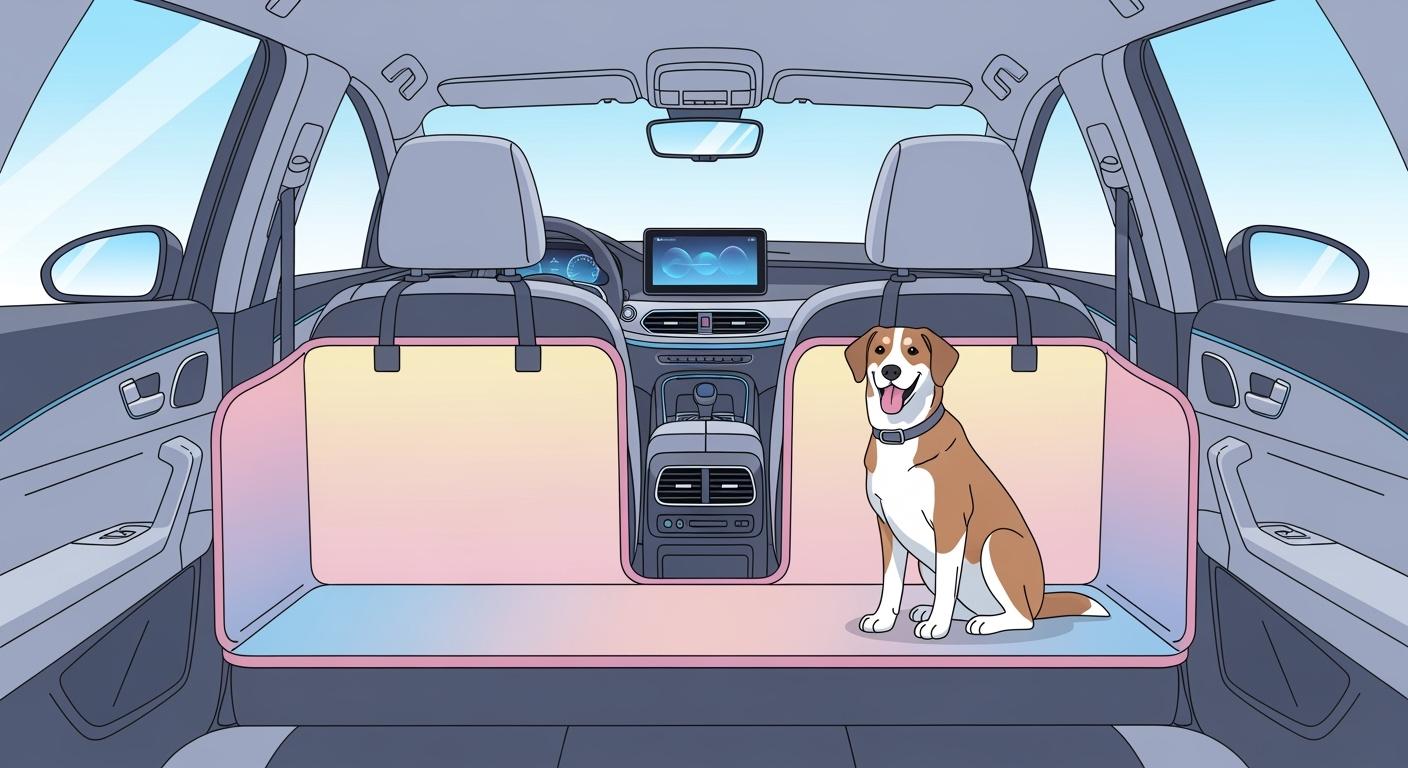
A procurement buyer evaluating back-seat dog mats faces one question that matters more than fabric weight or stitch count: where does the mess actually go? Flat mats photograph well and ship at lower cube, but the returns data tells a different story. Mud, moisture, and hair escape through seat creases, door-side edges, and backrest transitions — the exact points where a flat mat offers no barrier. Sourcing a mat that contains mess at the edges is not a premium upsell; it is the difference between a product that performs and one that generates cleanup complaints within the first week of use.
Note: A dog mat protects upholstery but does not replace a proper travel restraint for safety.
Where Flat Back-Seat Mats Stop Protecting
Seat Crease Gaps and Mess Paths
A flat dog mat for car back seat covers the main surface but leaves the seat creases exposed. When a dog jumps in with wet paws or shakes off loose hair, mess follows gravity into the cracks between seat cushions. Mud and moisture seep through these gaps on vehicles with deep seat creases, even when the mat surface itself is waterproof. Stains and debris collect in these hidden spots, and no amount of surface-level waterproofing stops the leakage. If the mat does not reach into the creases, the product fails at the most predictable failure point.
Door-Side Edge Exposure
Flat mats typically stop short of the door edges. When a dog enters or exits from the side, paws drag mud and grit onto the uncovered seat edge and door panel. Hair and dirt escape at these points on every trip, particularly with active dogs or in wet conditions. A mat that shifts during the ride exposes even more of the edge, and poor fit with unreinforced corners accelerates the problem. Side flaps that close the gap between the mat and the door panel reduce this failure mode, but they need to be part of the design from the start — retrofitting does not work.
Tip: Check whether the mat has non-slip backing and reinforced corners. Mats that shift or curl leave more of the seat exposed and increase the cleaning burden.
Backrest Transition Gaps
The transition between the seat base and the backrest creates another weak spot. Flat mats rarely cover the vertical gap where the seat meets the backrest. Liquids, hair, and grit slide down into this space during normal driving. If the mat lacks extra height or a back flap, mess collects here after every ride. This area is hard to clean and often overlooked during product evaluation.
The table below maps common use cases against flat-mat suitability. Use it to qualify which scenarios genuinely call for edge coverage.
| Use case | Flat mat sufficient | Edge coverage concern | Decision direction |
|---|---|---|---|
| Calm dog, dry weather | Yes | Minimal | Flat mat may meet the need |
| Active dog, muddy paws | No | Seat creases, door edges | Spec edge coverage |
| Contoured rear seat | No | Backrest and side gaps | Choose shaped or flapped mat |
Gaps When Dogs Turn or Climb In
Dogs rarely sit still during a car ride. Turning, shifting, and climbing in and out creates new mess paths that flat mats miss. When a dog turns, paws press against the edges of the mat. Mud, moisture, and hair escape through these gaps. Without raised sides or extended flaps, dirt transfers to the seat or the floor.
The pattern is most visible when a dog enters from the side door. Paws land on the mat edge, and mud transfers directly to the seat. Flat mats leave a strip of upholstery exposed between the mat boundary and the door. Hair and grit collect in these areas after a rainy walk or a trip to the park. Active dogs that dig, brace, or shift during the ride push the mat further out of position. If the mat curls or slides, more of the seat becomes exposed.
Signals that a flat mat is not containing the mess:
- Mud or hair appears near the seat edges after each ride.
- The mat slides or curls when the dog moves.
- Dirty paw prints appear on the door-side upholstery.
Matching the mat design to the dog’s habits reduces cleanup and return triggers. A flat mat may hold up for calm dogs in dry conditions. For active dogs or messy environments, edge coverage becomes the minimum viable spec.
Why Waterproof Fabric Alone Does Not Contain Edge Leakage
Limits of Surface Waterproofing
Waterproof fabric stops spills from soaking through, but it does not block messes from sliding off the mat. Liquids, hair, and grit follow gravity and movement. When a dog climbs in, shakes, or turns, mess travels toward the edges. Flat mats leave seat creases and door-side upholstery exposed. Mud and moisture collect in these areas after active rides or wet weather. Surface waterproofing cannot contain spills that escape through gaps — edge containment is the only mechanism that prevents leakage at the perimeter.
Sourcing note: Waterproof material protects the area it covers. Mess escapes through gaps and edges, not through the fabric itself. Evaluate edge design as a separate criterion from surface waterproofing.
Edge Height and Side Flaps
Edge height and side flaps determine how well a mat contains mess at the boundary. Raised edges create a barrier that stops liquids and debris from sliding off. Side flaps with zippers provide door-panel protection. The benefit is clearest when dogs enter from the side or lean against the door to look out. Zippered flaps contain mess and protect door cards without adding bulk, preventing stains and grit on the seat and door panels.
- Raised edges block spills from leaking underneath.
- Side flaps with zippers cover door panels and seat edges.
- Full edge coverage prevents hair and mud from escaping during entry and exit.
Checking for edge height and side flaps belongs on every spec sheet. Flat mats without these details fail at the edges first, and the failure pattern is consistent across brands and price points.
Crease Reach and Seat Contour Fit
Seat creases and contours create hidden paths for mess. Flat mats often fail to reach into deep creases or match the curves of a vehicle’s rear bench. Proper alignment minimizes gaps and prevents bunching. Gaps allow spills to escape and mats to shift. Anchors secure the mat and keep it in place. Raised perimeter walls create a basin effect that keeps moisture and debris within the mat’s borders.
How seat contour fit affects edge leakage:
| Feature | What it does | Why it matters for returns |
|---|---|---|
| Raised edges | Sidewalls that climb to contain spills | Prevents leakage underneath the mat |
| Vehicle-specific contour | Matches factory floor curves | Minimizes gaps that let mess through |
| Basin effect | Raised perimeter walls hold debris in place | Keeps moisture and hair within the mat borders |
Matching mat design to seat shape blocks mess before it reaches the upholstery. Flat mats work for simple bench seats and calm dogs. For contoured seats or active pets, in-car protection and cleanliness depend on edge coverage and secure backing working together.
Backing Grip and Mat Curling
A mat that slides or curls at the edges cannot protect the upholstery, regardless of how waterproof the surface is. Backing grip and mat stiffness determine whether the product stays in place across multiple rides.
Backing grip refers to the material on the underside of the mat. This layer must grip the seat and prevent movement. If the backing is too smooth, the mat slides when a dog jumps in or shifts. The mat bunches up or exposes the seat underneath, and more mess reaches the upholstery.
Mat curling happens when the edges lift or fold over. Thin mats without structure, or mats that do not fit the seat shape, curl predictably at the corners. Curled edges create gaps where mud, hair, and moisture escape. Dirt collects along seat creases and door-side edges. Curling makes the mat harder to clean and less stable for the dog.
Signals that backing grip or curling issues are active:
- The mat slides when the dog moves or climbs in.
- Edges lift after a few rides.
- Dirt or hair collects under the mat, not just on top.
- The mat bunches at seat creases or corners.
| Feature | What to check | Failure signal |
|---|---|---|
| Non-slip backing | Rubber dots, silicone, or texture | Mat slides during entry or turns |
| Reinforced edges | Stiff seams or piping | Edges curl and expose seat |
| Mat thickness | Medium to thick padding | Thin mat lifts at corners |
| Seat anchors | Straps or tubes for tucking | Mat shifts out of position |
A mat with strong backing grip and stiff edges stays in place even when a dog turns or braces. Stability and grip keep the cover from shifting under an active dog, which means less adjusting and fewer messes reaching the upholstery. Testing grip by pressing down on the mat and trying to slide it with a hand is a fast pre-purchase check. If it moves easily on a dry seat, it will not hold up during real use.
Quick decision rule: If a mat slides on a dry seat with hand pressure alone, it will fail under an active dog within the first three rides. Backing grip is not negotiable for contoured seats or dogs over 30 lb.
Flat Mat or Edge Coverage: Matching the Product to the Use Case
When a Flat Mat Is Enough
A flat dog mat for car back seat works when the ride conditions are simple and the dog is calm. If the dog sits quietly, sheds minimally, and enters from the center, fewer messes reach the seat edges. Dry weather and short trips reduce the risk of mud or moisture reaching the seat creases or door sides. In these scenarios, a flat mat provides adequate protection for the main seating area, and cleanup stays manageable.
Flat mats suit vehicles with a basic rear bench and minimal seat contours. For buyers describing easy wipe-down needs and light shedding, a flat mat can meet expectations without adding product cost or complexity.
When Edge Coverage Becomes Essential
The need for edge coverage becomes clear when the dog is active, the weather is wet, or the car seat has deep contours. Dogs that turn, brace, or dig during the ride push the mat out of position. Muddy paws and heavy shedding create mess that escapes through seat creases and door-side gaps. Side-door entry increases the chance of dirt landing on exposed upholstery. In these scenarios, a flat mat cannot contain all the mess, and the product fails in ways the end customer notices immediately.
Mats with raised edges, side flaps, and deeper seat-crease reach address these failure modes directly. These features block mud, moisture, and hair from slipping past the mat. Strong backing grip and reinforced edges keep the mat in place when dogs move around. Evaluating back-seat cover types, materials, and sizing against real use cases rather than spec-sheet claims separates products that perform from products that generate returns.
| Scenario | Flat mat | Edge coverage mat |
|---|---|---|
| Calm dog, dry ride | Suitable | Not required |
| Active dog, muddy paws | Not sufficient | Required |
| Contoured seat, deep creases | Not sufficient | Required |
| Heavy shedding | Not sufficient | Required |
Sourcing note: Matching edge coverage to the dog’s habits and the vehicle’s seat design reduces returns and increases repeat business. The most common return trigger for back-seat mats is mess escaping at the edges, not surface-level waterproofing failure.
Matching Mat Design to Seat Shape
Fit between the mat and the vehicle’s rear seat determines whether the product performs. Measuring the seating area ensures the mat covers all high-risk zones. If the mat is undersized or the seat has deep contours, gaps appear at the edges and creases, letting mud, moisture, and hair reach the upholstery.
Dog size and activity level also shape the decision. Larger or more active dogs create more movement and mess. A mat with raised edges or side flaps provides better containment for these cases. Some mats offer a basin effect with raised sides, while others use zippered flaps for full door coverage. Matching mat materials and fit to real travel conditions prevents the gap problems that drive negative feedback.
- Measure the rear seat to check for deep creases or contours.
- Assess dog size and activity level to judge mess risk.
- Select a mat style that fits the seat and blocks edge leakage.
Product-Fit Conclusion
The sourcing decision turns on a single question: where does the mess go when the dog moves? A flat mat covers the main seat area and works for calm dogs in dry conditions with simple bench seats. In these scenarios, protection is adequate and cleanup is straightforward.
Problems surface when the dog moves a lot, sheds heavily, or enters with muddy paws. Wet weather and contoured seats create additional mess paths. Mud and hair slip through seat creases and door edges. A mat with raised sides, side flaps, or deeper coverage blocks these messes before they reach the upholstery. A dog seat cover designed for back-seat fit with the right edge profile and backing grip protects the upholstery and reduces the cleanup burden that drives end-customer complaints.
The difference between a flat mat and an edge-coverage mat is not about price tier — it is about whether the product contains mess at the points where mess actually escapes. Flat mats work for calm dogs, dry weather, and simple bench seats. Edge coverage becomes essential for active dogs, wet conditions, or contoured rear seats. Automotive upholstery protection depends on waterproof surfaces, side flaps, and door protectors working together. Match the mat to the vehicle’s seat design and the dog’s behavior, and spec edge coverage where the use case demands it.
FAQ
What cleaning expectation should buyers set for flat back-seat mats?
Most mats can be wiped with a damp cloth. Some allow machine washing — check the care label before spec’ing. Quick cleaning turnaround keeps the product usable between trips and reduces odor complaints.
Does a flat mat protect against muddy paws?
A flat mat covers the main seat area. Mud can escape through seat creases and edges. Edge coverage — raised sides or side flaps — is needed for full containment in wet or muddy conditions.
Can a dog mat be used with a car seat restraint?
Yes. The mat protects the upholstery, while a harness or crate handles safety restraint. The two products serve different functions and should be evaluated separately.
What features keep a mat from sliding out of place?
Non-slip backing, seat anchors, and reinforced edges prevent sliding and curling. These features keep the mat flat and maintain coverage across multiple rides.
Which mat design handles heavy shedding best?
Mats with raised edges and side flaps contain hair and debris more effectively than flat designs. A flat mat may not catch loose fur that drifts toward the seat edges during the ride.






