
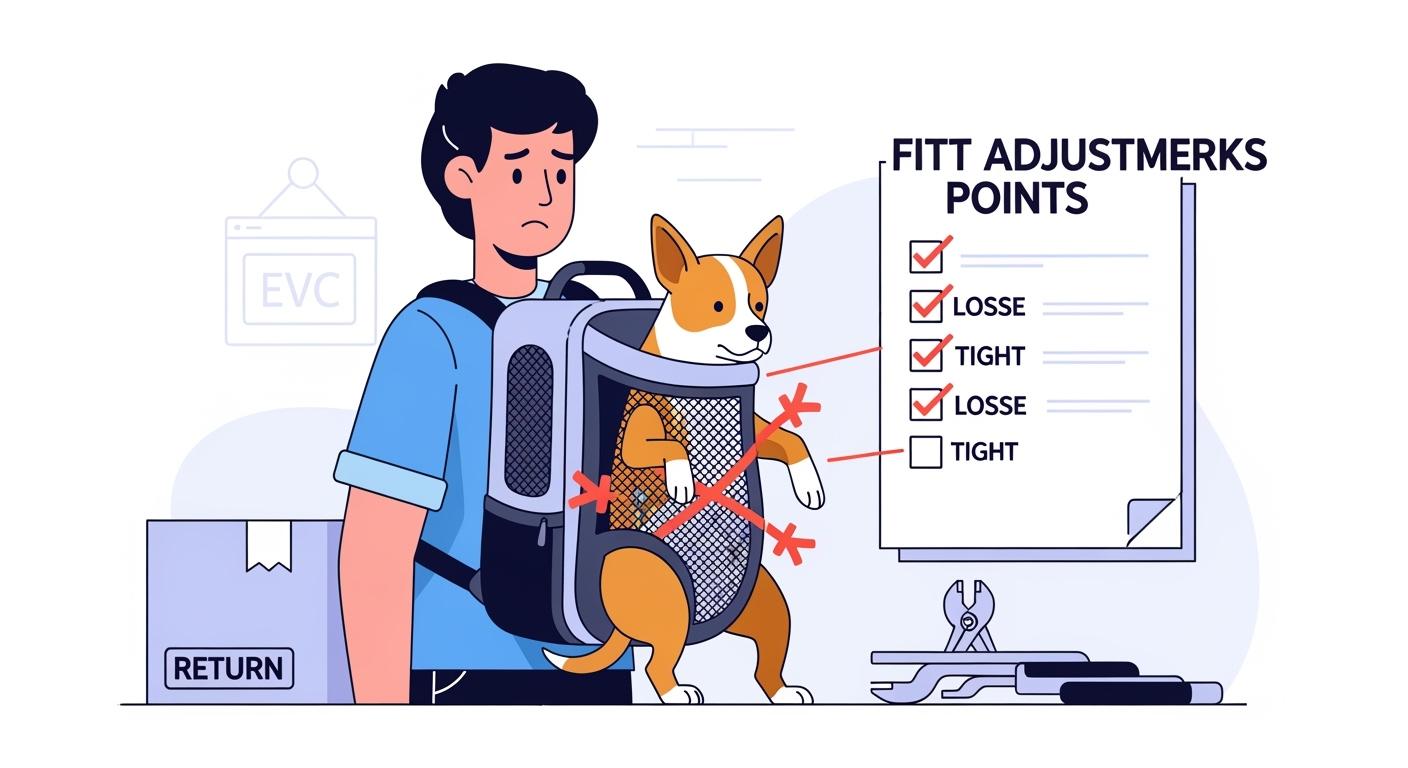
Front-facing dog carriers are not automatically safe or unsafe; the real issue is whether the carrier fits the dog’s body and the outing. A dog that looks cramped in a head-out carrier, slumps into the base, pushes against the opening, pants from heat buildup, or can work at the closure is showing fit or safety warning signs. Before using this style for short errands or light outings, check the base support, opening pressure, airflow, strap balance and use duration so the dog can sit upright without bouncing, twisting or trying to escape.
Key Takeaways
- Measure your dog the right way and compare the result with internal carrier dimensions, not just the outside product size.
- Front-facing backpack carriers work best for short errands, quick transfers, and close monitoring. They should not be positioned as substitutes for long hikes unless the design has enough structure, airflow, and weight distribution.
- Base support, closure security, mesh placement, and strap balance are the main details that decide whether the carrier feels stable in daily use.
Dog carrier backpack front-facing: buyer checks before purchase
Use-case limits: errands vs longer outings
A front-facing dog backpack carrier is usually best for short, low-impact use: quick errands, vet visits, public transport transfers, and situations where the handler wants to keep the dog visible. This use case is different from a hiking backpack carrier, which needs stronger load distribution, longer carry comfort, and more reliable ventilation under movement.
For B2B product selection, the use case should be clear on the product page and packaging. If customers expect one carrier to handle long outdoor walks, crowded travel, warm weather, and unstable dogs, the risk of poor experience rises quickly.
| Use Case | What to Check | Why It Matters |
|---|---|---|
| Short errands | Easy entry, stable base, secure front opening | Prevents slumping and escape during quick trips |
| Vet visits or transfers | Fast access, cleanable interior, secure tether | Helps handlers remove the dog quickly and safely |
| Longer outdoor use | Weight distribution, airflow, stronger structure | Reduces handler strain and heat buildup risk |
Fit essentials: posture, base, closure, airflow
Fit is not only a size-chart problem. A good dog carrier backpack front-facing design should keep the dog in a supported posture without forcing the chest, neck, or underarm area into pressure points. The base should resist sagging, because a soft or unstable bottom makes the dog slide, twist, or slump forward.
Closures also need to stay secure when the handler bends, climbs stairs, opens doors, or gets into a car. Mesh panels help airflow, but mesh does not make the inside cooler than the surrounding environment. That is why ventilation, use duration, and stop-use signs should be explained clearly to customers.
| Fit Area | Good Sign | Problem Sign |
|---|---|---|
| Posture | Dog sits or rests without twisting | Dog slumps, leans, or tries to climb out |
| Base support | Flat, firm base supports the chest and body | Bottom sags or folds under the dog |
| Closures | Zippers, drawstrings, and tabs stay closed during movement | Opening loosens when the dog pushes or shifts |
| Airflow | Mesh is placed near the dog and remains uncovered | Thick pads, covers, or fabric panels block ventilation |
Return triggers: slumping, bounce, escape, heat
The most common front-facing carrier problems are easy to predict before sourcing. Slumping usually comes from weak bottom support or an oversized interior. Bounce often comes from poor strap balance or a carrier that hangs too low. Escape risk rises when the opening, zippers, or tether are not secure enough. Heat buildup happens when mesh is limited, blocked, or used in the wrong environment.
These problems are also the same issues buyers notice first in reviews and customer feedback. A product that looks good in photos can still fail if it does not stay stable when the handler walks, turns, or bends.
| Complaint Pattern | Likely Cause | Buyer Check Before Sourcing |
|---|---|---|
| Dog slumps forward | Weak base or wrong internal depth | Check base stiffness and internal dimensions with sample testing |
| Carrier swings or bounces | Poor strap geometry or low carry position | Check shoulder strap adjustment and handler balance |
| Dog pushes out | Loose opening, weak zipper, or unsafe tether point | Check closure strength and harness-only tether guidance |
| Dog overheats or refuses to settle | Blocked mesh, poor airflow, or use in warm conditions | Check mesh placement and include clear stop-use warnings |
Best dog backpack carrier: size and fit guide
Choosing the best dog backpack carrier starts with internal fit. External size, marketing photos, and stated weight capacity do not prove that the dog will sit safely inside. For product listings, buyers should ask whether the carrier gives customers enough guidance to check back length, shoulder height, chest width, posture, and handler balance before purchase.
Dog check: posture, chest, head, neck
Start with the dog measurements customers actually need: back length from neck base to tail base, height from floor to shoulder, and the widest part of the chest. Then compare those measurements with the inside dimensions of the carrier. The dog should be able to sit or rest in the intended posture without hunching, twisting, or being squeezed behind the elbows.
If the dog looks cramped at the shoulders or neck, the carrier is too small. If the dog slides, sinks, or bounces inside the carrier, the product may be too large, too soft, or not supportive enough. This is why clear size-chart wording matters for B2B buyers: it reduces wrong-size purchases and helps customers understand the use boundary before ordering.
Handler check: straps, balance, swing
The carrier also has to fit the handler. Shoulder straps should hold the carrier close to the body without creating hard pressure. A sternum strap or waist support can improve stability on some designs. When the product swings, pulls to one side, or hangs too low, the dog feels less stable and the handler feels strain faster.
For sourcing, test the carrier with realistic movement: walking, turning, bending slightly, opening a door, and climbing a few stairs. A front-facing backpack carrier should not bounce heavily or shift enough to make the dog brace against the opening.
Buyer checklist table
| Check Area | What to Verify | Why It Prevents Fit Failure | Customer-Facing Wording |
|---|---|---|---|
| Dog measurements | Back length, shoulder height, chest width, and internal size match | Reduces wrong-size orders | Measure your dog and compare with internal carrier dimensions. |
| Weight limit | Dog weight stays under stated capacity with a safety margin | Protects structure and carrying comfort | Stay below the weight limit and check comfort during first use. |
| Posture support | Dog can sit or rest naturally with chest support | Prevents slumping and refusal to settle | Your dog should not slump, twist, or press hard into the opening. |
| Strap fit | Carrier stays close to the handler without heavy bounce | Reduces handler strain and instability | Adjust straps until the carrier feels stable and balanced. |
| Ventilation | Mesh panels remain open around the dog | Reduces heat buildup risk | Do not block mesh with thick pads or covers. |
| Closure security | Zippers, drawstrings, and tabs stay closed during movement | Reduces escape risk | Check every closure before carrying your dog. |
| Emergency access | Carrier can open quickly if the dog panics | Supports safer removal | Practice opening the carrier before the first trip. |
Product description text for listings or product pages can be built around these checks:
- Measure back length, shoulder height, and chest width before choosing a size.
- Compare dog measurements with internal carrier dimensions.
- Firm base helps support natural posture and reduce slumping.
- Adjustable straps help keep the carrier stable against the handler.
- Mesh panels support airflow when they are not covered by thick inserts.
- Locking zippers and secure closures reduce accidental opening.
- Internal tether should attach to a harness, not a collar.
- Stop use if the dog slumps, twists, pants heavily, refuses to settle, or shows distress.
Dog carrier safety and comfort features
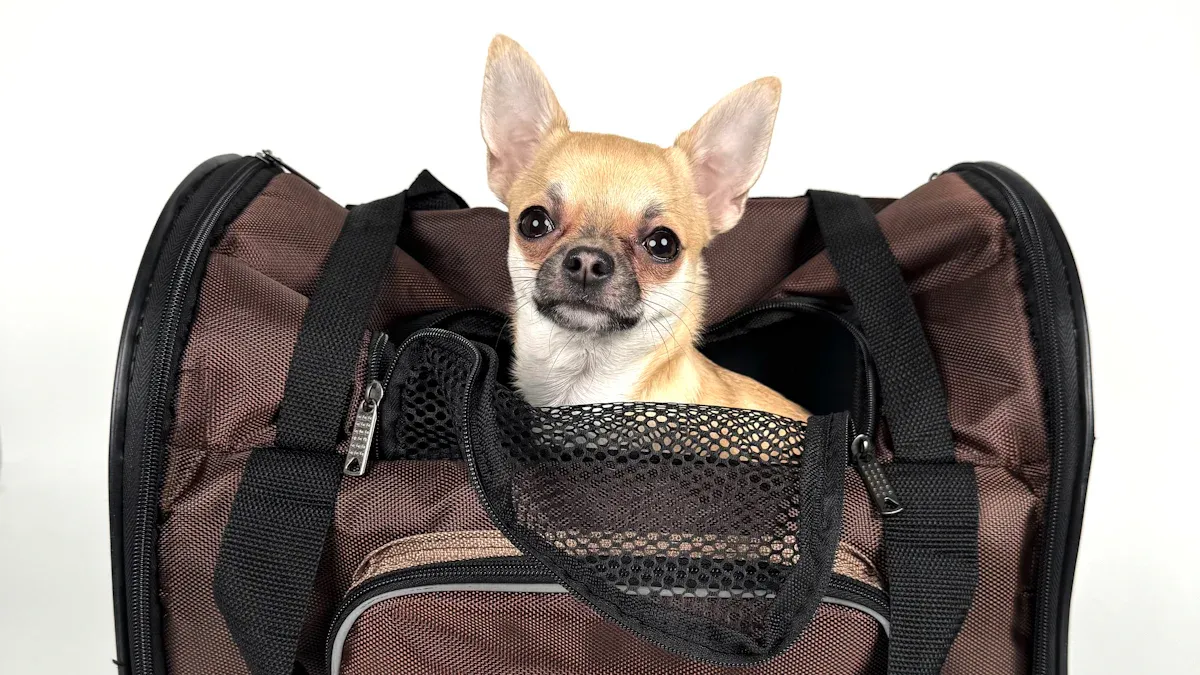
Closure security: openings, zippers, escape risk
Closure security should be judged during movement, not only when the carrier is empty. A dog may push against the top opening, turn inside the carrier, or shift suddenly when the handler opens a door. Zippers, drawstrings, mesh openings, and safety tabs should stay secure under normal movement.
| Safety Feature | Function | Buyer Risk If Weak |
|---|---|---|
| Drawstring mesh closure | Keeps the dog positioned while allowing head visibility | Loose opening can invite pushing or escape attempts |
| Fixed zipper | Closes the carrier body or access panel | Weak zipper can open during movement |
| Velcro or zipper cover | Reduces accidental opening | Uncovered pull tabs may loosen or catch |
| Internal tether | Adds secondary restraint when clipped to a harness | Collar attachment can create unsafe neck pressure |
Ventilation: airflow, heat limits
Mesh panels are important, but they do not remove heat by themselves. A front-facing carrier still needs correct use conditions, short carry sessions in warm settings, and clear customer guidance. Ventilation should be placed near the dog, not only on decorative side panels. Thick pads, covers, and oversized accessories can block airflow even when the carrier appears breathable.
Structure: anti-sag, bounce reduction
The structure should keep the dog supported without turning the carrier into a hard, uncomfortable shell. A firm base, reinforced seams, and balanced strap layout help reduce sagging and bounce. For product development, this is where sample testing matters most: the carrier should be checked with realistic dog weight, not only visual inspection.
Cleaning: easy-care, wear points
Cleaning and durability affect repeat use. Interiors should be easy to wipe, removable pads should dry fully, and seams around zippers, mesh, handles, and base panels should resist stress. For B2B buyers, these wear points are important because they decide whether the product still looks trustworthy after several uses.
Common mistakes, troubleshooting, and buyer-side fixes
Fit mistakes: oversizing, blocked airflow, poor balance, weak closure
Most front-facing dog carrier backpack issues come from a few predictable mistakes: choosing a loose size, covering mesh for extra padding, ignoring handler balance, or assuming any tether is safe enough. These mistakes should be handled in both product design and product information.
- Oversizing: A larger carrier is not always safer. Too much room can make the dog slide or slump.
- Blocked airflow: Mesh only works when it stays open and is placed where the dog needs airflow.
- Poor balance: Loose straps and low carry position increase bounce and handler strain.
- Weak closure: Zippers, tabs, and openings need to stay secure during normal movement.
Troubleshooting table
| Issue | Likely Cause | Fix Now | Prevent Next Time |
|---|---|---|---|
| Slumping | Oversized interior or weak base | Stop carrying and recheck posture | Choose a snug internal fit with a firmer base |
| Overheating | Blocked ventilation or warm environment | Remove the dog and cool down | Keep mesh open and explain heat limits clearly |
| Swinging or bouncing | Poor strap adjustment or unbalanced design | Readjust straps and carry position | Test strap geometry before sourcing |
| Escape attempts | Weak closure, loose opening, or nervous dog | Secure closures and remove the dog if needed | Use stronger zippers, safer openings, and harness tether guidance |
| Refusal to settle | Uncomfortable posture, pressure point, or heat | Stop use and inspect fit | Test posture, base support, and ventilation before listing |
The safest sourcing decision is not simply choosing the carrier that looks most convenient. It is choosing a design with clear size logic, stable structure, secure closures, and realistic use guidance. That is what makes a dog carrier backpack front-facing product easier for customers to trust before purchase and easier to use after delivery.
FAQ
Are front-facing dog carriers safe?
Front-facing dog carriers can be safe for short, low-stress use when the dog fits the carrier correctly. The dog should not be cramped, slumping into the base, pressing hard against the head-out opening, overheating, or pushing at weak closures. A safer fit depends on stable base support, enough airflow, balanced shoulder straps, secure closures and a use duration that matches the dog’s posture and comfort.
How do you check if a dog carrier backpack fits correctly?
Measure back length, shoulder height, and chest width, then compare those measurements with the carrier’s internal dimensions. Inside the carrier, the dog should stay supported without slumping, twisting, hard underarm pressure, or blocked airflow.
What is the safest way to secure a dog inside the carrier?
Attach the internal tether to a harness, not a collar. Then check that zippers, drawstrings, openings, and straps stay stable when the handler walks, turns, climbs stairs, or opens doors.
How can buyers reduce overheating problems in a dog carrier backpack?
Choose a design with mesh panels placed near the dog and make sure the product information explains heat limits. Customers should avoid thick covers that block airflow and stop use if the dog shows heavy panting, drooling, weakness, or distress.






