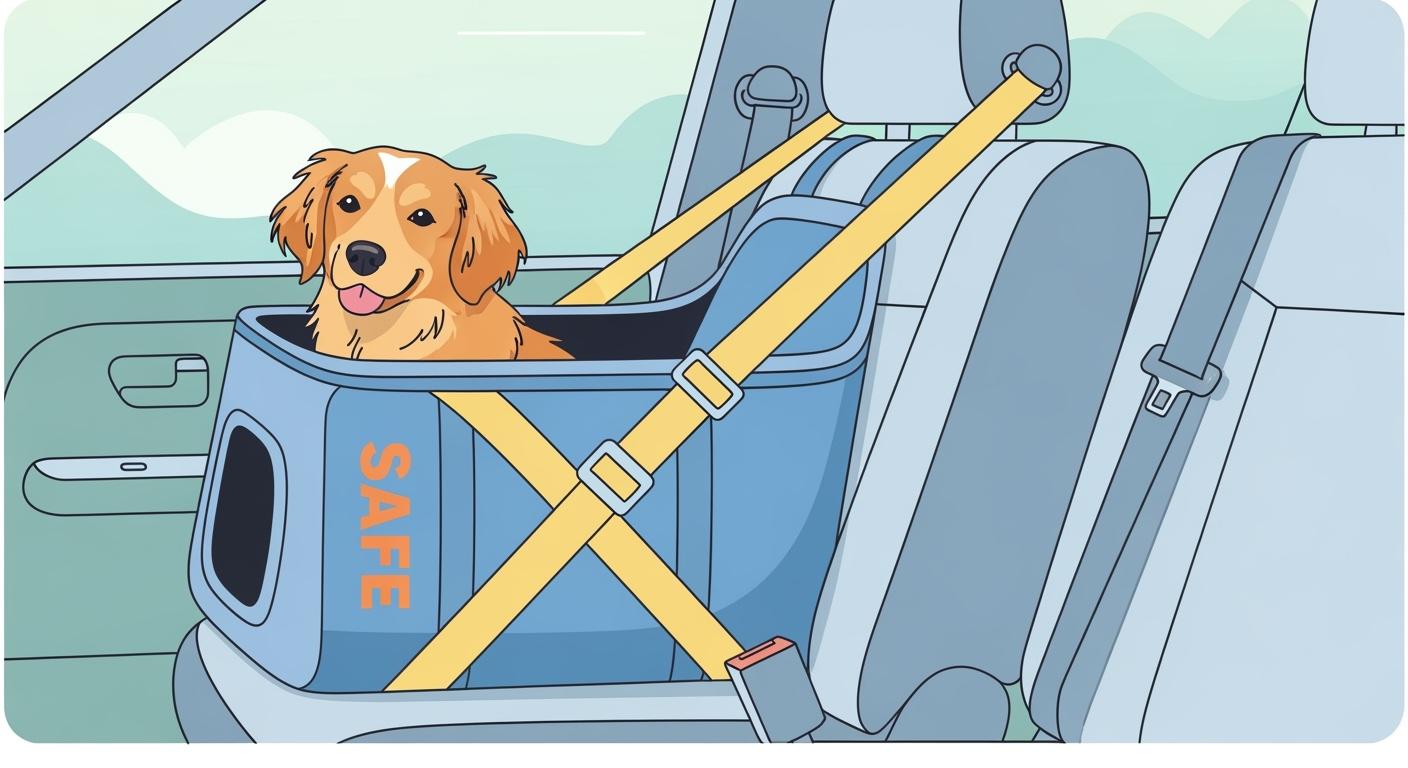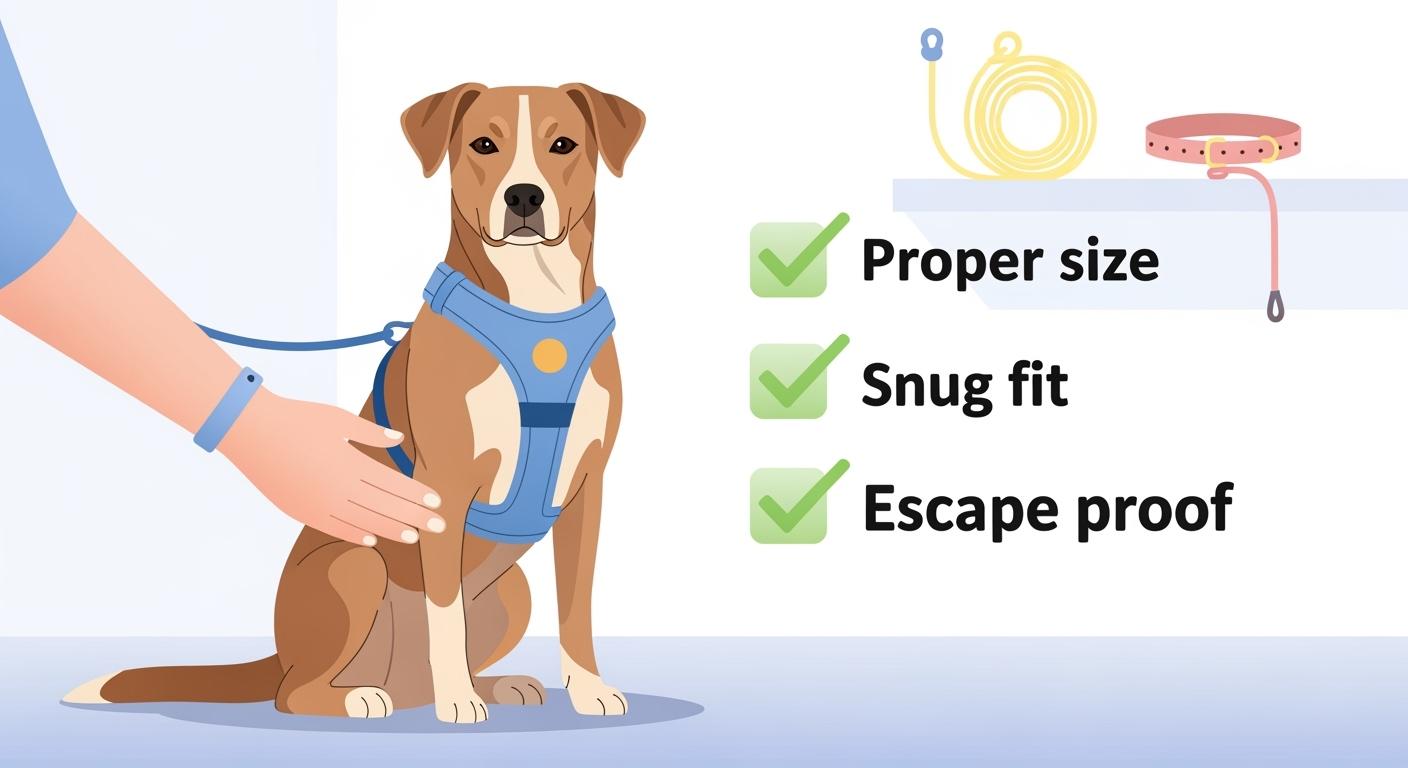
Many shoppers search for a dog harness escape proof because they want a setup that feels harder to back out of during everyday walks. In practice, the safer choice is not a magic label. It is a harness that fits closely at the neck base, stays centered across the chest, keeps the belly strap in the right place, and does not crowd the shoulders.
This guide focuses on what you can actually check before you buy: sizing, strap position, buckle security, movement, rubbing, and back-out risk. It does not treat any harness as a guarantee. If your dog shows panic, coughing, skin irritation, limping, or repeated escape attempts linked to fear, ask your veterinarian or a qualified trainer for hands-on help.
Quick takeaways
- Measure your dog’s neck and chest accurately to find the best fitting harness. Weight charts alone do not tell you whether the neck opening, chest panel, and belly strap will stay secure.
- Use the harness term “escape proof” as a shopping shortcut, not a promise. The real goal is lower back-out risk through better fit, better adjustment, and better movement checks.
- Before daily use, do a quick fit routine: buckle check, one-to-two-finger snugness check, short walk check, and gentle backward check.
What “escape proof” really means
Search term vs. real-world fit
Most people use “escape proof” to mean a harness that feels more secure on dogs who twist, freeze, back up, or slip out of loose gear. In real use, security comes from harness shape and fit together. A harness can look strong and still fail if the neck opening is too wide, the chest section sits off-center, or the strap behind the front legs slides too far back.
If you want more background on harness shapes and everyday use cases, start with a strong harness guide, then come back to this checklist for the fit details that matter most.
Lower back-out risk, not a guarantee
No harness can promise zero escapes in every situation. A dog may still back out of a loose setup, panic in a doorway, or slip free if the buckles are not fully locked. The more reliable claim is this: a well-fitted harness lowers slip-out risk and makes it easier for you to notice problems before a walk turns stressful.
That is why the best pre-purchase questions are practical ones. Can you adjust the neck area? Does the chest section stay flat? Is the belly strap placed behind the front legs without rubbing into the elbows? Can you do a quick back-out check at home?
What to check before you buy
Neck opening, chest coverage, and belly strap position
Start by looking at how the harness sits on the front of the body. The neck opening should sit closer to the base of the neck than the throat. The chest section should stay centered when your dog stands naturally. The strap behind the front legs should sit far enough back to avoid pinching the elbows, but not so far back that the whole harness starts to slide toward the ribcage.
These three points matter more than aggressive marketing words. If the front sits too low, too wide, or too loose, your dog may find room to reverse out.
Buckles, adjustment range, and stable hardware
Check how the buckles close and how much adjustment room the harness gives you. You want straps that tighten enough to fine-tune fit without leaving long loose ends that flap or shift. The hardware should feel consistent and sit flat, not twist outward under light tension.
It also helps to look at how the leash attachment lines up with the body. If the harness pulls the chest panel sideways every time you clip in, the fit may look good at rest but drift during the walk.
Everyday comfort still matters
A harness that feels secure but rubs the skin, crowds the shoulders, or traps too much heat often ends up being worn too loosely just to make it usable. Look for smooth edge finishing, a shape that leaves room for normal shoulder movement, and enough airflow for the coat your dog has. A better everyday fit is usually safer because you are less likely to over-tighten or stop using the harness correctly.
How to size and fit it
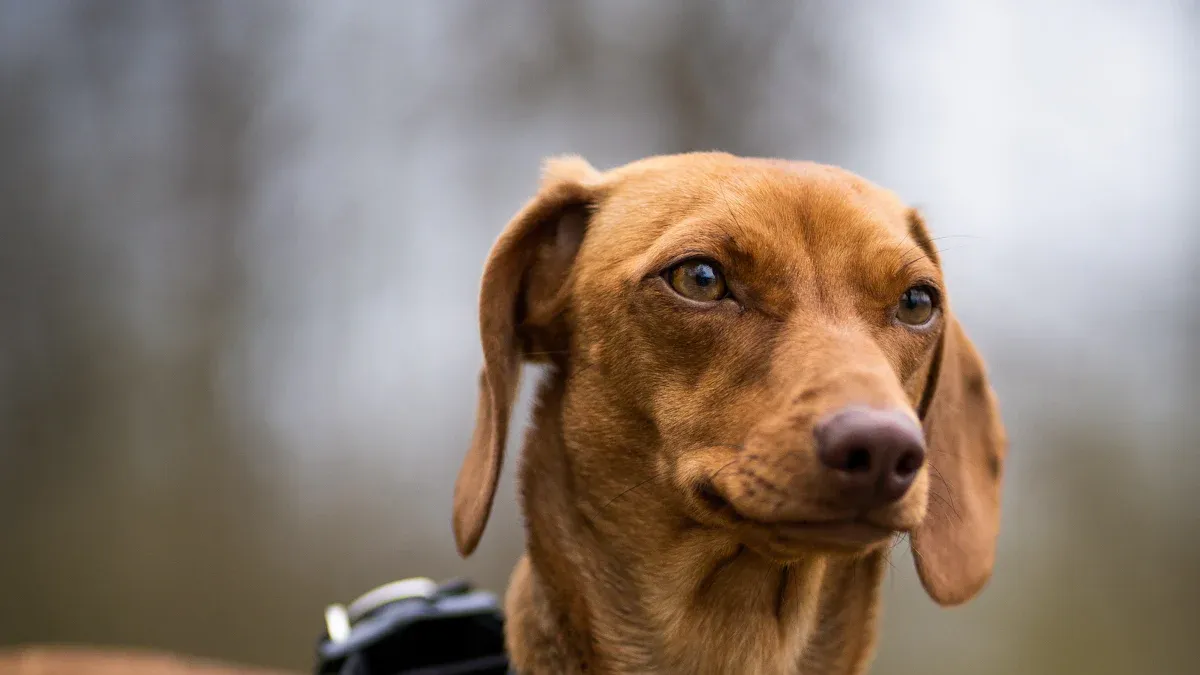
Measure your dog before you compare size charts
Before you order, measure your dog while they are standing still. Take two core measurements:
- The neck base, where the neck meets the shoulders.
- The widest part of the chest, usually just behind the front legs.
Write both down and compare them against the product’s chart. If one measurement fits but the other sits at the edge of the range, treat that as a sign to check harness shape carefully instead of relying on the size label alone.
Use a snugness check, then a movement check
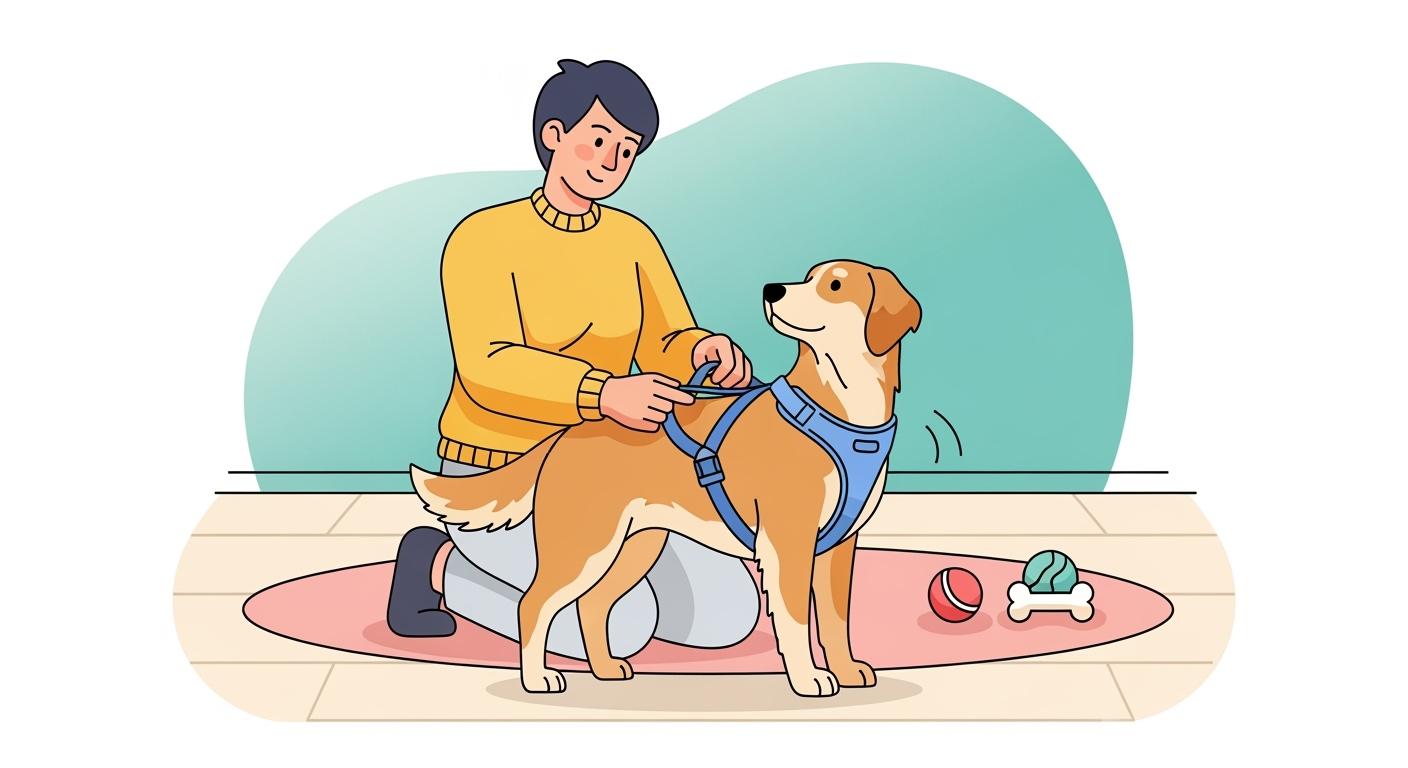
Once the harness is on, use a one-to-two-finger snugness check under the straps. The fit should feel close and secure, but it should not pinch. After that, do not stop at the standing check. Ask your dog to walk, turn, lower the head, and pause. Watch for these signs:
- The chest piece stays centered instead of drifting sideways.
- The neck opening does not climb up toward the ears when your dog backs up lightly.
- The strap behind the legs does not cut into the elbows.
- Your dog keeps a normal stride instead of shortening steps or moving stiffly.
Double-check after the first short walk
Many fit problems only show up after a few minutes of motion. After a short walk, run your hand under the edges and look for hot spots, flattened fur, or a section that has shifted away from the center line. Long coats can also settle after the first use, so a harness that seemed snug indoors may loosen outdoors.
Quick fit checklist and troubleshooting
| Check item | Pass signal | Fail signal | What to do |
|---|---|---|---|
| Entry and fastening | Harness goes on without forcing the dog into position | You have to pull hard or the buckles sit under tension | Recheck size range and strap layout |
| Chest position | Front section stays centered during a short walk | Front section drifts to one side | Re-adjust evenly or try a different shape |
| Back-out check | Neck area stays close when the dog steps back lightly | Neck opening lifts or widens | Tighten carefully or look for a more secure neck-to-chest shape |
| Post-walk skin check | No repeated rubbing or heat build-up at one point | Redness, flattened fur, or a recurring rub spot | Loosen pressure points or switch to smoother edge finishing |
Common mistakes that raise slip-out risk
- Using body weight as the main sizing method.
- Leaving extra room at the neck because a snug fit “looks tight.”
- Pulling every strap tighter instead of checking where the harness actually sits.
- Skipping the backward test and only checking the fit while the dog stands still.
- Ignoring coat changes after grooming, seasonal shedding, or weight shifts.
Simple troubleshooting table
| Problem | What to check first |
|---|---|
| Harness rolls to one side | Look for uneven strap adjustment or a chest section that is too narrow for your dog’s shape |
| Dog backs out during hesitation | Check neck opening size, centered chest fit, and whether the belly strap sits too far back |
| Dog resists putting it on | Check entry style, buckle location, and whether the harness has been over-tightened |
| Repeated rubbing after walks | Check edge finish, elbow clearance, and whether the harness shifts once the coat settles |
FAQ
Is an “escape proof” harness better for every dog?
Not automatically. A more secure shape can help dogs that freeze, reverse, or wriggle out of loose gear, but it still has to match your dog’s body shape and walking style.
How tight should the harness feel?
It should feel snug enough to stay close to the body without pinching. Use a one-to-two-finger check, then confirm the fit again while your dog walks and turns.
What should I do before the first outdoor walk?
Do a calm indoor fitting, a buckle check, a short hallway or driveway walk, and one gentle backward check. Then recheck the harness after a few minutes for rubbing, shifting, or looseness.