
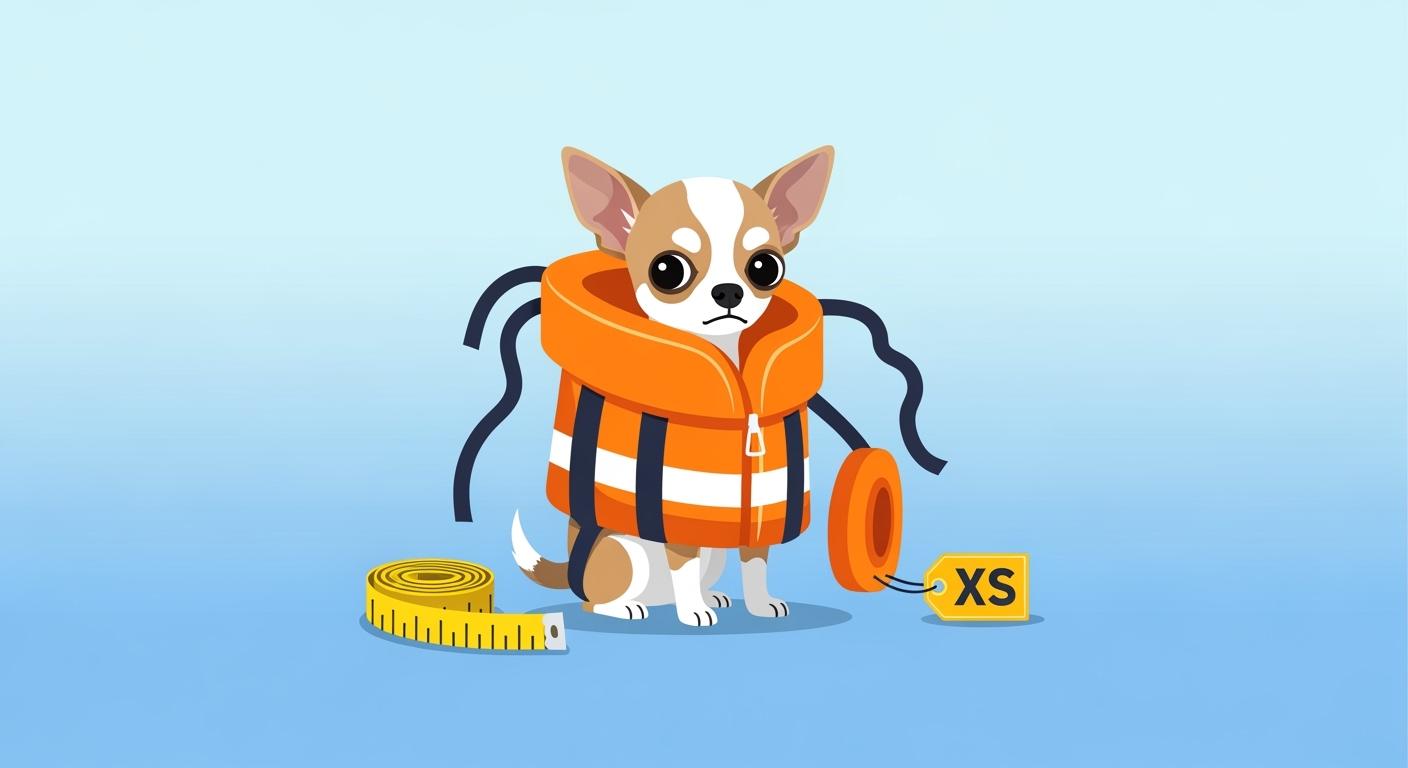
You try the smallest dog life jacket, but it still sags, rides up, or turns your tiny dog sideways in the water. That usually means the size label is not the real problem. Tiny dogs need a jacket that matches chest depth, neck opening, belly strap position, leg clearance, and buoyancy placement. A vest can be labeled XS and still be too long, too bulky in front, too loose around the ribs, or too heavy for natural paddling.
Key Takeaways
- Always measure your dog’s chest and neck before buying a life jacket. For tiny dogs, chest fit and strap position usually matter more than the XS label.
- Do not rely on size names alone. Different size charts can fit the same dog very differently, especially around the neck, belly, and back length.
- Test fit on land first, then in shallow water with close supervision. Ride-up, side roll, chin crowding, and stiff paddling are signs to stop and refit.
Why the Smallest Dog Life Jacket Still Fails Tiny Dogs
Size labels vs real body fit
XS does not mean the same thing across every dog life jacket. One XS may be short and close-fitting, while another may be longer, bulkier, or made for a deeper chest. For tiny dogs, a small difference in foam thickness, strap angle, or neck opening can change the whole fit.
The right jacket should sit close without pinching. It should not float forward toward the chin, slide sideways around the ribs, or press into the armpit area. If the jacket only looks right while your dog stands still, keep checking. Water changes the fit because buoyancy pushes the jacket upward while the dog paddles.
Where XS fit usually breaks down
Most tiny-dog life jacket problems show up in a few predictable places. The neck may gape when the dog lowers the head. The belly straps may sit too far forward and rub behind the legs. The back panel may cover too much of the body and push the jacket forward. The flotation may sit high on the back but fail to keep the dog balanced through the chest and sides.
These problems are not just cosmetic. A loose jacket can shift in water. A bulky front can block paddling. A high chin panel can make a small dog uncomfortable or anxious. A poor side balance can make the dog roll instead of swim straight.
Comparison table: tiny-fit, standard small, and low-profile vest
| Jacket Style | Use Case | Main Benefit | Main Watchout | Who Should Skip It |
|---|---|---|---|---|
| Tiny-Fit Life Jacket | Very small dogs with narrow frames | Shorter body coverage and closer strap control | May still fail if the neck or belly strap does not match body shape | Dogs that need more flotation or longer body coverage |
| Standard Small Jacket | Small dogs with fuller chest depth | More structure and flotation coverage | Can be too long, bulky, or heavy for very tiny dogs | Dogs that paddle stiffly or roll sideways in it |
| Low-Profile Vest | Supervised shallow-water practice and dogs sensitive to bulk | Less front-leg interference and easier movement | May offer less support than a fuller flotation jacket | Dogs that need stronger lift, rough-water support, or boating use |
Common fit mistakes and consequences
Many owners make mistakes when choosing the best dog life jackets for small dogs. The most common mistake is choosing by the smallest size label instead of body shape. Another mistake is tightening one strap to fix a loose area while leaving the jacket unbalanced elsewhere.
- A jacket that is too loose can ride up, twist, or float forward toward the chin.
- A jacket that is too tight can restrict breathing, shoulder reach, or natural paddling.
- A jacket that is too long can push forward when the dog sits, turns, or swims.
- A jacket with bulky front foam can cause short, choppy strokes.
- A jacket with uneven flotation can make the dog roll to one side.
Note: A life jacket is a flotation aid, not a substitute for supervision. Always stay close to your dog around water.
Tiny Dog Body Fit: Measurements and Water Checks
Measure before judging the size label
Getting the smallest dog life jacket to fit starts with measuring the body areas that actually control the vest. Use a soft tape measure and keep your dog standing naturally.
- Chest circumference: Measure around the widest part of the rib cage, just behind the front legs.
- Lower neck: Measure around the base of the neck where the jacket will sit, not high under the jaw.
- Back length: Measure from the shoulder area toward the tail base, then check whether the jacket leaves tail movement free.
- Belly strap zone: Check where the straps will sit under the body and whether they clear the front legs.
- Body depth: Look at whether the side panels match the chest depth or leave large gaps.
- Land movement: Watch your dog walk, sit, turn, and lift the front legs before going near water.
Tip: If the jacket already shifts on land, it will usually shift more in water.
Pass/Fail fit checklist table
Use this table on land first. Then repeat the most important checks in shallow water while staying close enough to lift your dog immediately.
| Check Item | Pass Signal | Fail Signal | Fix |
|---|---|---|---|
| Chest fit | Close contact without pinching | Vest slides, gaps, or compresses the ribs | Rebalance straps or try a different chest shape |
| Neck opening | Sits low and stable without throat pressure | Rides up, gapes, or crowds the chin | Try a lower-neck or more adjustable design |
| Belly strap position | Clears the front legs and stays flat | Rubs armpits or slides forward | Adjust strap placement or change jacket cut |
| Back length | Supports body without covering tail movement | Too long, bunches, or pushes forward | Use a shorter body design |
| Float position | Dog stays level and can keep the head clear | Jacket tips, rolls, or floats forward | Try different buoyancy placement |
| Paddling motion | Natural front-leg reach and steady movement | Short strokes, freezing, panic, or refusal | Stop the test and reassess fit before trying again |
Troubleshooting table: fit problems and fixes
| Symptom | Likely Cause | Fast Check | Fix |
|---|---|---|---|
| Jacket rides up to chin | Front too bulky, belly fit too loose, or body length too long | Watch the neck line in shallow water | Refit belly straps or try a shorter, lower-front design |
| Body rolls sideways | Uneven strap tension or uneven buoyancy placement | Look at whether the spine stays centered | Recenter the jacket or switch to a more balanced flotation layout |
| Foam presses chin | Neck panel too tall or too close to jaw | Check chin and throat space when the dog lifts the head | Use a lower-neck design or different front shape |
| Short, choppy strokes | Bulk blocks front-leg reach | Compare land stride with shallow-water paddling | Use a lower-profile vest with better leg clearance |
| Dog refuses to move | Stress, poor fit, rubbing, or too-fast introduction | Watch for freezing, pawing, panting, or trying to escape | Remove the jacket, check pressure points, and restart slowly on land |
Note: Test any life jacket in shallow, calm water before real swimming or boating. If your dog shows panic, breathing trouble, fatigue, or poor coordination, stop immediately and ask your veterinarian for guidance.
Spotting Unsafe Fit and Choosing a Better Option
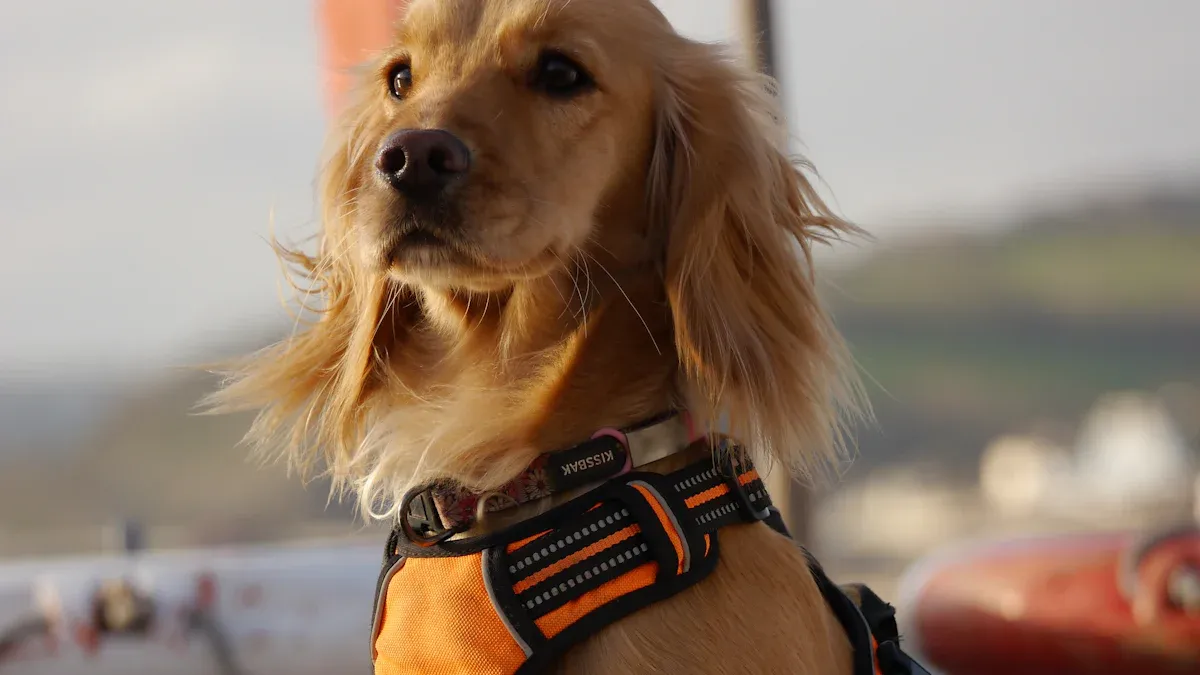
Failure signs: stiff paddling, ride-up, side roll
You want your tiny dog to move naturally in the water. Stop and reassess the jacket if you see these signs:
- Stiff paddling: The front legs cannot reach freely or the dog looks blocked by the vest.
- Ride-up: The jacket moves toward the chin, throat, or ears once buoyancy pushes it upward.
- Side roll: The dog tips to one side or the jacket rotates around the body.
- Chin crowding: The front foam presses the jaw or throat area.
- Refusal to move: The dog freezes, paws at the jacket, or tries to leave the water.
Do not keep testing through these signs. Tiny dogs have less body mass to compensate for poor balance, heavy hardware, or bulky foam. A small fit problem can become a large swimming problem quickly.
Adjustable, lower-profile, or custom-fit direction?
If XS still fits wrong, do not keep tightening random straps. First decide what type of mismatch you are seeing. If the jacket is close but slightly loose, more adjustment points may help. If the dog paddles stiffly, a lower-profile front and cleaner leg clearance may help. If the body is unusually narrow, short-backed, or deep-chested, you may need a different pattern rather than a smaller label.
Be careful with DIY changes. Shortening a loose strap may be reasonable if it does not weaken stitching or buckles. Adding bulky padding, changing flotation panels, or modifying the handle area can change how the jacket behaves in water. If a jacket needs major modification to seem safe, it is usually the wrong jacket.
Features that matter for tiny dogs
For the smallest dog life jacket, useful features are the ones that improve fit, balance, and visibility without adding unnecessary bulk.
| Feature | Why It Helps | Watchout | Best Check |
|---|---|---|---|
| Multiple adjustment points | Helps close gaps without over-tightening one area | Too many loose strap ends can snag or irritate | Check strap ends after final fitting |
| Low-bulk front | Improves front-leg movement and reduces chin crowding | May provide less lift if flotation is too minimal | Watch shallow-water paddling |
| Balanced side flotation | Helps reduce side roll in water | Uneven panels can twist the dog | Check whether the spine stays level |
| Sturdy handle | Helps lift or guide the dog out of water | Handle force must transfer through secure straps | Inspect stitching and strap path before use |
| Bright color or reflective detail | Makes a tiny dog easier to see | Visibility does not fix poor fit | Check both visibility and fit |
You want a small dog life jacket that keeps your dog supported, visible, and able to move. The right jacket should feel stable on land, stay balanced in shallow water, and let your dog paddle without fighting the vest.
Do not choose only by the smallest size label. Measure your dog, compare the jacket shape to your dog’s chest and neck, and test fit before real swimming. If the jacket rides up, rolls sideways, blocks the front legs, or crowds the chin, treat that as a failed fit. A better tiny-dog life jacket should stay centered, support flotation evenly, and let your dog move calmly under close supervision.
FAQ
How do you check if a tiny dog life jacket fits correctly?
Check that the jacket sits close around the chest and lower neck without pinching. Your dog should walk, sit, turn, and paddle without the jacket riding up, sliding sideways, or pressing into the chin or armpits.
What should you do if your dog refuses to move in the jacket?
Remove the jacket and check for rubbing, tight straps, bulky front foam, or poor leg clearance. Restart on land with short, calm practice before trying shallow water again.
Which signs show a poor fit during swimming?
- The jacket rides up toward the chin.
- Your dog paddles stiffly or stops moving.
- The body rolls to one side.
- The front foam presses the throat or jaw.
Tip: Stop swimming if you see any of these signs. Refit the jacket or choose a different design before trying again.






