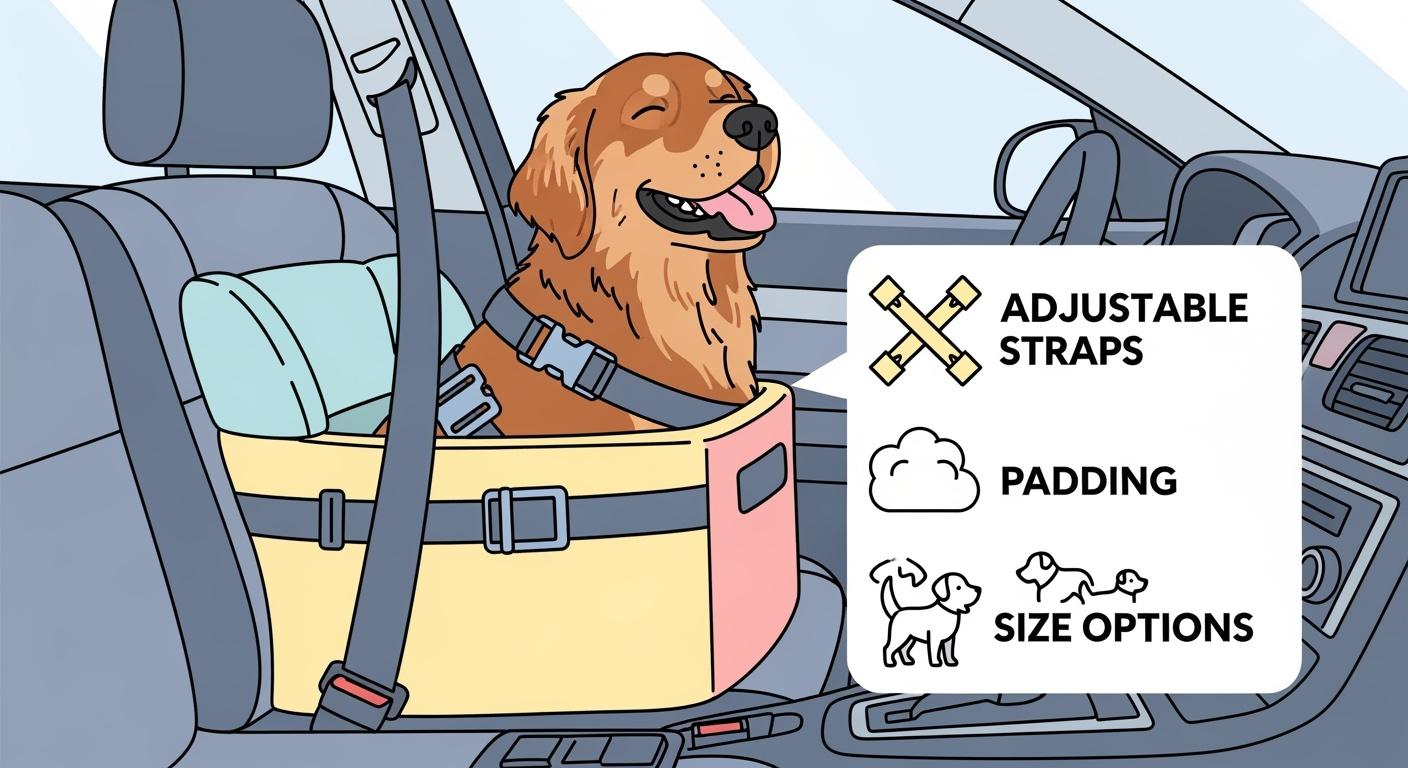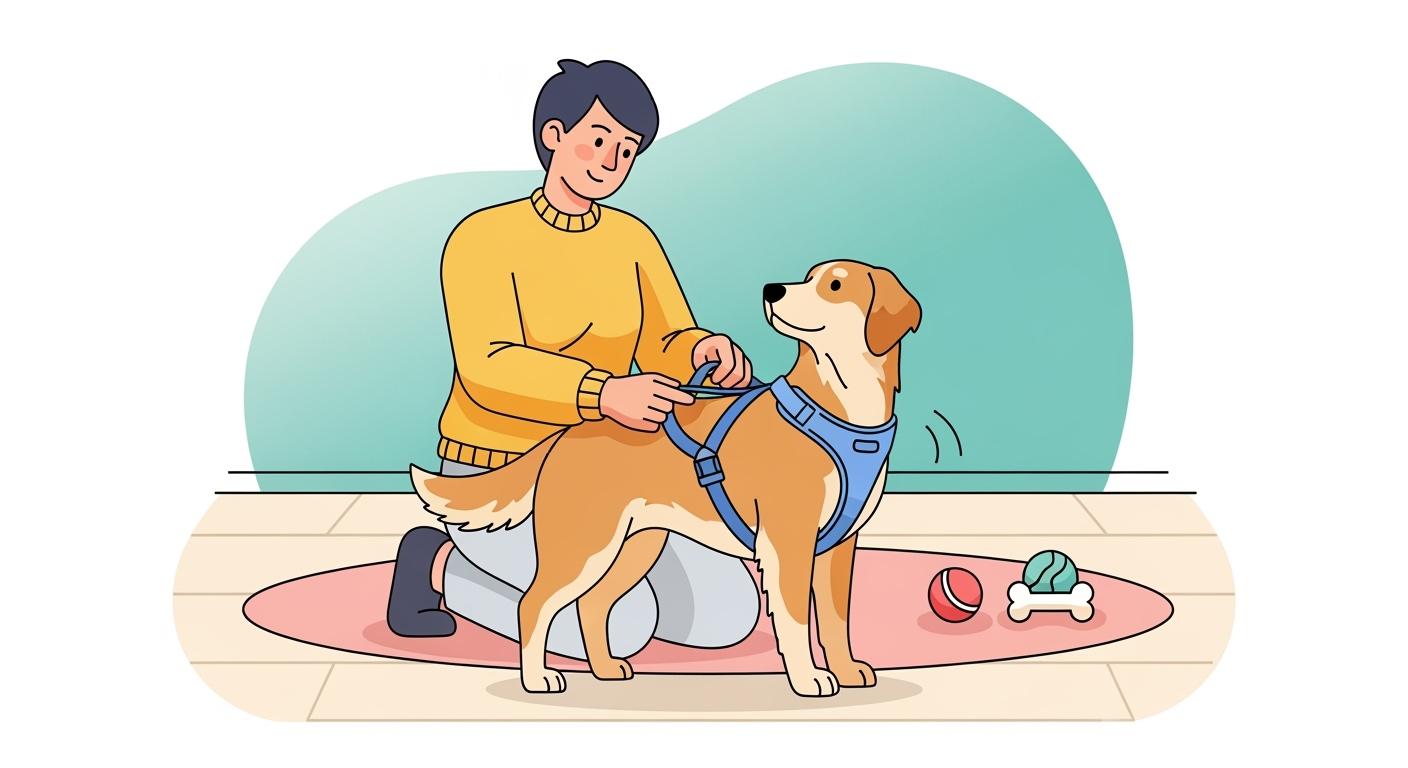
A customisable dog harness that fits right keeps your dog safe and comfy. The best option is not just the one with the most padding or the most adjustment points. It is the one that matches your dog’s chest shape, neck opening, movement, and everyday walking routine.
If a harness is too loose, it can shift, rub, or give your dog room to back out. If it is too tight, it can pinch at the shoulders, sit awkwardly at the chest, or make your dog less willing to walk. That is why sizing and fit checks matter more than style extras.
This guide focuses on everyday fit, comfort, and adjustment checks for walking use. It does not replace veterinary diagnosis or behavior treatment for pain, injury, or unusual movement.
What to measure before you choose a size
Start with real measurements, not breed labels or weight guesses. A customisable harness can only help if the starting size is close to your dog’s body shape.
Measure your dog’s chest and neck to find the best size. Chest size usually matters most because it affects how the harness sits behind the front legs and whether the body panel stays stable when the leash is attached.
How to measure for a better starting size
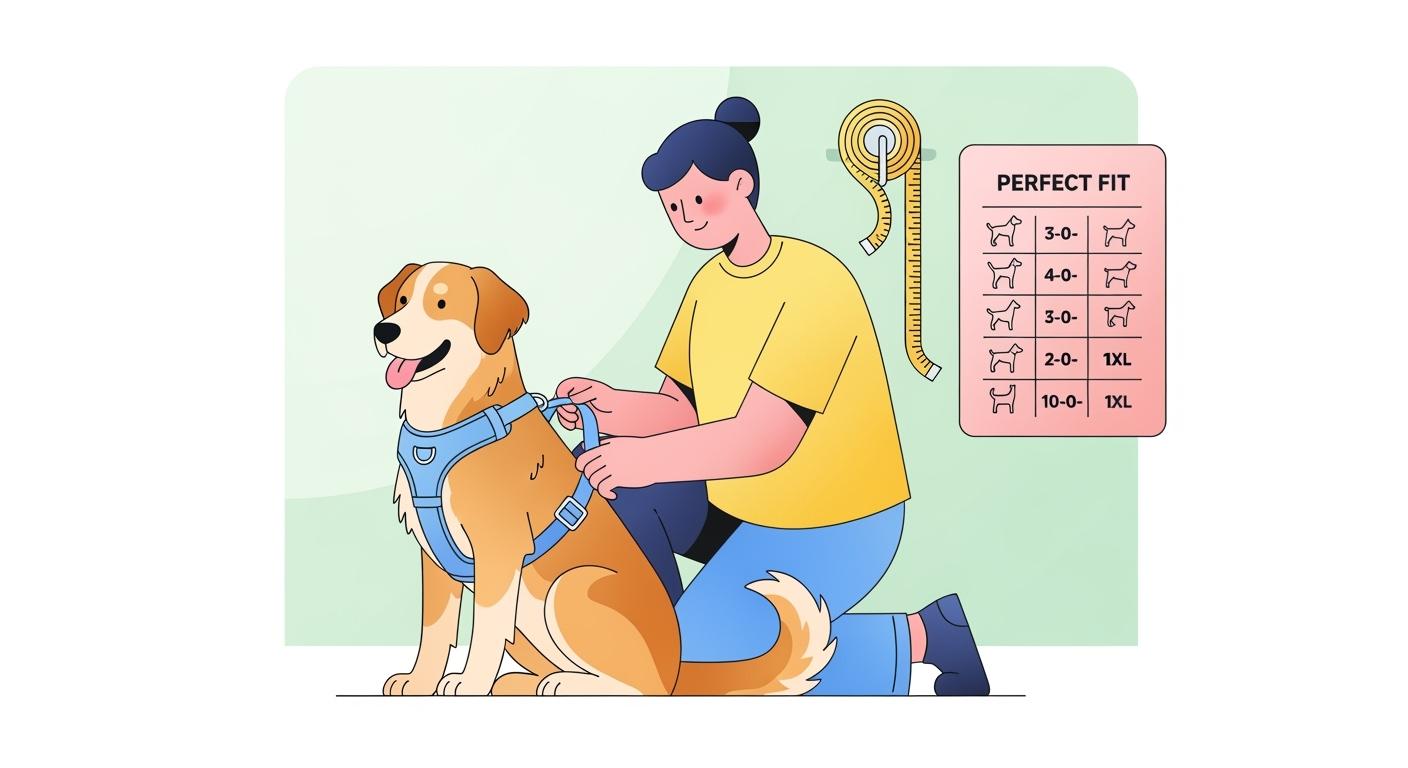
You need to measure your dog’s chest girth and neck size to get a true comfort fit dog harness. Use a soft tape and keep it level as you measure.
- Measure the widest part of the chest, usually just behind the front legs.
- Measure the lower neck where the harness opening will sit, not high up under the jaw.
- Write both numbers down before checking the size chart.
- If your dog falls between sizes, compare the adjustment range and overall harness shape instead of choosing by weight alone.
- For fluffy coats, take a second reading after smoothing the coat down so you do not buy a harness that ends up too loose once the fur settles.
A better starting size makes later adjustment easier. It does not guarantee a perfect fit, so always do a short wear test after you put the harness on.
Quick fit checks after the harness goes on
- The chest strap should sit flat and feel snug without digging in.
- You should be able to slide two fingers under the main straps without large gaps.
- The neck opening should stay off the throat and should not sag wide when the leash is relaxed.
- The leash attachment point should stay centered instead of rolling to one side.
- Your dog should be able to step, turn, and sit without the harness bunching behind the elbows.
After the first fitting, do a doorway test and a short walk test. Walk your dog in a straight line, turn once or twice, then stop and look for twisting, rubbing, or a strap that has drifted out of position.
Fit checks after you put it on
A customisable harness should help you fine-tune the fit. It should not force you to over-tighten one strap just to make the whole harness feel stable.
What a good everyday fit looks like
| Check item | Pass signal | Fail signal | What to do |
|---|---|---|---|
| Chest fit | Strap lies flat and stays in place | Rolls, gaps, or shifts after a few steps | Refit the chest adjustment first before changing other straps |
| Neck opening | Sits clear of the throat without hanging loose | Presses upward or opens too wide at the front | Check the size range and rebalance both sides evenly |
| Shoulder freedom | Front legs move naturally during walking | Shortened stride or obvious rubbing near the armpit | Reposition the body section and check for excess bulk |
| Leash ring position | Stays centered when the leash goes light-tight-light | Tilts or drags the harness to one side | Even out the adjustment and check whether the harness is simply too large |
Three useful real-world checks
- Doorway test: Walk through a doorway and turn back. This shows whether the harness twists during normal direction changes.
- Two-minute walk test: Let your dog walk at a normal pace. Look for shoulder restriction, rubbing, or a chest strap that drifts backward.
- Post-walk recheck: Remove the harness and inspect the coat and skin contact points. Mild coat flattening is normal, but repeated rubbing or redness means the fit needs work.
If your dog repeatedly resists wearing the harness or shows swelling, limping, or obvious pain, stop using it and ask your veterinarian for guidance.
Features worth prioritising in a customisable harness
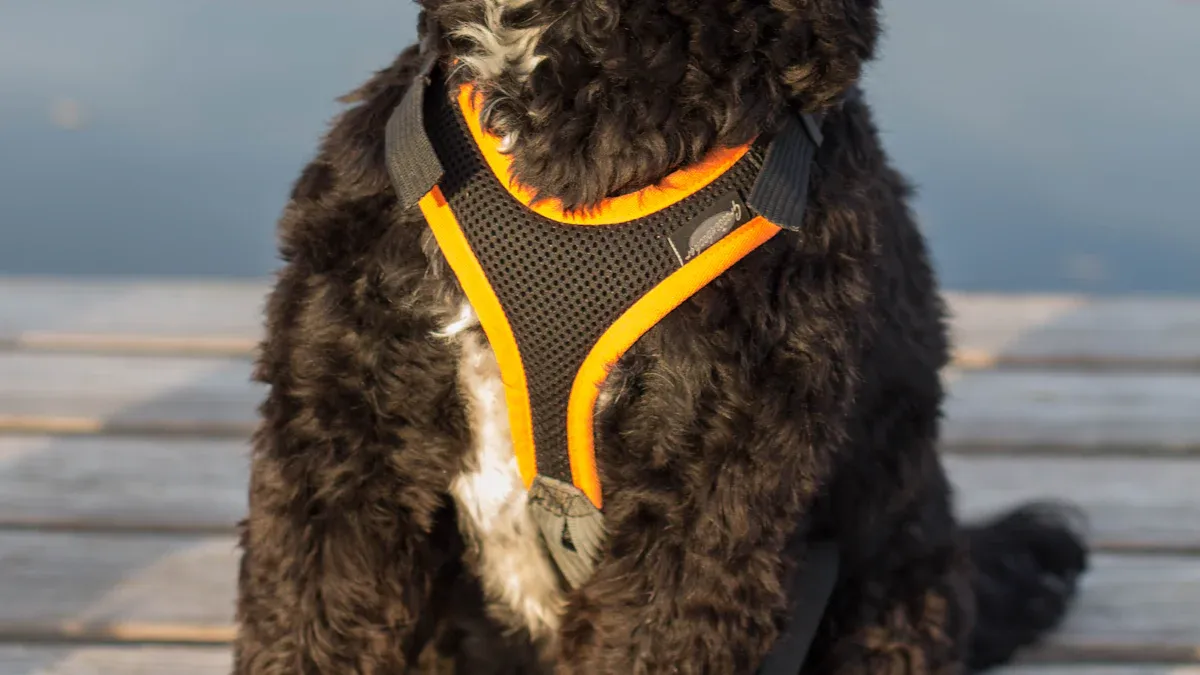
The most useful features are the ones that help the harness stay balanced on your dog’s body. Decorative add-ons matter less than fit range, hardware stability, and low-rub construction.
| Feature | Why it matters | Watch for |
|---|---|---|
| Multi-point adjustment | Helps match different chest and neck proportions | Uneven strap lengths that make the harness lean to one side |
| Low-bulk body shape | Can reduce bunching and rubbing during daily walks | Panels that extend too close to the armpit |
| Breathable lining | May feel more comfortable in warm or active use | Thick padding that traps heat without improving fit |
| Secure buckles and stable ring placement | Support more consistent handling once fitted correctly | Loose-feeling closures, cracked plastic, or a ring that sits off-center |
Name panels, patches, or other custom extras can be useful, but they should never come before basic fit. If an add-on changes how the harness sits, rubs, or balances, skip it.
Common mistakes and quick fixes
Most fit problems come from one of three issues: the starting size was off, the straps were not balanced evenly, or the harness shape did not suit the dog’s body.
Common buying and fitting mistakes
- Choosing by weight or breed only, without measuring.
- Using the loosest neck opening possible just to make the harness easy to put on.
- Tightening one side more than the other, which causes the harness to twist.
- Keeping a thick winter-coat fit all year without rechecking once the coat changes.
- Assuming more padding always means better comfort.
Fast troubleshooting guide
| Symptom | Likely cause | Fast check | Fix |
|---|---|---|---|
| Harness slides sideways | Chest size too large or uneven adjustment | Look at whether the back ring stays centered | Refit both sides evenly or move down a size if adjustment is maxed out |
| Dog backs out during hesitation or fear | Neck opening too loose for the body shape | Check front looseness when the leash goes lightly backward | Use a more secure fit and stop relying on chest tightness alone |
| Redness or coat wear near the elbow area | Body section sits too close to the armpit or shifts when walking | Inspect right after a short walk | Reposition, reduce bulk, or change the harness shape |
| Dog shortens stride | Front layout or chest section interferes with movement | Watch from the front and side during a calm walk | Refit first; if it persists, a different layout may suit better |
A customisable harness is most useful when you treat adjustment as part of the fit process, not as a substitute for choosing the right starting size. Measure carefully, test calmly, and recheck after real movement.
FAQ
How snug should a customisable dog harness feel?
It should feel secure and stable, not tight. You should be able to fit two fingers under the main straps without seeing large gaps or obvious pressure points.
What if my dog is between sizes?
Start with the size that best matches chest girth, then check how much adjustment room is left at the neck and body. If the harness is already close to its tightest or loosest limit, the other size may fit better.
How often should I recheck the fit?
Recheck after grooming changes, visible weight change, or when your dog seems less comfortable than usual on walks. You should also recheck after the first few real outings with a new harness.
Can a customisable harness fix every fit problem?
No. Adjustment helps, but some dogs simply need a different harness shape. If the harness still twists, rubs, or restricts movement after careful refitting, a different layout is the better answer.