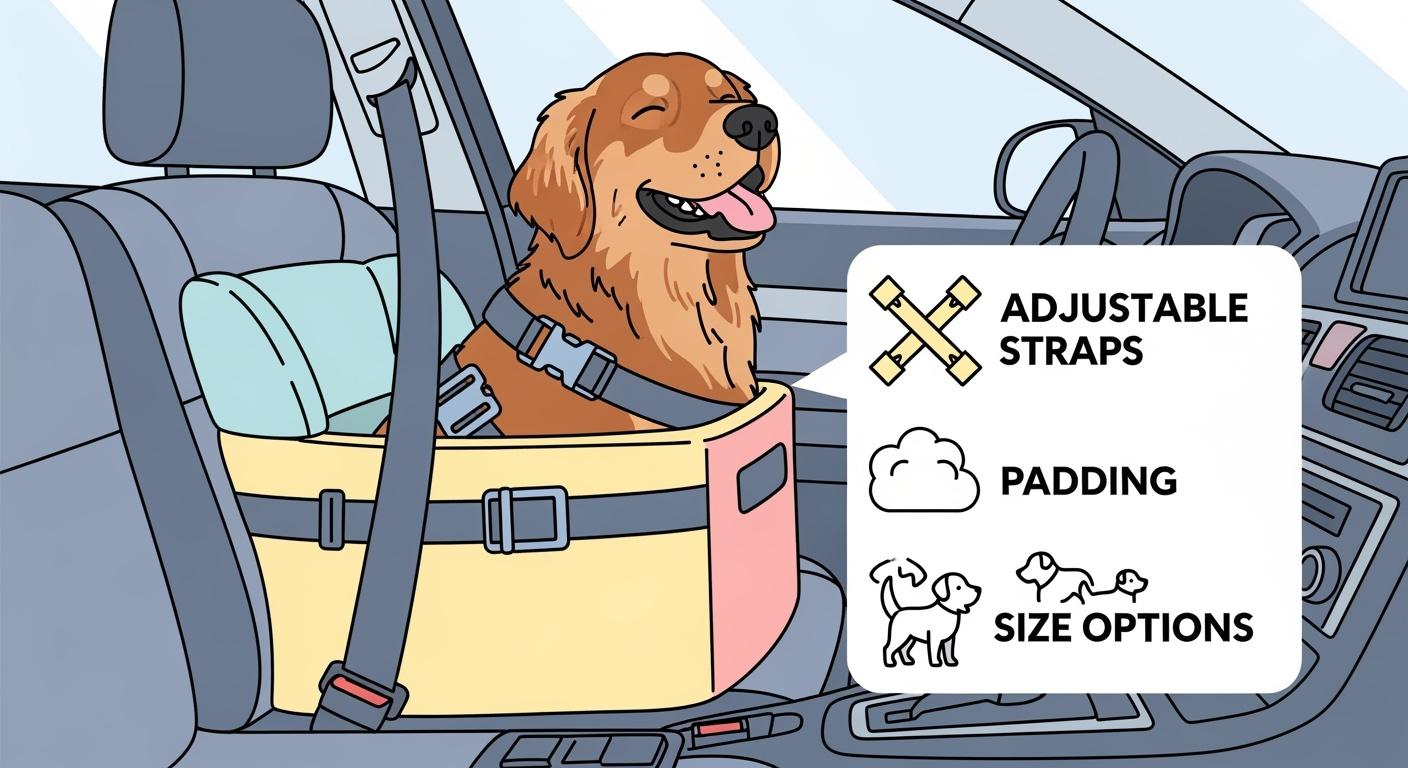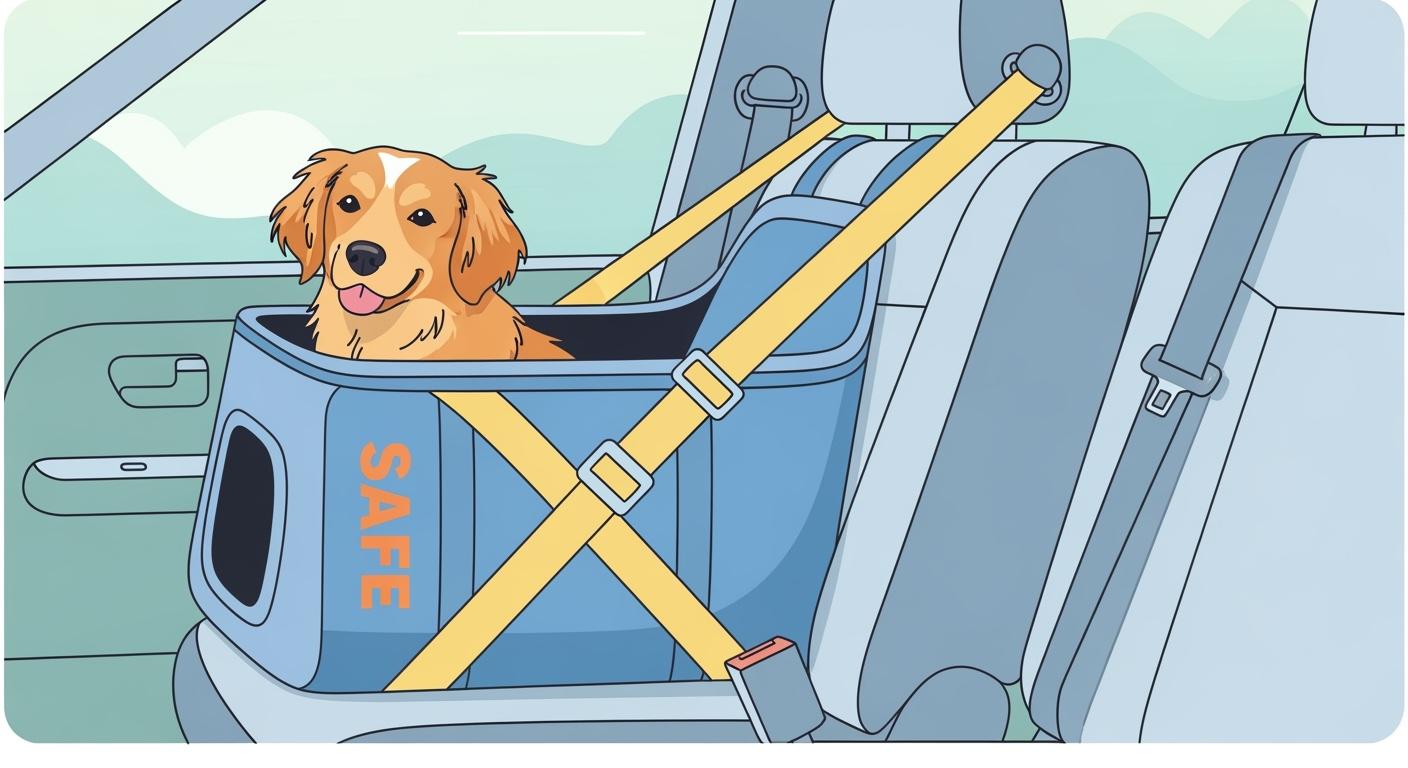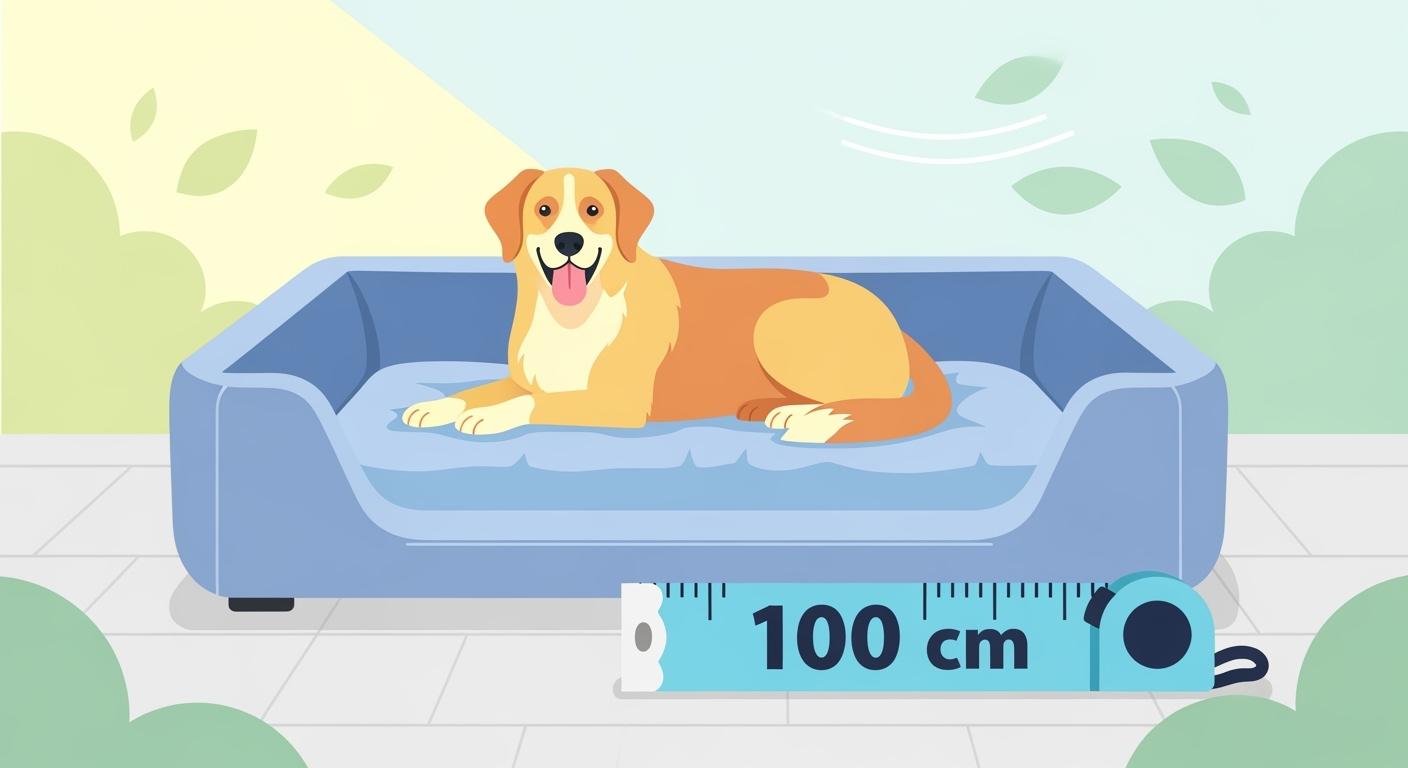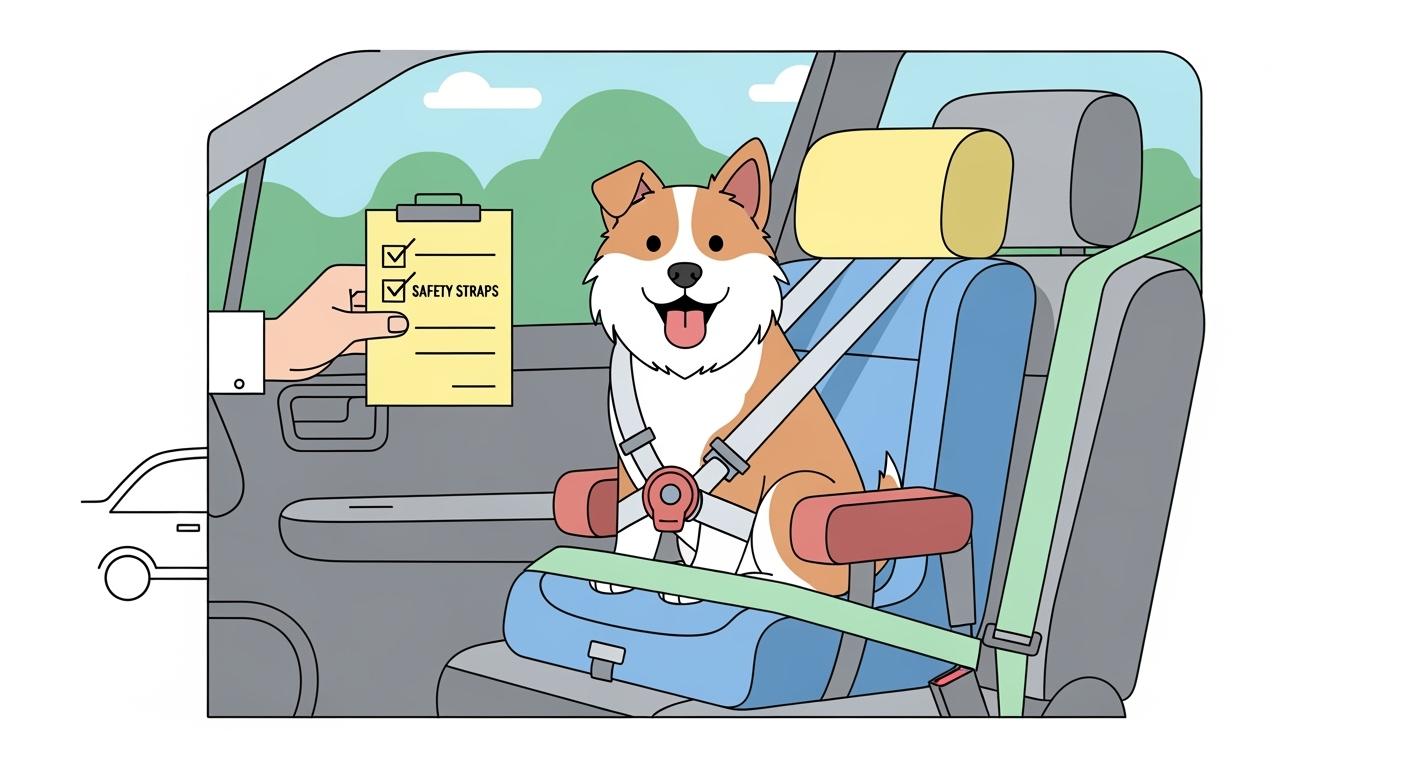
You should look at fit, comfort, safety, and how to install before you pick a car booster seat for dog. A good buying decision starts with three checks: whether your dog can settle naturally inside the seat, whether the base stays stable on your rear seat, and whether the tether works with a body harness rather than a collar. A booster seat can improve positioning and comfort for many small dogs, but it is not a one-size-fits-all travel setup.
Before you buy, check the seat footprint, entry height, wall support, harness compatibility, airflow, and cleaning effort. These are also the points most likely to decide whether the seat gets used regularly or ends up feeling like a poor fit after a few trips.
Car booster seat for dog fit and sizing guide
Measure body length, seated height, and curl-up space
Start with the way your dog actually rests in everyday life, not just the number on the weight label. A booster seat should let your dog sit upright, turn, and settle without leaning hard on the walls or hanging over the edge.
- Measure from the front of the chest to the base of the tail while your dog stands naturally.
- Measure from the floor to the top of the shoulders while your dog sits.
- Watch how much space your dog uses when curling up for a nap. This helps you judge the inside width and depth, not just the stated weight range.
Compare those checks with the seat’s usable inside space. A good fit means your dog can settle naturally, but the seat still feels supportive instead of loose. If your dog has to perch on the edge, brace against the side wall, or fold up tighter than usual, the seat is likely too small or the wall height is not right for your dog’s body shape.
Tip: Buy by body shape and usable inside space, not by weight alone. Dogs with the same weight can need very different seat dimensions.
Check seat footprint, entry height, and stable setup
The booster seat must fit your car’s back seat and stay in place. If the base overhangs the seat cushion, rocks from side to side, or forces your dog to climb over a wall that is too tall, daily use usually gets harder very quickly.
| Check | What you want to see |
|---|---|
| Rear-seat footprint | The base sits flat on the vehicle seat without rocking or hanging over the edge. |
| Strap routing | The belt or anchor strap follows the product’s guides cleanly and tightens without twisting. |
| Entry and exit | Your dog can step in and out without scrambling, slipping, or catching paws on the wall. |
| Pull test | After tightening, a firm tug shows only slight movement rather than obvious sliding or tipping. |
| Short drive test | On a short, low-speed trip, the seat stays level and your dog can settle instead of constantly rebalancing. |
Rear-seat placement also helps keep the dog away from front airbag exposure and away from your hands and line of sight while you drive. If the seat feels stable only when wedged into an awkward position, that is usually a sign to reconsider the size or structure before buying.
Restraint compatibility and safe everyday use
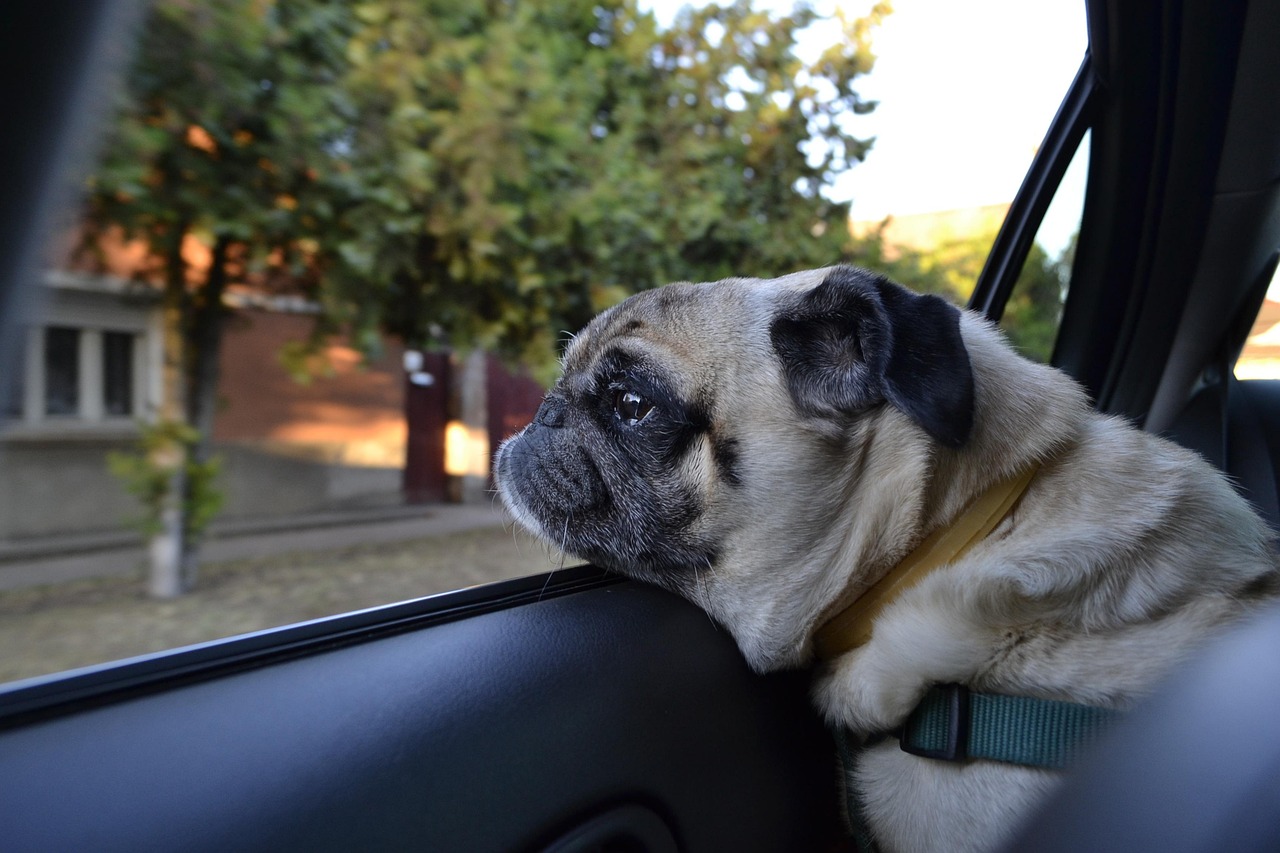
Use the tether with a body harness, not a collar
A booster seat helps with positioning, visibility, and day-to-day travel comfort. It should not automatically be treated as crash protection just because it includes straps. What matters first is whether the tether works correctly with a body harness and whether the seat stays stable in normal driving conditions.
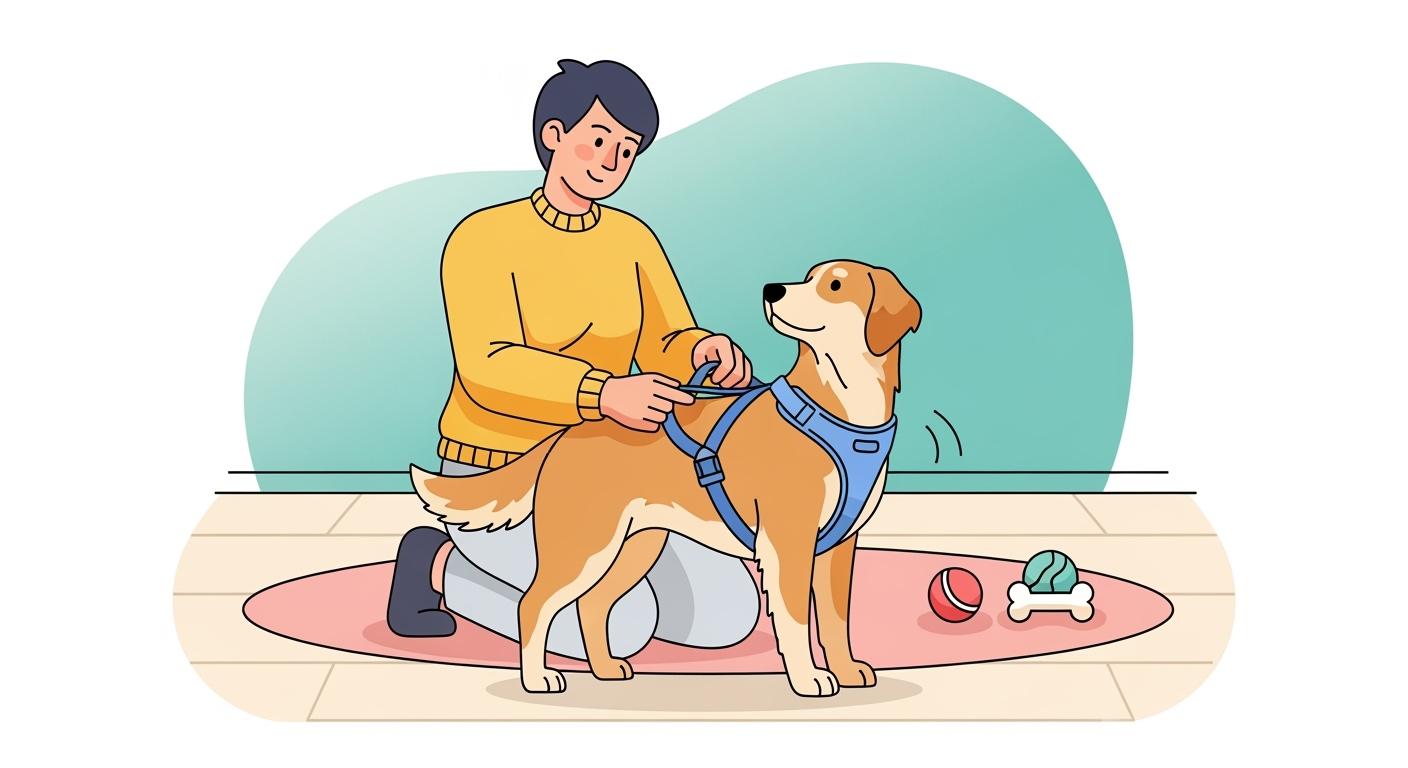
Clip the tether to a well-fitted body harness rather than a collar. This reduces neck loading and helps keep the dog centered in the seat. The tether should be short enough to limit climbing and jumping, but not so short that it forces the dog into a stiff posture.
- Check that the clip closes fully and does not twist under light tension.
- Check that the tether length still allows your dog to sit and lie down.
- Check that the harness does not ride into the throat, armpits, or shoulder joint when the dog changes position.
- Check that the dog cannot step over the tether and tangle during entry or turning.
Note: Do not assume every booster seat is tested the same way. Read the product’s own instructions and restraint details before treating it as more than a positioning aid.
Know when a booster seat is the wrong travel choice
Booster seats usually make the most sense for smaller dogs that can settle in one place and benefit from a little lift. They are often a poor match when a dog is heavy for the seat size, long-bodied enough to sag over the edge, highly anxious, or constantly pushing against the walls to chase movement outside the window.
Those cases often lead to the same problems: wall collapse, shifting, poor posture, harder entry, and more return risk after purchase. When that pattern shows up, the problem is usually not training first. It is often a mismatch between the dog’s travel behavior and the product format.
Comfort, materials, and cleaning checks
Support, airflow, and everyday comfort
The best comfort features are the ones you can observe quickly. Look for side walls that hold shape, a base that does not sag under the dog’s weight, and enough surface area for the dog to rest without sitting on seams or edge piping.
- Wall support: the sides should stay upright instead of folding inward when the dog leans.
- Base support: the dog should look level rather than slumped into the middle.
- Airflow: the fabric and structure should not trap heat around the chest and belly during a normal ride.
- Visibility: the lift should feel helpful, not so high that the dog keeps bracing or pawing at the edge.
Choose easy-clean surfaces and practical construction
The right materials make a real difference after muddy paws, drool, shed hair, and everyday use. Focus less on marketing names and more on what you can actually maintain.
- A removable cover is easier to keep fresh than a fully fixed seat shell.
- Wipe-clean areas help with small messes between deeper washes.
- Textured or non-slip contact surfaces can help reduce shifting during turns.
- Fast-drying materials are more practical when the dog gets in after rain or wet walks.
- Check seams, zippers, and strap attachment points because these areas often show wear first.
For many buyers, cleaning effort becomes obvious only after a few trips. If hair, dirt, and odor collect faster than the seat can realistically be cleaned, the product may look good on day one but perform poorly in daily use.
Common mistakes and quick checks before you buy
Mistakes that lead to poor fit or returns
- Buying by weight only and ignoring body length, shoulder height, and curl-up space.
- Choosing a seat mainly for window view, then finding the base is too small or unstable.
- Clipping the tether to a collar instead of a body harness.
- Putting the seat in the front and underestimating airbag and driver-distraction issues.
- Ignoring entry height, especially for dogs that hesitate to step up or turn around in tight spaces.
- Overlooking airflow and cleaning until the seat starts trapping heat, fur, dirt, or odor.
Pass/fail checklist
| Check item | Pass signal | Fail signal | What to do |
|---|---|---|---|
| Seat footprint | The base sits flat and feels steady on the rear seat. | The seat rocks, tips, or hangs over the vehicle cushion. | Recheck vehicle fit before buying or move to a more suitable size and structure. |
| Dog posture | The dog can sit, turn, and settle without bracing on the walls. | The dog perches, slumps, or keeps readjusting to stay balanced. | Recheck inside dimensions, wall height, and base support. |
| Harness and tether | The tether clips to a body harness and stays clear during movement. | The clip sits on a collar or the tether tangles during entry and turning. | Switch to a better-fitting harness setup and recheck tether length. |
| Entry and exit | The dog steps in and out with little hesitation. | The dog slips, scrambles, or avoids the seat. | Check wall height, opening shape, and seat placement. |
| Heat and comfort | The dog stays settled on a short drive and the seat surface stays reasonably cool and dry. | The dog pants, shifts constantly, or the seat quickly feels stuffy or damp. | Recheck airflow, padding density, and fabric choice. |
| Cleaning burden | Hair and dirt can be removed without much effort. | Messes get trapped in seams or the cover is difficult to remove. | Choose a simpler construction or a more practical cover design. |
A useful final check is a short local drive. Listen for shifting, watch whether the dog can resettle after turns, and inspect the harness and tether again once you stop. That quick test often reveals problems that photos and product descriptions do not.
This content is general product-selection guidance. For persistent travel stress, posture issues, or pain concerns, ask your veterinarian for advice.
FAQ
How do I know whether the seat is too small?
If your dog cannot turn, settles with part of the body hanging over the edge, or keeps bracing on the wall instead of relaxing, the seat is probably too small or the wall height is a poor match.
Is a booster seat suitable for every dog?
No. Booster seats are usually best for smaller dogs that can settle in one place. Dogs that are very heavy for the seat, long-bodied, highly anxious, or constantly lunging at the window often need a different travel setup.
Should the seat go in the front or back?
Use the rear seat. That placement helps reduce front airbag exposure and keeps the dog farther from the driver’s hands and line of sight.
Can I clip the tether to a collar?
No. Use a well-fitted body harness. A collar concentrates force at the neck and is a poor match for vehicle movement and sudden restraint.
What cleaning features matter most?
Look for a removable cover, wipe-clean surfaces for small messes, and construction that does not trap dirt and hair deep in seams. Easy maintenance is one of the biggest quality-of-use differences after purchase.
Does a booster seat count as crash protection?
Do not assume that. A booster seat is mainly a positioning and comfort product unless the manufacturer clearly explains its own restraint testing and installation method. Always verify the product’s own details before making that assumption.