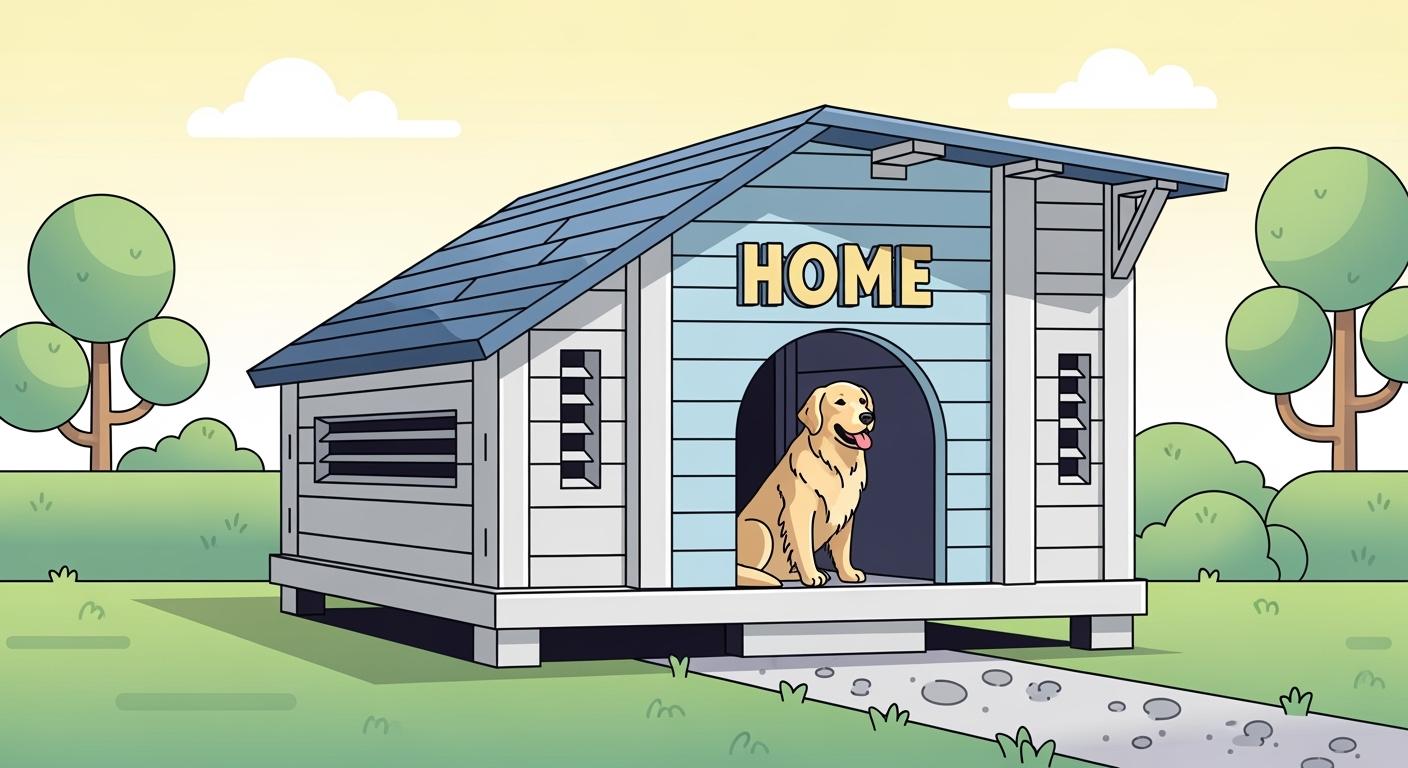
A big dog house outdoor should help a large dog stay dry, rest comfortably, and move in and out without hesitation. It should not be treated as the only answer for heat, cold, storms, or all-day outdoor care. Start with fit, floor height, roof coverage, drainage, placement, and how easy the house is to clean after real use.
A weatherproof setup only works when sizing and placement are handled well. Large dogs need enough room to stand, turn, settle, and lie down naturally, but the shelter should still feel protected rather than oversized and drafty.
This page is a buying and setup guide. It does not replace day-to-day judgment about weather, supervision, hydration, or veterinary care.
What to check before you buy
Fit and entry
Measure your own dog instead of buying by breed label alone. The house should let your dog enter without ducking hard, turn without bumping the side panels, and lie down without pressing against the doorway. Entry should feel easy, but the opening should not be so exposed that wind and rain blow straight in.
- Measure standing height from floor to top of shoulder.
- Measure body length in a natural standing position.
- Watch how your dog usually lies down: curled, side-stretched, or chest-down.
- Check whether the entry lets your dog step in without scraping shoulders or hips.
- After setup, watch one normal entry and one normal exit before deciding the size is right.
| Check | Pass signal | Fail signal | What to fix |
|---|---|---|---|
| Standing room | Dog stands naturally | Back hunches or head hits roof | Choose a taller size |
| Turn space | Dog turns without bumping walls | Needs repeated repositioning | Choose a roomier footprint |
| Entry access | Walks in and out smoothly | Hesitates, clips shoulders, or backs away | Recheck opening size and entry height |
| Resting fit | Lies down without crowding doorway | Body presses the frame or hangs near entry | Recheck usable interior floor area |
Raised floor, roof coverage, and drainage
The floor should sit above damp ground so rain splash, mud, and runoff do not reach the resting surface too easily. Roof coverage should extend enough to help keep the entry drier during normal rain. A sloped roof and sensible yard placement matter more than decorative shape.
Check the ground under the house after watering the yard or after rain. If the area stays soggy, the house may still feel damp even when the shell itself looks weatherproof. A better placement spot often fixes more than adding extra accessories.
Airflow and weather boundaries
A large outdoor shelter needs airflow, but not direct, constant draft through the sleeping area. Look for a design that avoids stale air while still giving the dog a more protected resting pocket. In hot weather, shade and water still matter. In cold, wet, or stormy weather, an outdoor house should not be treated as permission to leave a dog outside without judgment.
A dog house can improve day-to-day comfort outdoors, but it is not a substitute for shade planning, fresh water, daily checks, or bringing a dog in during risky weather.
Materials and maintenance that matter in real use
Material choice affects cleanup, dry-down time, and how the house holds up after repeated outdoor use. Smooth interior surfaces are usually easier to wipe down. Joints, corners, and floor texture matter because they affect how dirt, hair, and damp bedding build up over time.
The same practical checks used for outdoor pet shelters apply here too: look at how the floor dries, whether corners trap moisture, whether the roof sheds water cleanly, and whether the resting surface still feels usable after real weather instead of only on day one.
| Area to inspect | What to look for | Why it matters |
|---|---|---|
| Interior floor | Dry, stable, easy to wipe | Helps reduce damp rest and messy cleanup |
| Roof seams | No obvious drip paths or pooling points | Helps keep bedding drier in rain |
| Entry edge | Smooth contact area, no sharp rub points | Improves daily entry comfort for large dogs |
| Base contact with ground | Stable placement without rocking | Helps the house feel secure during use |
Simple first-week checks
- Check the floor after the first rain or yard watering.
- Watch whether your dog chooses to rest inside or avoids the space.
- Look for muddy splashback around the entry.
- Feel for trapped dampness in bedding or floor corners.
- Recheck placement if the house rocks, shifts, or sits in runoff.
Common buying mistakes
- Buying by breed label only instead of by actual body size and resting posture.
- Choosing the largest shell available without checking whether the sleeping space will feel too exposed.
- Putting the house directly on wet ground and expecting the roof alone to solve dampness.
- Treating the shelter as the only hot-weather or bad-weather plan.
- Ignoring how easy the house is to clean after mud, wet bedding, and normal outdoor use.
FAQ
How big should a big dog house outdoor be?
It should be large enough for your dog to stand, turn, and lie down naturally, but not so oversized that the resting area feels exposed and drafty. Measure your own dog and check usable interior space, not just the outside shell.
Does a raised floor really matter?
Yes. A raised floor helps separate the resting area from wet ground, splashback, and mud. It also makes it easier to keep the inside drier after rain.
Can an outdoor dog house replace shade and supervision?
No. A dog house can improve comfort, but it does not replace fresh water, shade planning, daily checks, or bringing a dog indoors when weather becomes unsafe.