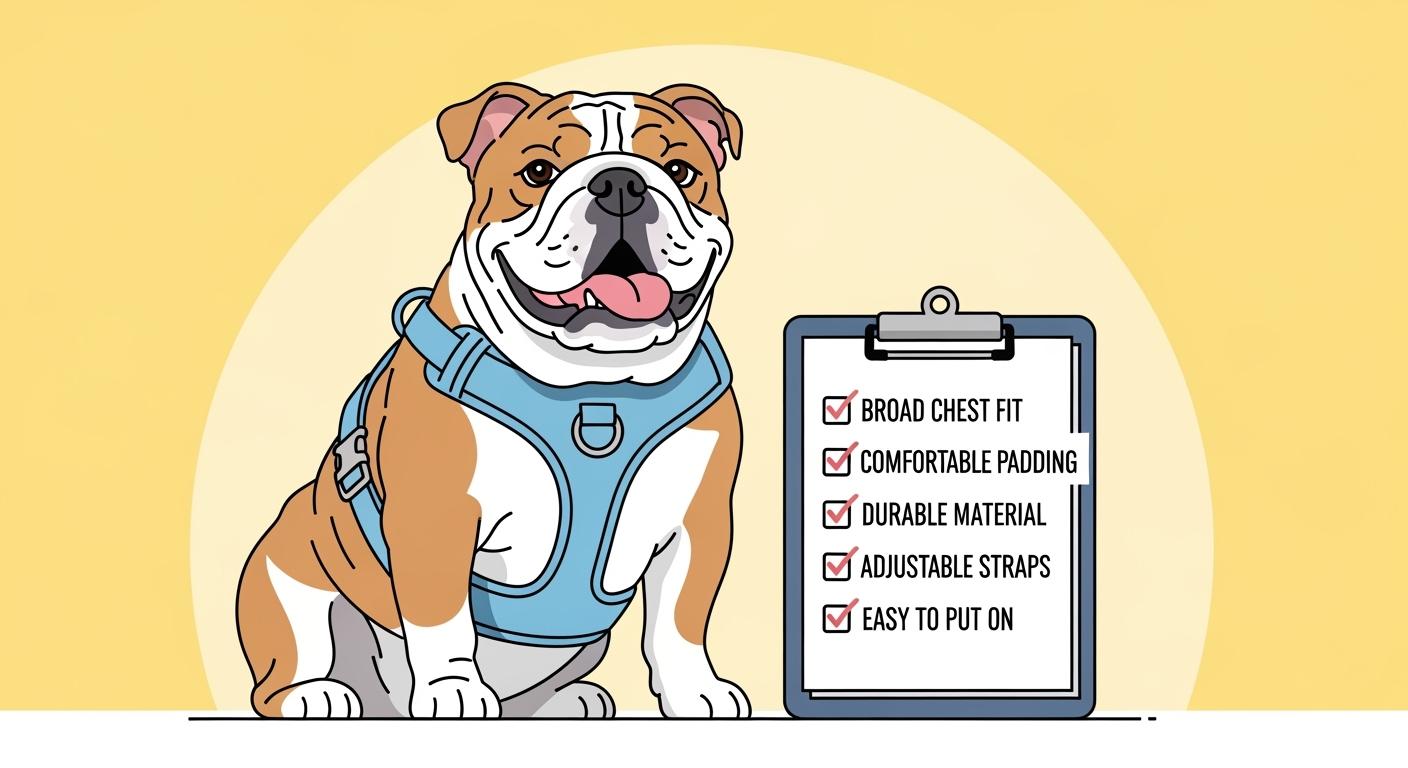
Bulldogs often need more than a generic breed-label size. A harness can look sturdy and still sit too high on the throat, crowd the shoulder, or rub behind the elbow once the dog starts moving. For this body shape, the better buying approach is simple: measure the chest first, check where the neck opening sits, confirm shoulder clearance, and then do a short walk recheck.
This guide focuses on observable fit checks, not marketing labels. If you want a broader starting point for fit and leash length basics, use that first and then come back to the bulldog-specific checklist below.
Method note: This article uses practical checks you can repeat at home: chest measurement, one- to two-finger tension, shoulder clearance, a gentle back-out test, and a short walk recheck. It is general product-fit guidance, not a medical or behavior diagnosis.
Key Takeaways
- Buy by chest measurement first, not by breed label alone.
- Look for a neck opening that sits low on the front of the chest instead of pressing up on the throat.
- Check shoulder freedom and elbow clearance before you judge padding, clips, or style.
- Use a short walk test and a back-out check before you trust a new harness for daily use.
- Choose breathable, easy-clean materials and low-bulk edge finishing for warm weather comfort.
How to Measure a Bulldog Harness Fit
Start with the Chest, Then Confirm the Neck Opening
The most useful measurement is chest girth. Wrap a soft tape around the widest part of the ribcage, just behind the front legs. That number should lead the size choice. If the brand also asks for neck size, measure at the base of the neck where it meets the shoulders, not high up near the collar line.
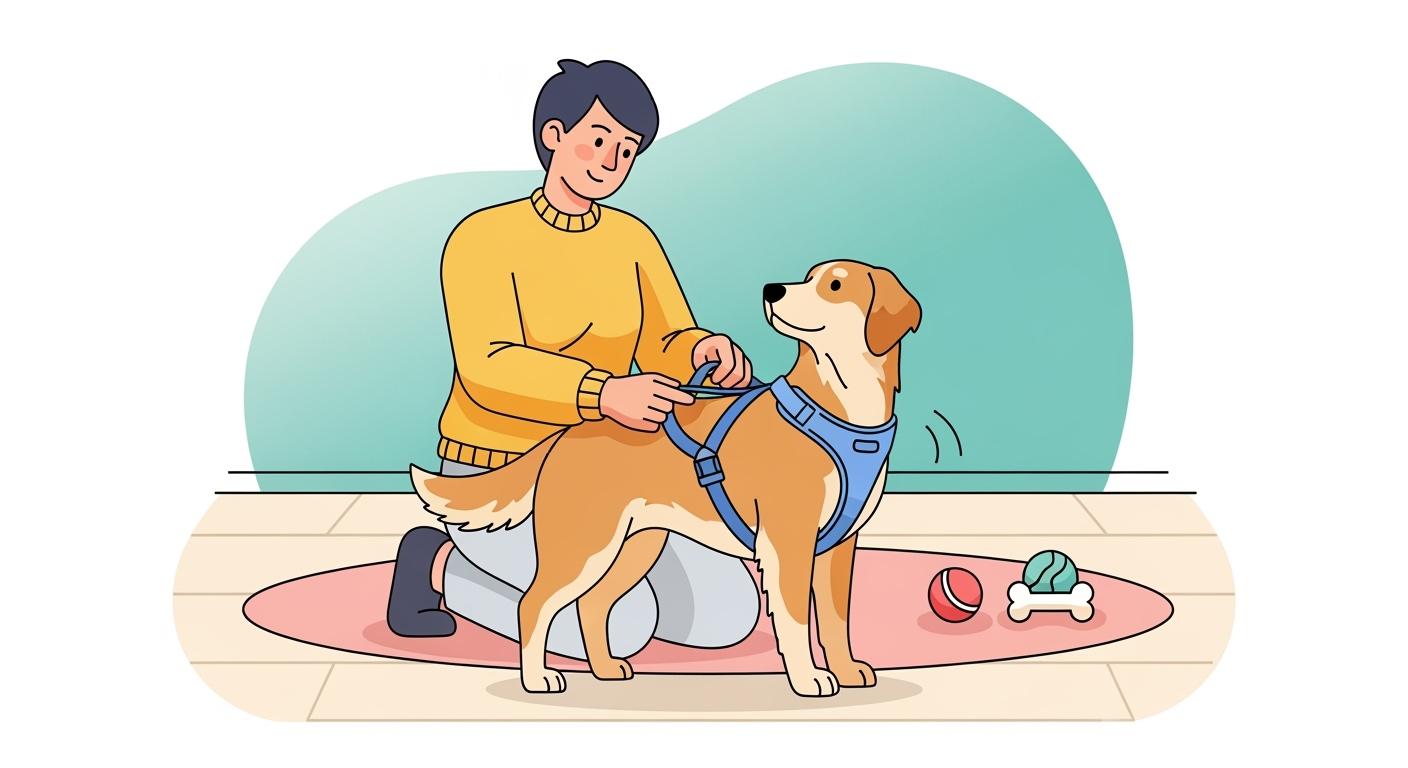
When the harness is on, the front section should sit on the chest, not ride up into the throat. You should be able to slide one to two fingers under the straps without seeing large gaps. If you cannot reach that balance, the size or harness shape is probably wrong even if the dog falls inside the listed weight range.
If you are comparing layouts inside a general dog harness category, keep the bulldog test the same: chest first, throat clearance second, shoulder movement third.
- Measure the widest part of the chest.
- Check the neck opening only if the size chart asks for it.
- Fasten the harness and adjust until the straps feel secure but not tight.
- Run one to two fingers under each main strap.
- Watch the dog stand, sit, turn, and take a few calm steps.
Check Shoulder Clearance, Elbow Rubbing, and Back-Out Risk
A bulldog harness should stay centered without blocking the front leg from swinging naturally. If the chest panel is too wide, the dog may shorten the step. If the girth strap sits too far back, it can rub behind the elbow. If the harness is too loose across the chest, a dog may back out of it when startled or when pressure comes from the front.
Quick check: After adjustment, walk your dog through a doorway, turn once or twice, then gently apply backward pressure on the leash. The harness should stay stable without twisting, sliding up, or lifting over the shoulders.
| Fit Check | Pass | Fail |
|---|---|---|
| Front sits on the chest, not high on the throat | Low and centered | Rides up when leash tension starts |
| Shoulders move freely | Normal step length | Shortened step or stiffness |
| Underarm clearance | No rubbing after a short walk | Redness, hair flattening, or seam marks |
| Back-out resistance | Stays in place during gentle backward pressure | Slides toward the head or shoulders |
Stop and reassess the fit if your dog coughs, gags, shows noisy breathing, seems unusually hot, or resists moving normally. If those signs continue after refitting, do not force the harness issue. Ask your veterinarian what type of walking setup is appropriate for your dog.
Features That Matter More Than Marketing Labels

Adjustment Range and Clip Layout
A broad chest and thicker neck usually benefit from more than one adjustment point. This does not mean more straps are always better. It means you need enough adjustment to keep the harness centered without making the dog feel boxed in. For some handlers, a front clip can make turns easier to guide. For others, a back clip is enough for calm neighborhood walks. The better choice is the layout that stays balanced on your dog and matches how you actually walk.
If you want a broader overview of size and material trade-offs before you narrow down the bulldog fit, this size and material guide can help. For bulldogs, though, stable fit still matters more than any clip label.
Breathability, Edge Finish, and Bulk
Material choice should support comfort, not distract from fit. Open mesh panels can improve airflow. Smooth edge finishing can reduce rubbing. Light padding can help at contact points, but thick foam is not always better if it traps heat or makes the harness bulky around the chest. Instead of asking which material is “best” in the abstract, ask a simpler question: does this harness stay cool enough for your routine and leave the dog moving freely?
| Feature | What to Look For | What to Watch Out For |
|---|---|---|
| Chest panel | Stable, low on the chest, not crowding the throat | Wide or stiff panel that limits stride |
| Padding | Soft where the dog makes contact | Extra bulk that adds heat or pushes the harness out of place |
| Edge finish | Smooth seams around the elbow area | Hard edges or rough stitching |
| Hardware | Buckles close cleanly and straps stay put after adjustment | Slipping strap adjusters or twisting attachment points |
| Cleaning | Simple wipe-down or easy hand wash after muddy walks | Heavy fabrics that stay damp or hold odor |
Common Mistakes and First-Walk Troubleshooting
The most common bulldog harness mistakes are usually fit mistakes, not style mistakes:
- Buying by breed label without checking chest girth
- Choosing extra bulk before checking shoulder freedom
- Accepting a high neck opening because the chest seems snug
- Ignoring elbow contact until the dog has already rubbed raw
- Skipping the back-out test and trusting the first indoor fit
Before regular use, do a short first-walk routine. Let your dog stand still, walk through a doorway, turn both directions, and walk for a few minutes on a normal route. Then remove the harness and check the coat and skin where the straps sat. Small seam marks that disappear quickly may be part of normal first use; repeated rubbing, hair wear, coughing, or heavy resistance means you should stop and reassess.
First-walk rule: Do not judge a harness only by how it looks when the dog is standing still. Judge it after movement, leash tension, and a short recheck once the coat has settled.
FAQ
What harness shape usually works better for a bulldog chest?
The better shape is the one that keeps the front section low on the chest, leaves room for the shoulder to move, and stays stable during a short walk. A breed label alone does not answer that.
How tight should a bulldog harness feel?
It should feel secure without cutting into the chest or riding up into the throat. A one- to two-finger check under the main straps is a practical starting point, followed by a short movement test.
Can a padded harness still fit badly?
Yes. Soft padding does not fix poor geometry. If the neck opening sits too high, the elbow area rubs, or the harness shifts during a walk, extra padding will not solve the core problem.
When should you stop using the harness and reassess?
Stop if you see coughing, gagging, noisy breathing, repeated backing out, clear rubbing, or reluctance to move normally. Refit the harness first. If the problem continues, ask your veterinarian what walking setup is appropriate for your dog.