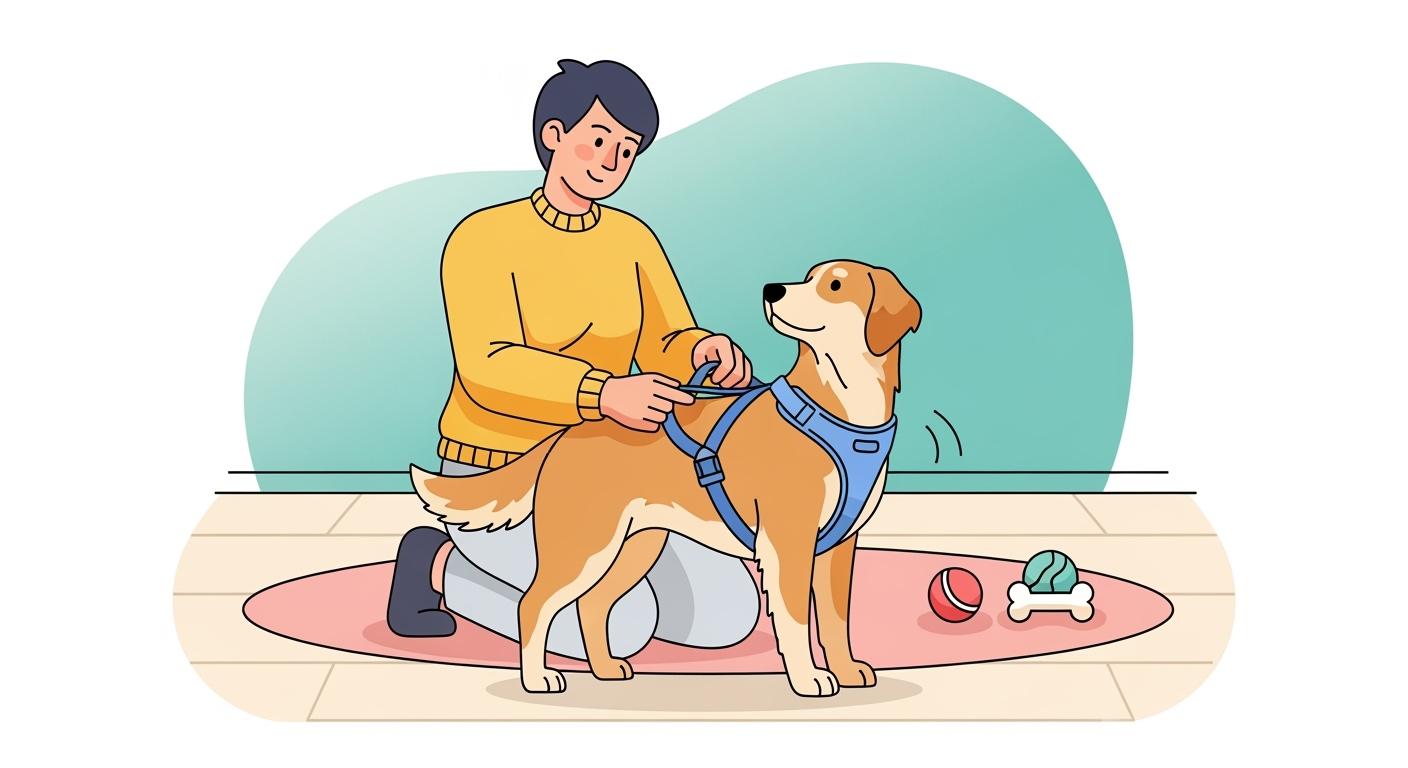
A back clip dog harness is usually easiest to use for calm daily walks, quick potty breaks, and dogs that already walk with light to moderate leash pressure. The main buying mistake is focusing on fabric names first and fit second. In real use, a harness feels comfortable only when the chest panel sits flat, the neck opening does not crowd the throat, the straps stay centered, and the dog can move through the shoulders without rubbing.
How this guide evaluates fit: standing measurement, two-finger strap check, shoulder-clearance check, short hallway or driveway walk, and a quick recheck for rubbing, shifting, or loosened adjusters after use.
Materials still matter, but they should support fit instead of replacing it. Look for webbing that feels firm without being stiff, padding that softens contact points without turning bulky, and hardware that stays closed and centered during daily walking. If your dog often surges, backs out, or twists hard at the end of the leash, judge control and escape risk first rather than buying only by softness.
What a Good Back-Clip Harness Should Do
A useful back-clip design should do four simple things well:
- stay centered instead of rolling to one side,
- leave enough room at the shoulders for a normal walking stride,
- sit securely without large gaps at the chest or neck opening, and
- feel easy to put on, take off, and clean after ordinary use.
If a harness looks padded but shifts, twists, or crowds the armpits, the extra material does not improve comfort. A back-clip style is usually best when you want a simple everyday walking setup, not a bulky all-purpose solution for every dog and every activity.
Fit Checks Before You Compare Materials
A correct fit keeps your dog safe and comfortable during every walk. Start with fit before you compare fabrics, padding, or hardware.
Measure the chest first
Use a soft tape around the widest part of the chest, just behind the front legs. Measure with your dog standing in a natural posture, not sitting or curled. The chest number is usually the most useful starting point for back-clip sizing because it tells you how much room the main body of the harness needs.
Check the neck opening and strap path
After matching the chest to the size chart, check whether the neck opening sits low and clear instead of riding up toward the throat. You should be able to slide about two fingers under the straps without seeing large empty gaps. The strap path should sit flat along the body rather than cutting into the armpit or drifting onto the shoulder blade.
Do a short walk and recheck
Once the harness is on, walk your dog in a hallway, driveway, or other low-distraction space. Then recheck four things: whether the back ring stayed centered, whether the straps loosened, whether the chest panel shifted sideways, and whether there is any rubbing under the front legs. This simple recheck is often more useful than staring at the harness while the dog is standing still.
| Fit checkpoint | What to look for |
|---|---|
| Chest fit | Snug enough to stay centered, but not tight enough to flatten the coat or leave pressure marks. |
| Neck opening | Clear of the throat area and not riding up when the leash is attached. |
| Shoulder clearance | Front legs move freely without the harness blocking the stride. |
| Underarm area | No bunching, rubbing, or edge contact after a short walk. |
| Back ring position | Stays close to the middle of the back instead of pulling to one side. |
Which Materials Affect Comfort Most
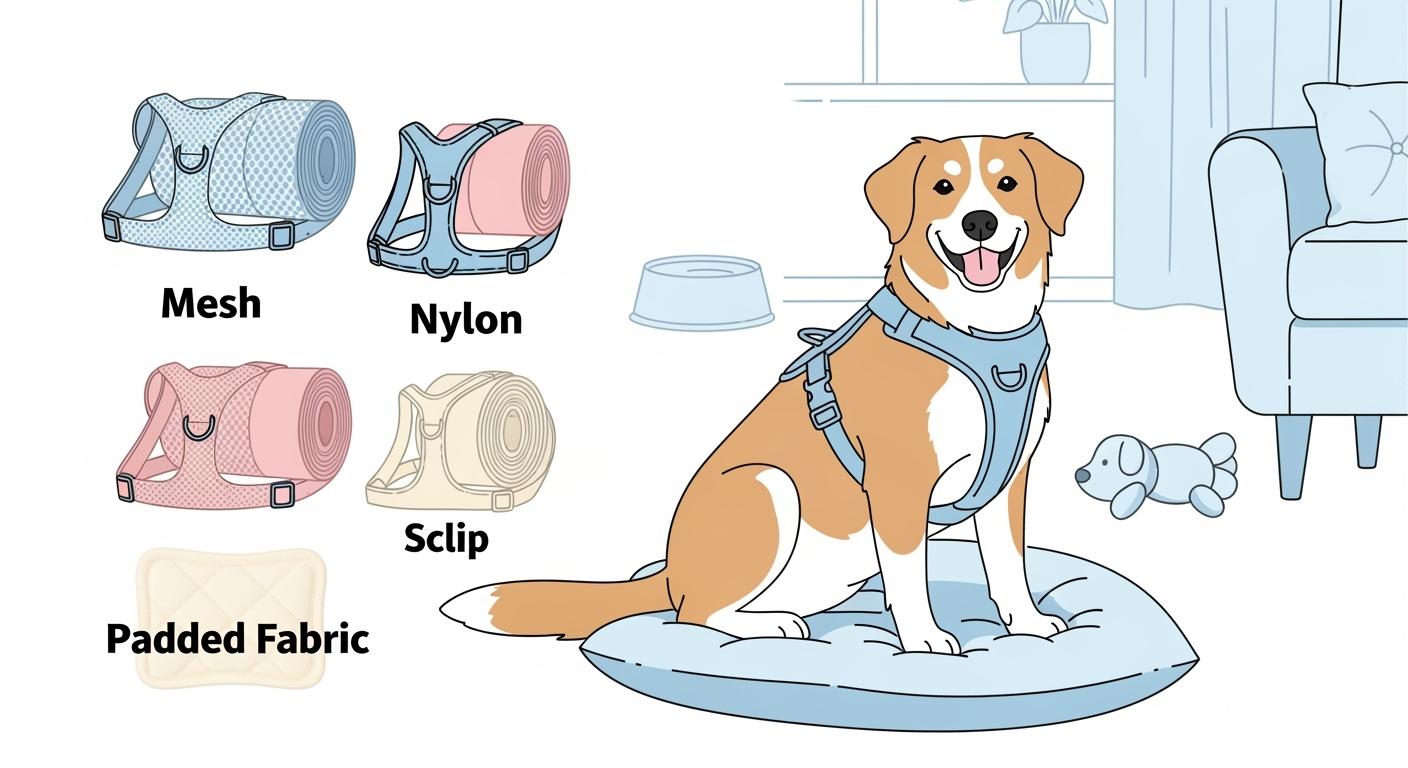
When people compare harness materials, the most useful question is not which fabric sounds strongest on paper. It is whether the right materials and padding support comfortable daily use for your dog’s coat, climate, and walking routine.
Webbing and outer fabric
Look for webbing that feels stable in the hand and does not fold too sharply when you pull it through the adjusters. Soft webbing can feel comfortable, but overly limp straps may shift more easily. Very stiff material can hold shape well, yet it may feel rough on short-coated dogs if the edge finish is poor. The goal is balanced structure: stable enough to hold adjustment, soft enough for repeated daily contact.
Padding and edge finish
Padding helps most at pressure points such as the chest and belly, but more padding is not always better. Thick panels can trap heat, stay damp longer, and make the harness feel bulky on smaller frames. Smooth edge finishing often matters more than heavy padding because rubbing usually starts where seams, folds, or rough edges touch the skin and coat.
Airflow, drying, and cleanup
If you walk in warm weather or damp conditions, judge how quickly the lining dries and whether the harness feels airy enough for normal use. Mesh inserts, open weaves, and low-bulk linings can help with day-to-day comfort, but the real test is what happens after a walk: does the harness stay clammy, collect odor, or hold debris inside the padding? Easy cleaning is part of comfort because a harness that is hard to rinse or dry often gets reused while dirty.
Hardware and adjusters
Check the buckle closure, slider grip, and back attachment ring before buying. Good hardware should close cleanly, feel secure under hand pressure, and stay aligned instead of twisting the strap path. The exact material matters less than consistent function. A light harness with smooth strap movement can be more comfortable than a heavy one that looks rugged but shifts during use.
| Feature area | Better sign | Warning sign |
|---|---|---|
| Webbing | Holds shape and adjustment without feeling sharp. | Too limp, rough, or hard-edged. |
| Padding | Placed at contact points with low bulk. | Thick everywhere, heavy when warm or damp. |
| Edge finish | Smooth seams and rounded contact edges. | Scratchy folds or exposed seam pressure points. |
| Hardware | Closes firmly and stays aligned during walking. | Feels loose, twists easily, or creeps open. |
| Cleanup | Rinses and dries without holding odor for long. | Stays damp or traps dirt inside padded zones. |
Common Buying Mistakes
- Buying by material name alone. A comfortable fabric still fails if the strap path rubs or the chest fit is loose.
- Choosing extra bulk for a small-framed dog. Heavy padding and wide panels can overwhelm a compact body.
- Skipping the first-walk recheck. Many fit problems only show up after a few minutes of movement.
- Using a back-clip layout for every pulling problem. If the dog regularly lunges, spins backward, or needs more directional control, a different layout may be more appropriate.
- Ignoring maintenance. Dirt, dried mud, and trapped moisture can make even a well-fitted harness less comfortable over time.
When to Consider a Different Harness Layout
A back-clip design is usually simplest for ordinary walking and dogs that already handle leash pressure reasonably well. It may be less suitable when your dog is a strong puller, backs out of gear, or needs more control at the front of the body. That does not make back-clip harnesses bad; it just means layout should match behavior and walking context, not only comfort claims.
If you are still comparing styles, start with the fit and use-case first, then narrow down material and comfort details. That approach usually reduces return risk more than choosing by appearance alone.
FAQ
How tight should a back clip dog harness feel?
It should feel secure without leaving deep marks or restricting movement. You want a close fit that stays centered, with enough room to slide fingers under the straps and enough clearance for a normal walking stride.
Is more padding always more comfortable?
No. Padding helps when it protects contact points, but too much bulk can hold heat, stay damp, and crowd a small or short-coated dog. Smooth edges and stable fit usually matter more than extra thickness.
How do you tell if the harness rubs?
Check under the front legs, along the chest, and near the neck opening after a short walk. Look for flattened fur, redness, repeated scratching, or a harness that has shifted into a new position.
How often should you recheck the fit?
Recheck after the first few uses, after coat changes, and anytime your dog’s weight or activity level changes. Also look over the straps, buckles, and ring regularly for wear before daily walks.
This guide covers everyday product fit and comfort checks. It is not a medical, training, or behavior diagnosis.