
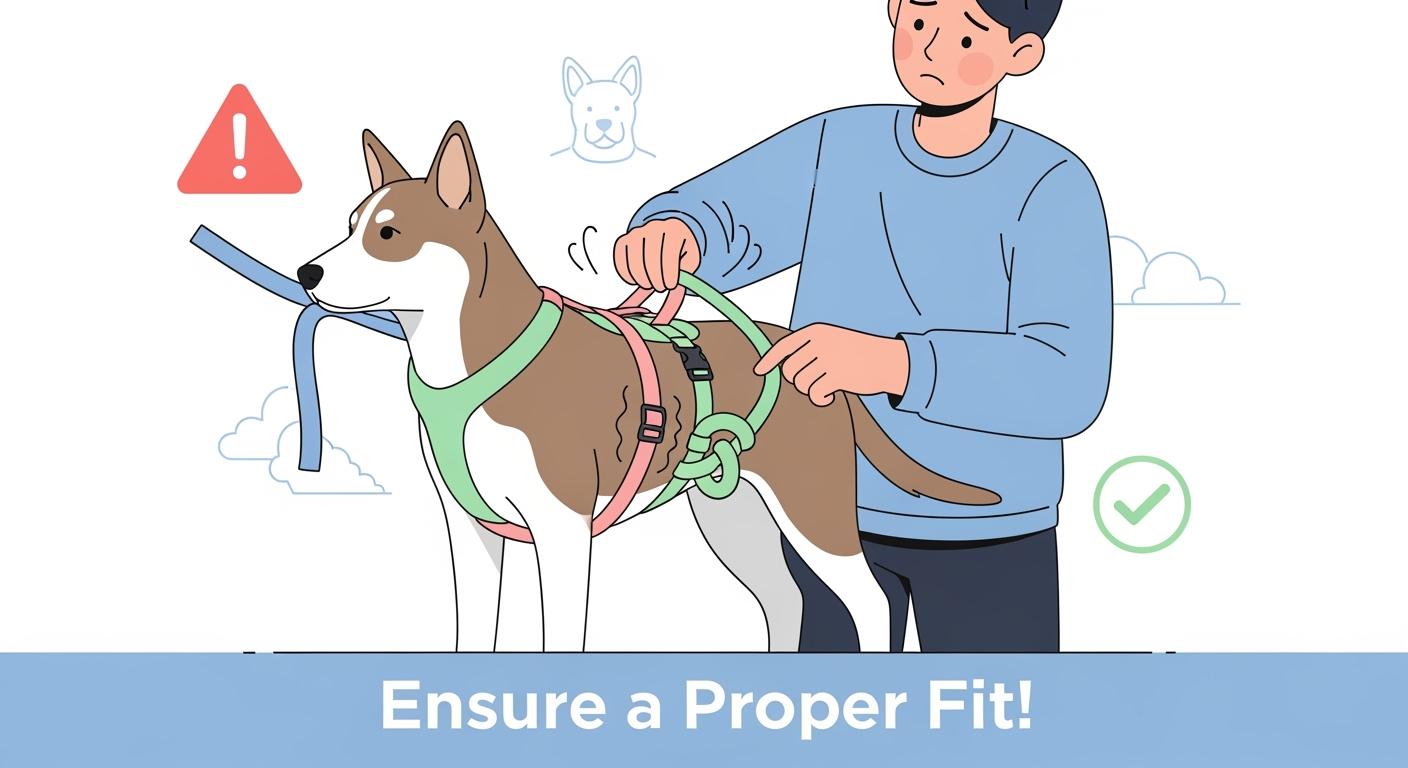
An adjustable dog harness should solve more than a size-label problem. For buyers, the real question is whether the harness still stays centered, holds its strap setting, leaves enough shoulder room, and avoids rubbing after the dog starts moving. A style can look adjustable in a catalog and still fail in daily use if the strap range is too short, the chest panel rides up, or the hardware loosens under leash tension.
This article looks at adjustable harness mistakes from a product-selection angle. It is not about teaching pet owners how to walk a dog. It is about helping retailers, distributors, pet brands, and OEM/ODM buyers judge whether an adjustable dog harness is likely to fit a wider range of dogs without creating slipping, rubbing, back-out risk, or repeated fit complaints.
Why an Adjustable Dog Harness Can Still Fail
Adjustability is useful only when the adjustment points match real dog body shapes. A harness with several sliders can still fit poorly if the neck opening is too fixed, the belly strap sits too close to the front legs, or the chest panel does not stay centered when the leash angle changes.
One common mistake is treating more straps as proof of better fit. More straps create more fitting room, but they also create more places for twisting, uneven tension, and user error. A stronger product choice is not simply the harness with the most adjustment points. It is the harness where each adjustment point has a clear job and stays stable during movement.
| Fit failure | What it looks like in use | What buyers should check |
|---|---|---|
| Neck opening too loose | The dog can reverse out when tension shifts backward. | Usable neck adjustment range and front panel height. |
| Belly strap too close to the elbows | Rubbing appears behind the front legs after walking. | Strap placement, strap width, and chest-panel length. |
| Chest panel rides upward | Pressure moves toward the throat instead of staying on the chest. | Panel shape, leash clip position, and front-strap angle. |
| Side straps adjust unevenly | The harness rotates or pulls to one side. | Left-right strap layout and slider holding power. |
| Adjustment slips after tension | The harness starts snug but loosens during the walk. | Webbing texture, slider grip, buckle quality, and stitching. |
Fit Details Buyers Should Check Before Sourcing
The first check is usable adjustment range. A size chart may show a broad chest range, but that range matters only if the harness remains balanced at both the small and large ends. If the smallest setting pulls the straps into a steep angle, or the largest setting leaves too little webbing inside the slider, the product may create fit problems even inside the listed size range.
The second check is body-shape tolerance. Dogs with broad chests, narrow waists, deep rib cages, thick coats, or short bodies do not load the harness in the same way. A good adjustable dog harness should not rely on tightness alone to stay in place. It should keep the pressure path stable across different chest shapes.
The third check is movement fit. A static standing fit is not enough. A harness can look correct when the dog stands still and then shift when the dog turns, sits, pulls forward, or backs up. For B2B product review, movement testing is where many adjustable harness mistakes become obvious.
If a buyer is comparing broader harness options, the existing best dog harness guide helps frame how sizing, material, and use case affect everyday product choice. For this page, the key point is narrower: an adjustable dog harness should be judged by how well its adjustment system works after real movement starts.
Construction Problems That Make Adjustment Unreliable
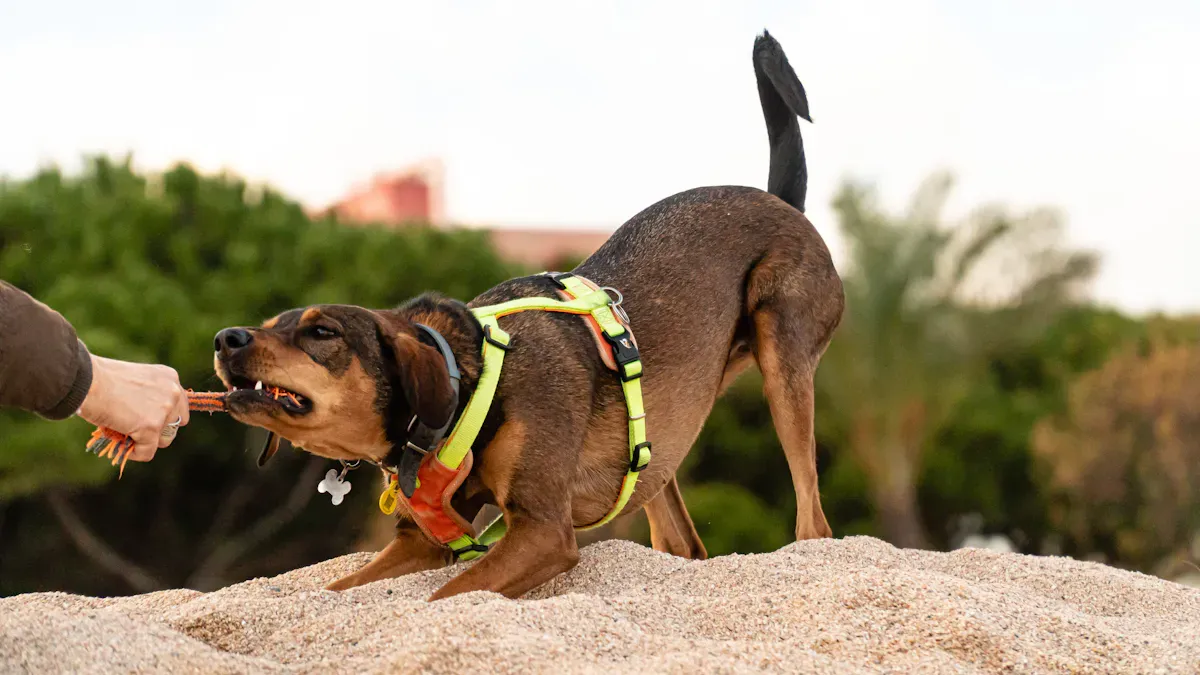
Some fit failures are not caused by the size chart. They come from construction details that let the harness move out of position. Webbing that is too smooth can slip through sliders. Edges that are too sharp can rub under the front legs. Buckles placed against high-motion areas can press into the body when the dog turns or sits.
For B2B buyers, this matters because the same product photo can hide very different real-use performance. Two harnesses may both be labeled adjustable, but one may hold its settings through repeated leash tension while another loosens after a few turns.
| Construction detail | Why it matters | Buyer check |
|---|---|---|
| Webbing texture | Affects whether sliders hold the selected setting. | Check slip resistance under repeated pull and release. |
| Edge finishing | Controls rubbing risk around high-friction zones. | Check whether edges feel smooth after bending and washing. |
| Slider placement | Can create pressure points if it sits near the elbow or rib curve. | Test the harness on different body shapes, not one sample dog. |
| Buckle location | Can affect comfort when the dog lies down or turns sharply. | Check whether buckles press into the side body during movement. |
| D-ring alignment | Changes how leash force pulls through the harness. | Check whether the harness rotates when leash tension changes. |
| Stitching at stress points | Determines whether the adjustment system stays secure over time. | Inspect bar tacks, box stitching, and reinforced load points. |
A product-category page such as dog harness can show the visible style range, but buyers still need to verify the hidden details: strap path, slider hold, buckle placement, and movement stability. Those are the points that decide whether an adjustable harness feels reliable after purchase.
How to Review Samples Without Turning It Into a Pet-Owner Checklist
Sample review should be simple, but it should focus on product risk rather than personal-use instructions. The goal is to find repeatable problems before approving a style for sourcing, private-label development, or product-line expansion.
Start with the size range. Check whether the harness stays balanced near the lower and upper ends of its listed measurements. Then check movement. The harness should remain centered while the dog walks, turns, sits, and backs up. Finally, check the hardware after movement. The selected strap setting should not creep loose after tension and release.
| Sample review step | Pass signal | Fail signal | What it means for buyers |
|---|---|---|---|
| Adjustment range | Each size has usable room at both ends. | The fit only works in the middle of the range. | Higher risk of size mismatch across different dog shapes. |
| Centered fit | Chest and back panels stay aligned. | The harness rotates after a few steps. | Likely issue with strap geometry or D-ring alignment. |
| Shoulder freedom | The dog reaches forward without a shortened stride. | The front strap blocks movement. | Potential discomfort and poor daily-use acceptance. |
| Back-out resistance | The neck and chest areas stay secure during reverse movement. | The opening loosens when the dog backs up. | Higher escape-risk concern for nervous or narrow-bodied dogs. |
| Skin-contact zones | Straps avoid the armpit and lie flat. | Edges sit close to the elbow or buckle pressure appears. | Higher chance of rubbing, return, or poor repeat use. |
| Post-wash behavior | Webbing stays flat and sliders still grip. | Webbing curls, stiffens, or slips more easily. | Material and finishing may not support long-term use. |
When the harness is sold or paired as a set, leash length and clip behavior can also change fit performance. The existing dog harness and leash set content is relevant here because a stable harness can still feel wrong if leash tension pulls from an unsuitable angle.
When Adjustable Is Not the Best Product Answer
An adjustable dog harness is not automatically the right answer for every use case. If the product depends on over-tightening to stop slipping, it is not a strong fit solution. If the harness needs constant readjusting after a short walk, the issue may be the style, strap geometry, or hardware rather than the user.
Buyers should also separate walking stability from crash protection. A walking harness that feels secure on a leash is not the same as a crash-tested car restraint. If the intended product use includes vehicle travel, the safety requirement changes and should not be implied through ordinary walking-harness language.
| Use case | Adjustable harness may work when… | Consider another style when… |
|---|---|---|
| Daily walking | The harness stays centered through turns and light pulling. | It twists, loosens, or rubs after short movement. |
| Strong pullers | Front or dual clip layout redirects tension without shoulder restriction. | The chest strap rides up or the whole harness rotates. |
| Escape-prone dogs | Neck and chest openings remain secure during reverse movement. | The dog can back out even after correct adjustment. |
| Thick-coated dogs | Adjustment still works after coat compression and grooming changes. | The fit hides under fur and creates unnoticed rubbing. |
| Outdoor use | Webbing, stitching, and hardware hold after moisture and dirt exposure. | Materials absorb water, curl, or lose slider grip. |
| Vehicle use | The product is clearly positioned only for walking or handling. | Crash protection is implied without proper testing and certification. |
The safer B2B decision is to define the product boundary clearly. An adjustable dog harness can be a strong everyday walking product when the strap system, body-shape tolerance, and hardware hold are all verified. It becomes risky when the product relies on generic claims such as “fits all dogs” or “safe for every use” without showing how the fit actually behaves in movement.
FAQ
What is the biggest mistake buyers make with adjustable dog harnesses?
The biggest mistake is assuming that more adjustment points automatically mean better fit. The real test is whether those adjustment points stay balanced, hold their setting, and keep the harness centered after the dog moves.
Should B2B buyers focus more on size charts or movement testing?
Both matter, but movement testing reveals problems that a size chart cannot show. Rotation, rubbing, back-out risk, and shoulder restriction often appear only after the dog walks, turns, sits, or pulls.
Why does an adjustable dog harness slip even when the size seems correct?
Slipping can come from smooth webbing, weak slider grip, poor strap angle, a chest panel that rides upward, or a body shape that does not match the harness geometry. It is often a product-structure issue, not only a sizing issue.
What construction details matter most for repeat use?
Webbing texture, edge finishing, buckle placement, slider grip, D-ring alignment, and reinforced stitching all affect whether the harness keeps its fit over time. These details are easy to miss in photos but important during sample review.
Is an adjustable walking harness the same as a car safety harness?
No. A walking harness can help with leash control and daily handling, but it should not be described as crash protection unless it has been properly tested for that purpose. Buyers should keep walking stability and vehicle restraint claims separate.






