
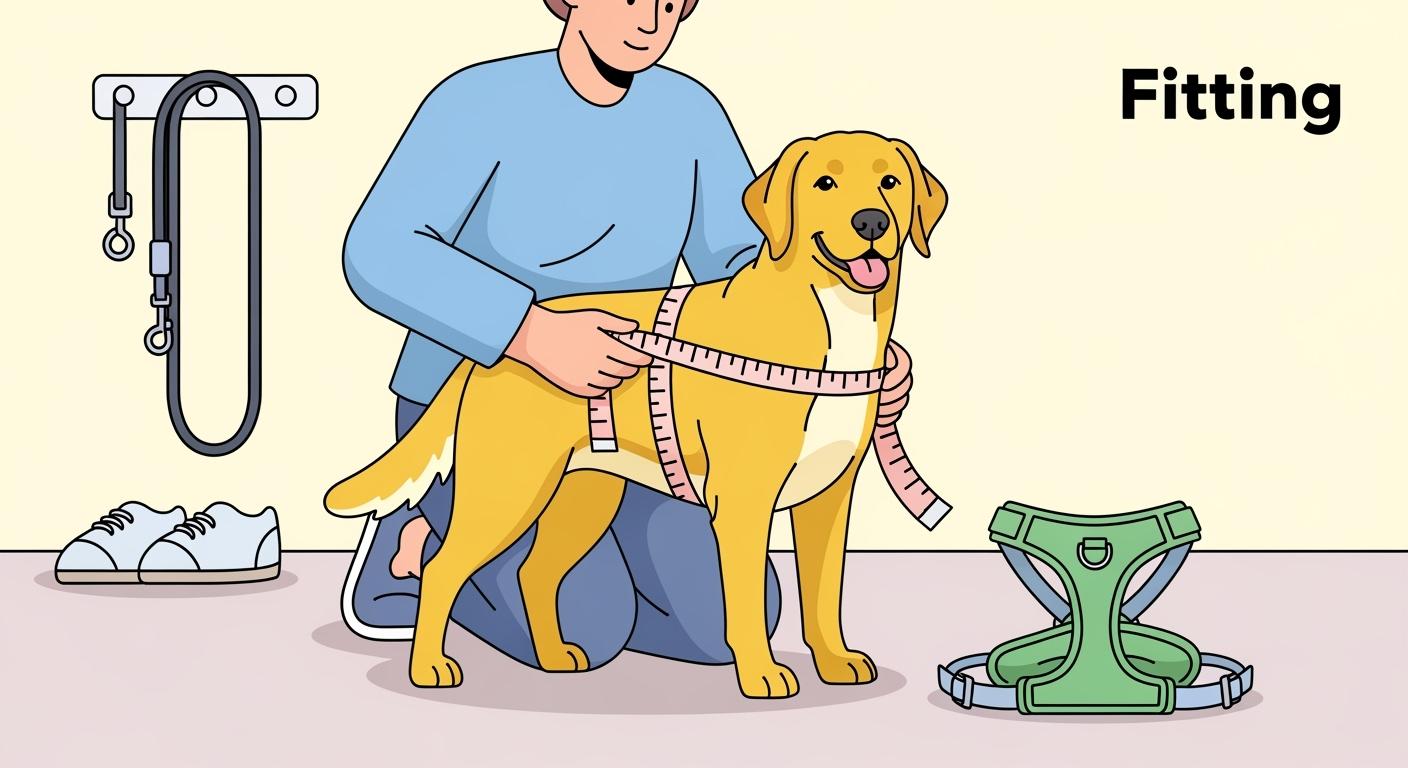
Learning how to measure a dog for a harness is not only about getting chest girth and neck size. Those numbers matter, but they do not guarantee that the harness will stay centered once the dog walks, turns, pulls, sits, or backs up. Many fit problems start after the size chart looks correct.
A harness can measure correctly and still slip sideways, rub behind the front legs, ride up toward the throat, or leave enough opening for a dog to back out. That usually means the measurement, body shape, and harness structure are not working together.
If you are still choosing the base style, start with a dog harness that has real adjustment around the chest and neck. A fixed shape gives less room to correct fit gaps, especially on dogs with deep chests, narrow waists, broad shoulders, or thick coats.
This guide focuses on the part many basic measuring guides miss: why a harness can fail even when the numbers look right, and how to connect measurements with the structure that keeps the harness stable in real use.
Measure chest and neck, then check where the harness will sit
The two most useful measurements are chest girth and neck size. Chest girth usually controls the first size choice because it affects how the harness wraps the rib cage. Neck size matters because it affects front opening control, throat clearance, and back-out risk.
Measure while the dog is standing naturally on all four legs. A sitting, leaning, twisting, or excited dog can make the tape angle wrong. If the dog has a thick coat, place the tape against the coat without compressing the fur hard enough to create a smaller number.
- Chest girth: wrap the tape around the widest part of the rib cage, usually just behind the front legs.
- Neck size: measure around the lower neck where the front opening of the harness will sit, not high under the jaw.
- Back length: use this only when the size chart or harness shape requires it.
Weight can help narrow the range, but it should not decide the size by itself. Two dogs with the same weight can have very different chest depth, rib shape, shoulder width, and body length. That is why a weight-only size choice often creates a harness that looks reasonable on paper but moves badly on a walk.
Why correct measurements still lead to harness fit problems
A size chart gives a range. It does not show how the harness will behave on a moving dog. The same chest number can fit differently on a barrel-chested dog, a narrow-bodied dog, a short-backed dog, or a dog with heavy shoulder muscle.
When a harness fails after careful measuring, the problem is usually one of these fit gaps:
| Fit problem | Why it happens | What structure works better |
|---|---|---|
| Harness twists to one side | The chest panel is too narrow, the straps are uneven, or the leash force pulls the body off center. | A more stable chest panel, balanced strap layout, and better side adjustment. |
| Straps rub behind the front legs | The chest strap sits too close to the armpit or the harness body is too short. | More clearance behind the front legs and smoother padded edges. |
| Front section rides toward the throat | The neck opening is too high or the front panel does not sit low enough on the chest. | A lower front panel that keeps pressure away from the throat. |
| Dog backs out of the harness | The neck opening is too loose, the body strap is too far back, or the harness lacks rear stability. | Better opening control, secure chest adjustment, and a shape that stays close to the body. |
| Dog shortens stride | The harness blocks shoulder movement or creates pressure at the front leg area. | A cut that leaves the shoulder free and keeps straps away from moving joints. |
If you want to compare front-clip, back-clip, dual-clip, and other everyday harness structures before choosing one shape, this best dog harness guide can help you separate size issues from style issues.
Read the size chart by adjustment room, not just the label
Once you have the measurements, start with the chest range first. Then check whether the chosen size leaves usable adjustment in both directions. A harness that only fits at the very end of the strap range may have little room for coat changes, weight changes, or small adjustment errors.
Do not size up automatically when a dog falls between sizes. A larger size can reduce tightness, but it can also create bounce, side shift, and a loose front opening. Do not size down only to make the harness feel secure either. A smaller size can create armpit rubbing, pressure points, and restricted shoulder movement.
The better question is: which size keeps the harness centered while still leaving enough strap room to adjust the chest and neck without squeezing?
| Size chart situation | Risk | Better decision |
|---|---|---|
| Chest girth is near the top of the range | The harness may feel tight after coat or weight changes. | Check whether the next size can stay centered without excess front opening. |
| Chest girth is near the bottom of the range | The harness may slide or rotate when the dog turns. | Check whether the smaller size still leaves shoulder freedom and armpit clearance. |
| Neck and chest fall into different sizes | One part may fit while another part gaps or presses. | Choose a harness with wider neck and chest adjustment, not a fixed-shape style. |
| The dog has a deep chest and narrow waist | The harness may fit the chest but drift backward or sideways. | Look for a more stable chest section and better side strap balance. |
| The dog has short legs or a compact body | Straps may sit too close to the armpits. | Choose a shorter, cleaner cut with enough front-leg clearance. |
Use a movement test before deciding the harness fits
A harness that fits while the dog stands still can still fail during movement. After adjusting the neck and chest, use a short movement test before judging the fit finished.
Ask the dog to walk forward, turn both ways, sit, stand, lower the head, and back up once or twice. Watch the harness instead of only watching the dog. The goal is to see whether the structure stays centered under normal motion.
- Drifting: the harness rotates or pulls to one side after a turn.
- Rubbing: the strap edge moves against the armpit or leaves redness after short use.
- Throat pressure: the front section rides upward when the dog pulls or lowers the head.
- Back-out gap: the neck opening loosens when the dog reverses.
- Short stride: the dog moves with less shoulder reach than normal.
- Buckle pressure: hard parts press into the body when the dog sits or turns.
If you are pairing the harness with a leash at the same time, use this dog harness and leash set guide to check whether the full walking setup stays balanced, not only whether the harness size looks correct.
Match the harness structure to the measurement problem
After measuring and testing, the next step is not always another size. Sometimes the dog needs a different structure. This is especially true when the same fit issue appears after repeated adjustment.
| What you notice | Likely issue | What to look for instead |
|---|---|---|
| The harness keeps sliding sideways. | The shape does not control rotation under leash tension. | A wider or more stable chest panel with balanced side straps. |
| The dog gets red marks behind the front legs. | The strap path is too close to the armpit or the body length is wrong. | Better front-leg clearance, softer edge binding, and a cleaner chest cut. |
| The front panel presses near the throat. | The harness sits too high or the neck opening is poorly shaped. | A lower chest position that keeps force away from the neck. |
| The dog can reverse out of the harness. | The opening is too loose or the back section lacks stability. | Closer body coverage, secure adjustment, and better escape control. |
| The dog dislikes walking after a few minutes. | Pressure, rubbing, heat, hardware weight, or restricted motion may be building. | Lighter hardware, smoother padding, breathable fabric, and shoulder freedom. |
This is why measuring should not end at the tape. The tape tells you where to start. The movement test tells you whether the harness structure actually works on that body.
Common measuring mistakes that cause fit failure later
The most common mistake is placing the tape too close to the front legs or too far back on the rib cage. Too far forward can lead to armpit rubbing. Too far back can lead to a harness that feels loose and unstable even when the size range looks right.
Another mistake is treating tightness as security. A harness can look secure because it is over-tightened, but that often creates friction, pressure, and movement restriction. A better fit is stable without squeezing.
It is also easy to ignore hardware and material weight. Heavy buckles, stiff webbing, rough seam edges, or thick padding can turn a correct size into a poor daily fit. For small or sensitive dogs, hardware weight can matter as much as strap length.
Re-check fit after grooming, seasonal coat changes, growth, weight change, or any change in walking behavior. Stop using the harness and reassess if the dog limps, scratches repeatedly at the gear, freezes, panics, shows skin irritation, or tries to escape.
FAQ
How do you measure a dog for a harness at home?
Use a soft tape measure while the dog stands naturally. Measure chest girth around the widest part of the rib cage, usually just behind the front legs. Then measure the lower neck where the harness opening will sit. Take each measurement twice to avoid a rushed reading.
What is the most important dog harness measurement?
Chest girth is usually the most important starting point because it controls the main body fit and stability. Neck size still matters because it affects throat clearance, front opening control, and back-out risk.
Should I size up if my dog is between harness sizes?
Not automatically. A larger size can create sliding, bouncing, or a loose neck opening. Choose the size that keeps the harness centered while leaving enough adjustment room for comfort and movement.
How tight should a dog harness be?
It should be snug enough to stay centered but not tight enough to restrict movement. You should be able to slide two fingers under the straps, and the dog should still walk, turn, sit, and stand naturally.
Why does a harness slip even when the measurements are correct?
The harness shape may not match the dog body. Deep chests, narrow waists, broad shoulders, short bodies, and thick coats can all change how a harness behaves during movement.
How do I know the harness style is wrong?
If careful adjustment still leads to twisting, armpit rubbing, throat pressure, shoulder restriction, or repeated back-out risk, the issue is probably structure rather than measurement alone.






