
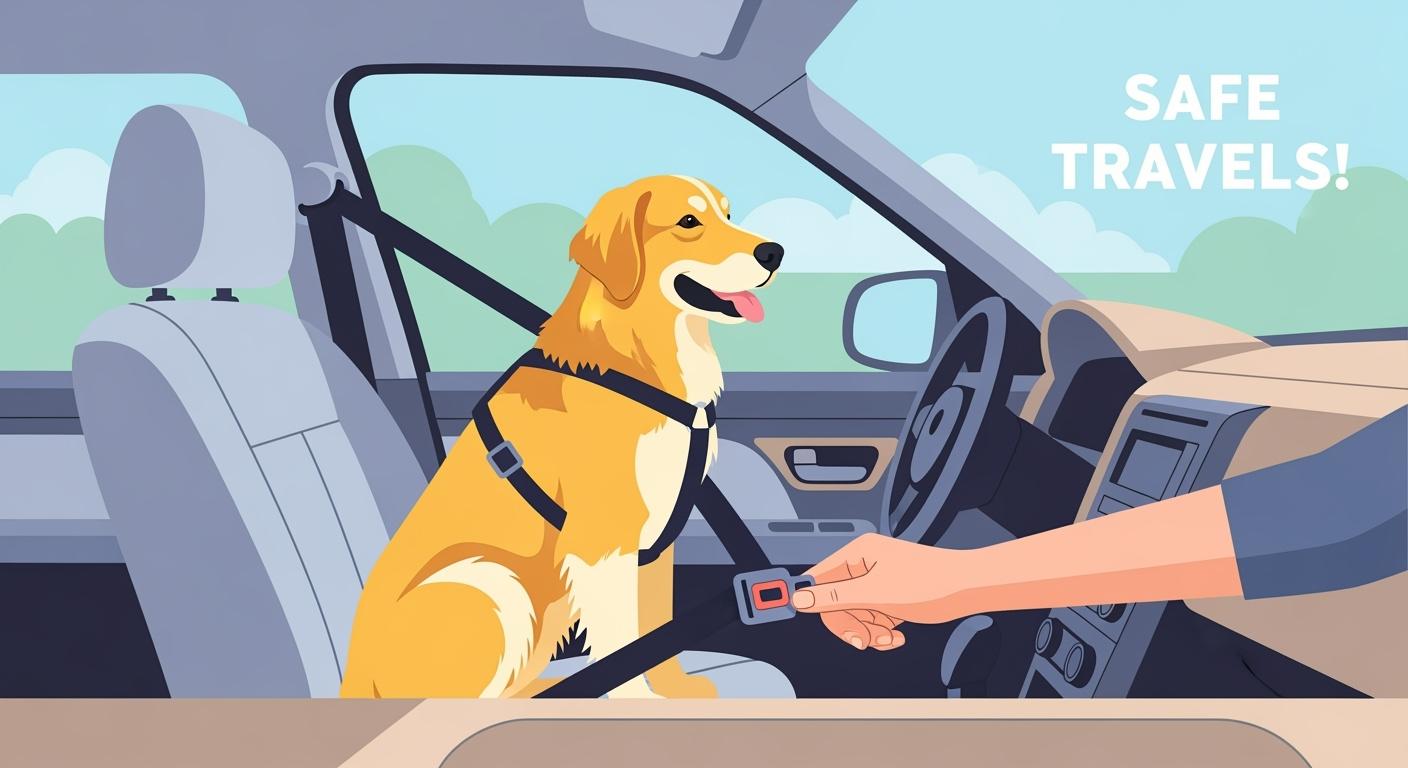
A dog seat belt only works well when the full setup works together. The tether, the harness, the buckle connection, and the dog’s position in the rear seat all affect whether the ride feels controlled or awkward. Many travel problems start with one simple mistake: too much slack, the wrong clip point, a harness that shifts under tension, or a setup that feels fine while parked but not once the drive starts.
The better goal is not only restraint. It is a calmer, more repeatable routine that limits unsafe movement without turning every ride into a struggle. That is why it helps to think about a seat belt as one part of your broader pet car travel setup rather than as a single item that solves everything by itself.
Start with the harness before you touch the tether
A seat belt setup is only as good as the harness it connects to. If the harness rotates, crowds the throat, or loosens once the dog moves, the restraint system becomes much less useful. The safest starting point is a harness that stays centered, lets your dog sit or lie down naturally, and does not put pressure into the neck when the tether loads.
What a better harness setup should do
- Stay centered on the chest and body instead of twisting sideways.
- Allow normal breathing and posture during the ride.
- Give the tether a stable clip point that does not shift under tension.
- Reduce neck pressure compared with clipping into a collar.
Early warning signs the harness is the weak point
- The chest section rides upward once the dog leans forward.
- The harness turns or drifts after a short drive.
- Your dog coughs, braces, or keeps pawing at the setup.
- The tether angle keeps pulling from one side instead of staying centered.
Quick rule: a seat belt should clip to a properly fitted harness, never to a collar, and the harness should be checked first on every trip.
How to set the tether length so the dog stays controlled but comfortable
The tether should be short enough to stop roaming and long enough to let your dog sit or lie down normally. Too much slack creates twisting, tangling, and forward reach. Too little slack creates tension, discomfort, and a dog that cannot settle into the seat. The right length usually becomes obvious once you watch what the dog does during the first few minutes of a normal drive.
Use this setup sequence
- Seat your dog in the rear seat and clip the tether to the harness.
- Shorten the line until your dog cannot climb toward the front seat area.
- Check whether your dog can still sit and lie down comfortably.
- Make sure the tether path stays clear of seat gaps, footwells, and tangling points.
- Drive a short route before trusting the length on a longer trip.
| Check point | What good looks like | What needs fixing |
|---|---|---|
| Tether length | Enough room for natural sitting or lying down | Too long for roaming or too short for comfort |
| Routing | Line stays clear and centered | Twists, crosses the body badly, or catches under the dog |
| Rear-seat position | Dog remains in a stable back-seat zone | Dog can reach the center console or front area |
| Ride behavior | Dog settles after a short adjustment period | Constant spinning, climbing, or frustrated bracing |
A seat belt setup works best inside a repeatable travel routine where the same seat position, harness, and restraint pattern are used often enough to become familiar.
Routine travel checks matter more than one perfect install
Even a good setup should be checked regularly. Long drives, repeated use, and frequent stops can shift the harness, loosen the tether, or create rubbing that was not obvious at the start. The safest routine is not complicated. It is just consistent.
Use this quick pre-drive check
- Confirm the harness still sits centered and secure.
- Check that the tether clip closes fully and does not feel worn.
- Look at the tether path and remove twists before the car moves.
- Make sure your dog can settle in the rear seat without climbing forward.
- Notice whether the dog already looks tense before the trip begins.
Use this quick stop-check during longer trips
- Recheck harness position and any rubbing under the straps.
- Look for tangling or a shifted tether angle.
- Offer water and let your dog reset calmly before restarting the trip.
- Restore the same stable rear-seat setup instead of improvising at each stop.
If the seat belt system keeps feeling awkward, it helps to compare it against broader harness fit and use guidance rather than assuming a longer tether or tighter setup will fix the problem.
Know when the seat belt setup is not the right answer
Some dogs do well with a harness restraint. Others keep spinning, tangling, climbing, or showing stress no matter how carefully the tether is adjusted. In those cases, the issue may not be a small setup mistake. The restraint type itself may be the wrong match for the dog’s behavior or the way the car is used.
Stop and reassess if you notice
- The dog keeps tangling in the tether after repeated careful setup.
- The harness shifts badly under normal driving movement.
- Your dog cannot settle and grows more stressed over time.
- The rear-seat restraint still allows unsafe forward movement.
What a better result usually looks like
A good dog seat belt setup should feel boringly dependable. The harness stays in place, the tether does its job quietly, the dog stays in the rear seat, and ordinary drives feel calmer instead of more complicated.
FAQ
Should a dog seat belt attach to a collar?
No. It should attach to a properly fitted harness so any sudden force is spread across the body instead of concentrated on the neck.
How long should the tether be?
It should be long enough for your dog to sit or lie down comfortably, but short enough to prevent roaming, climbing forward, or wrapping into the line.
Why does my dog keep tangling during travel?
This usually means the tether is too long, the routing is awkward, or the dog’s movement style does not match the current restraint setup well enough.
How often should I recheck the setup?
Check it before every trip and again during longer rest stops, especially if the dog is shifting, the harness is getting damp, or the travel day is running long.
When should I stop using the current seat belt setup?
Reassess if the harness keeps shifting, the tether keeps tangling, or the dog remains stressed and unable to settle even after careful adjustment.






