

Many dog carrier bags look the same. Small mistakes can make your dog uncomfortable. These mistakes can cause tipping or let your dog escape. You might see common mistakes that hurt your dog’s safety or comfort. Try adding a Key Takeaways section for quick tips. Always think about how your dog will feel when traveling. Pick a dog carrier bag with your dog’s needs in mind. A dog carrier bag helps you carry your dog. It does not replace safe restraint planning. Stop using the bag if your dog seems upset. Stop if your dog tries to escape or gets too hot. Ask a veterinarian if your dog has trouble breathing or moving. Talk to a trainer if your dog gets scared in dog carrier bags.
Key Takeaways
Pick a dog carrier bag that matches your dog’s size. Make sure your dog can stand, turn, and lie down easily.
Find carriers with strong closures and safety straps. These will stop your dog from escaping and keep them safe when you travel.
Make sure the carrier has good airflow with lots of mesh panels. This will help your dog stay cool and relaxed while you travel.
Always measure your dog the right way. Look at the inside size of the carrier, not just the weight limit, so your dog does not feel squished.
Help your dog get used to the carrier with short practice times. Use rewards to make it a good experience and lower stress when you travel.
What a dog carrier bag should do and its limits
A dog carrier bag lets you carry your dog safely. It should keep your dog comfortable. Each style has limits you need to know. Some people buy the wrong carrier. Their dog gets stressed or the bag does not work for them.
Benefits | Drawbacks |
|---|---|
Convenience: Easy to transport dogs | Limited Movement: Dogs may feel claustrophobic |
Safety: Keeps dogs secure | Lack of Socialization: Too much time inside can harm |
Comfort: Cozy environment | Health Problems: Bad fit can cause overheating or pain |
Security: Prevents escape | |
Compliance: Meets travel rules | |
Protection: Shields from hazards | |
Emergency: Useful for injured dogs | |
Training: Helps with new experiences | |
Fun: Bonding time |
Comfort space vs restraint
Your dog should feel safe, not trapped. The bag needs enough space for your dog to stand. Your dog should be able to turn and lie down. If your dog cannot move, it may crouch or press against the sides. Always check how your dog sits in the bag. Your dog should not hunch or curl up tight. Add 2-4 inches to your dog’s size when picking a carrier. This extra space helps your dog stay comfy while traveling.
Tip: If your dog cannot turn or stand, the bag is too small. Try a bigger carrier or a new style.
Stress and escape attempts
Dogs show stress in different ways. Your dog might bark or whine. Some dogs chew the bag or drool a lot. Others pace or pee if they feel trapped. Watch for these signs:
Behavioral Sign | Description |
|---|---|
Destruction of objects | Chewing or tearing at the bag or nearby items |
Escape attempts | Pawing at zippers or seams, pushing at openings |
Vocalization | Barking, whining, or howling |
Salivation | Excessive drooling |
Inappropriate urination | Accidents inside the carrier |
Pacing | Repeated movement in place |
Inactivity | Refusing to move or shutting down |
Frustration-related behaviors | Scratching or biting at doors or windows |
If you see these signs, your dog may need a different carrier. Your dog might also need more time to get used to the bag.
When to switch carrier style
Not every carrier works for every dog. A small dog may like a soft bag for short trips. A big or nervous dog may need a strong carrier or a backpack carrier. If your dog gets hot, try a mesh bag for better airflow. Luna, a miniature poodle, felt better after switching to a mesh carrier in summer. The right carrier can help your dog feel less stressed and more comfortable.
Dog and context | Best carrier bag features | What to avoid |
|---|---|---|
Small, calm dog, short trip | Soft bag, light, easy to carry | Overly rigid, heavy bags |
Large or anxious dog | Structured, firm base, secure closure | Soft sides, weak zippers |
Hot weather, active dog | Mesh panels, breathable, wide opening | Poor ventilation, dark fabric |
Long travel, frequent use | Padded straps, stable base, easy access | Thin straps, unstable bottom |
Option | Pros | Cons | Best for |
|---|---|---|---|
Soft bag | Lightweight, easy to store | Less support, may tip | Small, calm dogs, short trips |
Structured carrier | Firm, stable, secure | Heavier, less flexible | Large or anxious dogs |
Backpack carrier | Hands-free, good for walking | May lack ventilation, can shift | Active owners, outdoor travel |
Pet shoulder carrier bag | Easy to carry, quick access | May strain shoulder, less support | Quick errands, small dogs |
Pick the right carrier for your dog’s size and needs. Match the carrier to your travel plans to avoid mistakes.
Sizing mistakes: weight vs internal dimensions and overloading

Choosing the right pet carrier sizing recommendation can be tricky. Many buyers look only at the weight label. This leads to overloading or picking a carrier that feels too tight for your dog. Internal dimensions matter more than the weight limit. If you ignore them, your pet may feel cramped or unsafe.
Internal vs external size confusion
You might see a pet carrier that says it fits dogs up to 20 lbs (9 kg). Your dog weighs 18 lbs (8 kg), so you think it is a suitable size. But your dog crouches, cannot turn, and paws at the zipper. This happens because the internal length and height are too small. Always measure your dog from nose to base of tail and from floor to shoulder. Add 2-4 in (5-10 cm) to each measurement for comfort. Check the internal size, not just the outside.
Tip: Internal space lets your dog stand, turn, and lie down. External size can be misleading.
Buffer rules for fit
To find the correct size, follow these steps:
Measure your dog’s length from nose to base of tail.
Measure standing height from floor to shoulder.
Add 2-4 in (5-10 cm) to both measurements.
Weigh your dog and check the carrier’s weight limit.
A pet carrier should meet or exceed these numbers. If any dimension is too small, pick a larger carrier. This helps prevent overloading the carrier and keeps your dog comfortable during travel.
The posture test
After you pick a pet carrier, do a posture test. Place your dog inside. Your dog should stand without hunching, turn around, and lie down naturally. If your dog curls up tightly, presses against the top, or tries to escape, the carrier is too small. Improper weight distribution and overloading can cause tipping or stress.
Mistake | What it causes | How to fix it |
|---|---|---|
Only using weight label | Cramped posture, stress | Measure internal size and add buffer |
Ignoring internal dimensions | Dog cannot turn or stand | Use nose-to-tail and floor-to-shoulder method |
Overloading the carrier | Safety risks, tipping, discomfort | Stay within weight and size limits |
A good fit means your dog feels safe and relaxed. Always check both weight and internal size before you buy a pet carrier.
Base support and stability in motion
Soft base and tipping risks
You might think any pet carrier will keep your dog steady, but a soft base can cause problems. When the bottom of the bag is too flexible, it sags and shifts under your dog’s weight. This can make the carrier tip or collapse, especially when you pick it up or set it down. You may notice your pet carrier wobble or lean to one side. These issues can lead to discomfort or even injury for your dog. You might also feel anxious if you see your dog slide or tip during travel.
Limited stability can cause the carrier to tip over easily.
This tipping can lead to injury for the dog inside the carrier.
Increased anxiety for both the pet and the owner during transport.
A soft base does not give enough support. Your dog may feel every bump and shift, which can make travel stressful.
Car use and edge drop
When you use a pet carrier in a car, a weak base can cause edge drop. This means one side of the carrier dips down when you place it on a seat or floor. Your dog may slide toward the edge, which can put pressure on their joints. A stiffer base helps keep the carrier level and steady. It also helps distribute your dog’s weight evenly, which is important for comfort and safety. Look for a pet carrier with a non-slip bottom. This feature keeps the bag from sliding during turns or stops.
Evidence Point | Explanation |
|---|---|
Rigid base prevents sagging | A stiffer base helps maintain stability and prevents the carrier from collapsing under the dog’s weight, which is crucial for joint health. |
Non-slip backing ensures stability | An anti-slip bottom provides a predictable surface, enhancing the dog’s comfort and safety during travel. |
Even weight distribution | A hard bottom helps distribute the dog’s weight evenly, reducing pressure points and strain on joints, especially for larger or senior dogs. |
Shift and wobble test
Before you use a new pet carrier, do a shift and wobble test. Place your dog inside and gently move the bag side to side. If the carrier shifts more than about 2 in (5 cm), the base may be too soft or the size may not fit well. A stable carrier should stay balanced and not tip or slide easily. This simple test helps you spot problems before you travel. Always check for a firm base and anti-slip bottom to support your dog’s safety and comfort.
Comfort and ventilation in dog carrier bags
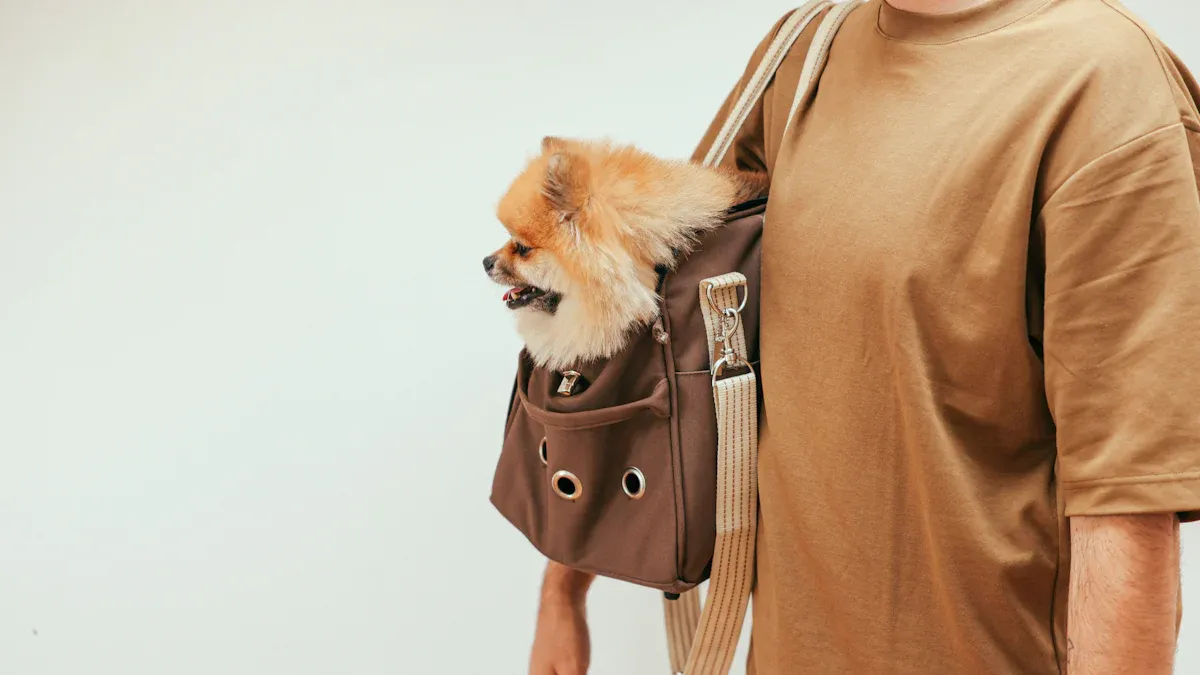
Choosing a dog carrier bag with comfort and ventilation in mind helps you avoid many common problems. If you overlook these features, your pet’s comfort and safety can suffer. Dogs need a comfortable ride with good ventilation to stay calm and healthy during travel. Without proper ventilation, your dog may overheat or become anxious.
Mesh placement and airflow
Mesh panels play a big role in comfort and ventilation. You should look for a carrier with mesh on more than one side. Mesh at the base and along the sides lets air move freely. This airflow helps control temperature and gives your dog a breathable space. Carriers with only a small mesh window can trap heat and limit airflow. Multiple mesh windows or double-layer mesh designs keep the air fresh and help your pet relax. Mesh also lets your dog see out, which can reduce stress.
Proper ventilation prevents overheating and helps your dog breathe easily.
Mesh panels on several sides improve airflow and temperature control.
Ample mesh windows support your pet’s comfort and reduce anxiety.
Overpacking and vent blocking
Overpacking your carrier can block mesh panels and reduce ventilation. If you fill the bag with blankets, toys, or supplies, you might cover the mesh and limit airflow. This mistake can make your dog uncomfortable and raise the risk of overheating. To avoid this, pack only what your dog needs and keep mesh areas clear.
Pick a carrier with plenty of mesh panels for good ventilation.
Place items so they do not block airflow.
Watch your pet’s comfort and adjust as needed.
Never leave your dog alone in the carrier.
Heat stop signals
You must watch for signs that your dog feels too hot or stressed inside the carrier. These heat stop signals warn you to act quickly.
Heat Stop Signal | What You See |
|---|---|
Panting | Fast, heavy breathing |
Drooling | Excess saliva |
Agitation | Restlessness, pawing, whining |
If you notice any of these signals, stop and check your dog right away. Move to a cooler place and make sure the carrier has enough ventilation. Your attention to comfort and ventilation helps keep your pet safe and happy on every trip.
Safety straps, closures, and escape risks
Dog carrier bags need to keep your pet safe when you travel. Some people forget about safety straps and how the bag closes. These mistakes can let dogs escape or get hurt. You can stop these problems by picking bags with strong closures. Always use pet safety straps the right way.
Zipper gaps and seam stress
Zipper gaps and weak seams are places where dogs can escape. Dogs may push at seams or paw at zipper gaps. This can make the bag open or rip. Look for bags with strong seams and tough material. Locking zippers help keep the bag closed. Strong seams make the bag last longer and safer, so it does not break open.
Common Cause | What It Leads To | What To Do Next |
|---|---|---|
Zipper gaps | Escape attempts | Choose locking zippers and check for gaps |
Weak seams | Bag tears or breaks | Pick carriers with reinforced seams |
No safety straps | Dog can jump out | Use pet safety straps every time |
Tether on collar | Neck injury risk | Attach tether to harness, not collar |
Tip: Check all seams and zippers before each trip. Get a new bag if you see any damage.
Locking pulls and closure routines
Locking zipper pulls stop dogs from opening the bag. Always close the zippers all the way and use any locks. More than one closure makes the bag safer. Before you travel, do a quick escape test. Put your dog inside, close all zippers, and use the safety straps. Watch for pawing, pushing, or moving zippers. If your dog finds a weak spot, fix it before you leave.
Use locking zipper pulls so your dog cannot escape.
Make sure all seams are strong.
Always use safety straps inside the bag.
Do an escape test before every trip.
Harness tether vs collar
You should attach safety straps to a harness, not a collar. Collars can hurt your dog’s neck if they pull or the bag moves. Harnesses spread the force across the chest and shoulders. This keeps your dog safer if you stop fast or hit a bump. Pet safety straps work best with harnesses. Never clip a tether to your dog’s collar.
Safety Aspect | Harness | Collar |
|---|---|---|
Injury Risk | Distributes force across chest and shoulders | Can cause severe neck injuries |
Sudden Stop Response | Provides better restraint and safety | Risk of neck fractures or airway damage |
Note: Make sure the harness fits well and the tether is tight before you travel.
You can stop most escape risks by using safety straps, checking closures, and following these steps. This helps your dog stay safe and comfy on every trip.
Acclimation and calm travel
Short acclimation plan
You want your dog to feel safe and relaxed in the carrier. Start by choosing a carrier that fits well and has good ventilation. Place the carrier in a familiar spot at home. Add a soft blanket, a favorite toy, or a treat inside. Let your dog explore the carrier with the door open. Use praise and treats when your dog steps inside. Build a positive connection by feeding your dog in the carrier or placing a cloth with your scent inside. Begin with short sessions, then slowly increase the time your dog spends inside. Puppies often adjust faster, but older dogs can learn too.
Quick acclimation steps:
Pick the right carrier for your dog’s size and needs.
Place the carrier in a quiet, familiar area.
Add soft bedding, toys, and treats.
Let your dog enter and exit freely.
Reward calm behavior with treats and praise.
Gradually close the door for short periods.
Increase the time as your dog gets comfortable.
Practice before trips
Practice helps your dog feel secure during travel. Leave the carrier open at home with treats or toys inside. Try short walks or car rides with your dog in the carrier. Use familiar items from home to boost comfort. Teach cues like “settle” or “down” to help your dog relax. Slowly increase the length of practice trips. This step-by-step approach lowers stress and prepares your dog for real travel.
Tip: If your dog is calm at home but tries to back out in a noisy place, check your closure routine and harness tether setup. Secure all zippers and attach the tether to a harness, not a collar. A short acclimation plan can reduce escape attempts in busy areas.
Handling stress signs
Watch for stress signs during practice and real trips. Common signs include excessive barking, refusal to eat, or shaking. If your dog shows these signs, stop and give comfort. Offer a favorite snack or a quiet break. Use a sturdy carrier to help your dog feel protected. Keep loud noises to a minimum. If stress continues, shorten practice sessions and try again later. Your attention to your dog’s comfort and safety makes every trip smoother.
Fit and setup checklist for every trip
A good fit and setup routine helps you avoid common mistakes before every trip. Use this checklist to make sure your dog stays safe and comfortable on the go.
Measure, compare, confirm
Start by measuring your dog. Use a soft tape measure for accuracy.
Measure from the front of the chest to the base of the tail for length.
Measure from the top of the shoulder blade to the floor for height.
Weigh your dog with a recent scale reading.
Next, compare these numbers to the carrier’s internal dimensions and weight limits. Always add 2-4 in (5-10 cm) to your dog’s length and height for extra comfort. Check this table for a quick reference:
Size | Weight Limit | Length Limit | Height Limit |
|---|---|---|---|
Small | Up to 15 lbs (7 kg) | Up to 16.5 in (42 cm) | Up to 10 in (25 cm) |
Large | Up to 25 lbs (11 kg) | Up to 18.5 in (47 cm) | Up to 12 in (30 cm) |
Tip: Your dog should turn around easily inside the carrier. If not, try a larger size.
Posture and escape tests
After you confirm the fit, do these quick tests:
Place your dog in the carrier. Watch for natural standing, turning, and lying down. If your dog crouches or presses against the top, the carrier is too small.
Close all zippers and attach the tether to a harness. Wait 60 seconds. Watch for pawing, pushing, or zipper movement. If your dog finds a weak spot, adjust the setup.
Take a short walk or car loop. Check for tipping, sliding, or signs of stress. Make changes if needed.
Parameter and value table
Use this table to double-check every important detail before you travel:
Parameter | Target range or option | Why it matters |
|---|---|---|
Dog length | nose to base of tail | Sets baseline size |
Standing height | floor to shoulder area | Prevents hunching |
Buffer rule | add 2-4 in (5-10 cm) | Reduces cramped posture |
Internal dimensions | internal L x W x H | Fit accuracy |
Posture test | stand, turn, lie down | Confirms real comfort |
Closure design | locking zipper pulls preferred | Reduces self-opening risk |
Tether setup | tether to harness point | Helps reduce escape risk |
Base style | stiffer base, anti-slip bottom | Reduces tipping and sliding |
Shift check | about 2 in (5 cm) threshold | Flags mismatch early |
Ventilation cue | breathable panels | Comfort cue |
Heat stop signals | panting, drooling, agitation | Safety-first rule |
Remember to pack essentials like collapsible water bowls, insulated food containers, a portable placemat, a pet first aid kit, vaccine records, and a spare leash with ID tags. These items help you handle unexpected situations and keep your dog happy during travel.
Now you know how to stop common mistakes when picking a dog carrier bag. Always think about your dog’s comfort and safety when you travel. Use the checklist to make sure the bag fits well, stays steady, and has good airflow before each trip. Planning ahead makes trips easier for you and your dog. If you have questions or want to tell your story, write a comment below. Your ideas help other pet owners choose better.
FAQ
What is the best way to measure my dog for a carrier bag?
You should measure from the nose to the base of the tail for length. Measure from the floor to the top of the shoulder for height. Add extra space for comfort.
How can I tell if my dog feels stressed in the carrier?
Watch for signs like heavy panting, drooling, or pawing at the carrier. If your dog tries to escape or seems restless, take a break and check the setup.
Can I use the same carrier for every type of travel?
Not every carrier works for all situations. For long trips, choose one with strong support and ventilation. For short errands, a lighter option may work better.
Why should I use a harness instead of a collar with the carrier tether?
A harness spreads pressure across the chest and shoulders. This setup helps reduce the risk of neck injury if your dog moves suddenly inside the carrier.
How do I keep the carrier from tipping or sliding?
Pick a carrier with a firm base and anti-slip bottom. Before you travel, test the carrier by gently moving it side to side. If it shifts too much, adjust the fit or base.






