
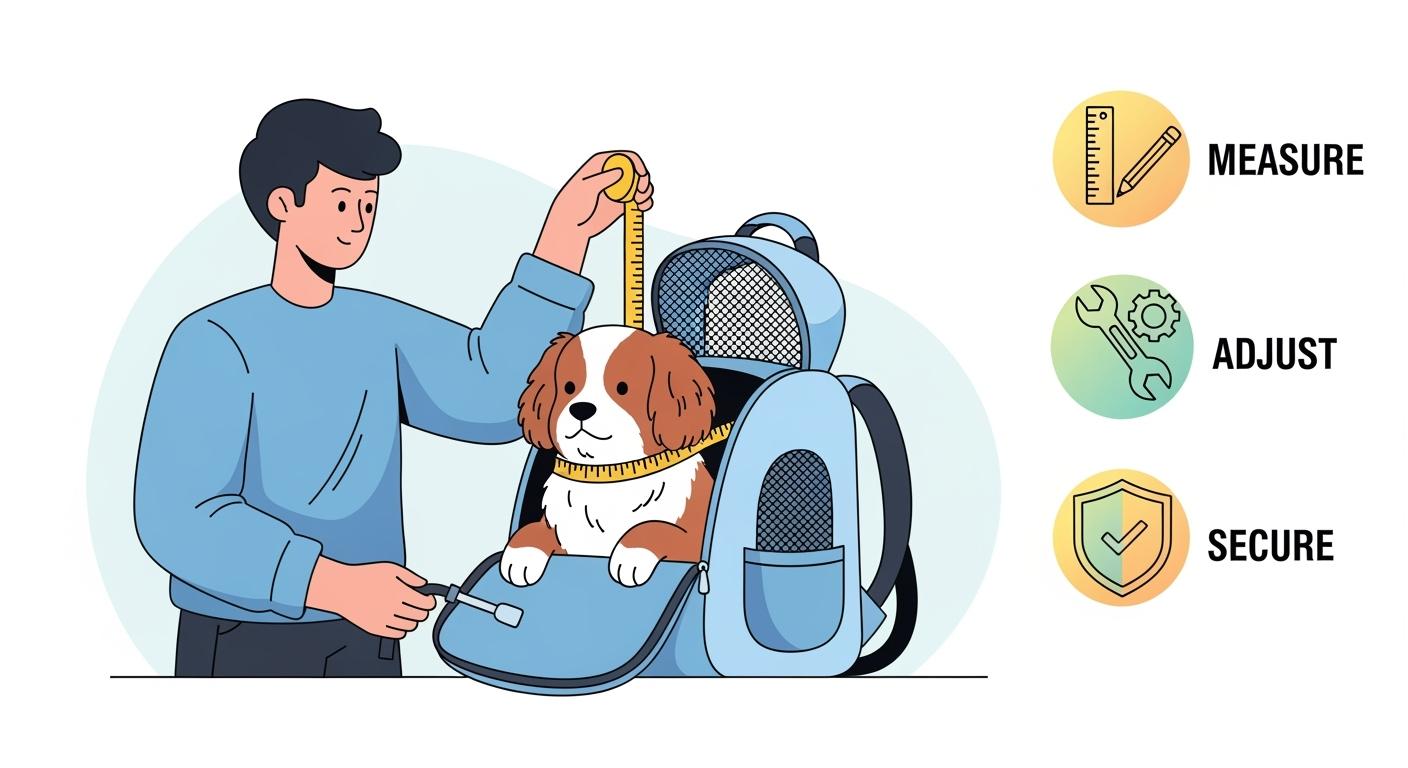
A dog carrier backpack only works when the size makes sense for your dog and the carry feels stable on your body. A label that says “small dog” or a maximum weight number is not enough by itself. The real question is whether your dog can sit or rest naturally, breathe easily, and stay supported while you move.
Before you compare models, start with the basics on a pet backpack carrier page so you can focus on usable interior space, support, and ventilation instead of just outer dimensions.
Quick answer: Measure your dog first, check interior dimensions instead of outer dimensions, adjust the backpack on your own body before using it outside, and run a short at-home test before any real trip.
Measure your dog before you compare backpacks
The most common sizing mistake is shopping by weight alone. Two dogs can weigh the same and still need different carrier dimensions because one has a longer back, a deeper chest, or a taller seated posture. Measure first, then compare.
What to measure
- Back length: Measure from the base of the neck to the base of the tail. This helps you judge whether the carrier will force a curve through the spine.
- Seated height: Measure from the floor to the top of the head or shoulder, depending on how enclosed the carrier is. This is the number that helps prevent hunching.
- Chest girth: Measure around the widest part of the chest, just behind the front legs. This helps you avoid side pressure and rubbing.
- Current body weight: Use a recent number, not an old estimate. Weight still matters, but only after shape and posture make sense.
A well-sized backpack should let your dog sit or rest without the chest pressing into the sides or the nose crowding the front panel. If your dog must curl tighter than usual just to fit, the carrier is too small even if the weight rating says otherwise.
Read the size chart with internal space in mind
Outer dimensions can be misleading because padding, pockets, and frame pieces make a backpack look bigger than the space your dog actually gets inside. Focus on interior length, width, and height first. Then check whether the base is flat and supportive instead of soft and saggy.
Leave a little room for natural movement, but do not confuse extra room with better comfort. Too much empty space can make the dog slide, lean, or bounce. If you want to compare backpack styles against more contained or more utility-focused options, this dog carrier backpack comparison guide helps clarify which structure makes sense for your routine.
What a pass looks like
- Your dog can settle into a neutral posture instead of folding into a tight curl.
- The face stays clear of blocked mesh, seams, or fabric folds.
- The base does not dip under body weight.
- The side walls feel supportive without pinching the chest or shoulders.
If your dog is right at the top of the listed weight band, be stricter with posture and base support. A near-limit fit often feels acceptable for one minute at home and uncomfortable after ten minutes of real carrying.
Adjust the backpack on your body, then test it at home
Even the right carrier size can feel wrong if the straps are not adjusted for your own body. The backpack should sit high enough to stay close to your center of gravity, with the weight spread across shoulders and, if present, the waist or chest strap. If it hangs too low, the bag will pull backward and the dog will feel every step.
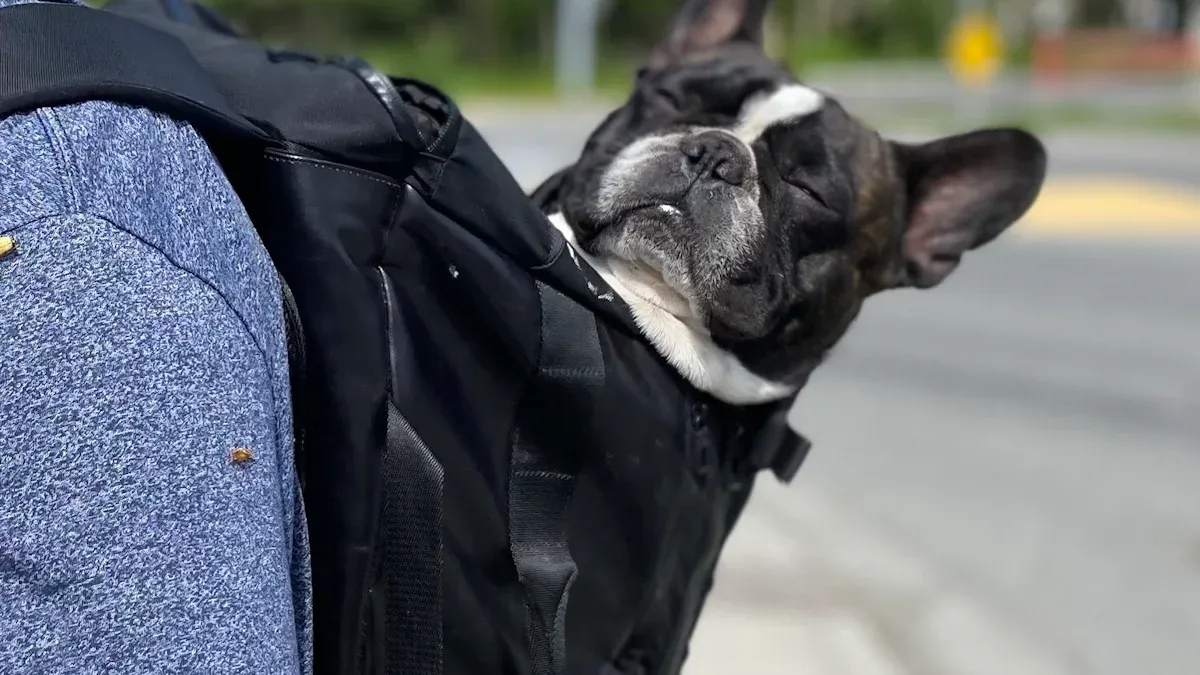
Do a simple fit test before you leave home
- Place your dog inside and watch the natural posture for one full minute before you start walking.
- Clip any internal safety tether to a harness, not a collar.
- Walk indoors for a few minutes and look for leaning, slumping, panic, or repeated attempts to brace against the opening.
- Stop and recheck strap tension after the first short walk because new carriers often settle once they take real weight.
For longer days out, it also helps to pack a small dog travel essentials kit with water, cleanup basics, and a comfort item so you can stop early if your dog shows heat or stress signs.
Common fit problems and how to fix them
Most backpack carrier problems show up quickly. The key is to treat those signs as fit feedback instead of assuming the dog just needs more time to “get used to it.”
| Problem | What it usually means | What to do next |
|---|---|---|
| Dog slumps to one side | The base is too soft, the bag is too roomy, or the straps are hanging too low on your body. | Check base support first, then tighten the carry system and retest. |
| Heavy panting starts quickly | Airflow is not enough, posture blocks the face area, or the dog is getting too warm for enclosed carry. | Stop immediately, cool down, and shorten use time. If it repeats, switch carrier style or activity plan. |
| Shoulders rub the side walls | The interior width is too narrow or the dog is being forced into an unnatural position. | Size up or choose a design with more usable chest room. |
| Backpack bounces when you walk | The bag is too loose on your body or the dog sits too low inside it. | Raise the carry position, tighten the straps, and confirm the dog is supported rather than hanging. |
| Dog tries to push out repeatedly | The fit may feel cramped, hot, unstable, or simply wrong for that dog’s tolerance. | Do not force longer sessions. Recheck fit and consider a different carrier format if stress stays high. |
If something looks wrong during a short test, trust that signal. Backpack carriers are supposed to feel calmer and more stable over the first few trials, not more chaotic.
Cleaning, storage, and signs it is time to stop using the carrier
Cleaning is part of fit and comfort because trapped hair, damp padding, and collapsed inserts change how the carrier feels inside. Wipe the interior after messy outings, clean removable pads regularly, and make sure the backpack dries fully before storage. A damp base can lose firmness and make the next trip less stable.
Stop using the carrier if you see seam separation, broken zippers, a base that no longer stays flat, or mesh panels that collapse toward the dog’s face. Those are not small cosmetic issues. They directly affect support, ventilation, and escape risk.
A good backpack carrier should feel predictable each time you use it. If you find yourself constantly compensating for sagging, rubbing, or bouncing, the problem is usually the fit or structure, not your dog’s attitude.
FAQ
How do I know if a dog carrier backpack is too small?
It is too small when your dog has to hunch, curl tightly, press into the side walls, or breathe too close to blocked mesh or fabric. Weight compatibility alone does not mean the fit is safe.
Should I size up for extra comfort?
Only a little extra room is helpful. Too much empty space can make your dog slide or bounce, which often feels less secure than a properly supported fit.
Can I rely on maximum weight when choosing a carrier?
No. Use weight as one checkpoint, then confirm back length, seated height, chest room, and base support. Shape matters just as much as weight.
What should I test before the first outdoor use?
Check posture, breathing space, strap stability on your own body, and whether the backpack stays level while you walk indoors for a few minutes. Recheck after a short test walk because the fit often settles.
When should I stop using a backpack carrier and choose another carry option?
Stop if your dog repeatedly pants, slumps, braces against the opening, tries to escape, or looks stressed even after you correct the fit. That usually means the structure or carry style is not right for that dog or that outing.






