
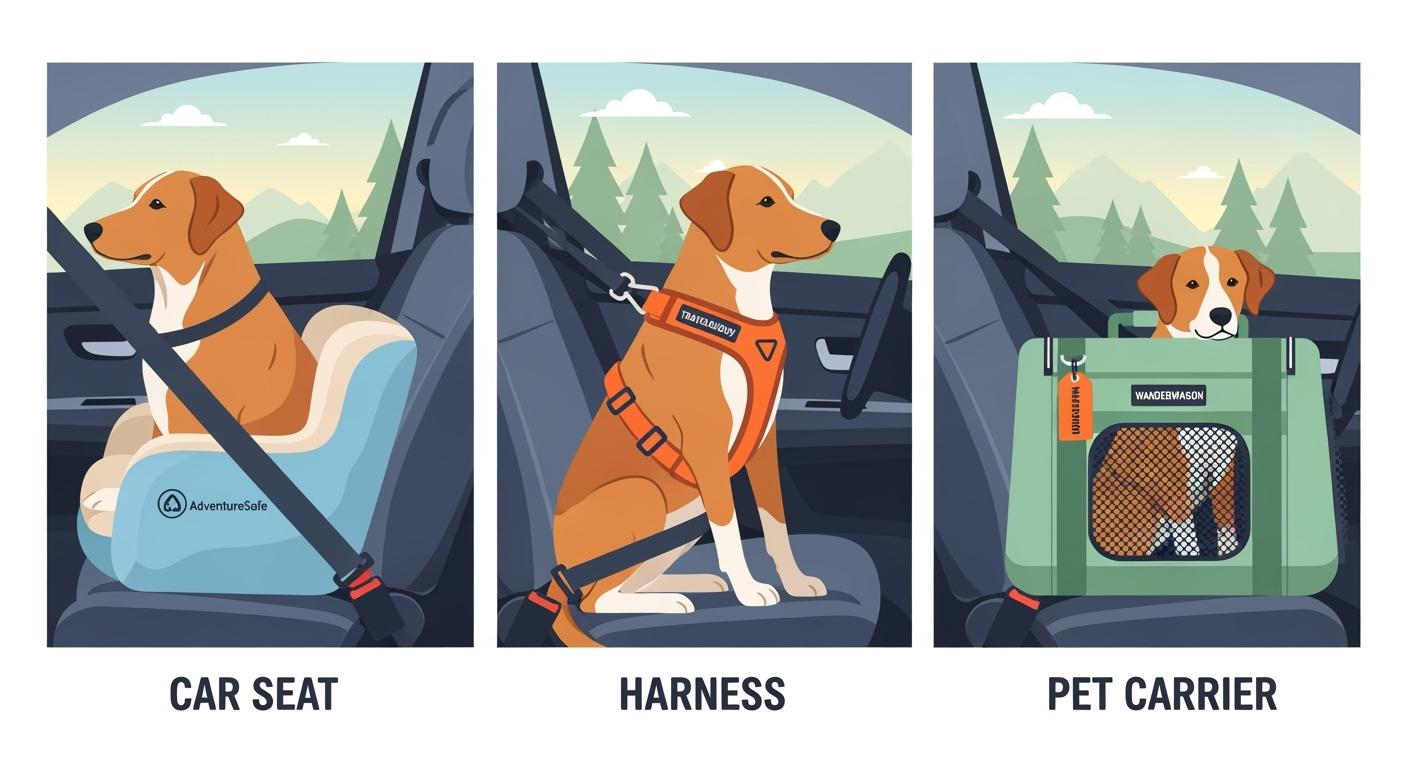
Choosing between a dog car seat, a seat belt harness setup, and a carrier is not really about picking the one that looks safest at first glance. It is about matching the restraint to your dog’s size, behavior, trip length, and the way your car is actually set up. A small dog who wants to curl up and look out the window may do well in a booster-style seat. A larger dog often needs a well-fitted harness restraint or a properly secured carrier instead. The safest decision usually starts by comparing the whole group of pet car travel gear as one system rather than treating every restraint as interchangeable.
Start with dog size, behavior, and trip type
The first question is not which option sounds more advanced. It is what your dog actually does in the car. Some dogs sit quietly and only need controlled positioning. Others pace, lean, chew, spin, or panic when the car moves. Those differences matter more than labels.
When a dog car seat usually makes more sense
- Small dogs that fit fully inside the seat without crowding the shoulders or chest.
- Dogs that settle better when they can see out and feel lightly enclosed.
- Short to moderate rides where comfort and stable posture matter most.
- Dogs that are calm enough not to climb or launch against the sides.
When a seat belt harness or carrier may be the better fit
- Larger dogs that would overload or outgrow a booster-style seat.
- Dogs that keep shifting, leaning hard, or trying to climb out.
- Longer drives where stability and consistent restraint matter more than elevation.
- Dogs that do better in a more enclosed, less visually stimulating setup.
Quick rule: if your dog cannot stay balanced and reasonably calm in the setup while the car is parked, that option is probably not the right one once turns, braking, and road vibration are added.
How car seats, seat belt harnesses, and carriers differ in real use
Each option solves a different problem. A dog car seat helps elevate and contain smaller dogs. A seat belt harness setup limits roaming while letting the dog stay on the seat. A carrier adds more enclosure and can work better for dogs that need clearer boundaries. None of them should be judged by softness or looks alone.
| Option | Usually best for | Main thing to check |
|---|---|---|
| Dog car seat | Small dogs that want support and a steadier view | Seat stability, body fit, and tether setup |
| Seat belt harness | Dogs that can stay on the seat without constant climbing or spinning | Harness fit, tether length, and rear-seat positioning |
| Carrier | Dogs that need more enclosure or settle better in a defined space | Anchoring, airflow, interior support, and escape resistance |
A car seat is often the more comfortable choice for smaller dogs, but it still needs proper attachment and a harness-connected tether. A seat belt harness can work well for many dogs, but only if the harness fits correctly and the dog is not reaching, twisting, or building too much force into the restraint. A carrier often makes more sense for anxious or escape-prone dogs that settle better in a contained space.
These differences become easier to judge when car rides are treated as part of a repeatable travel routine rather than a last-minute setup that changes every trip.
Fit and setup checks that matter before you drive
The safest option on paper can still work badly if the setup is loose, unstable, or the wrong size for your dog. The most common travel problems start with poor fit, too much movement range, or a restraint that is being used for the wrong kind of dog.
Use these checks for a dog car seat
- Make sure the seat sits level and does not rock when pushed from the sides.
- Check that your dog can sit or lie down without chest pressure or slumping.
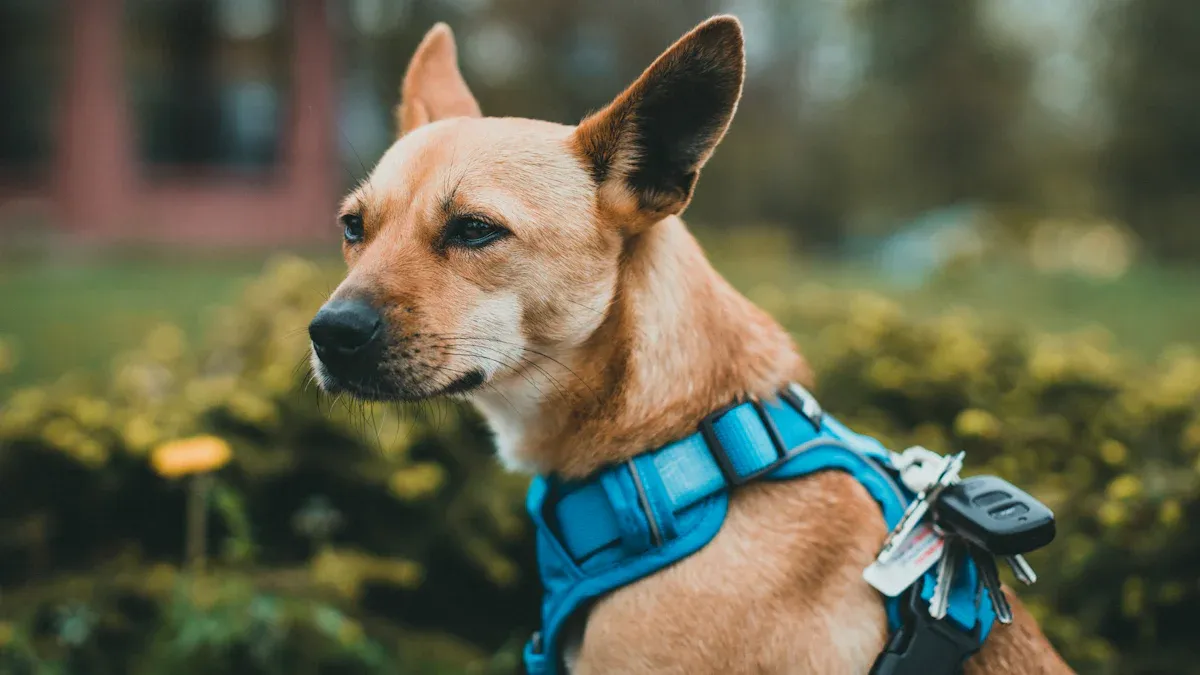
- Clip the internal tether to a harness, not to a collar.
- Keep the tether short enough to prevent climbing out, but not so short that it forces a stiff posture.
Use these checks for a seat belt harness setup
- The harness should stay centered instead of twisting when the dog shifts.
- The tether should keep your dog in the rear seat and away from the front area.
- There should be enough slack for sitting or lying down, but not for crossing seats.
- If your dog coughs, braces constantly, or keeps tangling, the setup needs rethinking.
Use these checks for a carrier
- The carrier should be anchored or restrained so it does not slide.
- The interior should support a natural resting position instead of forcing the dog into one corner.
- Airflow should stay open once the carrier is fully closed and placed in the car.
- If the carrier moves too much or your dog cannot settle, it is not ready for longer trips.
If the main question is whether a booster-style setup actually fits your dog and vehicle well enough, the most useful next comparison is a closer look at booster seat sizing and fit before assuming the issue is only installation.
Common mistakes that create avoidable problems
- Using a car seat that is too small or too soft for the dog’s weight.
- Clipping a tether to a collar instead of a harness.
- Leaving too much slack in a seat belt restraint.
- Choosing a carrier with weak anchoring or poor airflow.
- Assuming the calmest-looking option is automatically the safest one for that dog.
FAQ
Is a dog car seat better than a seat belt harness?
Not automatically. A dog car seat often works better for smaller dogs that fit comfortably and stay calm in a boosted position, while a seat belt harness setup may suit dogs that do not need elevation but can handle body-based restraint well.
When is a carrier the better choice in the car?
A carrier is often the better choice when your dog settles better in a more enclosed space, gets overstimulated easily, or needs clearer boundaries than an open seat or harness setup can provide.
Can I attach the tether to a collar?
No. Whether you are using a dog car seat or another tethered setup, the clip should attach to a properly fitted harness rather than a collar so neck pressure is not concentrated during stops or movement.
How do I know a dog car seat is too small?
Your dog will often slump, brace, crowd the sides, or look unable to rest naturally. A good fit should support the body without forcing the shoulders, chest, or spine into an awkward position.
What is the biggest setup mistake people make?
One of the biggest mistakes is choosing by appearance or convenience instead of by body fit, anchoring, and how the dog actually behaves during the ride. A setup that looks neat but shifts, twists, or crowds the dog is still the wrong setup.






